


I like making little trinket dishes because they’re useful while still leaving room to play with shapes and details.
Air-dry clay makes these projects approachable, and each dish can have its own look with a simple change in color or form.
In this collection, I’ve gathered ideas for beginners, from understated catchalls to playful decorative dishes.
I hope you find a design that feels right for your desk, bedside table, or a handmade gift.
Painted Lavender Flower Trinket Dish

A hand-shaped clay trinket dish uses five rounded petals, a raised white rim, and a mustard-yellow center to create a simple flower form. The lavender paint and visible brush texture keep the dish looking handmade, while the shallow center gives it a spot for small items such as rings.
The flower silhouette makes this design easy to personalize without adding complicated details: beginners could shape fewer, broader petals or use a small bowl as a guide for the center. Try different petal colors or paint the middle with dots or short lines, and make the dish larger or smaller to suit rings, earrings, or other small keepsakes.
Crescent Moon Clay Trinket Dish

A crescent-shaped clay trinket dish turns a simple shallow dish into a celestial-themed holder for small jewelry. Its curved silhouette, gold-colored rim, scattered star-like dots, and small raised star detail give the handmade piece a clear focal point while keeping the interior open for display.
The crescent shape is easy to adapt into a wider or narrower dish, and a beginner could keep the surface simple with just a painted rim and a few dots. Try different accent colors or add small moon-and-star details to make a matching set of decorative holders for earrings or other small keepsakes.
Heart-Shaped Air-Dry Clay Trinket Dish

A hand-sculpted heart-shaped trinket dish turns a simple catchall into a colorful decorative accessory. Its softly uneven rim and coral-to-pink coloring make the shape feel distinctly handmade, while the open center is suited to holding small jewelry pieces.
The broad, shallow shape is approachable to adapt: press a heart outline into a dish, then vary the rim or paint each half a different color. It can be made in other sizes for rings or necklaces, or the same idea can become a round or flower-shaped dish; keep it for jewelry and other small items rather than food.
Air-Dry Clay Trinket Dishes for Earrings and Keys
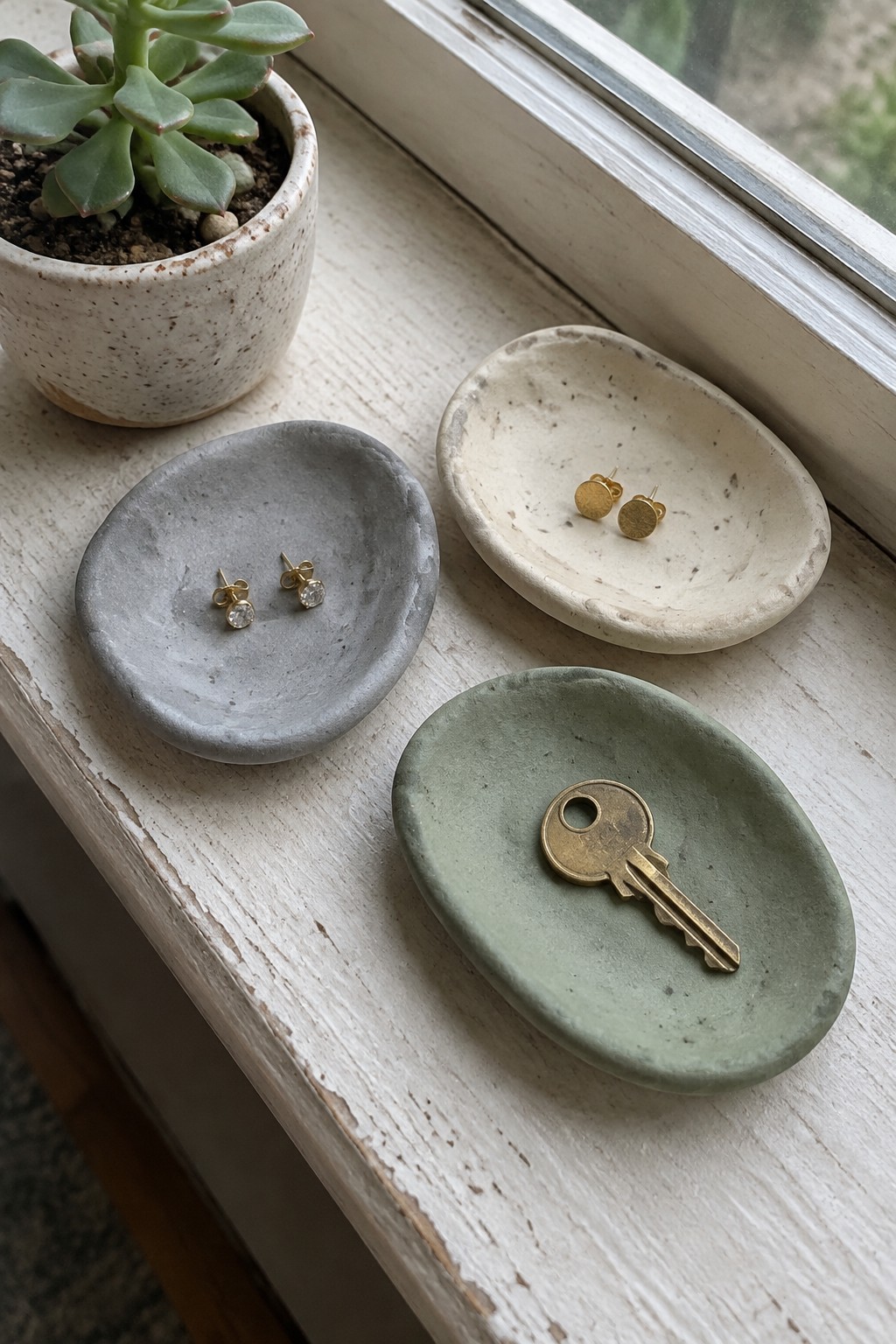
Air-dry clay trinket dishes are small hand-shaped holders for keeping everyday items together. This set pairs shallow, irregular dishes in gray, cream, and sage green with gold-tone earrings and a key, using muted colors and softly uneven edges to make the handmade forms stand out as decorative accessories.
The shallow shape is easy to adapt by changing the outline, size, or clay color, and beginners can keep the edges simple rather than adding detailed decoration. Make a few in different sizes for earrings, rings, or keys, or add subtle speckles to echo the textured finish; these dishes are for holding small objects, not serving food.
Seafoam Shell-Shaped Clay Trinket Dish

A hand-shaped clay trinket dish with a scalloped shell outline turns a small jewelry catchall into a decorative accessory. Its ridged interior and mottled seafoam-and-cream coloring echo the shell form, while the shallow shape suits holding small items such as rings and pendants.
The shell silhouette makes the design recognizable, and beginners can simplify it by shaping a shallow bowl with a few broad ridges and an uneven edge. Try different coastal colors or make the dish larger or smaller to suit jewelry, hair pins, or other small keepsakes; it should be kept for decorative storage rather than food.
Sunburst Clay Trinket Dish

A shallow, hand-shaped clay trinket dish has a warm terracotta-colored center and an uneven pale rim, with incised lines radiating from the middle like a sunburst. The simple sculpted pattern gives this decorative holder visual interest while leaving room for small jewelry such as rings and an earring.
The radial grooves make the design easy to adapt: a beginner could use fewer, wider lines, or vary their length and spacing for a different look. Try changing the center color or rim shade, or make the dish larger or smaller to suit different pieces of jewelry; it is a useful idea to save for a handmade gift or a small decorative accessory.
Mustard Speckled Clay Ring Dish

A shallow, rounded clay trinket dish with a raised cone in the center creates a simple place to set rings. Its mustard-yellow color and scattered white speckles give the handmade form a clear focal point, making it a decorative holder as well as a small jewelry dish.
The central cone makes rings easy to place and keeps this design distinct from a plain bowl-shaped dish. A beginner could simplify the speckles or use a different color, then adjust the dish size to hold a few rings or other small accessories; keep it for jewelry and decorative use rather than serving food.
Sleeping Cat Clay Trinket Dish

A hand-sculpted cat-shaped clay trinket dish combines a shallow bowl with a raised sleeping-cat face and ears. Its cream-colored surface, pink cheeks, and simple painted features make the animal shape easy to recognize while keeping the dish practical for holding small items such as earrings.
The cat silhouette gives a basic dish a distinctive outline, and the face can be simplified to a few painted lines and dots for an easier version. Try different colors or animal features, or make the dish larger for rings and hair clips, while keeping it decorative rather than using it to serve food.
Sage Green Leaf-Shaped Clay Trinket Dish

A hand-shaped clay trinket dish formed like a broad leaf makes a decorative place to keep small jewelry. Its muted sage-green surface, raised vein lines, and irregular scalloped edge give the dish a recognizable botanical shape without needing extra decoration.
The leaf outline is easy to adapt into a simple beginner project by keeping the shape broad and adding just a few vein lines. Try different green tones or make the dish larger or smaller to suit rings, earrings, or other small items; the same leaf motif could also be used for a purely decorative catchall.
Open-Book Clay Trinket Dish

An open-book-shaped clay trinket dish turns a familiar silhouette into a small place to keep rings, paper clips, or other loose items. Its cream-colored, page-like interior contrasts with the blue edges and hand-painted corner marks, while the shallow center fold makes the book shape easy to recognize.
The book form gives this dish more visual interest than a simple tray, and the painted details can be adjusted to suit a favorite color palette or made to look like a journal or sketchbook. For a simpler version, keep the shape rectangular and add a single painted border; making it smaller would also create a compact spot for rings or earrings.
Terracotta Sunburst Clay Trinket Dish

A hand-sculpted sunburst trinket dish pairs a shallow yellow center with terracotta-colored rays around the rim. Its uneven, carved-looking contours give the small dish a handmade look, while the sun shape makes it a decorative place to keep earrings or other small accessories.
The raised rays make the silhouette memorable, and they can be simplified into fewer, broader points for an easier version. Try changing the center and rays to different contrasting colors, or make the dish larger for roomier jewelry storage while keeping it decorative rather than using it for food.
Blue Speckled Oval Clay Trinket Dish

A shallow, irregular oval clay trinket dish has a soft blue-gray surface dotted with darker speckles. Its rounded raised edge keeps small jewelry pieces together, while the simple color and handmade contours make it a decorative dish for everyday accessories.
The speckled finish adds visual interest without requiring a complicated design, and the oval shape can be adjusted to fit a pendant, rings, or other small items. For a simpler version, use one clay color and add a few painted dots, or try a different color with a softly uneven rim.
Blue Cloud-Shaped Clay Trinket Dish

A hand-sculpted cloud dish turns a simple jewelry holder into a small decorative accessory, with a pale blue surface, scattered stars, and a sleepy face with pink cheeks. Its rounded, uneven contours suit the sky theme and give the dish room to hold small pieces such as stud earrings.
The cloud silhouette and painted details make the idea easy to adapt without changing its main concept: try different sky colors, swap the stars for dots or tiny moons, or simplify the face for a quicker version. Making the dish in a smaller or larger size could suit a few rings or a handful of jewelry, and the same design could also become a decorative catchall for a bedside table.
Terrazzo-Style Clay Trinket Dish for Keys
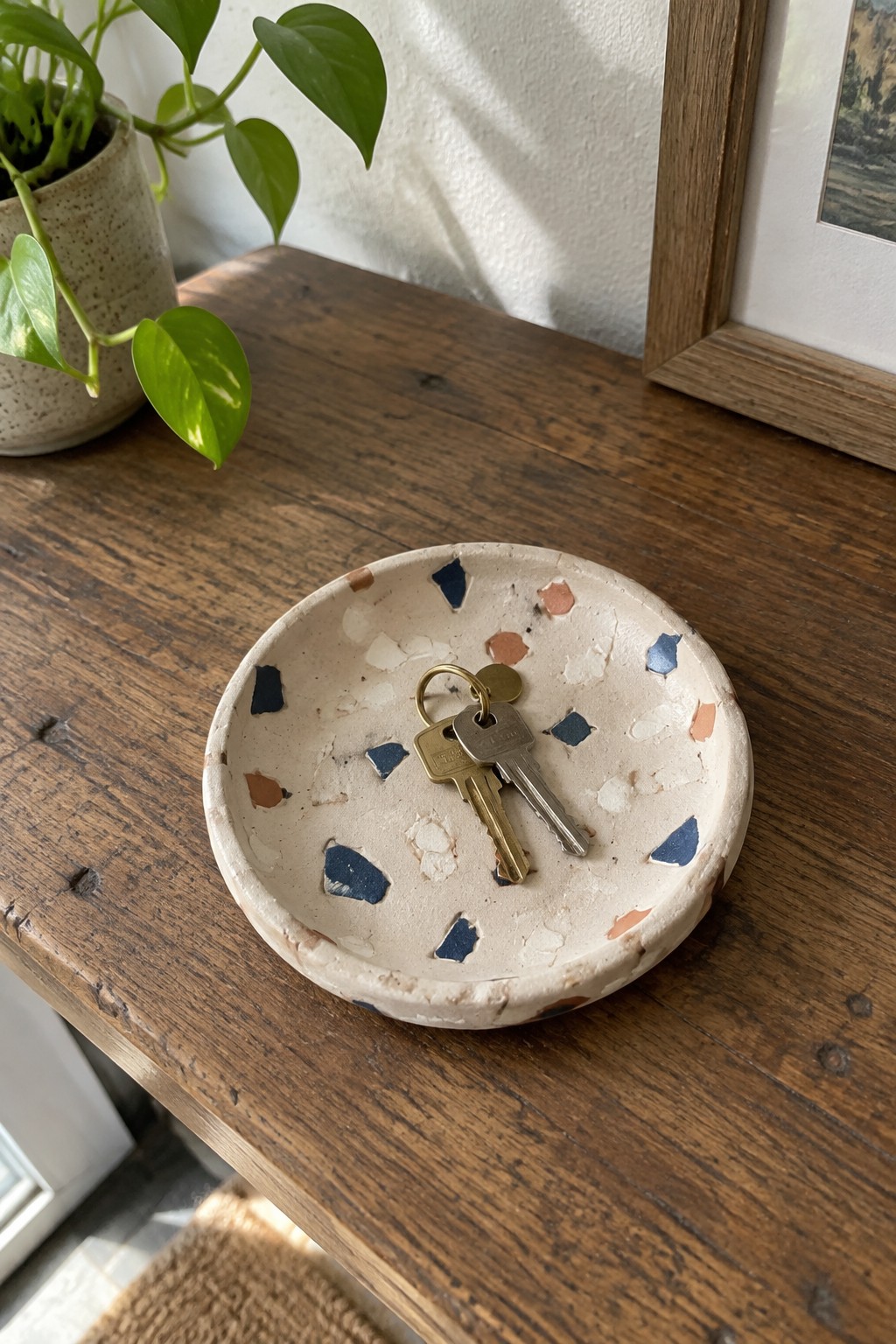
A shallow, round clay trinket dish with an irregular rim holds small everyday items such as keys and rings. Its cream surface is scattered with navy, rust, and pale fragments, creating a terrazzo-style pattern that makes this decorative catchall visually distinct.
The simple dish shape is easy to adapt with different colors, fragment sizes, or a gently wavy edge, and the same design could be scaled down into a ring dish. For a simpler version, use just two accent colors and leave more of the base plain, while keeping the dish for small accessories rather than food.
Red-and-White Mushroom Clay Trinket Dish

A handmade clay trinket dish shaped like a mushroom pairs a wide, red cap with white spots and a rounded stem-shaped base. The painted mushroom design turns a small jewelry holder into a decorative accessory, with its shallow bowl suited to holding rings or other small items.
The mushroom silhouette and simple spots make the idea easy to adapt: keep the dish plain and add a few painted dots, or change the cap color and spot pattern. Making the dish in a smaller or larger size could suit a few rings or a bigger collection of small accessories, while a simplified flat mushroom shape could become a decorative clay dish without the raised base.
Cream Clay Trinket Tray with a Blue Stripe

This shallow, rectangular clay trinket tray has softly rounded corners, raised edges, and a simple blue stripe running along one side. Its cream surface and hand-formed outline keep the design understated, while the painted line gives it a distinctive accent. It fits the category of a decorative clay dish for small accessories.
The long shape leaves room to separate a watch from a ring or other small items, and the stripe could be changed to a different color or pattern to suit the design. A beginner could keep the edges gently uneven and paint one simple line, then try a smaller version as a ring dish or a wider one for several accessories.
Teal Ring Dish with a Sculpted Ring Holder

This air-dry clay trinket dish pairs a shallow oval tray with a raised cone-shaped holder for displaying rings. Its handmade contours and teal exterior contrast with the pale interior, while the gold-toned ring around the holder adds a small accent to the simple sculpted design.
The raised holder keeps a ring upright and easy to spot, while the tray can hold a few more pieces of jewelry. For a simpler version, make a plain oval dish and add one tapered holder in a contrasting color, or vary the tray shape and colors to suit the jewelry it will hold.
Pink Rosebud Clay Trinket Dish
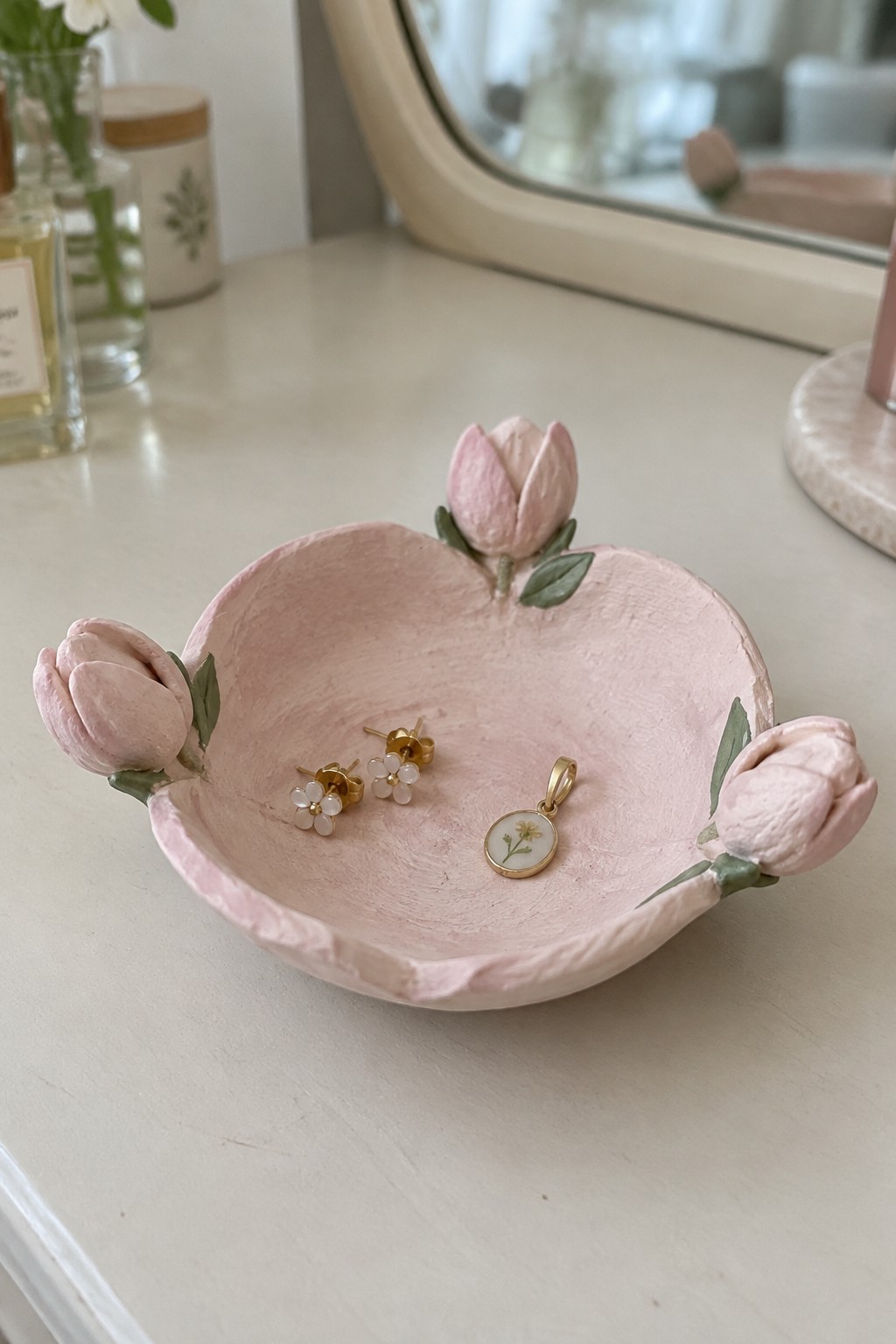
A hand-sculpted clay trinket dish uses a soft pink, shallow bowl shape with raised rosebuds and green leaves around the rim. The floral details turn a simple dish for small jewelry into a decorative flower-themed accessory.
The rounded bowl is a useful starting shape, while the attached buds provide a clear focal point that could be simplified to one flower for an easier version. Try different petal and leaf colors, or make a smaller dish with the same rosebud border for holding earrings and a pendant.
Woven-Look Clay Trinket Dish for Keys

A shallow, round air-dry clay trinket dish with a raised rim and a woven-looking surface turns a simple catchall into a textured decorative accessory. Its warm natural color and handmade contours suit an entryway dish for keys or small jewelry.
The basket-like pattern gives the dish visual interest without needing painted details, and a beginner could simplify it with a smooth center and a textured rim. Try a smaller version for rings or change the shape to an oval while keeping the woven motif; it’s an easy concept to adapt to different spaces and uses.
Pinecone-Shaped Clay Trinket Dish
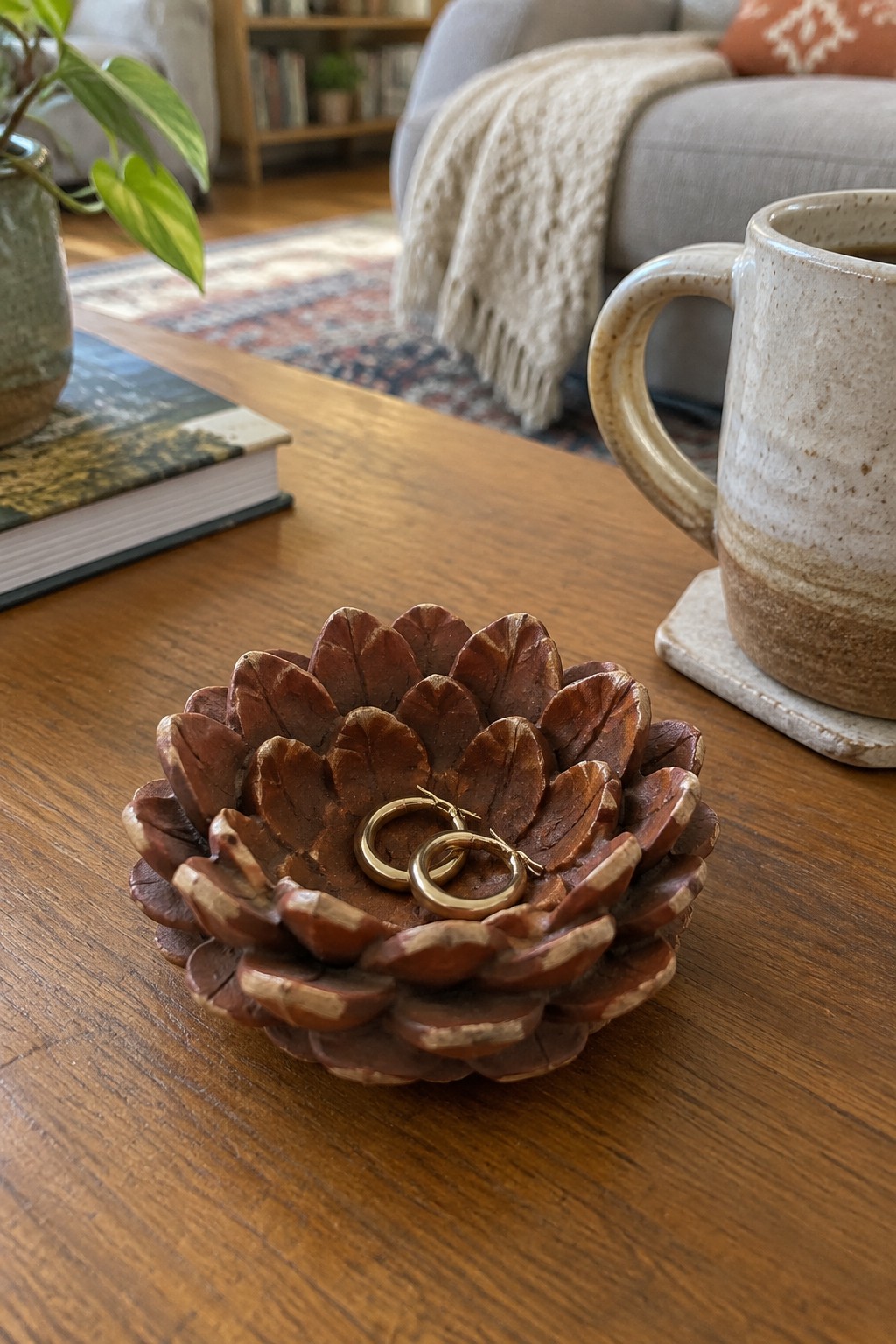
This hand-sculpted clay dish uses overlapping pinecone-like scales to form a shallow bowl for small items such as rings. Its layered brown pieces create a distinctive natural texture, making it a decorative trinket dish as well as a miniature sculptural project.
The repeated scale shapes make the design memorable, though arranging them into a full dish takes more detail than a simple pinched bowl. For an easier version, use fewer, larger scales around a small center, or change the colors to create a stylized pinecone or flower-like pattern.
Three-Color Wavy Clay Trinket Dish

A hand-shaped clay trinket dish uses three wavy sections of seafoam green, cream, and coral to create a color-blocked design. Its shallow, organic form gives separate spots for rings and earrings, making it a decorative accessory holder rather than a food dish.
The flowing color boundaries give the dish its distinctive look, and you could adapt the layout with other muted or contrasting colors. For a simpler version, make one shallow dish and divide it into three broad color areas, or scale it down for a compact ring dish; it’s a useful design to save if you want jewelry storage with a sculpted, handmade look.
Frequently Asked Questions
You’ll need air-dry clay, a smooth work surface, a rolling pin, and a small bowl or other rounded object to shape the dish. A craft knife, clay tools, or household items such as toothpicks and bottle caps can add details. Keep a little water nearby to smooth the clay, and use acrylic paint and a suitable sealer after it dries if you want a colorful or more durable finish. Check your clay’s package instructions, since products can differ.
Roll the clay to an even thickness, usually around ¼ inch, and avoid making the center much thinner than the rim. Smooth cracks with a fingertip lightly dampened with water, but don’t add too much, since excess moisture can weaken the clay. Let the dish dry slowly on a flat surface, turning it occasionally if the instructions recommend it. Avoid placing it near a heater or in direct sunlight, which can make it dry unevenly.
Drying time depends on the clay brand, the dish’s thickness, and the room’s humidity. Many pieces need at least 24 to 72 hours, and thicker projects may take longer. Let the dish dry completely before painting or sealing it. If it still feels cool or damp, give it more time and follow the manufacturer’s guidance.
No. Air-dry clay dishes are generally intended for decorative use, not for serving food or holding water. Paint and craft sealers do not automatically make them food-safe or waterproof. Use your finished dish for dry items such as rings, earrings, keys, or paper clips, and check product labels before applying any coating.
Try simple designs that don’t require special tools: press lace, leaves, or textured fabric into the clay; make a scalloped edge with a toothpick; or add small clay dots, stripes, or a stamped initial. You can also paint the dried dish with acrylics. For a tidy finish, let the paint dry fully and apply a clear sealer according to its instructions.
