


I like how a small clay dish can give keys, earrings, or other little treasures a place to land.
Slab building makes it easy to play with simple shapes, from soft curves to crisp geometric edges.
I’ve gathered ideas with different colors and details, so you can find a look that suits your space.
Here are 18 trinket dish designs to inspire your next clay project.
Leaf-Shaped Clay Trinket Dish

A hand-sculpted leaf-shaped clay trinket dish turns the broad outline and raised central vein of a leaf into a shallow catchall for small jewelry. Muted green and warm ochre painted across the uneven surface bring out the vein-like details, while the irregular rim keeps the dish visibly handmade. It fits naturally among decorative clay dishes for holding rings or other small items.
The leaf silhouette gives the dish its visual interest, so a simpler version can use a single paint color and just a few incised veins. Try different leaf outlines or soft color combinations, and vary the size to suit rings, earrings, or other small keepsakes. The design is also easy to adapt into a purely decorative clay leaf if you want to keep the sculpted form without making a dish.
Crescent Moon Clay Trinket Dish

A crescent-shaped clay trinket dish pairs a deep blue inner surface with a pale, speckled rim and small star details. The curved silhouette gives this handmade decorative dish a clear night-sky theme while leaving a shallow space for small items such as rings or earrings.
The crescent outline is the main feature, so you could simplify the stars or make them in different sizes without losing the idea. Try other color combinations, or adapt the same silhouette into a larger decorative dish or a small wall decoration; the hand-shaped edges keep each version distinct.
House-Shaped Clay Trinket Dish

A hand-sculpted clay trinket dish shaped like a small house turns a simple catchall into a miniature architectural scene. Its shallow, terracotta-colored roof forms the dish, while the cream walls, tiny chimneys, painted windows, and front door create a clear house motif. It fits well as a decorative holder for small items such as keys or jewelry.
The house silhouette makes the idea memorable, and the painted details can be simplified to a door and a few windows if you want an easier version. Try different roof and wall colors, or make the dish larger for more room or smaller as a desktop accent; just keep its use decorative rather than for food.
Wavy Green-Edged Clay Trinket Dish

A hand-shaped clay trinket dish with an irregular, softly ruffled rim makes a simple slab-built form feel more sculptural. Its pale surface and muted green edge keep the look understated, while the shallow bowl is suited to holding small jewelry or other keepsakes as a decorative accessory.
The wavy outline is the main design feature, so the dish can stay plain inside and still look distinctive. You could vary the rim’s curves, add a different muted color along the edge, or make a smaller version for earrings; a simpler shape with just a few gentle waves would be easier to form.
Marbled Scalloped Clay Trinket Dish

A hand-sculpted clay trinket dish pairs a shallow, scalloped shape with swirling pink, teal, and cream colors. Its uneven, flower-like rim gives the small dish a defined silhouette, while the marbling makes the surface the main decorative feature. This is a decorative trinket dish for holding small items such as rings or earrings.
The wavy edge and marbled pattern can be adapted without changing the basic dish shape: try a smoother rim, fewer colors, or a more defined color swirl. A smaller version could hold a couple of rings, while a larger one could make a decorative catchall; either way, treat it as a display dish rather than a food-serving piece. The contrast between the sculpted outline and flowing colors makes this idea easy to recognize and save for a future clay project.
Painted Five-Petal Clay Flower Trinket Dish

A shallow clay trinket dish shaped like a five-petal flower turns a simple jewelry holder into a sculpted floral craft. Alternating pale yellow and lavender petals frame a textured yellow center, making the handmade contours and color contrast the main features of the design.
The flower shape gives rings and other small accessories a few separate resting spots, while the raised center adds a distinctive detail. For a simpler version, use one color for all five petals or make the center smooth; you could also change the flower’s size or colors to suit a gift or display.
Geometric Patchwork Clay Trinket Dish

A shallow, rectangular clay trinket dish gets its visual interest from a patchwork of triangular shapes in teal, mustard yellow, and coral, with coordinating strips around the raised rim. The crisp color blocks create a pinwheel-like pattern across the base, making this handmade dish a decorative place to keep small jewelry or loose accessories.
The repeated triangles make the design memorable, and the pattern could be simplified to fewer, larger color blocks if you want an easier version to plan. Try changing the palette or making the dish smaller for rings and earrings, or larger for a bedside catchall; the same patchwork idea could also decorate a flat clay tile.
Scalloped Shell Clay Trinket Dish

A hand-shaped clay trinket dish with a scalloped, shell-like outline turns a small catchall into a decorative accessory for jewelry and keepsakes. Cream and sandy tones emphasize the raised ridges, while the irregular rim gives the dish a sculpted look without needing extra ornament.
The shell shape is easy to adapt by changing the size or making the edge more or less wavy, and a few painted lines can bring out the ridges. A simpler version could use a plain cream finish, while a larger dish or a different color palette would make the same idea suit a range of small decorative uses.
Coral and Mint Striped Clay Trinket Dish

A shallow oval clay trinket dish gets its look from raised, irregular stripes in coral, mint, and off-white. The layered colors continue across the rim and sides, making this handmade dish a colorful place to keep small jewelry such as stud earrings.
The stripe pattern is easy to adapt by changing the colors, varying the band widths, or leaving some areas plain. A simpler version could use fewer stripes, while a larger dish could hold rings or other small accessories; the same palette would also suit a matching set of decorative dishes.
Textured Rose Clay Trinket Dish
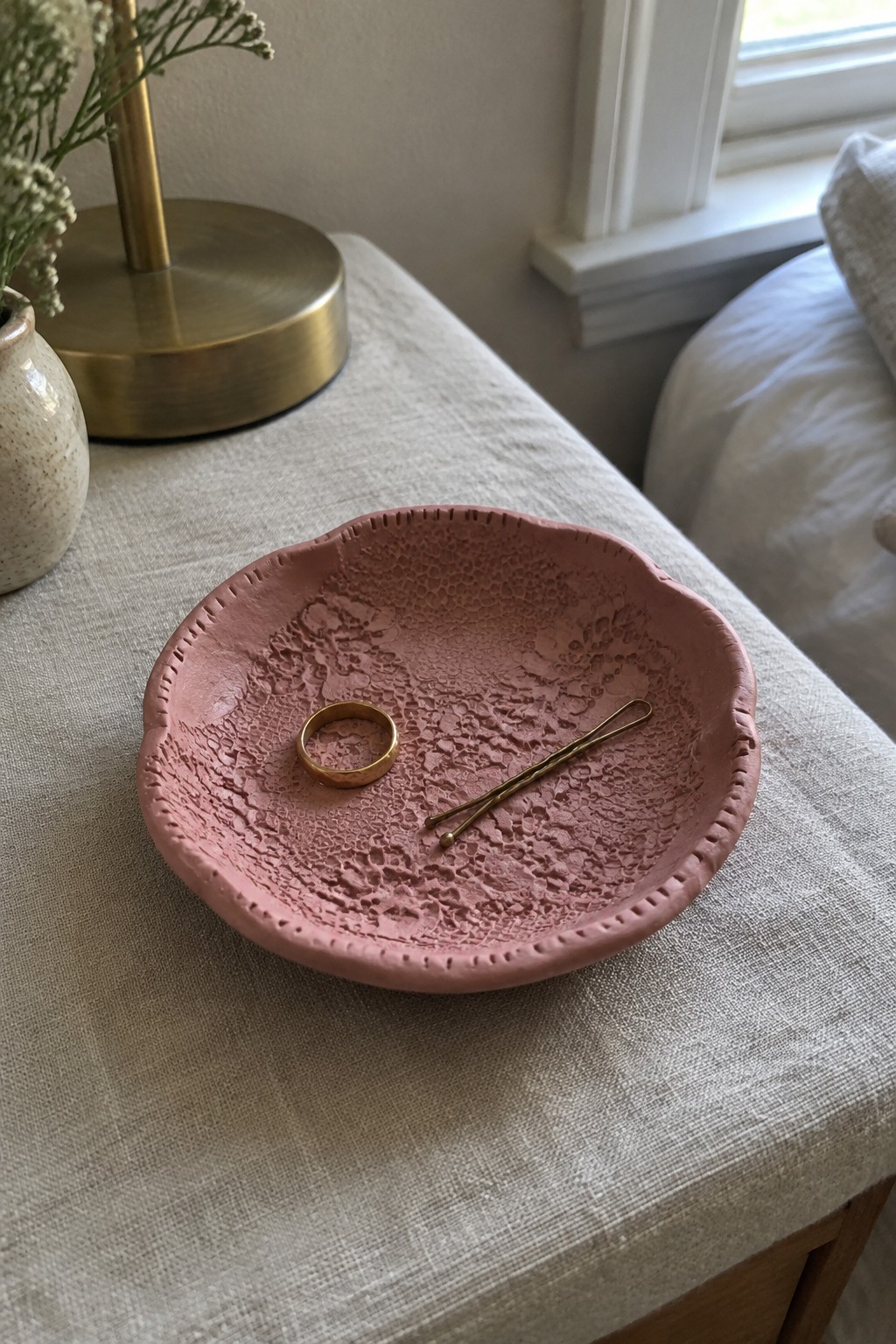
A shallow, hand-shaped clay trinket dish uses a dusty rose color and an uneven, textured interior to hold small jewelry such as a ring and hairpins. The softly irregular rim and pressed-looking surface give this small decorative accessory more visual interest than a plain smooth dish.
The textured center is the main feature, so you could keep the shape simple and still make the dish distinctive. Try a different muted color, add a lightly patterned rim, or make a few sizes for rings, earrings, and other small items; a simpler version could use a single texture across the dish.
Orange-Slice Clay Trinket Dish
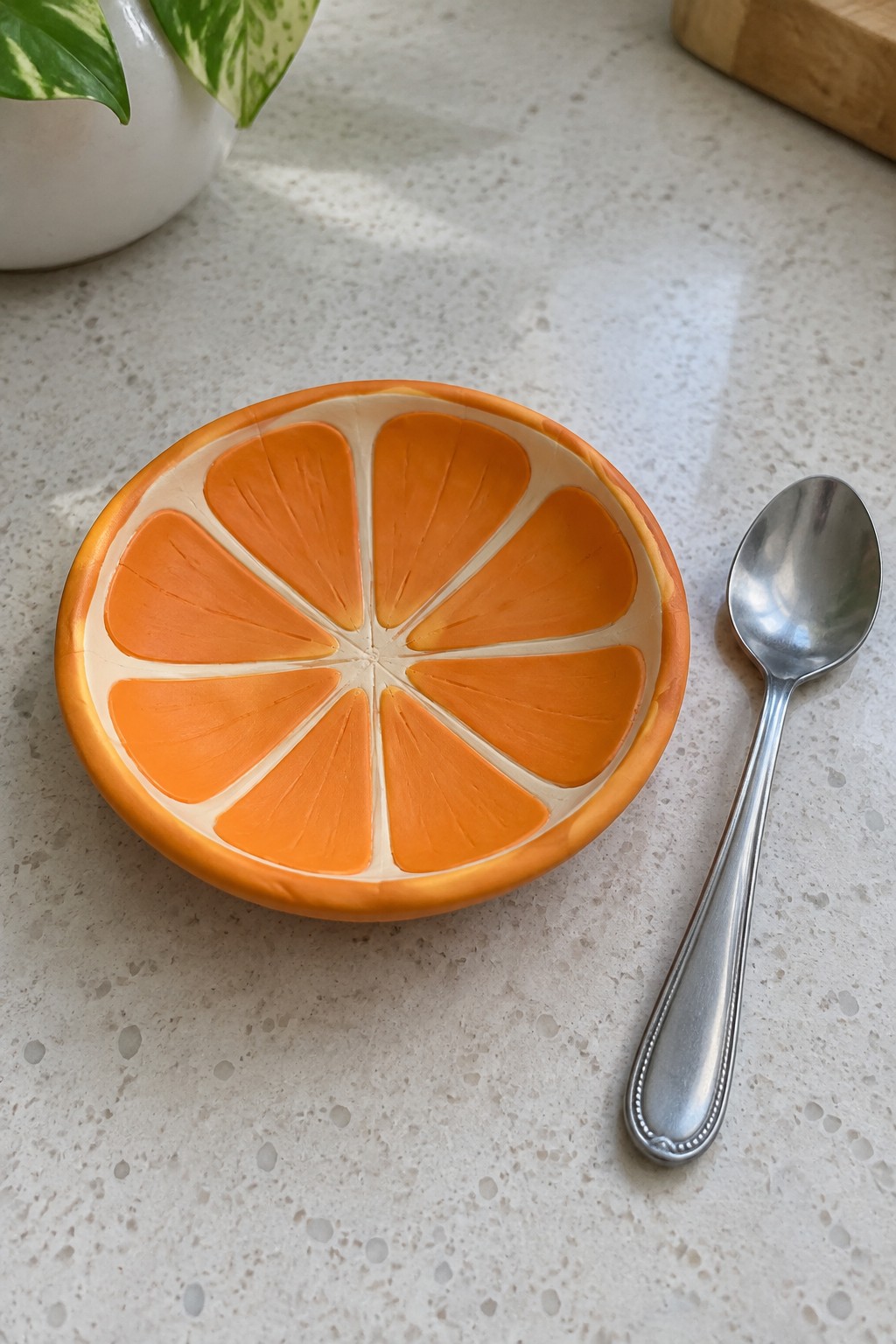
An orange-slice clay trinket dish uses a round fruit cross-section as its design, with sculpted segments separated by pale clay lines and a bright orange rim. The citrus colors and handmade contours make the dish recognizable as a decorative trinket dish without needing extra embellishment.
The segmented pattern is the main feature, so you could simplify it to fewer wedges or use a lemon, grapefruit, or watermelon color palette. Make the dish larger or smaller to suit the trinkets you want to hold, or keep it miniature as a decorative piece or handmade gift.
Three-Section Clay Trinket Dish

A hand-shaped clay trinket dish with three connected, rounded compartments keeps small items sorted while giving the piece a simple sculptural form. The gray, ivory, and terracotta colors distinguish each section, making this a decorative holder for jewelry and keys rather than a food-serving dish.
The three-part layout is easy to adapt by changing the number or shape of the compartments, or choosing colors that suit a room or gift recipient. A simpler version could use two connected sections, while a larger one could provide separate spots for rings, earrings, and other small accessories.
Pastel Flower Clay Trinket Dish

A shallow, square clay trinket dish pairs a softly marbled base with raised flowers and leaves clustered along one corner. The handmade floral details and muted pink, cream, and sage palette give this decorative dish a clear focal point while leaving most of the center open for small jewelry.
The corner arrangement keeps the design distinctive without covering the dish’s useful surface, and it could be adapted with different flower shapes, colors, or a round base. For a simpler version, add just one sculpted flower and a few leaves, or make the dish smaller for rings and earrings.
Fern-Printed Clay Trinket Dish

A shallow, hand-formed clay trinket dish uses a fern imprint as its main decoration, with muted green tones that bring out the leaf’s fine shape against the pale surface. The oval form keeps the botanical design visible while giving the dish room to hold small jewelry or other keepsakes.
The fern motif is easy to adapt with a different leaf shape or a single color, and the uneven rim can stay simple or be shaped more deliberately. Making the dish larger or smaller changes its use, while the same botanical imprint could decorate a wall piece or another small clay accessory.
Stacked Pastel Clay Trinket Dishes

A set of shallow, hand-shaped clay trinket dishes in muted green, peach, and blue makes a simple jewelry holder feel more decorative. The softly irregular oval rims and stacked arrangement create visual interest while keeping each dish useful for holding small items such as rings.
The separate dishes can be made in different sizes and colors, or given gently wavy edges for more variation. A simpler version could use plain ovals with one dish nested inside another, making the set easy to adapt as a small handmade gift or a decorative place to keep everyday jewelry.
Star Map Clay Trinket Dish

A shallow, hand-formed clay trinket dish uses gold stars, fine constellation lines, and small celestial details to create a night-sky design. Its pale surface keeps the pattern easy to see, while the irregular rim gives this decorative jewelry holder a handmade look.
The constellation pattern can be adapted with different star arrangements, moon shapes, or metallic and painted accents, and the dish can be made larger or smaller to suit the pieces it will hold. For a simpler version, add just a few stars and one constellation, keeping the open center clear for rings, earrings, or a necklace.
Color-Blocked Checkerboard Clay Trinket Dish
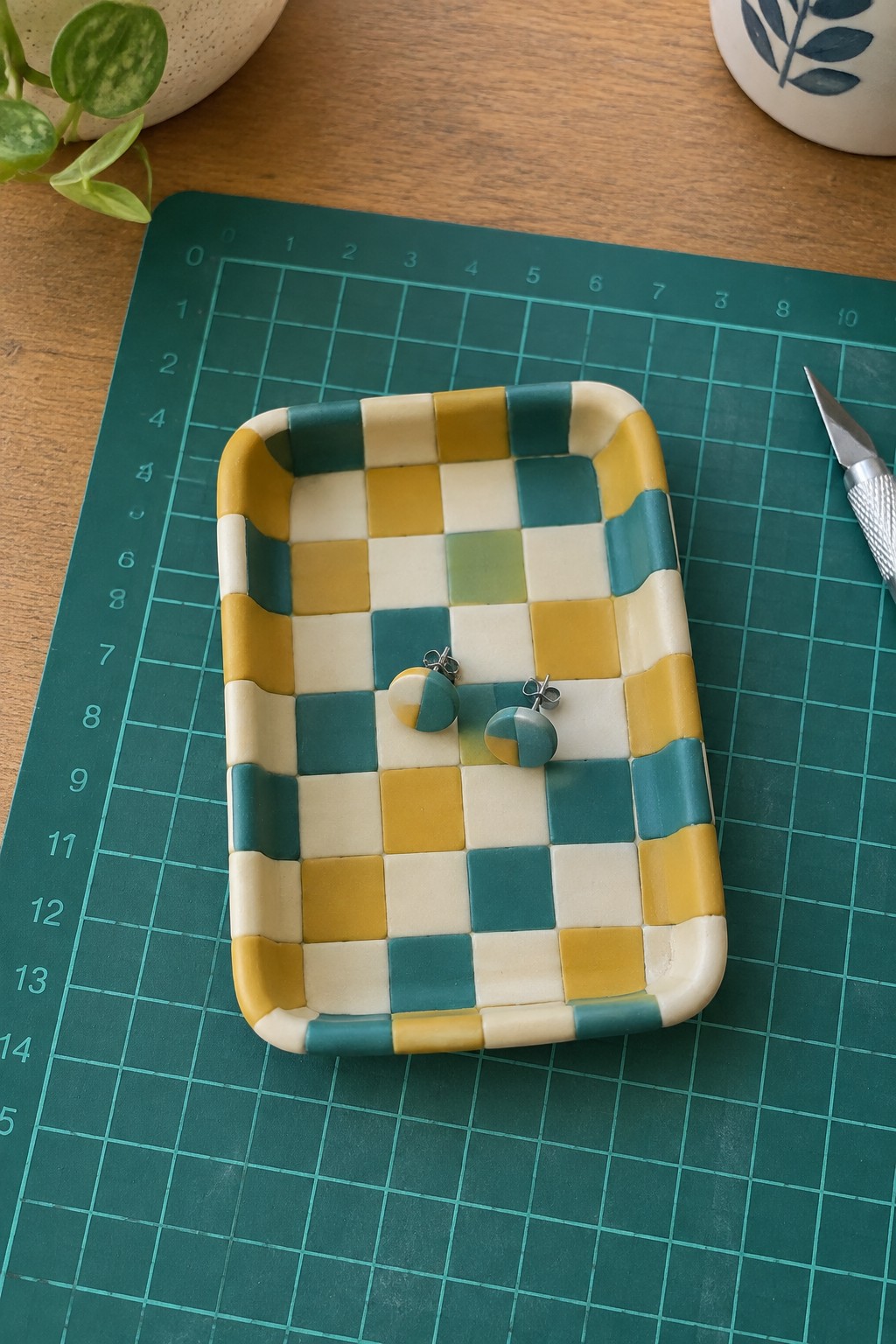
A shallow, rounded-rectangle clay trinket dish pairs a checkerboard base with larger color-blocked sections along its raised rim. Teal, mustard yellow, and cream create a bold patchwork pattern, with a muted green square adding a subtle variation. The handmade dish fits the functional decorative accessory category and can hold small items such as earrings.
The repeating squares make the design memorable, while the rounded shape and limited palette keep the pattern easy to adapt. For a simpler version, use two or three colors and fewer blocks, or vary the square sizes for a looser look; the same patchwork idea could also decorate a small tray or another decorative holder.
Hand-Formed Clay Key and Ring Dish
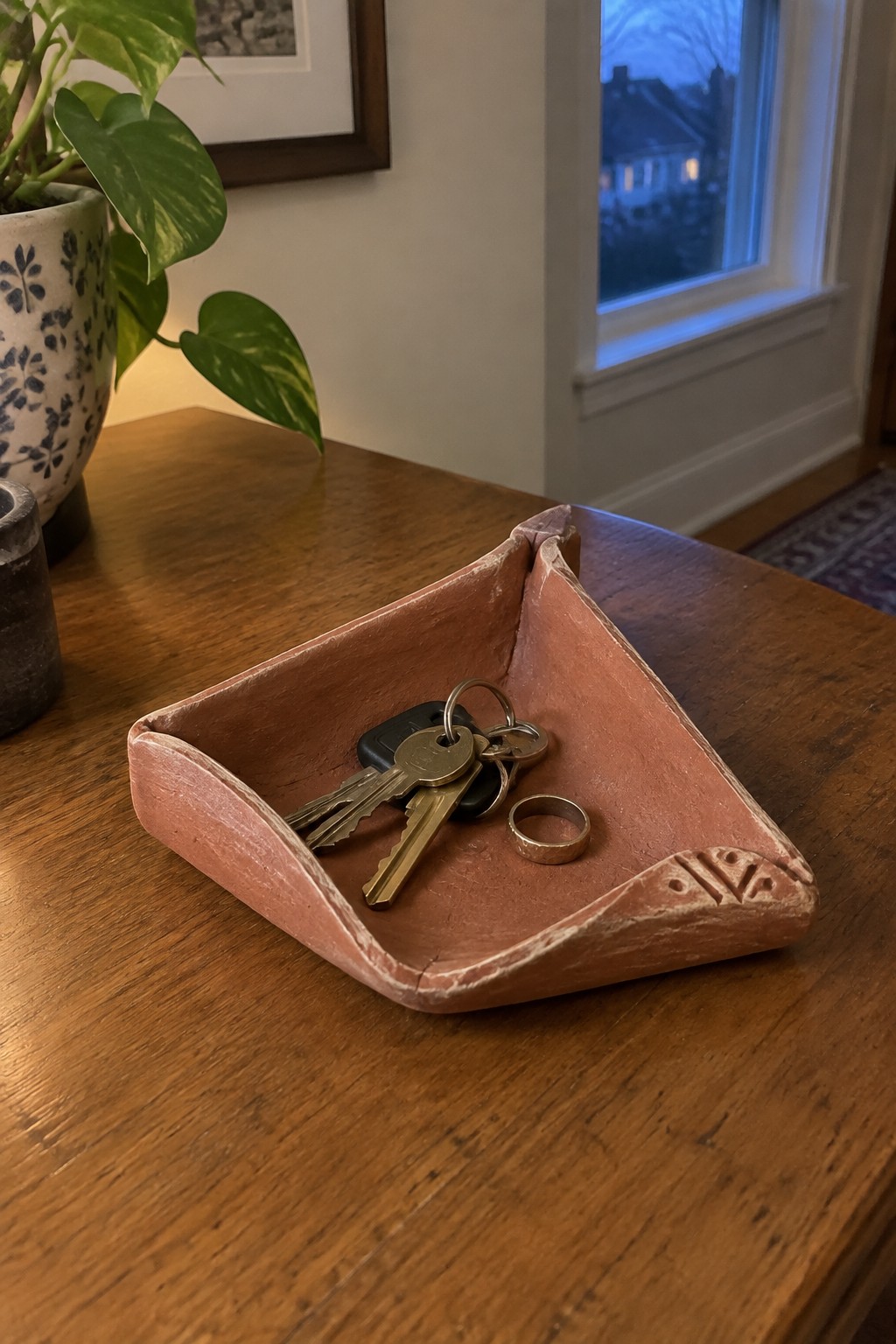
A shallow, square clay trinket dish with uneven raised sides keeps everyday keys and a ring together. Its warm terracotta color, hand-formed contours, and small incised motif on one corner give this functional clay accessory a rustic, handmade look.
The broad, simple shape is easy to adapt into a smaller ring dish or a larger catchall, while the corner motif could be changed to a leaf, dots, or initials. For a simpler version, keep the sides plain and focus on shaping the dish; contrasting clay colors could also make the decoration stand out.
Frequently Asked Questions
Slab building is a handbuilding technique that starts with rolled-out sheets of clay. You can cut the clay into shapes, drape it over a mold, or join pieces to create a dish. It’s especially useful for trinket dishes because it makes it easy to experiment with silhouettes, textures, and raised details without needing a pottery wheel.
Choose a clay body that matches your kiln and intended finish. Earthenware, stoneware, and porcelain can all work, but they fire at different temperatures. Basic tools include a rolling pin or slab roller, thickness guides, a needle tool or craft knife, a rib or scraper, and a sponge. For added interest, try lace, leaves, stamps, or other materials that can press patterns into the clay.
Roll the slab to an even thickness, and avoid making one area much thinner than another. Compress both sides of the slab gently with a rib, then let the dish dry slowly and evenly. If you shape it over a mold, remove it when the clay is firm enough to hold its form but still slightly flexible. Follow your clay manufacturer’s instructions for drying and firing, and avoid rushing the process.
Press textures into the clay while it is soft, using tools such as stamps, carved rollers, fabric, or botanical materials. You can also add clay details, including handles, feet, borders, or small sculpted shapes. Score and add slip where pieces join, then smooth the seams. After the dish dries and is fired, underglaze, glaze, or ceramic stains can highlight its design. Make sure any glaze is suitable for your clay body and firing temperature.
Not necessarily. Many trinket dishes are designed for jewelry, coins, keys, or other small objects, so food safety may not be a concern. If you want to use a dish for snacks or candy, use a glaze labeled food-safe, fire it to the correct temperature, and make sure the finished surface is smooth, intact, and easy to clean. Avoid using pieces with cracks, sharp edges, or glaze that is not intended for food contact.
