


I like how a simple piece of clay can become a small animal with just a few hand-shaped details.
For this collection, I’ve gathered ideas for sculpting everything from familiar pets to playful little creatures.
Some keep their shapes simple, while others use color and small features to give each animal its own character.
I hope these hand-shaped animal ideas help you find a clay sculpture to make your own.
Sleeping Fox Curled in an Acorn
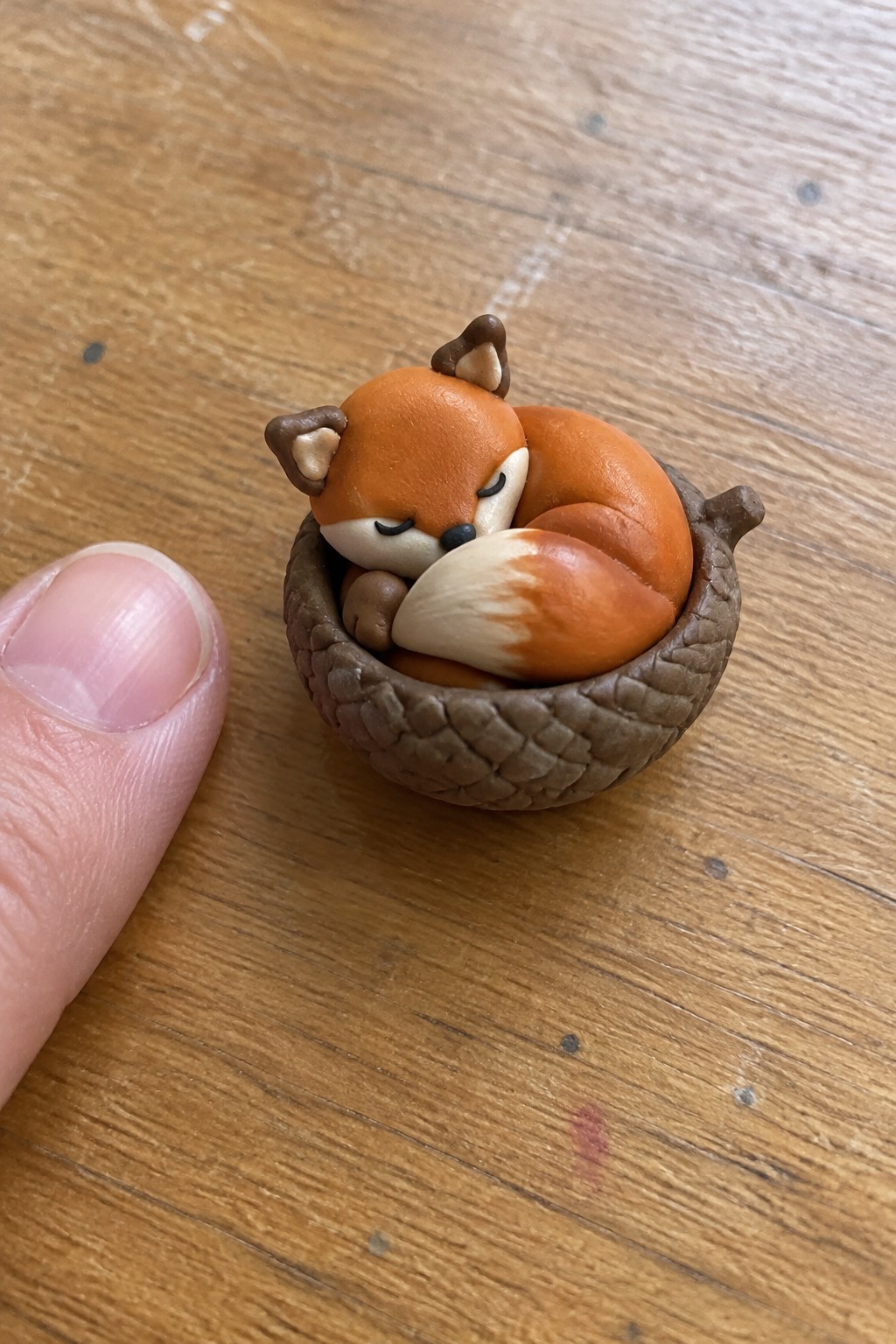
This miniature clay animal sculpture features a sleeping orange fox curled inside a brown, textured acorn. Its cream-colored face and tail tip, tiny dark features, and tucked-in paws make the compact shape easy to read while giving the design a clear woodland theme.
The curled body and acorn setting create a distinctive silhouette that could be adapted with different fox colors, leaf details, or another small woodland animal. Keeping the face and paws simple would make a smaller version easier to sculpt, while a larger one could include more texture on the acorn shell; it works best as a decorative miniature or handmade gift.
Hedgehog Clay Trinket Dish

A hand-sculpted hedgehog trinket dish combines a shallow cream-colored tray with a raised ring of sculpted brown and cream spines. Its gray face and small dark features give the decorative clay dish a clear animal shape while leaving space in the center for rings or other small items.
The hedgehog silhouette makes this idea easy to recognize, and the raised spines provide room to vary the colors and shapes. You could simplify the face and use fewer spines for a smaller version, or make the dish wider to hold more jewelry; it could also be adapted into a purely decorative miniature by leaving out the open tray.
Handmade Clay Animal Magnets
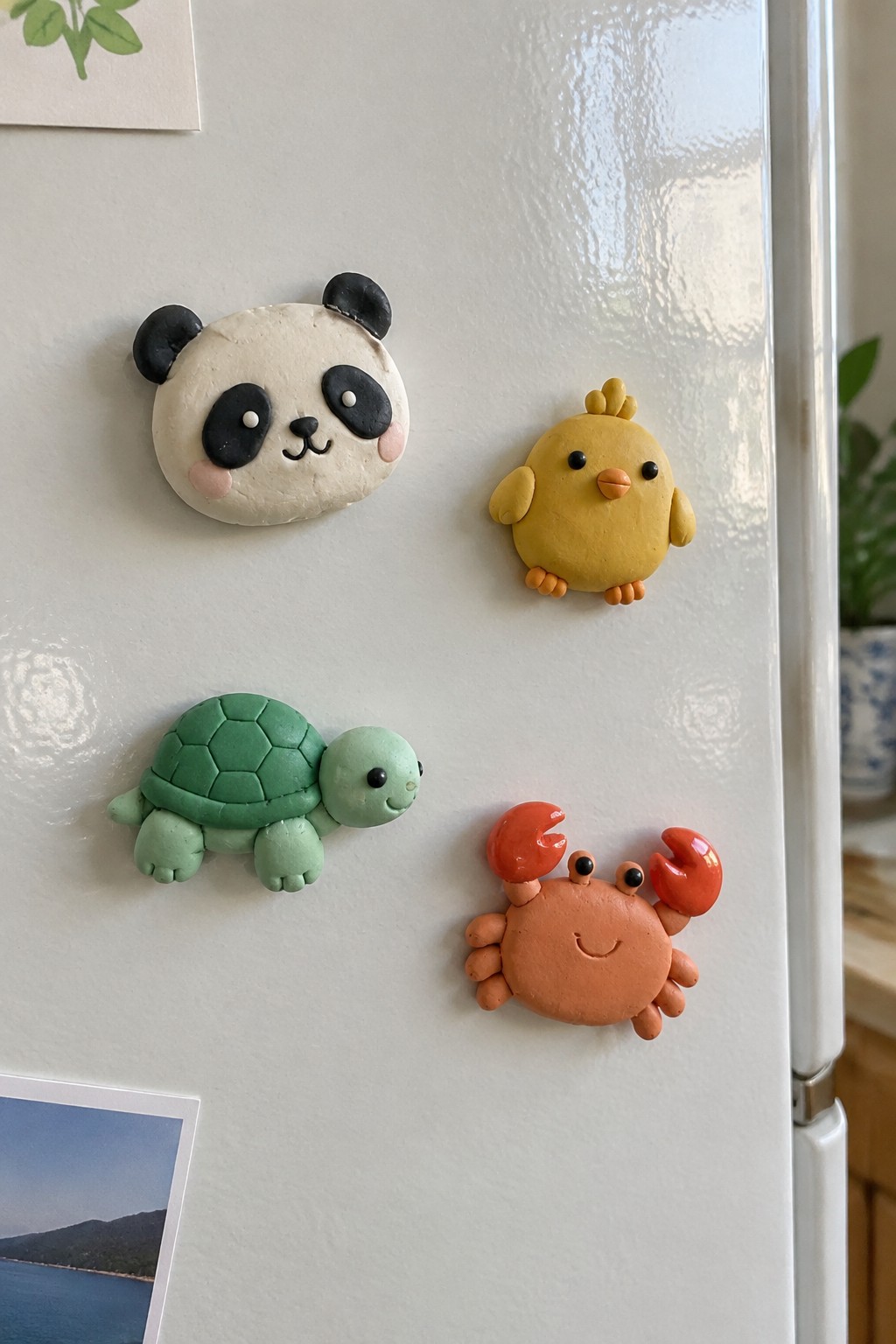
Hand-sculpted animal magnets turn simple rounded forms into a set of small refrigerator decorations. A panda, chick, turtle, and crab each use a distinct silhouette, color combination, and a few raised details to make the animal recognizable without a lot of fine features. The project fits miniature animal sculpture and decorative clay craft.
The simple body shapes make the idea easy to adapt: keep the features minimal for a simpler version, or add details such as the turtle’s shell pattern and the crab’s claws for more definition. Making the animals in a coordinated set, or changing their colors and expressions, gives you room to create a collection or a small handmade gift. Add magnets only if the clay pieces and attachment method are suitable for that use.
Hand-Shaped Robin Wall Ornament

A hand-sculpted clay robin makes a simple wall ornament with its rounded bird silhouette, raised beak, and painted rust-orange breast against a taupe and cream body. Short incised feather marks and a curved closed eye add detail without taking away from the bold shape, making this an animal craft that reads clearly at a small scale.
The rounded outline is a useful starting point for adapting the design into other birds, with different breast colors, feather marks, or painted expressions. A simpler version could use a plain body and just a beak and eye, while a more detailed one could add wing patterns; the hanging loop makes the finished piece easy to display as a seasonal ornament or year-round wall decoration.
Pink and White Clay Bunny Earrings

These miniature clay bunny sculptures are made as a matching pair of stud earrings, with rounded bodies, upright pink-and-white ears, small tails, and simple facial details. The soft color contrast and compact animal shapes make them recognizable as rabbits while keeping the design suitable for a small clay jewelry accessory.
The rounded forms and minimal faces offer a clear template to adapt with different ear positions, colors, or tiny painted details. You could simplify the features for a more basic version, or make a larger pair as decorative miniatures, but check that each finished piece is appropriately secured to its earring finding before wearing.
Whale-Shaped Clay Planter

A hand-sculpted whale planter turns an animal figure into a decorative holder for a small potted plant. Its rounded blue-green body, simple face, side fin, and raised tail make the whale shape easy to recognize, while the leafy plant adds height and contrast.
The whale’s broad body gives the design its shape, so a simpler version could use fewer details and a smaller fin or tail. Try other colors or plant sizes, or adapt the animal form into a decorative holder without a plant; the clear silhouette also makes the idea easy to save as inspiration for a handmade gift.
Striped Clay Cat Bag Charm

This hand-sculpted clay cat charm has a rounded orange body, dark stripes, cream-colored paws and muzzle, and a raised tail, with a small metal loop for hanging. Its compact animal-figurine shape and contrasting sculpted details make it a recognizable decorative accessory.
The curved tail and simple face give the design clear features that could be adapted into other cat colors or different animal patterns. For a simpler version, use fewer stripes and larger, less detailed features, then keep the charm small for a bag or key ring.
Hanging Clay Woodland Animal Mobile

A handmade clay mobile turns simple animal face sculptures into a hanging decoration, with a fox, rabbit, bear, owl, whale, and lamb arranged at different heights beneath a wooden ring. Their rounded shapes, muted painted colors, and small facial details give the set a consistent look while keeping each animal easy to recognize. It fits the decorative animal sculpture and hanging ornament categories.
The varied silhouettes make the mobile visually interesting, and the same idea could be adapted with a smaller group of animals or simpler painted features. You could change the animal choices and colors to suit a nursery, classroom, or seasonal theme, or make individual pieces as ornaments instead. The layered arrangement is a useful detail to save if you want a clay project that combines several small sculptures into one display.
Hand-Sculpted Clay Sea Turtle Family
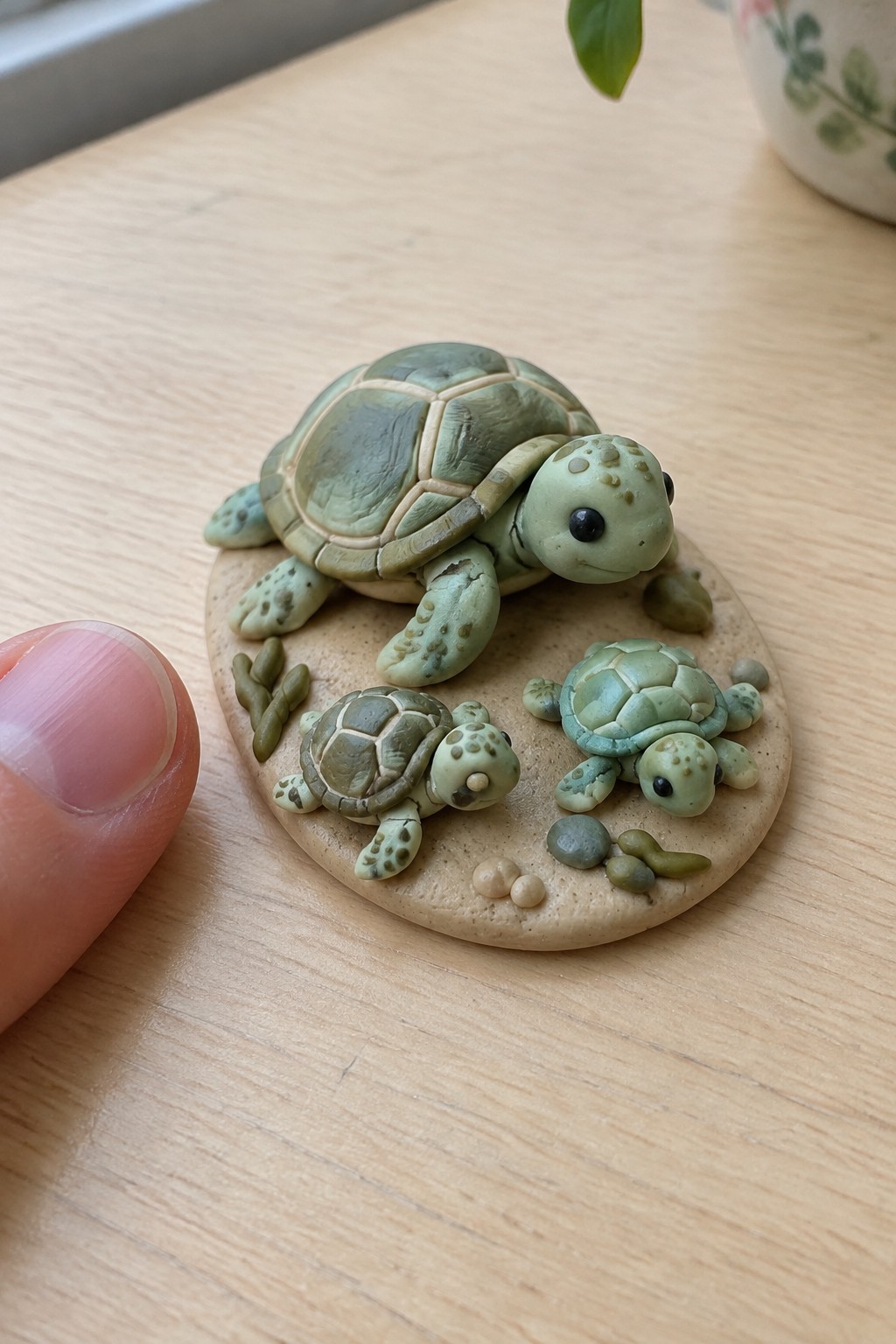
A hand-sculpted clay scene of a large sea turtle with two smaller turtles and pebble-like details makes a miniature animal sculpture. Muted greens and sandy beige, along with the segmented shells and spotted flippers, give the group clear detail without needing a large scale.
The separate turtle sizes make the scene easy to adapt: simplify the shell sections and spots for a smaller version, or add more turtles and change their colors for a larger group. It works as a decorative miniature or a handmade gift, and the family arrangement makes it a memorable project to save for sculpting practice.
Hand-Sculpted Animal Pencil Toppers

These small clay animal sculptures turn ordinary pencils into decorative accessories, with a sleeping koala, a smiling whale, and a round hedgehog as the main motifs. Their distinct silhouettes, muted colors, and simple facial details make each topper recognizable while keeping the pencils usable for writing.
The pencil-topper format is easy to adapt by changing the animal, colors, or small sculpted features, such as the whale’s tail or the hedgehog’s textured back. A simpler version could use one rounded animal shape and just a few facial details, while making a set in different sizes would suit a handmade gift or a collection of school supplies.
Hand-Painted Clay Animal Plant Stakes
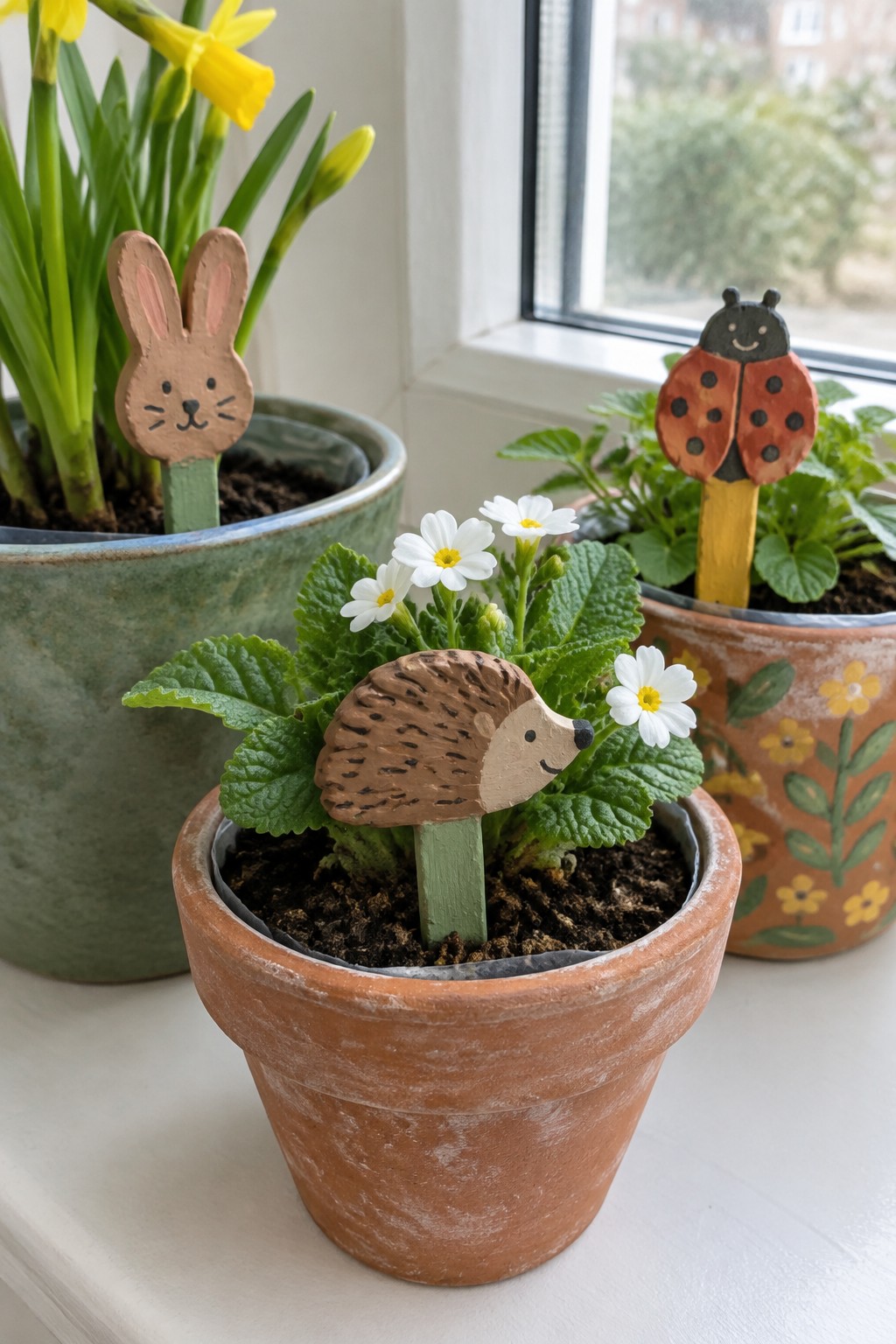
Hand-shaped clay animals turn simple plant stakes into small decorative garden markers. A bunny, ladybug, and hedgehog have rounded silhouettes, painted facial features, and contrasting colors that stand out among the leaves and flowers, making this a playful clay animal craft for potted plants.
The flat, simplified shapes make each animal recognizable without needing many fine details, and the designs could be adapted with other garden creatures or different color combinations. Make one as a small accent or create a matching set for several pots, keeping the painted designs simple if you want an easier version.
Reading Mouse Beneath a Red Mushroom

This miniature clay scene pairs a hand-sculpted gray mouse reading a tiny book with a tall red-and-white mushroom. The mouse’s rounded features and the mushroom’s contrasting cap, pale gills, and stem give the figurine clear shapes and color without losing the small details that make it distinctive.
The mushroom provides a natural backdrop for the seated animal, so the idea could be adapted with another small creature, a different book color, or a mushroom in muted woodland shades. A simpler version could use a less detailed mouse and fewer ground decorations while keeping the same reading-under-a-mushroom concept; the finished miniature would suit a decorative shelf or a handmade gift.
Hand-Painted Clay Woodland Animal Ornaments

These small clay ornaments turn simple animal shapes into a coordinated holiday set: a curled fox, a scarf-wearing reindeer, and a penguin in a red hat. Their rounded forms, muted painted colors, and small details such as the scarves and antlers make each figure distinct while keeping the set visually consistent.
The hanging loop makes each sculpture ready to display on a tree or seasonal branch, and the same idea could be adapted with other woodland animals or different scarf and hat colors. For a simpler version, use a basic rounded body and just a few painted features, then make each ornament a different animal while keeping the same small scale and color palette.
Hand-Shaped Clay Bunny Ring Holder

A rounded clay base with two upright, pink-tipped ears makes a simple bunny-shaped ring holder. Its hand-shaped contours and soft cream-and-pink colors keep the design recognizable without adding facial details, while the ears provide places to display rings as a decorative accessory.
The tall ears give this small sculpture its distinctive silhouette, and the ring placement can be adjusted to suit different sizes or styles of jewelry. A simpler version could use one ring on each ear, while changing the ear colors or shaping the base into a smaller or wider form offers easy variations for a handmade gift.
Clay Fox, Whale, and Sunflower Animal Decorations

These small hand-sculpted clay decorations combine two animal figures, a fox and a spotted whale, with a smiling sunflower that has attached leaves and feet. Their rounded shapes, simple painted faces, and contrasting colors make each design readable at a small scale, while the mix of animal and flower motifs gives the set a playful, collectible quality.
The shapes can be simplified by forming each figure from a few broad pieces and keeping the facial details minimal. You could make just one animal, swap in different colors or markings, or turn the sunflower into another character; the finished pieces could be displayed as miniature sculptures or adapted into decorative magnets.
Hand-Sculpted Clay Snail Figurine

A hand-sculpted clay snail figurine turns the animal’s coiled shell into the main visual feature, with a raised body and simple eye stalks completing its shape. The shell’s earthy terracotta and cream patches give the decorative animal sculpture a worn, mottled look without relying on extra ornament.
The large spiral makes the design recognizable, so a simpler version could use a smoother shell and fewer surface marks while keeping the same rounded form. Try different shell colors or make several snails in varied sizes for a small decorative collection.
Blue Whale Clay Bag Charm

A small hand-sculpted whale makes a playful clay charm, with a rounded blue body, white belly, simple painted face, and raised tail. The metal loop turns the miniature animal into a decorative accessory, while the contrasting colors and oversized tail make its silhouette easy to recognize.
The compact shape keeps the idea manageable to adapt: simplify the face, change the whale’s color, or add small painted markings while keeping the body and tail as the main features. You could make it as a bag charm or create a larger whale figurine for display.
Clay Animal Heads on a Picture Frame

A hand-sculpted clay decoration can turn the side of a wooden picture frame into a vertical display of small woodland animal faces. The cat, fox, hedgehog, bird, and rabbit use rounded forms, painted features, and varied colors and textures to make each miniature distinct while keeping the arrangement cohesive.
The narrow frame edge gives several animal sculptures a clear place to sit without taking attention away from the landscape print. You could use a different mix of animals, simplify the faces to basic shapes, or make fewer, larger figures to suit another frame; this idea could also be adapted into a decorative plaque.
Frequently Asked Questions
Simple, recognizable animals are great for beginners. Try a curled-up cat, a sitting dog, a turtle, a fish, or a bird. Start with basic shapes, such as a ball for the body and smaller pieces for the head, legs, or fins. Add a few distinctive details, like pointed ears, a shell pattern, or a beak, rather than trying to sculpt every feature perfectly.
Keep your clay at an even moisture level while working, and avoid making one part much thicker than another. Attach separate pieces by scoring both surfaces, applying a little water or clay slip, then pressing them together firmly. Smooth the join with a fingertip or tool. Follow the clay’s instructions for drying or firing, since rushing the process can lead to cracks. For air-dry clay, let the finished sculpture dry slowly and evenly.
You can make many animal sculptures with just clay, your hands, and a little water. A wooden skewer or toothpick can add eyes, fur marks, scales, and other small details. A plastic knife or craft stick is useful for shaping and trimming. If you plan to paint the sculpture, check whether your clay needs to be fired first and choose paints or sealants that are suitable for the finished material.
Focus on the animal’s most recognizable features. Give a rabbit long ears, a turtle a clear shell, or a bird a distinct beak. Look at reference photos to notice the body’s proportions and posture. A simple pose and a few carefully placed details often look more convincing than lots of tiny decorations. You can also use texture, such as short lines for fur or small marks for feathers, to add character.
Choose a pose, expression, or color scheme that reflects the animal’s personality. Add a small accessory, such as a collar, scarf, flower, or painted pattern, or sculpt a pair of animals as companions. You could also turn the sculpture into a practical keepsake by adding a name, date, or small base. If you are making it with children, let them choose the animal’s colors and details so each piece feels individual.
