


I like how a little paint can give a plain decorative pot a look that feels more personal.
For this collection, I’ve gathered ideas ranging from simple patterns to playful designs that can brighten a shelf, windowsill, or tabletop.
Some are subtle, while others use bolder colors and details to make the pot stand out.
Here are 20 clay painting ideas to help you find a style that suits your space.
Painted Clay Planter With Broad Brushstrokes

A handmade clay planter gets its decorative look from broad, uneven bands of muted terracotta, cream, and blue-green paint. The simple rounded form keeps the hand-painted pattern as the focus, making this a functional decorative accessory rather than a miniature sculpture.
The brushstrokes do not need to be perfectly even, so you can adapt the pattern with a few sweeping shapes and a limited palette. Try different color combinations or vary the planter’s size to suit a windowsill or shelf, keeping it intended for plants rather than food use.
Floral Clay-Banded Decorative Pot

A hand-sculpted clay flower band turns a plain tapered pot into a decorative planter, with raised roses, small buds, and green leaves arranged around its middle. The coral and soft pink flowers stand out against the muted foliage and unpainted pot, while their rounded, handmade contours give the design depth.
The flower band is the main feature, so you could simplify it by making a few larger roses and leaves instead of filling the whole circumference. Try different flower colors or make the same floral motif as a clay border for a small decorative pot; varying the pot size would also change how dense the arrangement feels.
Face-Shaped Clay Planter With a Succulent

A rounded clay planter with closed eyes, a raised nose, and painted blush turns a simple plant pot into a handmade face sculpture. The muted cream surface and green succulent keep the design calm, while the sculpted features give it a clear decorative character.
The raised facial details make the idea memorable, and the main shapes can be simplified to a nose, curved eyes, and two painted cheeks. Try different expressions or cheek colors, or make smaller versions as decorative holders for other small plants; the face motif could also be adapted into a standalone clay ornament.
Colorful Mosaic-Band Clay Planter
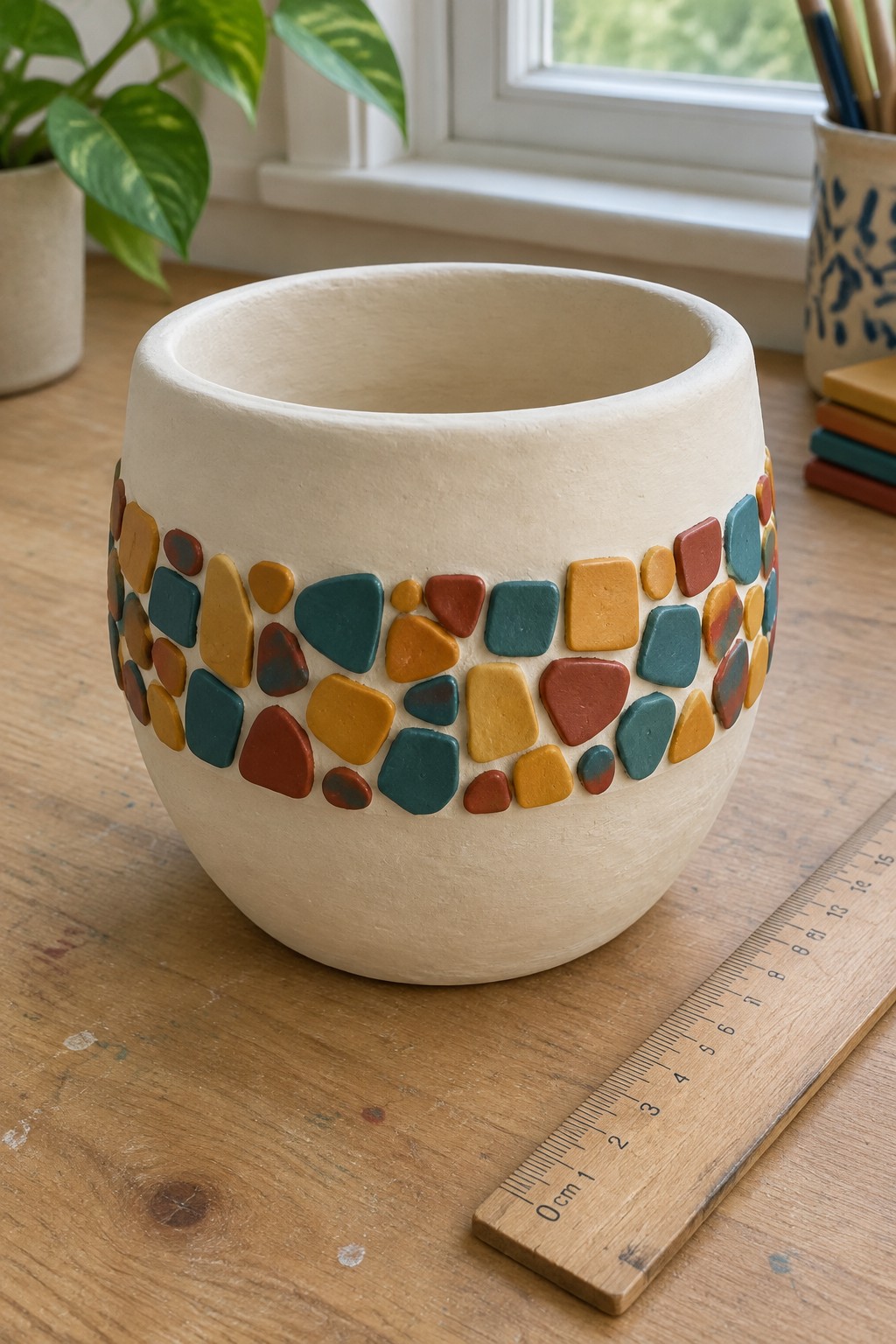
A hand-sculpted clay planter gets its defining detail from a band of small, irregular clay pieces in teal, ochre, and rust. The contrast between the simple rounded pot shape and the raised, varied-color pattern makes this a distinctive decorative clay project, with a tactile mosaic look.
The mosaic band can be adapted with fewer, larger pieces for a simpler version, or arranged in several rows for a busier pattern. Try different color combinations or make the planter in a smaller size to suit a shelf or windowsill, keeping it decorative rather than using it as a food container.
Clay Planter With Pressed Leaf Imprints

A handmade clay planter can be decorated with leaf impressions and muted green coloring for a natural, botanical look. The rounded, slightly irregular form and raised leaf details give this decorative planter visual texture without covering the whole surface in paint.
The leaf motif is easy to adapt by changing the leaf shapes, arranging them in a border, or using a different color palette. You could make the planter larger or smaller, or carry the same pressed-leaf idea onto a clay pot cover or decorative container; a simpler version could use just one or two leaves.
Clay Planter With Colorful Hanging Charms

A handmade clay planter gets a playful border from small painted charms attached around the rim. The mix of flat round pieces and tiny fruit-like shapes in mustard, olive, and terracotta gives the plain, textured pot a clear focal point, making this a decorative clay accessory rather than just a painted pot.
The separate charms make the idea easy to adapt: use simple discs for a beginner version, or add small fruit, leaves, or other shapes for more detail. Varying the colors and charm sizes can create a coordinated look for different pots, and the same dangling motif could also be made as a small clay garland or hanging ornament.
Pastel Clay Flower Pot

A hand-shaped clay pot gets its decoration from sculpted flowers attached around the rim, turning a simple planter form into a floral clay craft. The raised pink, pale yellow, and muted blue petals stand out against the softly brushed green surface, while the dotted centers add small painted details.
The repeated flowers make the design easy to adapt: use fewer blooms for a simpler version, or change their colors and petal shapes to create a different pattern around the rim. It could be made in several sizes as a decorative planter, with the flower motif also suited to a smaller clay pot or other decorative holder.
Fruit-Adorned Blue Clay Cup

A hand-sculpted clay cup becomes a decorative object with raised fruit details arranged over its pale blue surface. Red cherries, orange slices, green leaves, and a yellow pear create a colorful miniature-sculpture motif that stands out against the cup’s simple shape and uneven handmade rim.
The fruit could be changed to match a season or favorite color palette, or simplified to a few larger shapes for an easier version. Keep the piece as a display cup, or adapt the same raised-fruit idea for a small decorative pot or pencil holder.
Hand-Coiled Clay Planter With Earthy Painted Bands

A hand-coiled clay planter gets its texture from raised, uneven bands wrapped around the pot, with terracotta, cream, and muted green paint emphasizing the handmade contours. The mix of earthy colors and ridged surface turns a simple plant container into a decorative clay project that can be displayed with a houseplant.
The irregular bands make this design memorable without requiring detailed painted motifs, and the color pattern can be changed to suit a room or plant. A simpler version could use fewer, wider coils and two paint colors, while a smaller pot would make a manageable decorative gift.
Miniature Clay Cottage Planter With Succulent

A small hand-sculpted clay planter shaped like a cottage turns a decorative pot into a miniature scene. Its terracotta-colored roof, blue windows, green door, and planted succulent give the rounded house form clear details without making the design feel crowded, so it fits both decorative planter and miniature sculpture ideas.
The cottage shape is memorable but can be simplified by using a plain house form and adding just a roof and painted windows. You could change the door and roof colors, add a different small plant, or make the design at a larger scale for a tabletop display; the cat, mushroom, and tree figures nearby could also inspire matching miniature clay decorations.
Geometric Color-Block Clay Planter

A handmade clay planter can become a decorative accent with a simple geometric painting scheme. Rounded blocks of mustard yellow and muted teal, separated by thin black lines on a warm cream base, give the pot a balanced, graphic look while letting its handmade contours remain visible.
The design is easy to adapt by changing the block shapes, colors, or number of dividing lines, and a simpler version could use two painted shapes instead of several. Keep it as a decorative planter, or make a smaller version as a painted clay pot cover to suit a shelf or tabletop.
Clay Animal Planters With Sleeping Foxes and a Hedgehog

Small hand-sculpted animal figurines turn these painted clay pots into decorative animal planters. A curled fox with a white-tipped tail and a textured hedgehog rest across the pot rims, while simple white plant motifs tie the earthy brown pots together. The contrast between the smooth animal shapes and the hedgehog’s raised texture gives each pot its own distinct look.
The animal figures are the main feature, so you could simplify the project by making just one fox or hedgehog and using fewer details. Try changing the animal, pot color, or painted motifs to create a matching set, or make the figurines separately as small display pieces. These pots are best treated as decorative planters rather than food-use vessels.
Swirled Neutral Clay Planter

A hand-shaped clay planter gets its distinctive look from broad, flowing bands of cream and gray that curve across its rounded sides. The uneven rim and subtle surface contours keep the painted pattern from feeling too uniform, making this a decorative clay craft that pairs well with a simple succulent.
The marbled effect can be adapted with two or three muted colors, or made bolder with contrasting shades while keeping the same sweeping pattern. For a simpler version, paint a few wide curved bands instead of blending many smaller swirls, and try the design on a smaller decorative pot or a larger planter.
Clay Planter With a Raised Floral Pattern Band

A handmade clay planter gets its visual interest from a band of small raised squares decorated with daisies and concentric geometric shapes. The warm yellow body and blue, orange, and cream details create a clear contrast, making the planter a colorful decorative clay craft rather than a plain plant pot.
The repeating band is easy to adapt by changing the motifs, colors, or number of decorated sections to suit a different pot size. For a simpler version, use fewer clay squares and repeat one flower or geometric design, or turn the same patterned band into decoration for a small clay container.
Textured Clay Planter With Raised Floral Motifs

A hand-sculpted clay planter gets its visual interest from a rough, earthy surface covered with raised flower and leaf motifs. The uneven rim and carved-looking texture keep the botanical pattern from feeling too regular, making this a decorative clay container with a distinctly handmade look.
The raised details make the design memorable, while a simpler version could use just a few larger flowers against a lightly textured surface. Try different earthy shades or add small painted accents to vary the pattern, and make the planter larger or smaller to suit a shelf or tabletop display; keep it decorative rather than using it as a food container.
Clay Planter With a Two-Row Mosaic Band

A handmade clay planter gets a colorful accent from two rows of rounded, tile-like pieces in muted pink, mustard, cream, and olive green. The wide, unpainted upper and lower sections keep the mosaic band as the focal point, making this a decorative clay planter with a simple, graphic design.
The repeated tile shapes make the pattern easy to adapt: use fewer pieces for a simpler band, or vary their size and colors for a less regular look. You could also carry the same mosaic idea onto a small decorative pot or another clay vessel, adjusting the band’s width to suit the shape.
Pastel Polka-Dot Clay Planter

A hand-shaped clay planter gets its pattern from raised, rounded dots in soft pink, mint, lavender, and blue, set against a natural cream-colored surface. The uneven contours and handmade texture keep the orderly rows of dots from feeling too formal, making this a decorative clay pot with a simple, cheerful motif.
The repeated dots are easy to adapt by changing their size, spacing, or colors, and a simpler version could use just one or two rows. Make the pot taller or smaller to suit a different plant, or carry the same raised-dot pattern onto a decorative holder or clay container.
Succulent Cascade Clay Planter

A hand-sculpted clay planter gets its decoration from a cluster of small succulent forms arranged to spill down one side. The muted green, blue, pink, and purple rosettes contrast with the pot’s softly textured, earthy surface, making this a floral clay craft that combines a decorative container with miniature plant sculpture.
The cascading arrangement is the main idea to adapt: use fewer, larger rosettes for a simpler version, or add small trailing shapes to fill gaps between them. Changing the palette or placing the cluster along the rim instead could give the planter a different look, and the same sculpted succulent motif could be made as a separate decorative piece.
Green Clay Planter With Sculpted Jack-O’-Lanterns

A hand-shaped clay planter gets a seasonal border from small orange and cream pumpkins with painted jack-o’-lantern faces. The contrast between the muted green pot and the raised, individually sculpted pumpkin decorations makes this a recognizable Halloween-themed clay craft and a decorative planter.
The pumpkin row is the main feature, so you could simplify the project by using fewer pumpkins or painting simple faces on flatter shapes. Try different pumpkin colors, vary the expressions, or make a smaller version as a decorative holder; the repeating border also gives you an easy design to adapt for other seasonal motifs.
Hand-Painted Landscape Clay Planters

These small clay planters feature hand-painted landscapes, with a coastal view, rolling green hills, and a desert scene wrapped around their rounded sides. The contrasting palettes and simple painted details make each pot read like a miniature landscape, fitting the category of decorative planters.
The landscape motif is easy to adapt across different pot sizes, or to a single pot painted with a scene that continues around its sides. For a simpler version, choose one landscape and use a few broad color areas, then add small details like clouds, hills, or cacti; making a set with different scenes keeps the designs varied while tying them together.
Frequently Asked Questions
Acrylic paint is a popular choice because it comes in many colors, dries quickly, and works well for decorative designs. For unglazed terracotta, you can usually apply acrylic paint directly after cleaning and drying the pot. If your pot is glazed or especially smooth, lightly sand the surface and use a primer made for ceramics or multi-surface projects so the paint adheres better.
Sealing is a good idea if you want to protect your design from scratches, moisture, and fading. Once the paint is completely dry, apply a clear sealer that suits the pot’s intended use. A water-resistant sealer can help protect the exterior, but it does not automatically make the pot safe for outdoor exposure or food use. Follow the product instructions, and keep the sealer away from the inside if the pot will hold edible plants.
First, remove any dust, dirt, labels, or loose material. Wash the pot if needed, then let it dry completely. A dry surface helps paint apply evenly and adhere properly. For designs that need crisp edges, use painter’s tape or a stencil, and make sure the pot is clean before you begin.
Simple designs can look polished without requiring special artistic skills. Try color-blocked sections, painted rims, polka dots, stripes, scalloped edges, abstract arches, or a small repeating leaf pattern. Use painter’s tape for straight lines, a stencil for consistent shapes, or the end of a pencil to make neat dots. Limiting your palette to two or three colors can also help the finished pot feel coordinated.
You can use them outdoors, but sun, rain, and temperature changes may wear down the paint over time. Choose exterior-suitable acrylic paint and a compatible outdoor sealer, and allow each layer to dry as directed. Keep in mind that unglazed terracotta absorbs water, so moisture can affect the finish from underneath. For longer-lasting color, place the pot in a sheltered spot or use it as a decorative outer cover for a separate plant pot.
