


I like how a few raised details can give a simple clay mug its own personality.
Sculpted leaves, little animals, and playful shapes can make each design feel thoughtful without being too fussy.
I’ve gathered ideas with a mix of styles, so there are plenty of details to inspire your own version.
Here are 18 whimsical clay mug ideas to browse for your next creative project.
Sculpted Moon and Star Clay Mug
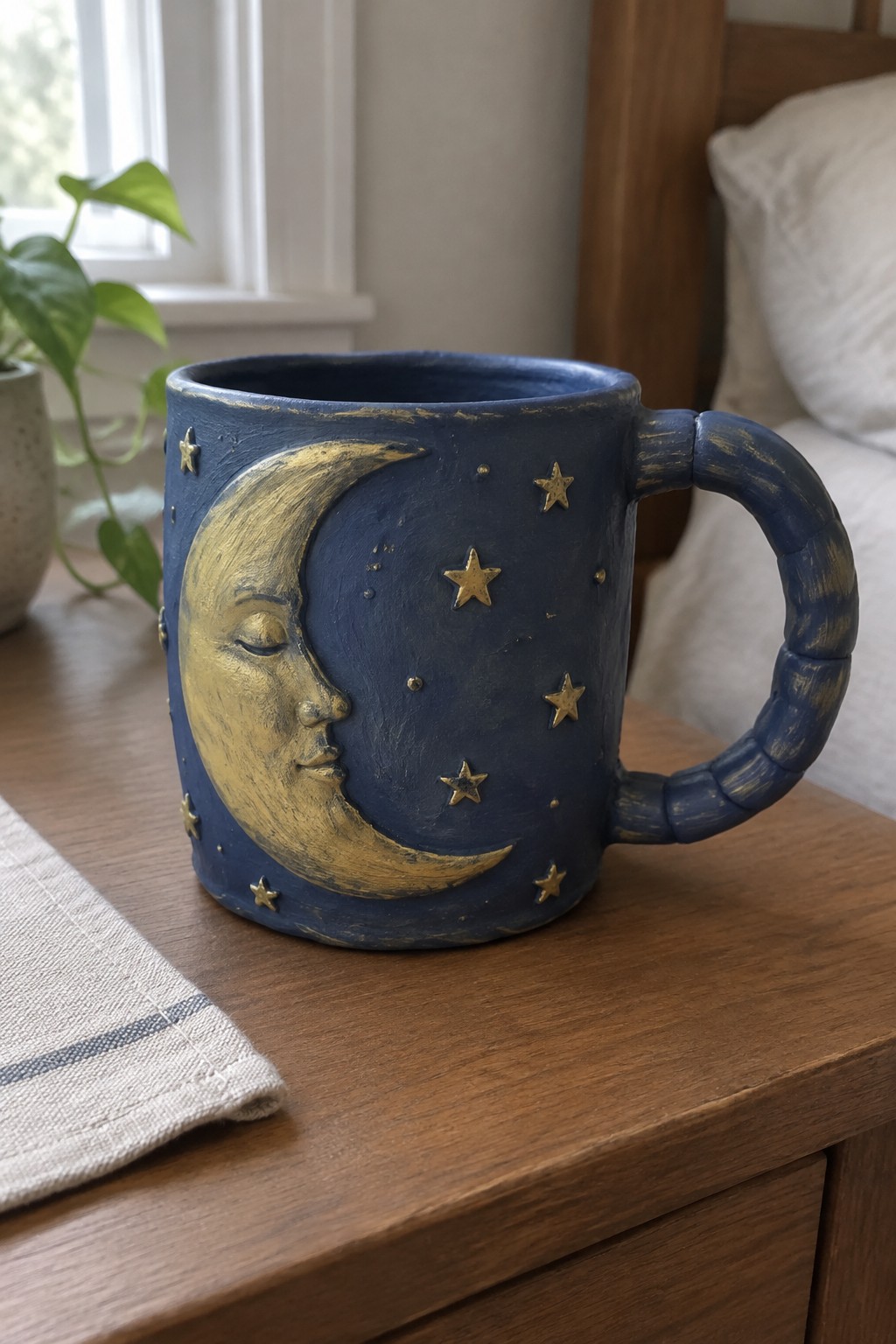
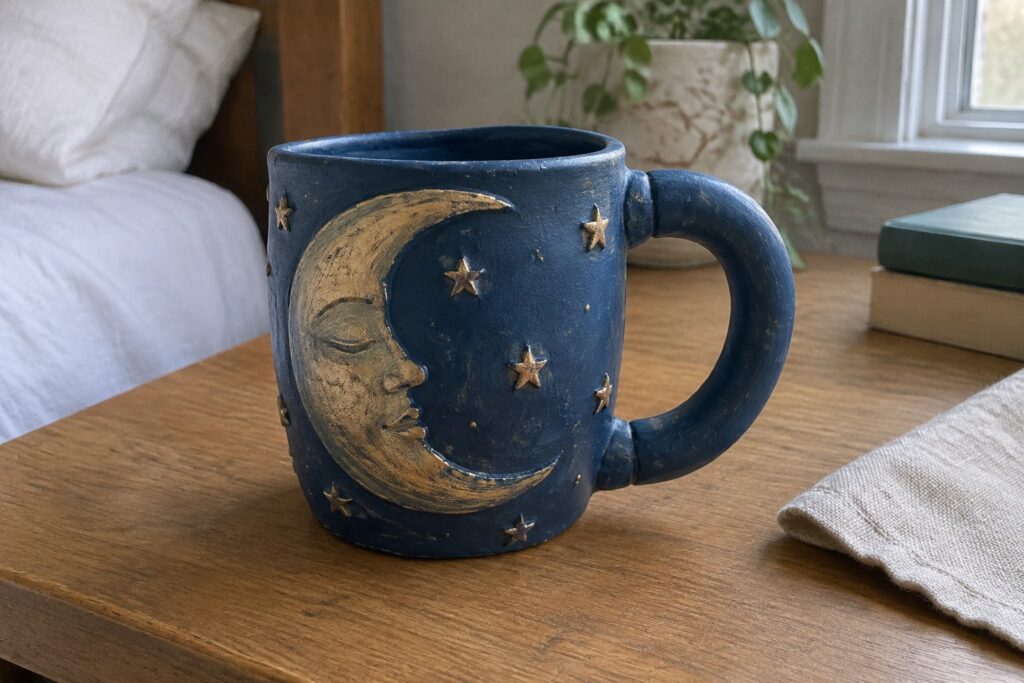
A hand-sculpted clay mug pairs a deep navy surface with a raised crescent moon, small stars, and a sculpted handle. The moon’s gold-painted face and the scattered star details create a clear night-sky motif, making the mug a functional decorative accessory with miniature sculptural elements.
The crescent and stars are the main features, so a simpler version could use a plain moon shape and just a few attached stars. Try different colors, such as a pale blue background with silver details, or adapt the same motif for a decorative clay vessel or wall piece. If made as a drinking mug, it should only be used for beverages if its materials and finish are suitable for food contact.
Cactus Mug Succulent Keychain

This hand-sculpted clay miniature turns a mug-shaped planter into a decorative keychain, with a smiling cactus attached to the front and small sculpted succulents arranged at the top. The cream and terracotta colors set off the layered green details, while the metal loop makes the miniature easy to attach to a key ring.
The mug silhouette and separate plant shapes make the design easy to adapt into a bag charm or hanging ornament, or to scale up as a small display piece. For a simpler version, use one cactus and a single succulent, then change the plant colors or add a different face to create a matching set.
Scalloped Clay Mug With Sculpted Flowers

A hand-sculpted clay mug gets its decorative detail from a softly wavy rim and a band of raised pink flowers with pale centers. The mint-green body and matching handle keep the floral additions in focus, making this a sculpted-surface idea for a decorative mug rather than a piece to assume is suitable for drinking.
The flower band is the main feature to adapt: use fewer, larger blossoms for a simpler version, or change the colors and add leaves for a different look. You could also carry the same raised-flower motif onto a small clay vase or pencil holder, keeping the scalloped edge as a distinctive finishing detail.
Woodland Mushroom and Hedgehog Sculpted Clay Mug

A hand-sculpted clay mug becomes a woodland scene with layered leaves, red-and-white mushrooms, and a textured hedgehog across its outer surface. The raised details and muted greens, browns, and reds make it read as a miniature sculpture built into a decorative mug, while the curved handle carries the leaf motif around the design.
The hedgehog and mushrooms are the memorable focal points, so you could simplify the surrounding leaves or use fewer details while keeping the woodland theme. Try changing the colors or swapping in another small forest creature, and consider adapting the same raised motifs for a decorative container if you want a project without a mug shape.
Cable-Knit Texture Clay Mug

A hand-sculpted clay mug takes its design cue from a chunky cable-knit sweater, with raised braided and ribbed patterns covering the cup and wrapping around its handle. The cream-and-taupe texture makes the mug read like knitted fabric while keeping the contours of a solid, decorative object.
The raised pattern is the main feature, so a simpler version could use just a few braided bands against a plain surface. You could also vary the cream and brown tones or carry the knit motif onto a small decorative vessel, but a mug made from craft clay should be treated as display-only unless it is made and finished for food use.
Sculpted Mermaid Scale Clay Mug

A handmade clay mug gets a flowing sea-inspired design from overlapping rounded scales, raised wave scrolls, and a sculpted fin-like detail near the rim. Soft blue, teal, and lavender tones contrast with the pale upper section, making the attached surface details stand out across the mug’s curved shape.
The scale pattern and wave accents could be adapted to a smaller decorative mug or simplified by using fewer repeated shapes and one main motif. Try changing the palette or swapping the fin detail for a shell or seaweed form to create a different ocean-themed variation. Since this is a hand-decorated clay object, confirm that its materials and finish are suitable before using it as a drinking vessel.
Yellow Monster Clay Mug With Sculpted Eyes and Teeth

A handmade clay mug becomes a quirky monster character through its uneven sculpted eyes, wide row of teeth, and oversized handle. The mustard-yellow body and blue-green details make the raised facial features stand out, turning the mug into a playful decorative clay piece rather than an ordinary drinking vessel.
The face is the easiest part to adapt: change the eye sizes, add horns or spots, or swap the yellow and blue-green palette for other colors. A simpler version could use just one pair of sculpted eyes on a small clay cylinder, while a more detailed take could become a larger display piece or a character-inspired gift.
Stacked Miniature Clay Mugs With Celestial Details

Three hand-sculpted miniature mugs are stacked on a speckled clay base, with vertical ridges on the mustard-yellow cup, gold stars on the teal cup, and cream moons on the terracotta one. Their small scale and contrasting colors make this a decorative clay sculpture rather than a set of functional drinking vessels.
The stacked arrangement gives the idea a clear shape, while the raised motifs make each cup distinct without needing elaborate decoration. You could simplify the project by making two cups and using dots or a single moon motif, or change the colors and details to create a different themed miniature display.
Sculpted Botanical Clay Mug
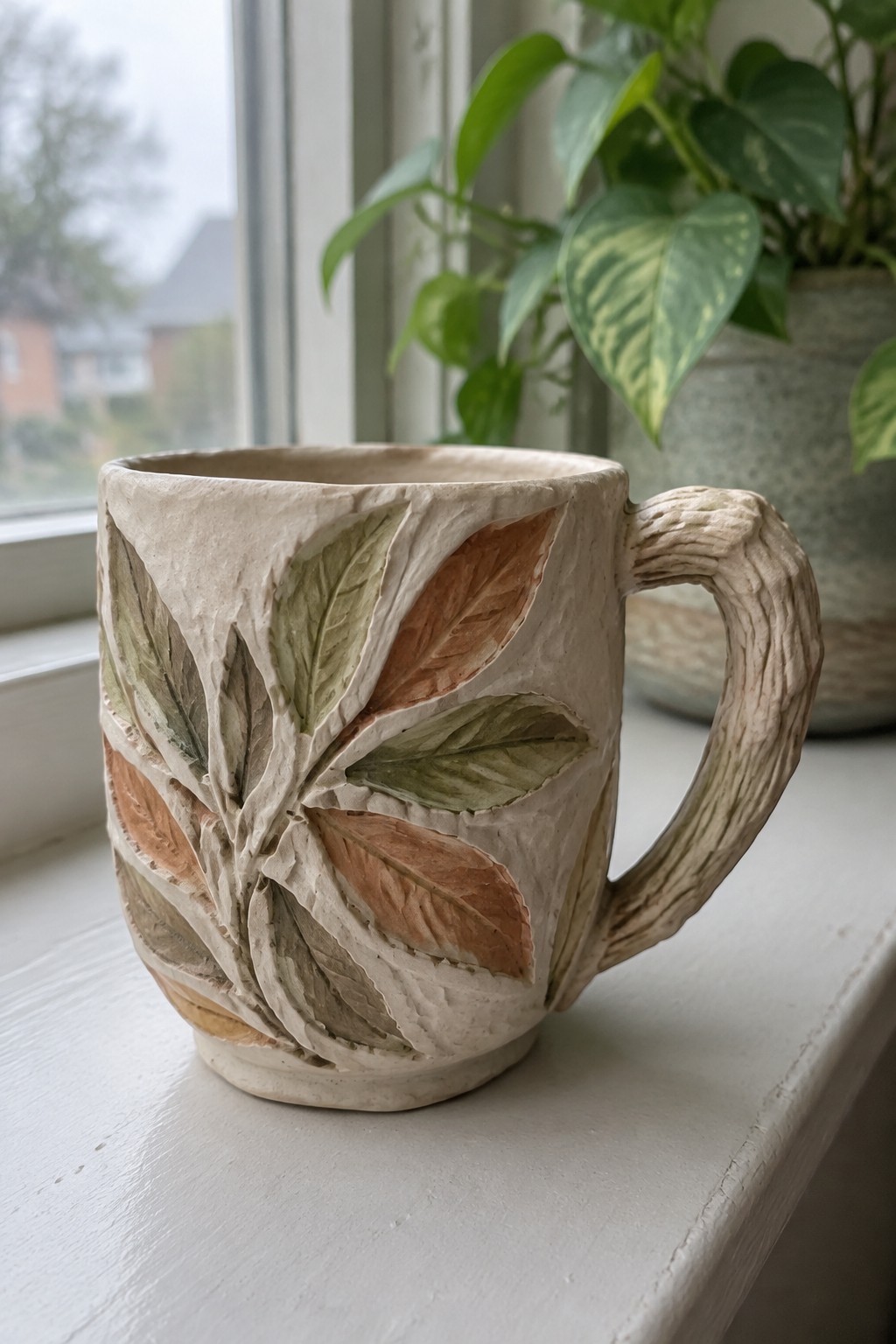
A handmade clay mug with raised, leaf-shaped details turns a simple vessel into a sculpted botanical accessory. Muted green and terracotta tones distinguish the leaves against the pale, textured surface, while the branch-like handle carries the motif around the mug.
The leaf shapes and earthy palette are easy to adapt to different plants, seasons, or colors, and a simpler version could use just a few larger leaves. Keeping the details on a smaller mug-sized form makes the idea a distinctive gift or decorative craft project; any practical use should depend on the clay and finish being suitable for drinking.
Miniature Cottage Clay Mug

A handmade clay mug can be turned into a miniature cottage, with a rounded house shape, layered reddish roof tiles, tiny doors and windows, and small sculpted plants. Contrasting blue, green, and muted earth-tone details make the raised features easy to distinguish, giving the mug the look of a small decorative sculpture rather than a plain cup.
The roof tiles and window shutters are the main details to adapt, so you could simplify the design by adding just one door, a few windows, and a small chimney. Try changing the cottage colors or adding a different garden detail, or make the house smaller as a decorative clay miniature; keep it decorative unless the materials and finish are specifically suitable for drinking use.
Pebble-Textured Clay Mug

A hand-sculpted clay mug gets its surface detail from rows of rounded, pebble-like pieces in terracotta, tan, and cream, with a plain curved handle and open interior. The contrast between the smooth mug shape and the uneven attached forms makes this a sculpted-surface clay accessory with a bold, tactile look.
The pebble pattern could be simplified by using fewer, larger shapes or repeated in a tighter range of colors for a more orderly design. Making the mug larger or smaller, or adapting the rounded pieces to a vase or pencil holder, offers ways to reuse the idea; if intended for drinking, the mug would need to be made with materials and methods suitable for food use.
Rain Cloud Clay Mug With Colorful Raindrops

A small decorative clay mug becomes a rain-cloud sculpture with a rounded white cloud and dangling pastel raindrops in teal, yellow, pink, and purple. The soft handmade contours and muted green mug shape keep the many hanging details visually balanced, making this a sculpted clay mug decoration rather than a functional drinking vessel.
The cloud-and-rain motif is easy to adapt by changing the drop colors, adding fewer hanging pieces, or making the mug and cloud larger or smaller. A simpler version could use a plain mug shape with just a cloud and a few raindrops, while the same motif could also be made as a wall decoration or hanging ornament.
Rose-Covered Clay Mug

A hand-sculpted clay mug covered with layered pink and cream flowers turns a simple cup shape into a floral decorative accessory. The raised petals and central rose create depth across the front, while the matching sculpted handle carries the design around the side.
The flower-covered surface is the main feature, so you could simplify the idea by adding one large rose or a few spaced petals instead of covering the whole mug. Try different flower shapes or color combinations to make a coordinated set, and treat the finished mug as decorative rather than for drinking unless its materials and construction are confirmed suitable for that use.
Color-Blocked Clay Mug With Raised Geometric Details
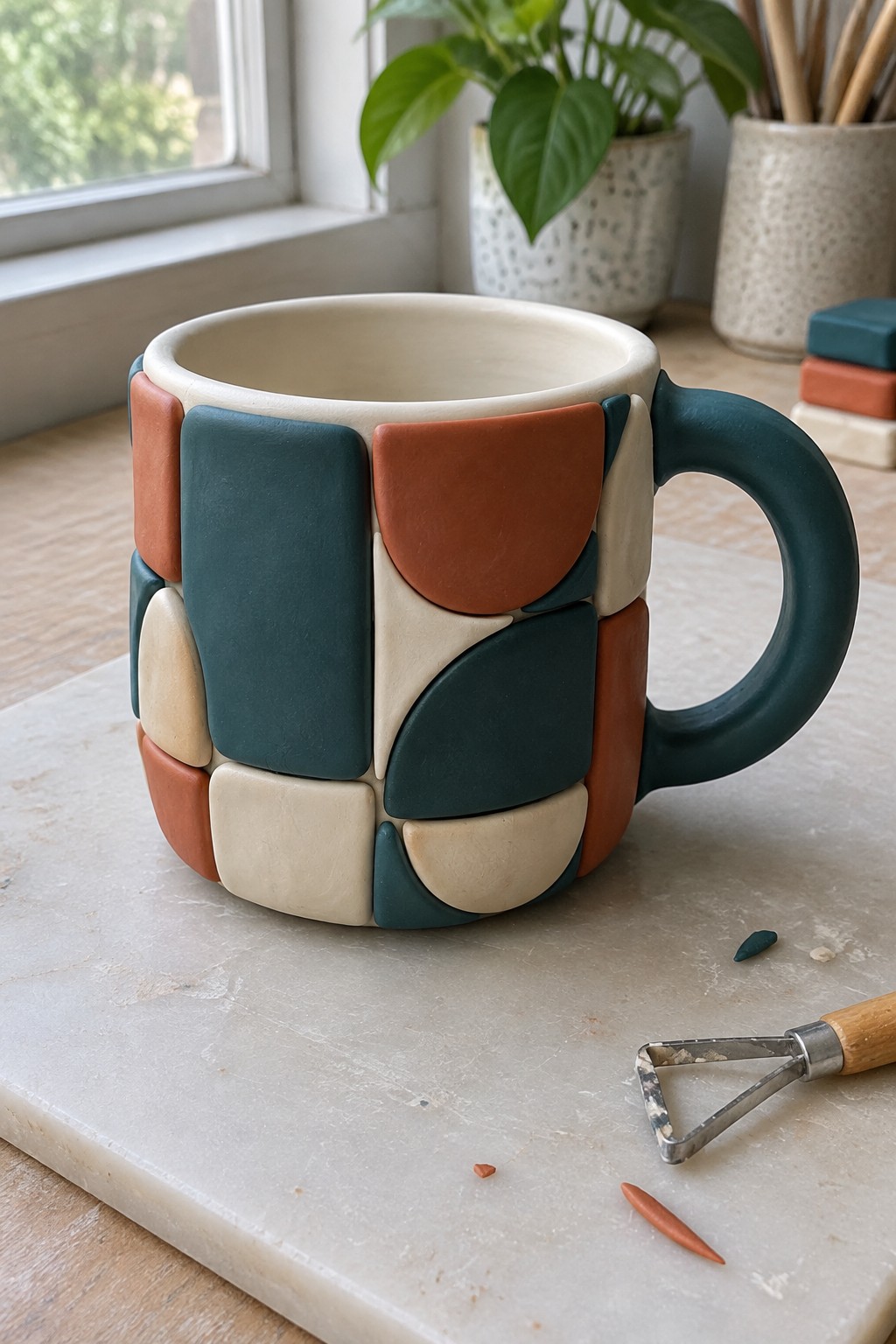
A handmade clay mug gets its sculpted surface detail from rounded, irregular panels in deep teal, rust, and cream, arranged like a simple geometric mosaic. The contrast between the smooth, plain rim and handle and the raised, matte-looking shapes makes this functional decorative accessory visually distinctive.
The panel idea is easy to adapt by changing the palette, varying the shapes, or covering only part of the mug for a simpler design. Keep in mind that a mug intended for drinking needs materials and construction suited to that use, so this sculpted surface concept can also be adapted onto a decorative vessel instead.
Sculpted Ocean-Wave Clay Mug

A hand-sculpted clay mug uses layered, wavy bands of sea green and pale cream to create a flowing ocean-like surface, with a twisted clay handle that continues the textured design. The contrast between the rippling upper section and the plain sandy-colored base makes this functional decorative accessory visually distinct.
The wave pattern is the main idea to save and adapt: vary the band widths, use blues or muted coastal colors, or simplify the handle texture for a less detailed version. You could also carry the same sculpted waves onto a small decorative vessel, though a mug made from an unknown clay should be treated as decorative rather than assumed safe for drinking.
Blushing Face Clay Mug Charm

A tiny hand-sculpted mug becomes a decorative charm with a loop above the rim, a rounded handle, and a simple sleepy face. Cream clay, a dusty pink interior and handle, and raised pink cheeks give the miniature its clear mug shape and soft color contrast.
The compact design could be adapted with different facial expressions, handle colors, or small decorations around the rim. Simplifying the face to curved eyes and a small nose makes the concept easier to recreate, while the hanging loop makes it suitable as a decorative ornament or bag charm.
Mushroom-Covered Clay Mug

A handmade clay mug gets a sculpted surface detail from a band of small mushrooms wrapped around its base. The earthy cream body and muted green, rust, and off-white mushroom caps keep the miniature forms distinct without overpowering the mug, making this a functional decorative accessory with a woodland theme.
The mushroom band is the main design feature, so a simpler version could use just a few larger mushrooms along the front instead of a full border. Try changing the cap colors or turning the same motif into a small sculpted decoration for another clay object; the mug itself should be treated as decorative unless its material and finish are confirmed suitable for drinking.
Sunflower and Terrazzo Clay Mug

A hand-decorated clay mug combines a raised sunflower with a scattered terrazzo-style pattern in warm, earthy colors. The sculpted petals and leaves add depth against the speckled surface, making the mug a floral decorative accessory with a clear focal point. Its thick, rounded form keeps the design grounded while the bright yellow handle ties in with the flower.
The sunflower motif could be adapted with different petal colors or paired with small sculpted leaves, while the scattered shapes can use any leftover color palette. For a simpler version, keep the mug plain and add just one raised flower, or use the same surface concept on a decorative clay container. Because this is a handmade clay mug, confirm that its materials and finish are suitable before using it for drinks.
Frequently Asked Questions
Start with simple, low-relief shapes that are easy to attach and comfortable to hold. Try raised flowers, leaves, clouds, stars, tiny mushrooms, or a friendly face. Roll small coils for outlines, flatten little balls into petals, or cut shapes from a thin slab. Keep details fairly small at first so they don’t make the mug awkward to grip or overly heavy.
Score both surfaces where the piece will go, then apply slip or a small amount of clay mixed with water to make a thick paste. Press the piece firmly into place and blend the edges with a damp tool or soft brush. For larger details, add a small coil of clay around the join and blend it in. Make sure the mug and the added pieces are at a similar level of moisture before attaching them, since uneven drying can cause cracks or separation.
Keep sculpted decorations away from the rim, interior, and areas where your lips touch. Check that the handle is easy to grasp and that decorations don’t interfere with holding or stacking the mug. Smooth sharp edges and deep crevices, which can be uncomfortable to touch and difficult to clean. If you want a very elaborate design, place most details on the side opposite the handle.
Choose a clay body intended for functional ware and fire it to the temperature recommended by its manufacturer. A clay body with some texture or grog can provide extra support for larger sculpted features, though fine details may be easier with a smoother body. Use glazes that are food-safe when fired correctly, especially on the inside and drinking rim. Test glazes on a sample first because they can pool around raised details and produce unexpected color variations.
Make details sturdy but not excessively thick, and avoid attaching very wet pieces to a nearly dry mug. Dry the finished mug slowly and evenly, loosely covered at first, so all parts lose moisture at a similar rate. Pay special attention to joins and thick areas, which tend to dry more slowly. Don’t rush the firing process, and follow the clay and kiln manufacturer’s firing instructions.
