


I’m drawn to clay bowls with soft, uneven shapes and textures that make each one feel a little different.
In this collection, I’ve gathered ideas featuring details like gentle ridges, speckles, and organic edges.
Some have a simple, natural look, while others bring in color or a small decorative touch.
I hope these designs help you find a clay bowl idea that feels right for your own style.
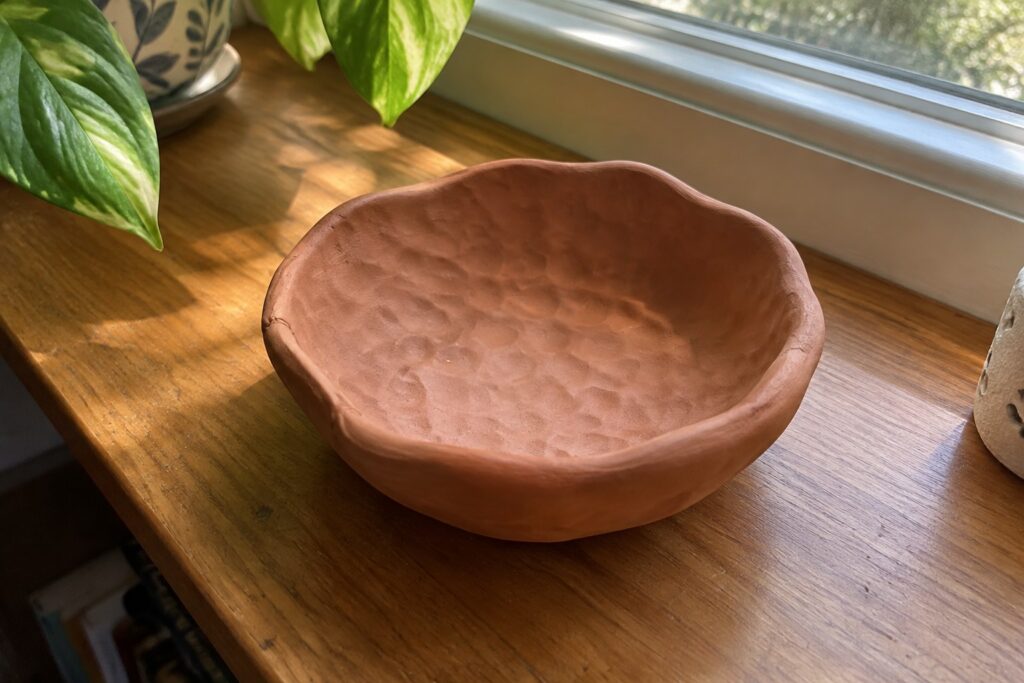
Hand-Formed Clay Bowl With a Textured Interior

A shallow, hand-formed clay bowl uses an irregular rim and dimpled interior to make its organic surface the main design feature. The warm terracotta color keeps the sculpted texture easy to see, making this a decorative clay bowl idea with a distinctly handmade look.
The uneven contours are the part to adapt: press small, shallow indentations into the inside, or keep the surface smoother for a simpler version. Make the bowl smaller for holding jewelry or other small items, or vary the rim and clay color to create a set of decorative bowls; don’t assume it’s suitable for serving food.
Swirled Clay Ring Dish

A shallow, hand-formed clay dish with flowing teal, blue, and cream swirls makes a decorative place to keep rings and other small jewelry. Its rounded shape and marbled color pattern give the simple trinket dish visual interest without needing extra sculpted details.
The swirling pattern is the main feature, so you could adapt the idea with two or three contrasting clay colors and make the dish in different sizes. For a simpler version, use fewer colors and keep the shape softly rounded; a smaller dish could also hold earrings or tiny keepsakes.
Leaf-Shaped Clay Bowl

A hand-sculpted clay bowl shaped like a broad leaf turns the leaf’s branching veins and uneven outline into the main design features. Its shallow, irregular form and muted green-and-cream surface make it a decorative clay object with an organic, sculptural look.
The leaf outline gives the bowl a clear shape, while the raised vein details make the surface interesting without needing extra decoration. You could change the leaf shape, try a different green or earthy color palette, or make a smaller version as a decorative trinket dish; a simpler design could use just a few main veins and a gently wavy rim.
Pebble-Textured Clay Trinket Dish

A shallow, hand-formed clay trinket dish gets its distinct look from rounded gray pebble-like marks across a cream-colored interior and an uneven sculpted rim. The contrast between the mottled surface and plain outer sides makes it a decorative holder for small items such as earrings.
The rounded pattern is easy to adapt with different color combinations or pebble sizes, and a simpler version could use fewer marks arranged across the center. Making the dish larger or smaller changes how it can be used, while the same textured idea could also decorate a small tray or jewelry dish.
Elongated Clay Bowl With Layered Organic Texture
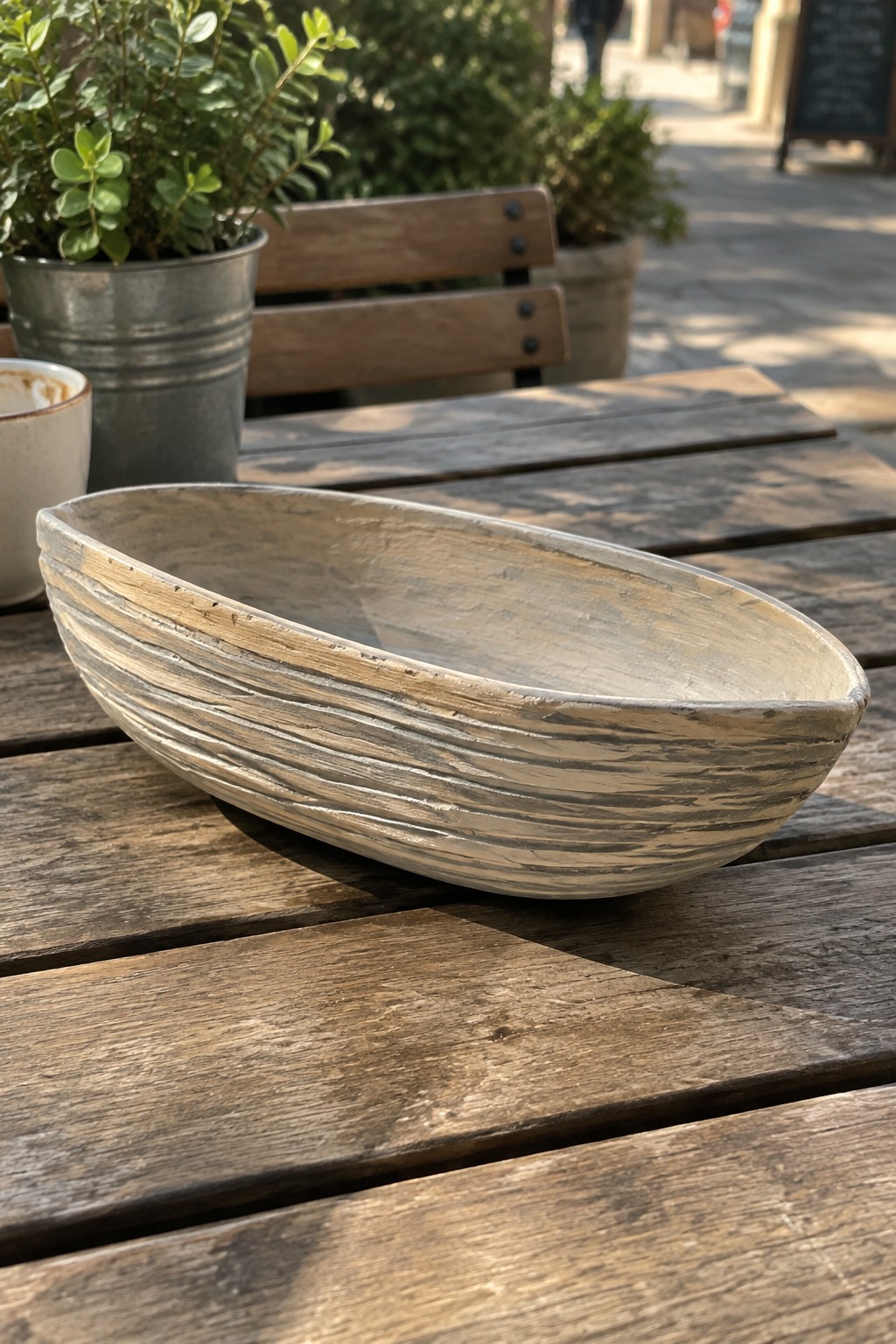
This hand-formed clay bowl has a shallow, elongated shape and uneven horizontal ridges that give its surface a natural, weathered look. The muted beige and gray tones keep the texture in focus, making it a sculptural decorative bowl rather than a piece to assume is suitable for serving food.
The irregular rim and layered contours make the design memorable without relying on added motifs, and you could adapt it into a smaller trinket dish or a wider centerpiece. For a simpler version, use a basic oval shape and add a few broad, uneven ridges; changing the clay’s color or varying the ridge pattern would give each bowl a distinct look.
Nested Hand-Formed Clay Bowls

A set of hand-formed clay bowls uses three nested sizes and a muted palette of terracotta, teal, and cream to make simple rounded forms more visually interesting. Their slightly uneven rims and visible handmade contours give the bowls an organic look, fitting the idea of a decorative clay bowl set.
The nested sizes make the design easy to adapt: create just one bowl for a simpler project, or vary the colors and rim shapes across a full set. These bowls could be displayed as decorative objects or used to hold small non-food items, and the same color-blocked concept could also be applied to a single trinket dish.
Hand-Painted Flower-Shaped Clay Trinket Dish

A hand-sculpted clay trinket dish takes the shape of a broad flower, with raised, uneven petals and a dotted center painted in soft pink, cream, and yellow. The brushwork follows the petals, giving this decorative holder a loose, organic look rather than a perfectly uniform finish.
The petal outline makes the dish memorable, while the shallow center can hold small items such as rings when used as a trinket dish. You could simplify the design by shaping fewer, rounder petals, or change the colors and center pattern to create a different flower; making it smaller would also work for a single ring or other small keepsake.
Hand-Sculpted Clay Bowl With Layered Bands

A wide, rounded clay bowl gets its character from uneven horizontal bands and a warm, earthy finish. The handmade contours and lightly contrasting ridges make this a sculptural decorative bowl idea, with more emphasis on texture than on a perfectly smooth shape.
The layered bands are easy to adapt by changing their width, spacing, or color, and a smaller version could become a decorative catchall. For a simpler project, keep the bowl shape plain and add just a few raised lines, or vary the bands to create a more irregular, stone-like surface.
Speckled Clay Bowl With a Rounded Rim

A hand-formed clay bowl with a rounded rim and scattered dark flecks turns a simple vessel shape into an organic decorative piece. Its softly uneven contours and speckled surface give it a natural, handmade look, making it a good fit for a collection of textured clay bowls. Use it as a decorative catchall for small items rather than assuming it is suitable for food.
The rounded shape is easy to adapt by changing the bowl’s depth, rim thickness, or speckle pattern, and a smaller version could become a trinket dish. For a simpler variation, keep the form plain and use a light clay color with a few contrasting flecks; the restrained palette makes the surface texture stand out.
Red-and-White Spotted Clay Bowl

A rounded clay bowl with a short pedestal base becomes a decorative mushroom-inspired piece through its rust-red color and raised cream spots. The irregular handmade contours and scattered dots give the bowl a playful, sculptural look that fits the category of a decorative clay accessory.
The spotted design is easy to adapt by changing the color pairing, dot sizes, or spacing, and a simpler version could use fewer, larger spots. Make the bowl smaller for a trinket holder or keep it as a display piece, but treat it as decorative rather than for serving food.
Speckled Clay Trinket Bowl

A shallow, hand-formed clay bowl becomes a small trinket dish through its irregular rounded shape and dark speckles scattered across a warm cream surface. The contrasting marks give the interior an organic, stone-like texture, while the simple form keeps the dish useful for holding small jewelry such as stud earrings.
The speckled pattern is easy to adapt with different base colors and mark sizes, and the bowl can be made larger or smaller to suit other small items. For a simpler version, keep the shape smooth and add scattered dots; a more uneven rim can make each handmade dish look distinct.
Radial-Ridged Clay Bowl

This hand-formed clay bowl has a rough, pale rim and a warm brown interior marked with long ridges that fan out from the center. The radial texture gives the shallow decorative bowl an organic, carved look, making surface detail the main feature rather than added decoration.
The ridges create a clear pattern that can be varied by changing their spacing, depth, or direction, while a different clay color could make the contrast between the rim and interior stronger. A smaller version could serve as a decorative trinket dish, or the same radiating lines could be adapted for a wall piece; keep any bowl made from unknown clay or finish for display rather than food use.
Pastel Petal Clay Bowl for Hair Accessories

A hand-formed clay trinket bowl takes its shape from overlapping, petal-like pieces in soft pastel colors. The irregular contours and layered arrangement create a flower-like rim, while the small bowl is suited to holding hair clips or other lightweight accessories as a decorative holder.
The petal shapes make the design easy to adapt: use fewer, larger pieces for a simpler bowl, or vary the colors and overlap for a fuller look. You could also scale the idea down for a small ring dish or make a larger decorative catchall, keeping in mind that this clay bowl is best for accessories rather than serving food.
Fern-Imprinted Clay Bowl

A shallow, hand-formed clay bowl gets its organic pattern from fern fronds pressed into the interior, with the leaf shapes standing out in darker brown against a pale, mottled surface. The botanical imprint and softly irregular rim make it a decorative clay bowl with a natural, handmade look.
The fern motif can be changed to suit the season or what is available, using other leaves or small sprigs to create different impressions. Keep the design simple with one large frond, or arrange several smaller leaves across a wider bowl; the finished piece could be displayed as a decorative catchall rather than used for food.
Moss-Textured Clay Bowl

A hand-formed clay bowl gets an organic edge from the uneven green texture sculpted around its rim, contrasting with the smooth, pale interior. The rough, moss-like border turns a simple bowl shape into a decorative clay object with a nature-inspired finish.
The contrast between the irregular rim and smooth center makes this idea easy to adapt: use a thinner textured border for a subtler look, or vary the green tones and raised details for a fuller effect. A smaller version could serve as a decorative trinket dish, while a larger one could be displayed as a sculptural accent; keep it decorative rather than using it to serve food.
Two-Tone Clay Bowl With a Painted Green Half

This hand-formed clay bowl has a simple rounded shape divided into deep green and warm off-white, creating a clear color-block design. Its uneven rim and visible surface texture keep the trinket dish from looking mass-produced, while the shallow form suits small accessories such as hairpins.
The two-color split is easy to adapt with other contrasting shades or a softer, less defined boundary between them. Make the bowl smaller for rings or larger for organizing lightweight items, and keep it decorative rather than using it to serve food.
Sage Green Clay Bowl With Sculpted Folds

A hand-formed clay bowl with an irregular rim and raised, leaf-like folds wrapping around one side turns a simple vessel shape into a sculptural decorative piece. Its muted sage-green color and matte surface keep the organic contours in focus, making it a natural fit for the textured clay bowl ideas in this collection.
The folded details create a memorable silhouette, while a plain rounded bowl shape underneath gives the design a clear starting point to adapt. Simplify it by adding just a few broad folds, or change the color and scale to make a small decorative catchall or a larger display bowl; don’t assume an unverified clay finish is suitable for food use.
Sage Green Clay Ring Dish With a Swirled Center

A small hand-formed clay ring dish pairs a softly irregular bowl shape with a spiral-like interior and muted sage green color. Its organic contours and satin-looking surface make it a decorative jewelry holder, while the shallow center keeps the rings visible.
The sculpted swirl gives the dish visual interest without needing extra decoration, so a simpler version could use a smooth interior and a single muted color. Try making it in different sizes or shades, or add a small painted accent to the center for a personal gift or bedside accessory.
Tree-Bark Textured Clay Bowls

Hand-formed clay bowls with rough, vertical grooves take their texture from the look of tree bark. Their rounded, slightly irregular shapes and earthy brown, muted green, and cream finishes make the carved-looking surfaces stand out. They fit the category of decorative clay bowls, suitable for display or for holding small non-food items.
The bark-like texture is the main idea to adapt: try making one bowl in a single earthy color, or create a coordinated set in different shades and sizes. A simpler version could use fewer, broader grooves, while uneven rims and varied colors keep each bowl distinct. Their sculpted surfaces make the set a useful reference for anyone saving ideas for textured clay forms.
Pebble-Built Clay Bowl

A hand-formed clay bowl with smooth, pebble-like pieces arranged in overlapping rows turns a simple rounded vessel into a sculptural decorative object. The varied stone-like shapes and muted cream, tan, and gray colors create an organic texture inside and out, making the bowl fit naturally among clay crafts with tactile, nature-inspired surfaces.
The pebble pattern is the main feature, so you could keep the bowl shape simple and vary the size or color of the individual pieces to make the design your own. A smaller version could serve as a decorative trinket bowl, while a larger one could be displayed as a sculptural centerpiece; treat either as decorative rather than assuming it is suitable for food.
Frequently Asked Questions
Try pressing natural materials into the clay before it dries. Leaves, grasses, shells, lace, and pieces of bark can leave distinctive impressions. You can also use your fingers, a wooden tool, or a sponge to make soft ridges, ripples, and uneven marks. Keep the pattern relaxed rather than perfectly repeated for a more natural look.
Air-dry clay is a convenient choice for small decorative bowls because it requires no kiln. Polymer clay works well for lightweight pieces with fine details, while pottery clay is best for functional bowls that you plan to glaze and fire. Check the clay’s instructions before choosing a project, since drying and firing requirements differ.
Make the bowl’s walls and base a fairly even thickness, and avoid stretching the clay too thin around the rim. Dry it slowly and evenly, away from direct heat or sunlight. If you’re using air-dry clay, turn the bowl over once the upper surface feels firm so the underside can dry too. Follow the manufacturer’s guidance for drying, firing, or baking.
It depends on the clay, finish, and firing process. A decorative air-dry or unglazed bowl usually isn’t suitable for food or liquids. For serving, choose pottery clay that has been properly fired and finished with a food-safe glaze. Always confirm that the materials and finished piece are labeled or verified as food-safe.
Use finishes that enhance rather than cover the surface. A thin wash of diluted paint can settle into grooves while leaving raised areas visible. You can also try a light coat of matte glaze, earthy pigments, or a small amount of metallic paint on selected ridges. Test your finish on a sample first, since some coatings can soften or obscure fine details.
