


I like making miniature food charms because even simple shapes can turn into tiny, recognizable treats with a few color and detail choices.
They’re a fun way to play with little pastries, fruit, snacks, and other foods without taking on a large project.
I’ve gathered 20 ideas with different styles, so you can pick the tiny bites that suit your taste.
Here are some playful clay food charms to inspire your next small creation.
Miniature Strawberry Clay Charm

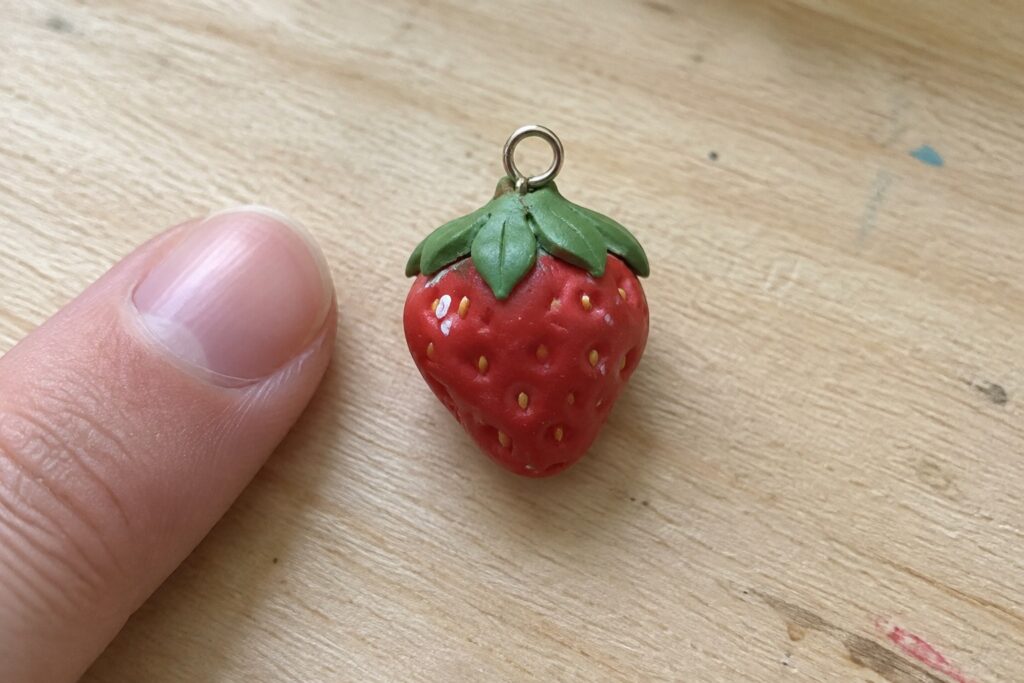
This hand-sculpted strawberry is a miniature clay charm, with a rounded red fruit, small indented seeds, green leaves, and a metal hanging loop. The simple red-and-green palette and raised details make the fruit easy to recognize at a small scale.
The strawberry shape makes a useful starting point for other miniature fruit charms, such as a blueberry, peach, or lemon, with colors and surface details adjusted for each one. For a simpler version, keep the fruit silhouette and leaf cap, then use fewer seed marks; making a few in different sizes could also create a matching set.
Pink Frosted Donut Clay Charm
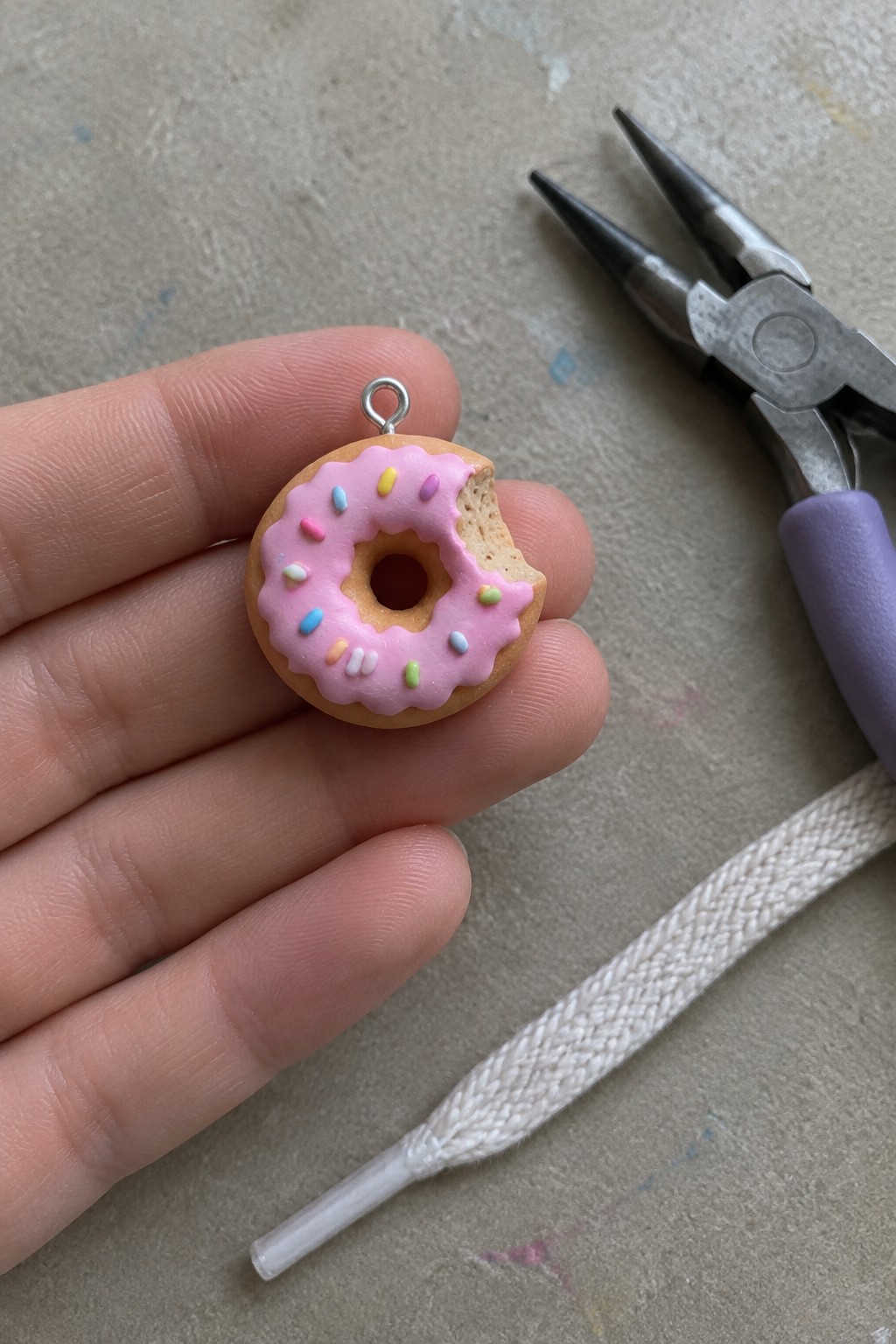
A miniature clay donut charm pairs a rounded, hand-sculpted pastry shape with pink frosting, colorful sprinkle details, and a small hanging loop. The bite-shaped edge exposes the tan dough beneath the frosting, giving this playful food miniature a clear sculptural detail that works well for jewelry or a bag accessory.
The donut’s simple ring shape makes the idea easy to adapt with different frosting colors, sprinkle patterns, or a smaller bite mark. You could also turn the same concept into a miniature cupcake or cookie charm, or make a set of varied pastries for a coordinated accessory.
Miniature Sushi Clay Charms
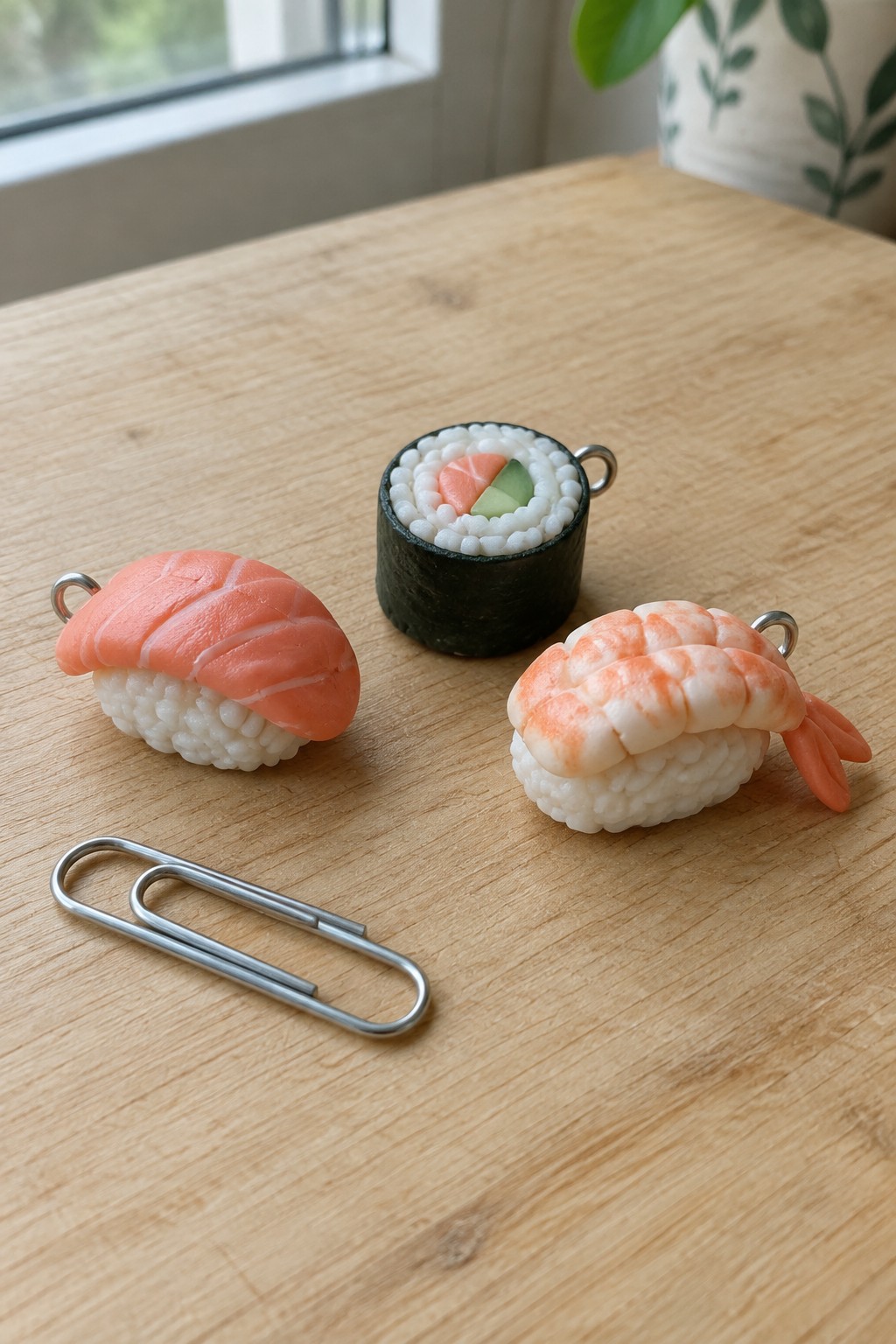
Hand-sculpted clay sushi charms turn familiar nigiri, shrimp sushi, and a seaweed-wrapped roll into tiny food miniatures. Their rounded rice shapes, layered toppings, and contrasting white, coral, green, and dark tones make each piece easy to recognize at a small scale, while the small metal loops make them suitable as jewelry charms or keychain decorations.
The simple sushi forms give you room to adjust the level of detail: start with a rice base and one topping, then add small sculpted pieces or rice texture for a more detailed version. Try different fish colors or make a matching set with other sushi shapes, keeping the pieces small enough to wear as charms or display as a miniature collection.
Miniature Croissant Clay Charm
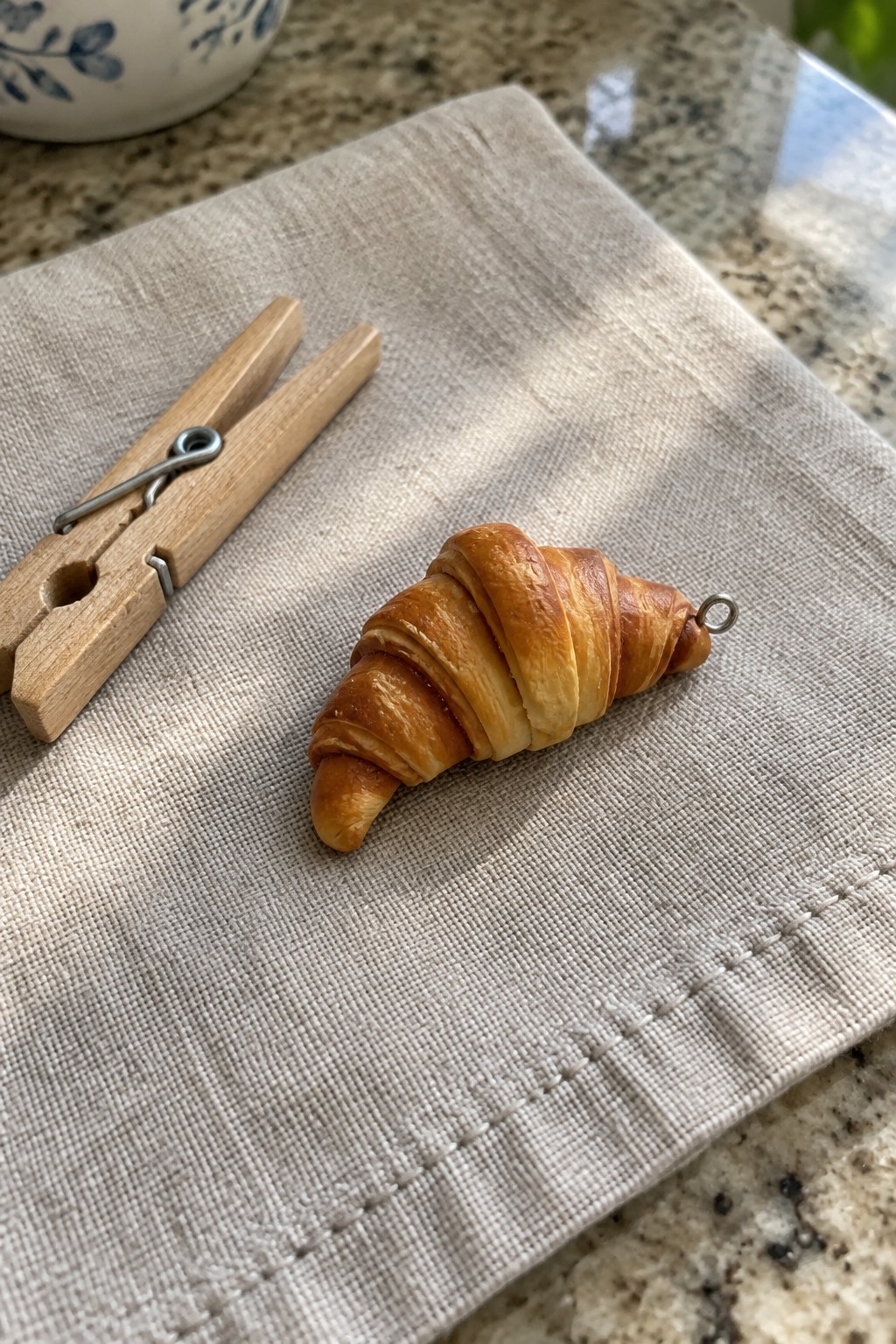
A tiny hand-sculpted croissant makes a playful miniature food charm, with curved pastry layers and warm golden-brown color giving it the look of a flaky baked treat. Its recognizable crescent shape and raised folds provide enough detail to make the small clay sculpture stand out without adding extra decoration.
The layered contours are the main feature to focus on when recreating it, and a simpler version could use a crescent shape with just a few shallow lines. Try lighter or darker browns to suggest different levels of baking, or make several miniature pastries for a playful charm collection or small decorative display.
Miniature Pepperoni Pizza Slice Charm

This hand-sculpted clay charm turns a pizza slice into a tiny wearable miniature, with a browned crust, red sauce, pale cheese, and round pepperoni pieces. Its triangular shape and contrasting toppings make the familiar food easy to recognize at charm size.
The layered colors make the design memorable, and the toppings could be simplified into flat shapes for an easier version. Try different toppings or crust shades, or make the slice smaller for a keychain or jewelry charm.
Miniature Cupcake Clay Charm

This miniature clay cupcake charm pairs a mint-green fluted wrapper with rounded pink frosting and a few colorful sprinkle details. Its layered, hand-sculpted shape makes it recognizable as a tiny dessert, while the attached metal loop turns it into a decorative jewelry charm.
The contrasting wrapper and frosting colors make the cupcake easy to customize with other icing shades, sprinkle colors, or a different wrapper shape. You could keep the details simple for a smaller charm or make a larger version as a miniature sculpture or gift topper.
Miniature Ice Cream Cone Clay Charm

A tiny clay ice cream cone charm features two rounded scoops, a textured waffle cone, and a red berry topping. The pink and cream colors stand out against the cone’s warm brown ridges, making this a playful miniature food sculpture for jewelry or a keychain.
The layered scoops make the design easy to adapt with different colors, toppings, or cone shapes, and a simpler version could use two smooth scoops with just one small accent. Make it small for a charm or larger as a decorative miniature, keeping the berry topping as a clear focal point.
Miniature Avocado Clay Charm
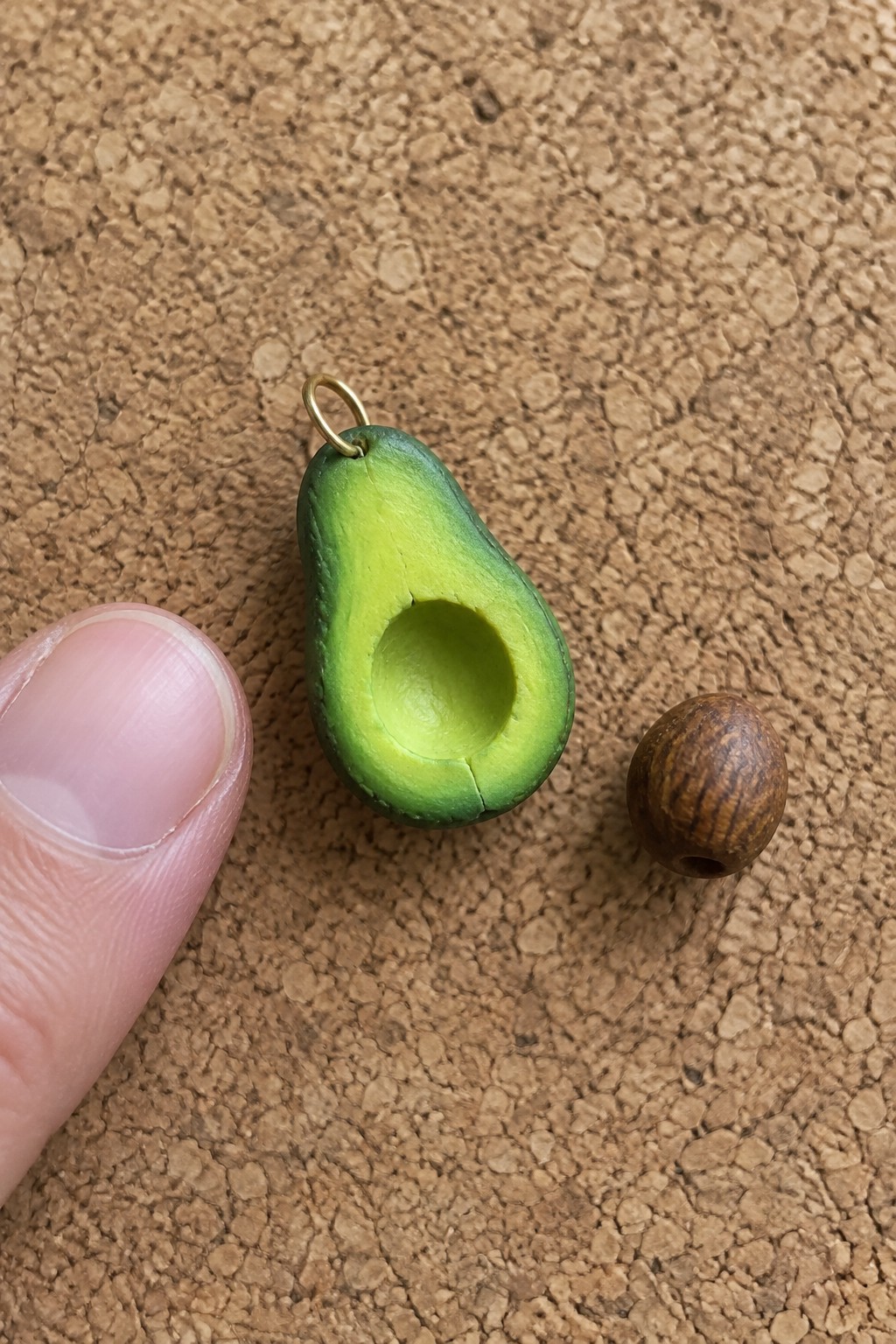
A tiny avocado charm turns the fruit’s familiar shape into a miniature sculpture, with a green flesh-and-skin color contrast and a recessed pit area that makes the design instantly recognizable. A small loop at the top gives it a jewelry-style finish, while the separate brown pit adds a playful detail.
The rounded silhouette and simple color blocks make this idea easy to adapt into different fruit charms, such as a halved pear or peach. Keep the pit area as a shallow sculpted recess for a simpler version, or vary the green tones and size to make a set of matching miniature food charms.
Pastel Macaron Clay Charm

A stack of three miniature macaron shapes forms a playful clay charm, with pale green, pink, and lavender shells and contrasting cream-colored filling. The rounded layers and ruffled edges make the familiar French treat easy to recognize, while the small hanging loop turns it into a decorative accessory.
The stacked design gives each macaron a clear outline, so you could simplify the details to a few rounded layers and still keep the idea readable. Try different shell and filling colors, or make a single macaron for a smaller charm; several in a pastel palette would also make a fun matching set.
Miniature Clay Noodle Bowl Charm

A tiny noodle bowl becomes a playful food charm with sculpted noodles, green toppings, a halved egg, and chopsticks resting across the rim. The warm noodle colors stand out against the white bowl, while the small details make the handmade clay miniature easy to recognize.
The bowl-and-topping arrangement gives you a clear design to simplify or customize: use fewer noodles and toppings for a simpler version, or change the garnish and egg placement for variety. Made small, it could be used as a charm or kept as a miniature food sculpture, and a larger version could become a decorative collectible.
Miniature Taco Clay Charm

A hand-sculpted miniature taco charm turns a familiar food into a playful clay accessory. Its folded golden shell frames small green, yellow, and brown filling details, while the metal loop at the top makes the taco easy to attach to a key ring or bag.
The folded shape gives the design a clear silhouette, and the colorful filling makes it recognizable even at a small scale. For a simpler version, use fewer filling colors and larger sculpted pieces, or switch up the toppings to create a set of different taco charms.
Miniature Pancake Stack Clay Charm

This hand-sculpted clay charm turns a stack of three pancakes into a tiny breakfast-themed miniature, complete with a square pat of butter and a glossy-looking drizzle of syrup. The rounded layers and warm golden-brown coloring make the food shape easy to recognize at a small scale.
The stacked form gives the design clear layers without needing many details, so you could simplify it by making fewer pancakes or use different syrup and topping colors for variations. Add a small hanging loop to make it a charm, or make a slightly larger version as a decorative miniature for a breakfast-themed collection.
Pair of Cherry Clay Earrings

These miniature clay cherries form a playful jewelry charm, with two rounded red fruits joined by sculpted green stems and a small metal loop at the top. Their simple silhouette and strong red-and-green contrast make the fruit motif easy to recognize at a small scale.
The paired shape makes this idea memorable while leaving room to adjust the fruit size, stem angle, or colors for other miniature designs. You could simplify the stems into short green shapes or adapt the same concept into a single cherry pendant; the metal finding suggests how the clay piece can become wearable jewelry.
Miniature Watermelon Slice Clay Charm

A hand-sculpted watermelon wedge makes a bright miniature charm, with red fruit, a pale green rind, a dark green edge, and small black seeds. Its simple triangular shape and clear bands of color make the fruit recognizable at a small scale, while the attached loop gives it a jewelry-ready detail.
The layered rind and scattered seeds are the details that make this design easy to adapt: a simpler version could use fewer seeds, while different wedge sizes or seed placements would give each charm a slightly different look. The same fruit motif could also be made as a matching set of miniature food charms or changed into a small decorative clay piece.
Miniature Chocolate Chip Cookie Charm

A tiny clay chocolate chip cookie charm turns a familiar baked treat into a miniature accessory. Its rounded, golden-brown shape, raised chocolate chips, and small bite taken from the edge make the cookie easy to recognize at a small scale.
The bitten edge gives the design a clear focal point, while the simple chip details can be varied in size or placement for each cookie. You could keep the charm this size for jewelry or make a larger version as a small display piece; a beginner-friendly take could use a plain round cookie shape with just a few chocolate chips.
Miniature Hot Dog Clay Charm
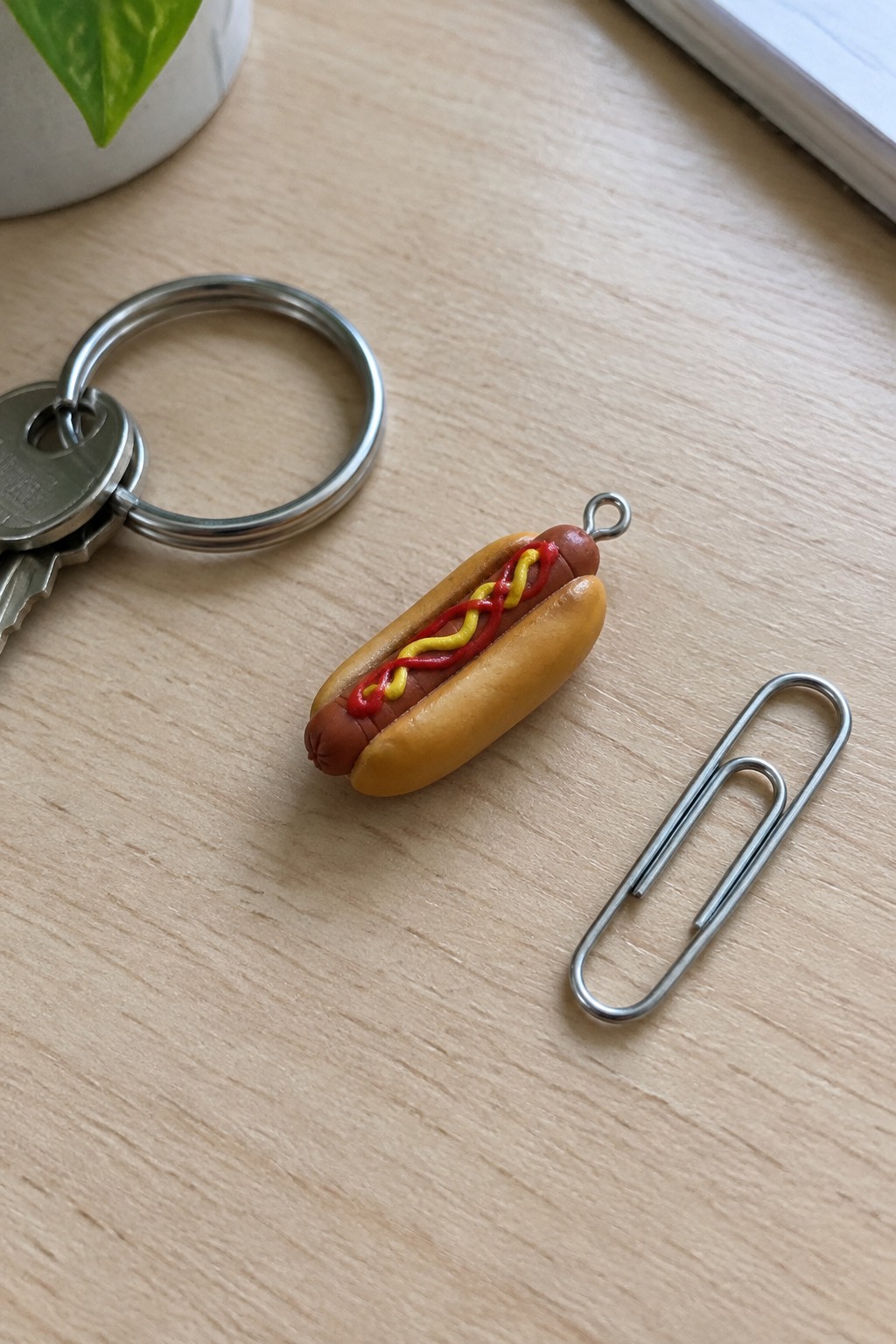
A hand-sculpted hot dog charm turns a familiar snack into a tiny food miniature, with a reddish-brown sausage nestled in a golden bun and topped with red and yellow condiment details. Its small scale and simple, recognizable shape make it a playful addition to a collection of clay food charms.
The contrasting toppings make the design easy to personalize: try different squiggle patterns or add a small green detail while keeping the bun and sausage shapes simple. It could also be adapted into a miniature burger or corn dog, or made larger as a decorative collectible; the small loop gives this version a clear charm-style finish.
Miniature Onigiri Bento Clay Charm
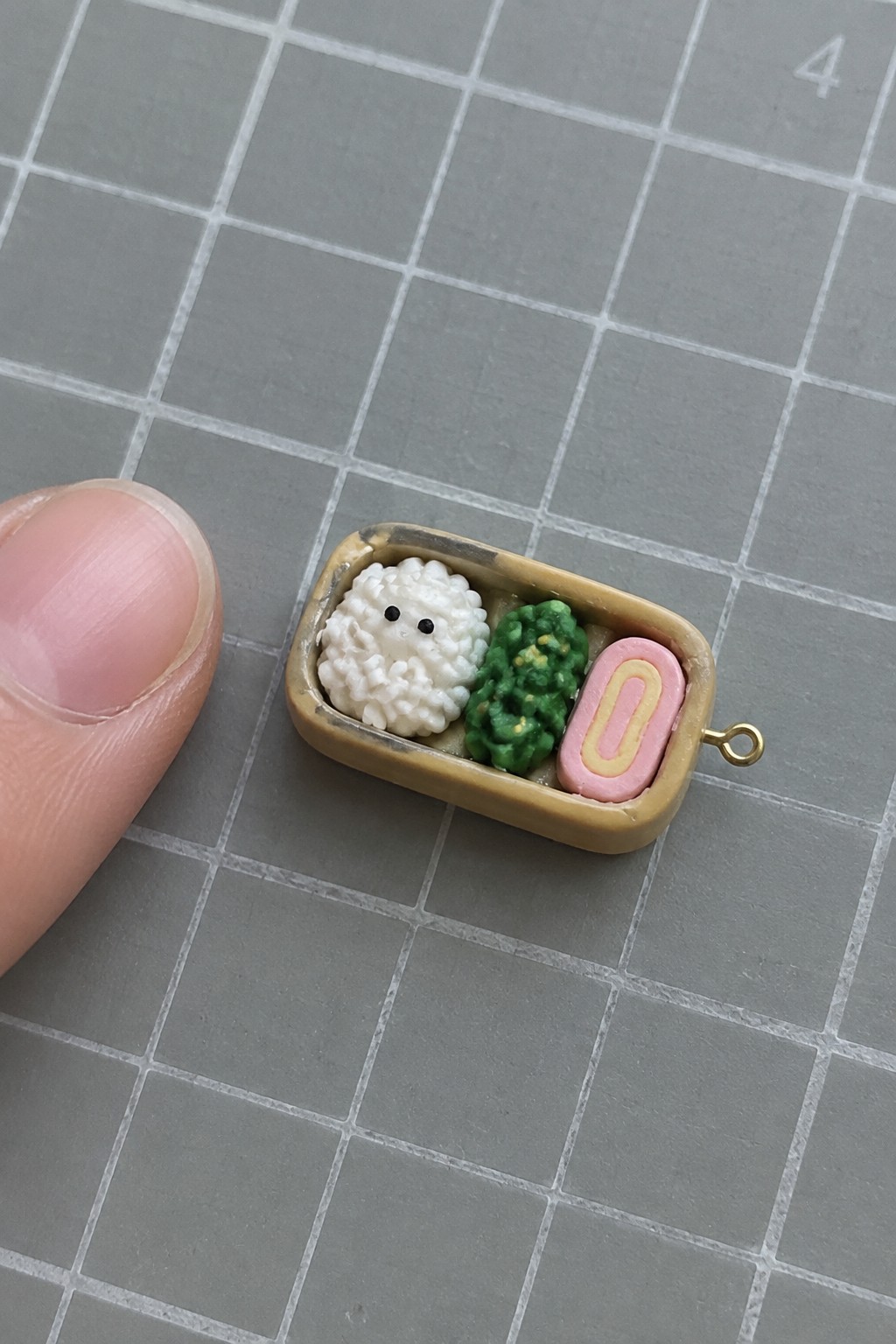
This hand-sculpted clay charm turns a tiny bento tray into a miniature meal, with a white rice ball, green vegetable, and pink rolled side dish arranged in separate sections. The contrasting colors and textured rice make the small food scene easy to read, while the tray shape gives the miniature a clear, compact silhouette.
The bento layout is easy to adapt with different miniature foods, colors, or tray shapes, and simple rounded forms can preserve the idea if you leave out the finer texture. Make it small for a charm or larger as a decorative miniature, keeping in mind that the attached loop is suited to display or accessory use rather than food service.
Wrapped Candy Clay Charm

A miniature wrapped candy charm turns a familiar sweet into a hand-sculpted clay accessory, with a rounded yellow center, red stripes, and translucent-looking twisted ends. Its bold color bands make the candy shape easy to recognize at a small scale, while the loop lets it hang as a charm.
The striped center is the main design feature, so a simpler version could use a plain clay oval with a few painted bands and sculpted wrapper ends. Try different stripe colors or make a set in several candy-inspired combinations for a playful keychain or bag charm.
Miniature Cinnamon Roll Clay Charm

A miniature cinnamon roll charm turns a familiar baked treat into a small hand-sculpted clay food design. Its coiled brown-and-tan layers and white icing lines make the spiral easy to recognize, while the rounded shape keeps the detail clear at charm size.
The spiral is the main feature, so you can simplify the dough and icing into a few curved bands and still keep the idea readable. Try changing the icing pattern or adding a small hanging loop to make it a keychain or necklace charm, or sculpt a larger version as a decorative miniature.
Swirled Lollipop Clay Charm
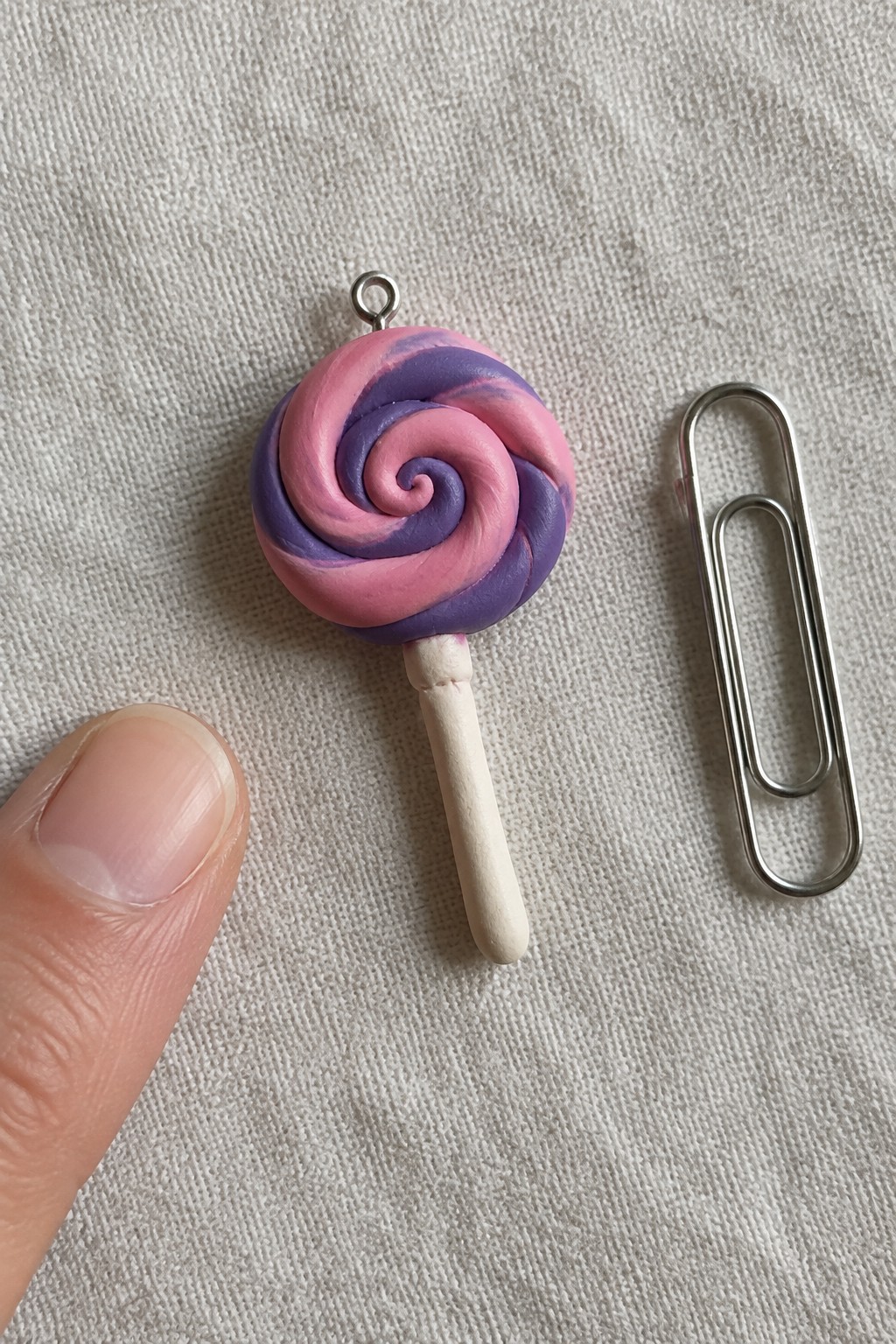
A miniature lollipop charm turns a familiar candy shape into a playful clay accessory. Its pink and purple spiral creates the main visual detail, while the pale stick and small metal loop make it read clearly as a hanging charm.
The spiral can be made with two contrasting clay colors, or adapted with stripes, a different pastel palette, or a smaller, simpler swirl. Keep the lollipop compact for a jewelry charm, or make a larger version as a decorative ornament or miniature sculpture.
Frequently Asked Questions
Polymer clay is a popular choice because it stays workable until you bake it, holds tiny details, and comes in many colors. Air-dry clay can work too, but it may be more fragile and can shrink as it dries. For charms that will be handled often, choose a sturdy clay and follow its package instructions for curing or drying.
You can start with just a craft blade, a toothpick, and a smooth work surface. A small roller or acrylic rod helps flatten clay evenly, while dotting tools, needle tools, and miniature cutters make details easier. For texture, try a toothbrush, foil, or the tip of a toothpick. Use tools dedicated to crafting rather than food preparation.
Build details in layers. Mix subtle shades for natural color variations, add tiny marks for seeds or toppings, and press texture into foods such as bread, waffles, or fruit peels. Keep proportions consistent, and look at real food or reference photos for guidance. A glossy finish can suggest syrup, frosting, or fruit, while a matte finish often suits bread and baked goods.
Before baking or drying, insert a small eye pin or screw eye into the piece, leaving enough of the loop exposed to attach a jump ring. For a more secure hold, remove the pin, add a tiny amount of compatible adhesive, and reinsert it before curing. Let the piece cool or dry completely, then attach it to a keychain, bracelet, necklace, or phone charm.
Start with simple shapes that do not need many tiny components, such as a strawberry, lemon slice, cookie, donut, sandwich, or miniature pizza. These are great projects for practicing rolling, shaping, layering, and adding texture. Once you’re comfortable, try more detailed ideas like a boba tea, tiny cake slice, sushi roll, or decorated cupcake.
