


I like clay projects that leave room to experiment without needing complicated tools or a big workspace.
For this collection, I’ve gathered simple handbuilding ideas that use basic shapes and easy-to-follow techniques.
You’ll find small decorative pieces, cute sculptures, and useful handmade objects to personalize with your own colors and details.
These 25 ideas are a relaxed place to begin if you’re new to working with clay and want a project that feels manageable.
Here are some approachable ideas to try at your own pace.
Cloud-Shaped Clay Trinket Dish

A hand-sculpted clay trinket dish with a scalloped cloud outline turns a simple catchall into a small decorative accessory. Its pale blue surface, tiny white cloud marks, and painted face give the dish a clear sky-inspired theme without needing a complicated shape or many details.
The cloud silhouette makes the idea easy to adapt: keep the outline and use different colors or painted motifs, or leave off the face for a simpler version. Made in a small or larger size, it could hold lightweight items such as jewelry, while the same design could also become a purely decorative piece.
Miniature Clay Succulent Pot Charms

These tiny clay succulents are sculpted as potted plants, with layered, rounded leaves and small hanging loops that turn each one into a decorative charm. The contrast between the green foliage and the terracotta, mint, and speckled pots gives each miniature its own look without distracting from the plant shapes.
The repeated leaf forms make this idea easy to adapt: a beginner can use fewer, larger leaves, then try different pot colors or make a set of matching plants. Keep them as miniature sculptures or use the hanging loops for decorative charms, adjusting the size and colors to suit the project.
Sunburst Clay Wall Hanging

A round, hand-sculpted clay wall decoration uses a raised central circle and radiating lines to create a simple sunburst motif. Its warm ochre color and pale carved-looking rays make the design easy to read, while a hanging loop turns it into a decorative wall ornament.
The round shape and repeated rays give beginners a clear design to adapt without adding many small details. Try a smaller version for a seasonal ornament, or change the color and vary the rays to make a set of wall hangings with different sunburst patterns.
Strawberry, Lemon, and Cinnamon Roll Clay Magnets

Hand-sculpted clay magnets turn familiar foods into small, colorful decorations, with a strawberry, lemon wedge, and iced cinnamon roll forming a playful matching set. Their rounded shapes and raised details, such as the strawberry leaves and cinnamon swirl, make each miniature easy to recognize.
The simple food shapes are useful starting points for a set, and beginners can reduce the detail to basic forms with a few contrasting clay pieces. Make the magnets in different sizes or swap in other fruit and pastry designs to create a coordinated collection or a small handmade gift.
Crescent Moon Clay Ring Holder

This hand-sculpted clay ring holder pairs a crescent moon with two small star figures, creating a decorative accessory stand with a celestial theme. Its deep blue, gold-speckled finish contrasts with the lighter stars, while the moon’s curved shape provides a place to rest rings.
The crescent silhouette makes the idea recognizable, and the stars can be simplified into basic shapes for a more manageable version. Try different night-sky colors or make the moon larger or smaller to suit the rings it will hold; the same design could also be adapted into a display piece without the ring-holding detail.
Avocado Clay Keychain

A hand-sculpted avocado charm turns the familiar cut-fruit shape into a small character, with a bright green center, darker green edging and limbs, and simple face details. The metal loop makes it a decorative keychain or bag charm, while the contrasting colors keep the avocado silhouette easy to recognize.
The rounded form can be built from simple shapes, and the face and limbs can be reduced to a few small details for a simpler version. Try different expressions or shades of green, or adapt the same fruit character into a small hanging ornament or miniature sculpture.
Geometric Clay Coasters

These handmade clay pieces are decorative coasters in a mix of simple shapes, including a circle, square, triangle, and hexagon. Their bold mustard, teal, terracotta, and cream colors make each shape distinct, while the slightly uneven edges and matte surfaces keep the set looking hand-sculpted rather than mass-produced.
The variety of shapes makes the set easy to adapt: start with one or two basic forms, or make a coordinated group in different sizes and colors. The same idea could become decorative tiles or small display pieces, and the earthy palette could be swapped for brighter colors or simple painted patterns.
Clay Fruit Charm Bracelet

A hand-sculpted clay fruit bracelet pairs a gold-tone chain with small banana, blueberry, cherry, and pear charms. The bright fruit colors, leafy details, and varied shapes make it a playful piece of decorative jewelry rather than a single miniature sculpture.
The linked chain gives each charm room to stand out, and you could simplify the design by making just one or two fruit shapes with basic leaves. Try swapping in strawberries, oranges, or tiny flowers, or make the charms smaller for a different accessory; the mix-and-match idea also makes this a useful project to save for a handmade gift.
Daisy Clay Photo Holder

This hand-sculpted clay photo holder pairs a rounded pink base with raised white and peach flowers and a simple metal clip for displaying a small photo or note. The contrast between the soft clay shape and the slim wire holder makes it a decorative desk accessory as well as a floral clay craft.
The rounded base gives beginners a forgiving shape to adapt, while the attached flowers provide a clear way to add color and detail. Try fewer, larger daisies for a simpler version, or change the flower colors to match a desk or gift theme.
Animal Clay Pencil Toppers

These handmade clay animal figurines turn ordinary pencils into playful decorative accessories. A seated orange fox, blue whale, and gray cat use rounded sculpted shapes, contrasting colors, and small painted facial details to make each design easy to recognize.
The simple faces and compact forms offer a useful starting point for making a favorite animal, with colors and details adjusted to suit each version. Make a matching set for school supplies or create one as a small gift, keeping the features simple if you want an easier sculpting project.
Pastel Clay Moon and Star Hanging

This handmade clay hanging uses sculpted moons, stars, and clouds arranged in three strands beneath a wooden crossbar. Its muted mint, blush, and cream palette ties the different shapes together, making it a decorative wall or window ornament with a simple repeating design.
The repeated silhouettes make the idea easy to adapt: a beginner could make fewer shapes or use just one moon, star, and cloud form. Vary the strand lengths, colors, or size of the clay pieces to suit a bedroom or nursery, or make a smaller version as a hanging gift.
Miniature Clay Cupcake Sculptures

These tiny hand-sculpted cupcakes are decorative miniatures, with fluted-looking bases, swirled frosting, and berry details in contrasting colors. Their small scale and familiar dessert shapes make them a playful clay sculpture set rather than functional food or tableware.
The three frosting colors give the set variety while keeping the cupcake shapes consistent, so you could make a matching group with different toppings or pastel shades. A beginner-friendly version could use simple rounded bases and thicker frosting coils, then be displayed together as miniatures or adapted into small charms.
Layered Clay Incense Holder

A hand-sculpted clay incense holder pairs a low, flowing base with a raised mound that supports an upright incense stick. Its stacked bands of terracotta and sandy beige create a simple landscape-like design, while the handmade contours keep the decorative accessory from looking too uniform.
The long, low shape gives the colors room to form distinct curves, so even a simplified version can look finished with just two contrasting clay colors. You could change the palette, make the base narrower or more sculptural, or create a few small versions as gifts; keep the incense stick upright and use the holder only as intended for incense.
Handmade Clay Animal Refrigerator Magnets

These hand-sculpted clay magnets turn familiar animals—a hedgehog, ladybug, turtle, and bee—into small refrigerator decorations. Rounded bodies, attached legs and wings, textured shells and spines, and simple painted features make each animal recognizable while giving the set a consistent handmade look.
The animal shapes are easy to adapt by changing the colors, markings, or facial details, and simpler silhouettes can keep the sculpting manageable for beginners. Make a matching set of different creatures for the fridge, or use one animal as the starting point for a small decorative figurine or ornament.
Botanical Leaf Clay Wall Plaque

A hand-sculpted clay plaque with a raised leafy branch makes a simple botanical wall decoration. The shallow relief brings out the leaf veins, while the green-to-teal color gives the rectangular plaque visual depth without needing extra embellishments.
The branch motif is easy to adapt by using a different leaf shape or arranging several smaller sprigs across the surface. A beginner could simplify the vein details and choose one clay color, or make a smaller version as a hanging ornament or decorative plaque.
Miniature Clay Mushroom and Star Decorations

These hand-sculpted clay decorations pair small spotted mushrooms with simple star shapes in warm red, brown, yellow, and cream. The rounded caps, contrasting stems, and raised dots give the miniature sculptures clear shapes, while the mix of motifs makes the set feel varied without adding complicated details.
The mushroom forms can be simplified to a cap and stem, then personalized with different spot patterns or colors; the stars offer an even easier shape to try alongside them. Make the pieces in matching or mixed sizes for a small decorative collection, or adapt the motifs into charms or ornaments by adding a suitable attachment.
Hand-Sculpted Clay Daisy Bouquet

This hand-sculpted clay bouquet is a freestanding floral decoration with five white daisies, textured yellow centers, and green stems gathered into a small base. Its raised petals and uneven handmade contours give the flowers a sculptural look, making it a clay floral craft rather than a functional vase arrangement.
The separate flowers make the design easy to adapt: a beginner could start with one daisy and a simple stem, then add more blooms as their shaping skills grow. Try different petal colors or center details, or make a smaller version as a desk decoration or handmade gift.
Miniature Clay Camera Pendant
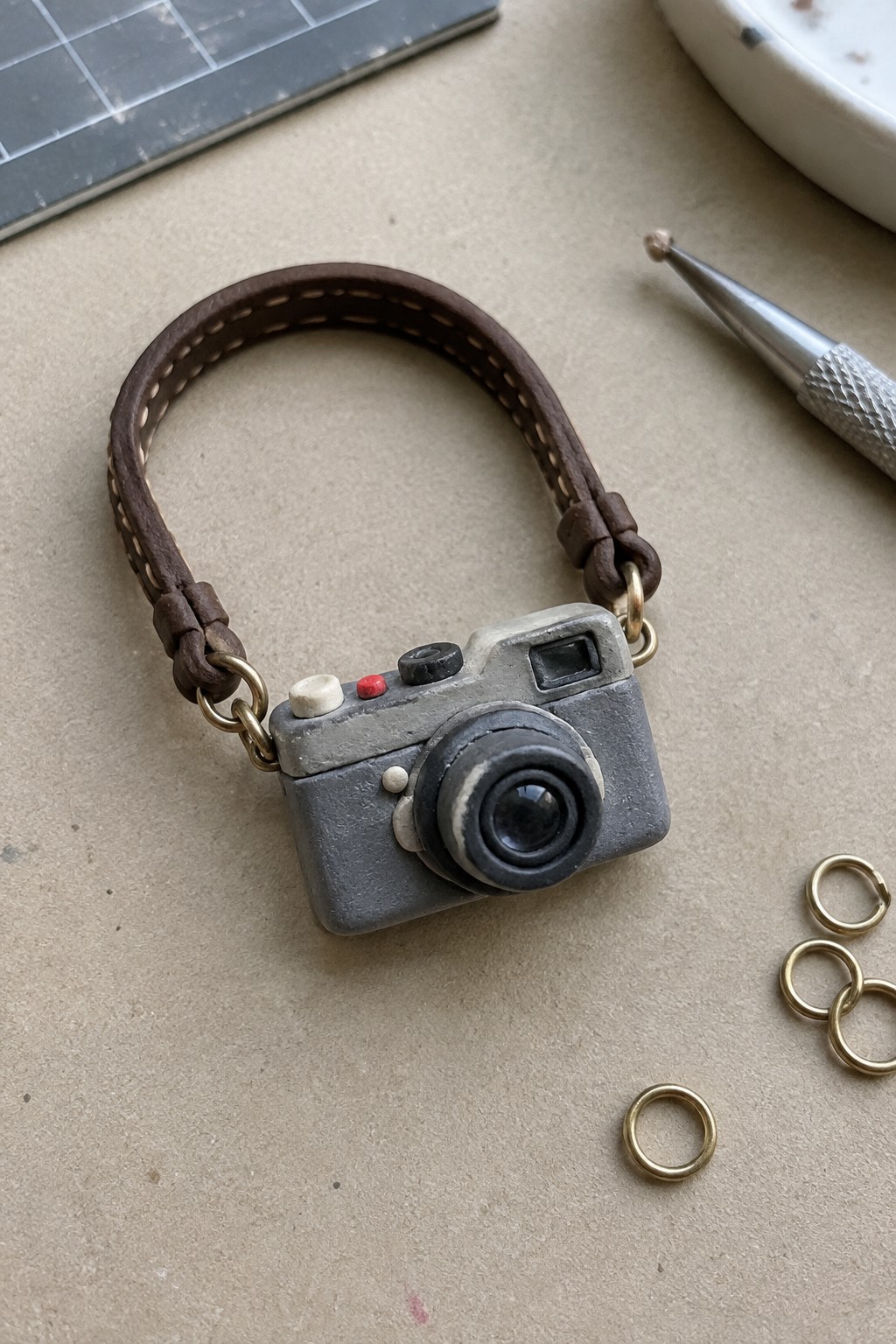
A tiny hand-sculpted camera makes a distinctive pendant or bag charm, with a dark lens, small raised controls, and a brown strap that completes the camera shape. Its muted gray body and contrasting black, cream, and red details give the miniature a recognizable, slightly vintage look.
The camera’s simple rectangular body is a useful starting point for a small clay project, while the lens and controls let you add detail without changing the basic silhouette. You could simplify the features for a smaller charm, or try different body colors and strap styles to make a matching set of wearable or decorative miniatures.
Painted Clay Christmas Ornaments

These handmade clay ornaments use simple holiday silhouettes, including a star, a mitten, and a heart, as the base for hand-painted seasonal designs. Cream, deep green, and red details keep the set visually cohesive, while the twine loops make each piece ready to hang as a decorative clay ornament.
The clear shapes make the idea easy to adapt: a beginner could choose one silhouette and add a few painted berries, leaves, or a snowflake rather than covering it with detailed patterns. Try different color combinations or make the ornaments in smaller sizes for gift tags, while keeping them as decorative pieces for a tree or seasonal display.
Blue Clay Whale Paper Clip Holder

A hand-sculpted whale makes a playful desk accessory, with a recessed opening in its back for holding paper clips and small sculpted details that give it a clear animal shape. The blue body, pale underside, and small water spout make the object recognizable while keeping the design simple and rounded.
The whale shape and contrasting colors do most of the visual work, so a beginner version could use a plain body and a few basic details. You could change the color, make the whale larger or smaller, or adapt the idea into a different animal-shaped holder for lightweight desk supplies.
Sculpted Clay Stamp Handles

These small handmade clay pieces are decorative handles for pressing patterns into a surface, each with a different sculpted head: a smooth oval, a ridged flower-like form, and a faceted shape. Their simple forms and muted terracotta, gray, and cream colors make the hand-shaped details easy to notice.
The wooden handles give each stamp a practical grip, while the clay tops could be varied with other rounded, petal-like, or geometric designs. For a simpler version, make one basic shape and focus on clear contours; a set in different sizes or colors could also make a useful gift for someone who enjoys clay crafting.
Miniature Clay Fairy Door

A miniature clay fairy door is a small decorative sculpture built around a rounded, wood-look doorway, with a curled top, flower wreath, stepping stones, and sculpted plants. The muted green door and lavender blossoms give the hand-sculpted details clear contrast, while the stone path makes the design read as a tiny garden entrance.
The door and path can be simplified into a flat-backed decoration, or kept freestanding and made larger for a miniature display. Beginners could use a plain arched door with a few flowers and stones, then try different door colors, wreath designs, or plant shapes in later versions.
Colorful Clay Cable Clips

These hand-sculpted clay cable clips have a curved, notched shape that holds a cord in place, with rounded raised details that give each one a simple, playful look. Their contrasting colors make these small functional accessories easy to distinguish on a desk.
The open notch and curved base are the key shapes to adapt, and a beginner could keep them plain before adding a raised dot or other simple detail. Make a set in different colors or sizes for different cords, keeping the opening wide enough for the cable you want to guide.
Miniature Clay Book Pendant

A tiny hand-sculpted clay book makes a distinctive pendant, with a dark green cover, small painted white flowers, and modeled pages along the edges. Its miniature book shape and botanical cover art give this clay jewelry charm its recognizable look.
The flat cover provides a simple space for painting, so you could swap the daisies for leaves, stars, or a different small motif. Keep the details minimal for an easier version, or make several miniature books with different cover colors and designs for personalized pendants or gifts.
Textured Clay Napkin Rings

Hand-sculpted clay napkin rings turn a simple table accessory into a small decorative craft. Their rounded bands have an irregular dotted texture, while muted green, ochre, and cream create a coordinated set that stands out against neutral linen.
The open ring shape is straightforward to adapt with different widths, colors, or pressed-in patterns, and making several matching pieces gives the set a consistent look. A beginner could keep the bands plain and add just a few dots, or vary the sizes and colors for a more playful table setting or handmade gift.
Frequently Asked Questions
Air-dry clay is a convenient choice if you want to make projects at home without a kiln. It hardens as it dries, though finished pieces usually aren’t waterproof or food-safe unless the product specifically says otherwise. For durable pottery, choose a clay body designed for firing and check that you can access a kiln. Polymer clay is another no-kiln option, but it cures in a home oven and works differently from pottery clay.
You can start with clay, a smooth work surface, and a few household tools. A rolling pin or smooth bottle helps flatten clay, while a butter knife or craft stick can cut shapes. A damp sponge smooths surfaces, and a toothpick can add details. If you’re joining pieces, keep a small container of water nearby. Specialized pottery tools are helpful, but not essential for many beginner projects.
Start with pinching, coiling, and slab building. For a pinch pot, press your thumb into a ball of clay and gently pinch the walls outward. For a coil project, roll clay into long ropes and stack them to build a form. For slab building, flatten clay into an even sheet, then cut and shape it. These techniques are versatile enough for projects such as small bowls, trinket dishes, ornaments, and simple planters.
Work with clay that is soft and evenly moist, and avoid making parts dramatically different in thickness. When attaching one piece to another, lightly score both surfaces, add a little slip or water as appropriate for your clay, then press the pieces together firmly. Smooth the join, but don’t soak it. Let the finished piece dry slowly and evenly, away from direct heat or sunlight. Follow the clay maker’s instructions, since drying and firing requirements vary.
Yes, but the clay and finish matter. Air-dry clay projects are generally best used for decoration or dry storage, not for holding food or water. For functional dishes or mugs, use pottery clay that can be fired correctly, and choose a food-safe glaze and firing process. A small planter can be decorative, but a functional one needs a suitable clay body and a drainage hole. If you’re new to pottery, start with a simple dish or planter and ask a local studio about firing options.
