


I like how a simple pinch in a piece of clay can turn into something useful or decorative.
In this collection, I’m sharing 20 ideas that play with the pinch-pot shape, from small sculptural pieces to charming accents for the home.
Each one offers room to try different forms, colors, and little details.
I hope you find a project here that feels fun to make your own.
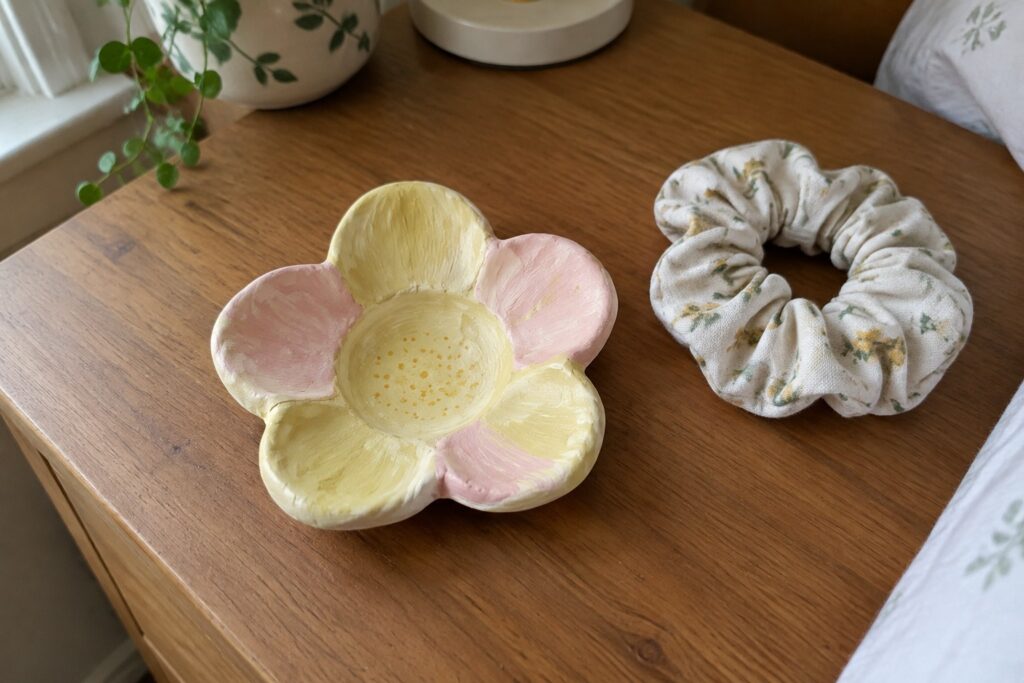
Pastel Flower Clay Trinket Dish

A hand-sculpted flower-shaped clay trinket dish pairs a shallow center with five rounded petals painted in alternating soft pink and yellow. Its uneven handmade contours and brush-painted finish give this decorative holder a simple floral design without making it look mass-produced.
The petal shape is easy to adapt by changing the number or outline of the petals, or by using a different color combination. A smaller version could hold rings or other small keepsakes, while a beginner could simplify the painting to one color per petal and leave out the fine brushwork.
Mushroom House Decorative Pot

This pinch-pot clay craft turns a rounded mushroom cap into the roof of a miniature house, with a cream-colored stem, a small arched door, windows, and pebble details. The red-and-white color contrast makes the mushroom shape easy to recognize, while the attached features give the handmade clay sculpture the look of a tiny cottage. It is a decorative miniature rather than a functional container.
The large cap and simple house details give the design a clear outline that can be adapted without copying every small feature. For a simpler version, use a plain door and a few white cap spots, or change the colors and add different windows or greenery; making it larger or smaller can also turn the same concept into a desk decoration or a small gift.
Terracotta Pinch-Pot Ring Holder

A hand-sculpted clay ring holder pairs a shallow, rounded dish with a raised cone-shaped post for keeping rings together. Its warm terracotta color and irregular white rim give the decorative trinket dish a simple, handmade look, while the central post makes the design useful for displaying rings.
The dish and post can be shaped with basic pinch-pot forms, then adjusted to hold a few rings or a larger collection. Keep the terracotta and white combination, or try a painted rim, speckles, or a different post shape to suit the recipient; a smaller version could also make a compact gift or desk accessory.
Sleeping Fox in a Woven Clay Nest

A curled fox figurine nestled in a small woven-style clay basket makes a compact miniature sculpture with a clear animal-craft theme. Warm rust-brown clay, cream markings, closed eyes, and fine fur texture distinguish the fox, while the rounded body and raised basket rim create a snug nest-like composition.
The curled shape keeps the design cohesive, and the fox’s face and contrasting markings provide the main details to personalize. For a simpler version, use smooth surfaces and fewer fur marks, or change the animal, colors, or basket texture to make a small collectible or decorative gift in a different style.
Three-Tier Hanging Clay Planters

These hand-sculpted clay wall pockets form a vertical decorative holder, with three rounded, open-front bowls linked by cord and filled with dried stems. Their uneven rims and muted coral, ochre, and blue-green colors give the stack a handmade look while making each pocket distinct.
The tiered arrangement makes a narrow wall space useful for displaying dried flowers or other lightweight decorative items. You could vary the pocket sizes and colors, or simplify the design to one or two bowls; repeating the same rounded form keeps the set visually connected.
Hand-Painted Pinch-Pot Bead Necklace
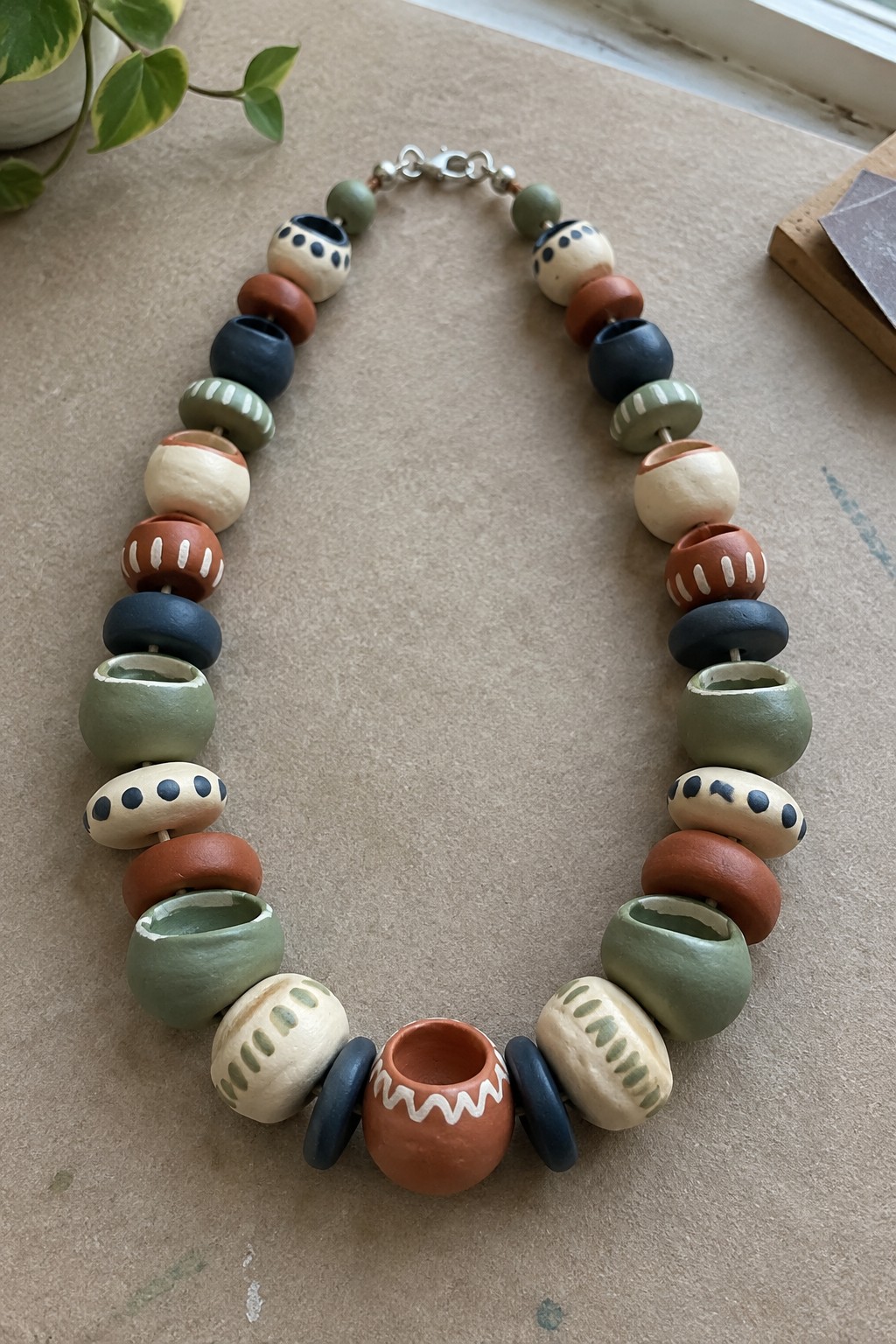
This handmade clay necklace uses a series of rounded, pinch-pot-style beads as oversized decorative jewelry. The repeated bowl-like forms, earthy rust, sage, cream, and navy colors, and simple painted patterns make the necklace visually cohesive while keeping each bead distinct.
The repeated shapes make the design easy to adapt: use fewer beads for a shorter necklace, or change the colors and painted motifs to suit a different style. A simpler version could use a small set of pinch-pot beads with one or two painted details, while the larger, more varied arrangement works as a bold statement accessory or a decorative handmade gift.
Three-Tone Pinch-Pot Pumpkins

These handmade clay pumpkins use rounded, lobed pinch-pot forms and raised stems to turn a familiar seasonal shape into a small decorative sculpture. Their matte orange, cream, and sage-green finishes make the trio visually distinct while keeping the sculpted contours easy to notice.
The simple rounded shape can be adapted to different sizes, stem styles, or autumn color combinations, such as rust, mustard, and dusty blue. A beginner could make one pumpkin with fewer, softer lobes, while making several in contrasting colors creates a coordinated seasonal display.
Miniature Layer Cake in a Pinch Pot

A small hand-sculpted pinch pot holds a miniature slice of layer cake topped with red berries, a blue berry, and green leaves. The cake’s pale frosting and pink filling give the tiny sculpture clear layers and color contrast, making it a playful miniature display rather than a serving dish.
The layered cake is easy to adapt by changing the filling color, berry arrangement, or frosting shape, and the same concept could become a whole miniature cake or a single cake-slice ornament. Keep the details simple by shaping the layers and adding just one or two small toppings, or make several slices with different fruit for a tiny dessert collection.
Cutout-Rim Clay Trinket Bowl

A hand-sculpted clay bowl becomes a decorative trinket dish with a plain, shallow center and an openwork rim of uneven leaf and teardrop shapes. The contrast between the smooth interior and the textured, sculptural edge makes the cutouts the main feature.
The simple bowl form gives you room to change the rim pattern, from repeated leaves to dots or geometric openings, or to make a smaller version for rings and earrings. Keep it unpainted for a muted look or add a few contrasting details, and use the finished piece to hold small items rather than food.
Pastel Pinch-Pot Stud Earrings
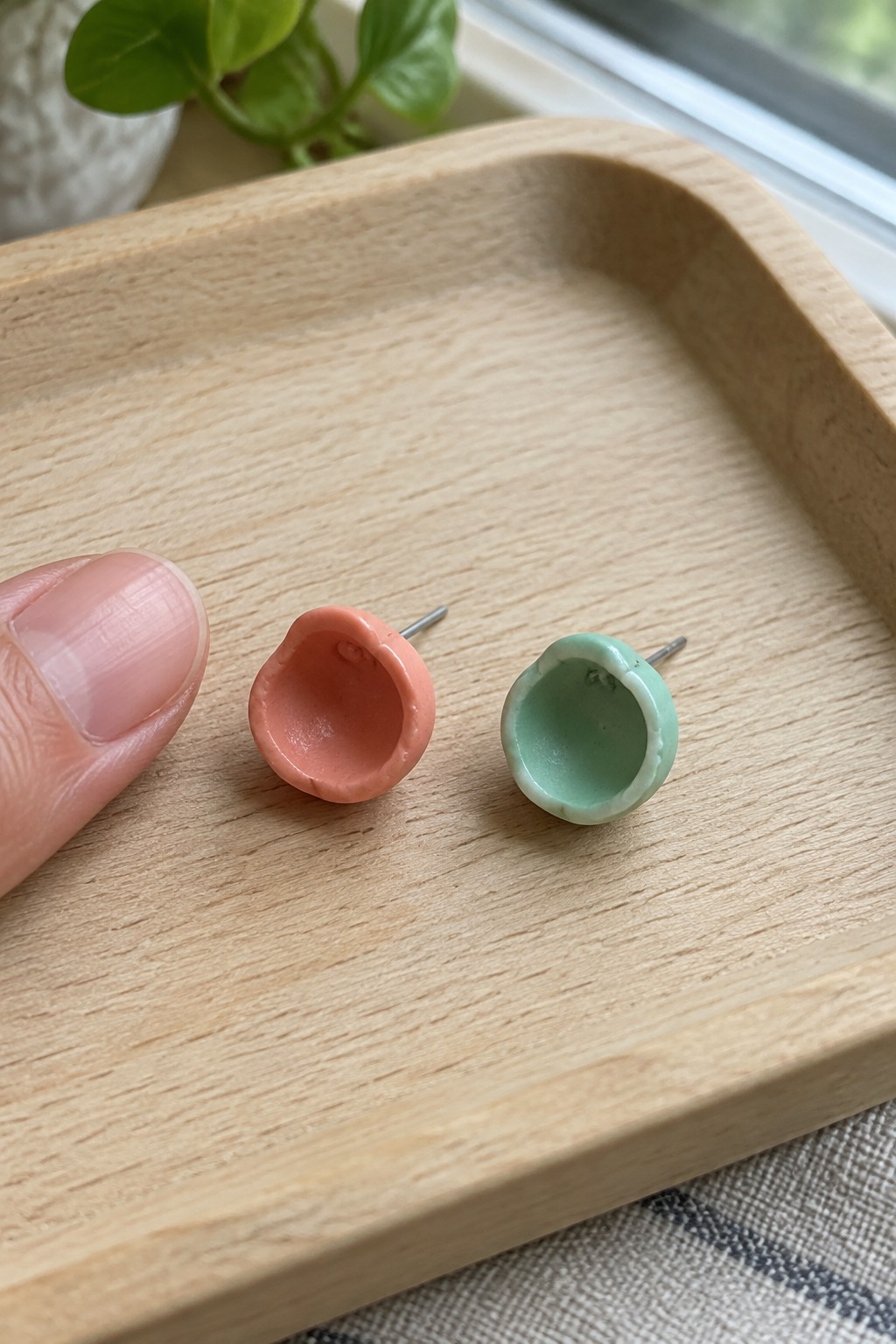
These small clay stud earrings use shallow, rounded pinch-pot forms as wearable miniature sculptures. Their open bowl-like fronts, uneven handmade rims, and contrasting coral and mint colors make the shape stand out without needing extra decoration.
The simple form is easy to adapt with different pastel shades, rim shapes, or tiny sculpted details, and making each earring a different color keeps the pair playful. You could also scale the concept up into decorative miniatures, but the small size and paired design make it especially suited to handmade jewelry.
Stacked Pinch-Pot Clay Sculpture

This decorative clay sculpture stacks four open pinch-pot forms in a vertical column, with a small flattened clay base supporting the bottom piece. Its rounded, uneven contours and contrasting ochre, cream, blue-gray, and terracotta colors make the handmade shapes stand out as a miniature sculptural display rather than a set of functional bowls.
The stacked arrangement is the idea to save, and you could change the number of forms, their proportions, or the color order to suit a shelf or tabletop. For a simpler version, make fewer pinch pots and focus on keeping the colors distinct; a small scale also makes the design easier to adapt into a compact decorative sculpture.
Miniature Clay Food Magnets

Small hand-sculpted clay motifs turn familiar foods into decorative magnets, including a lemon slice, croissant, tulip, and spotted mushroom. Their rounded shapes, muted colors, and simple raised details make each miniature easy to recognize, while the mix of food and flower designs gives the set variety.
The separate motifs could be made in different sizes or adapted into pins and small ornaments, depending on how they are finished. For a simpler version, focus on one shape, such as a lemon slice, and use a few contrasting clay colors for the segments and rind; the same approach also works for other fruits or baked goods.
Leaf-Stamped Pinch-Pot Wall Hanging

Small, shallow pinch pots become a vertical wall decoration when they are linked with cord and finished with painted leaf motifs. The earthy red, ochre, green, and cream colors give each handmade clay disc a distinct look while keeping the strand visually connected.
The repeated shape makes this idea easy to adapt: try fewer pots for a shorter hanging, or vary their sizes and colors for a looser arrangement. Keep the leaf designs simple for a quicker version, or use different botanical motifs on each pot to make a one-of-a-kind decorative piece for a wall or doorway.
Miniature Pinch-Pot Turtle Figurine

A small handmade clay turtle combines a rounded green shell with a beige head and four stubby legs. The shell’s open, segmented surface gives this miniature animal sculpture its defining detail, while the simple dark eyes and tiny nostrils keep the face easy to read.
The shell shape makes the design memorable and offers room to try different panel patterns or colors, such as a blue shell with a pale body. For a simpler version, use fewer shell divisions and basic rounded shapes; the finished turtle can be made at different scales as a decorative figurine or adapted into a small hanging ornament.
Miniature Fruit Basket Clay Charms

These miniature clay charms turn pinch pots into tiny baskets of fruit, with a strawberry-shaped bowl, an orange bowl, and a green bowl holding sculpted fruit pieces. The bright colors, small attached leaves, and hand-painted details make each one read clearly as a different fruit while keeping the rounded pinch-pot form at the center.
The fruit theme is easy to adapt by swapping in cherries, lemons, or apples, or by making just one basket for a simpler project. Their compact scale suits decorative keychains or a small collection of miniature sculptures, and repeating the bowl shape in different colors gives the set a consistent look.
Pinch-Pot Vases With Dried Flowers

Hand-shaped clay vases in soft cream, dusty pink, and sage green make a simple decorative set for displaying dried flowers and grasses. Their gently uneven contours and matte surfaces keep the forms looking handmade, while the restrained colors let the stems add height and texture.
The narrow necks and rounded bodies give each vase a clear silhouette that can be adapted into different sizes or colors. For a simpler version, make one small vase and pair it with a few dried stems, or vary the rim shapes and muted colors to create a coordinated group for a shelf or windowsill.
Miniature Clay Basket of Croissants and Berries
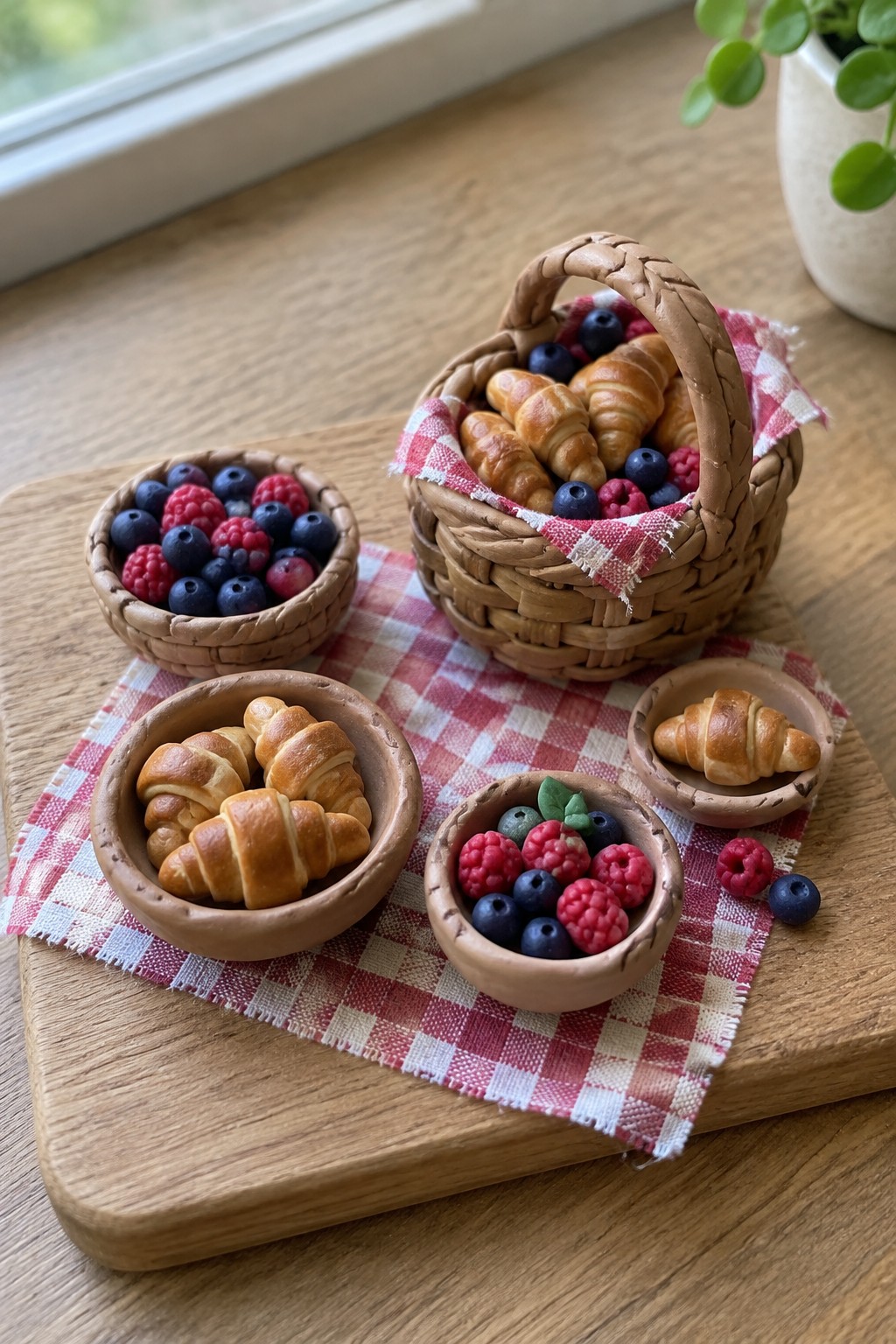
A tiny hand-sculpted picnic set pairs a handled basket of croissants with small pinch-pot bowls filled with berries and more pastries. The woven-looking basket, rounded dish shapes, and red-and-blue colors make it read as a miniature food scene and a decorative clay sculpture rather than functional tableware.
The idea is worth adapting because simple pinch-pot bowls can become the base for different miniature spreads, while the basket and pastries add variety in shape and texture. Make a smaller version as a display piece, or swap in other sculpted foods and berry colors; the tiny croissants and scattered fruit keep the scene recognizable even with simplified details.
Sleeping Face Pinch-Pot Dish

A shallow pinch-pot dish shaped like a resting face turns a simple bowl form into a sculptural decorative piece. Its closed eye, raised lashes, dark lips, and contrasting earthy colors make the facial design easy to recognize while keeping the handmade contours visible.
The face motif could be adapted with different expressions, painted sections, or smaller sculpted details, and the dish could be made in several sizes for display or small keepsakes. For a simpler version, keep the shallow form and add just one closed eye or a pair of lips, letting that single feature carry the design.
Miniature Pinch-Pot Succulent Planters

Small handmade clay pinch pots become miniature decorative planters, each holding a different succulent arrangement. Rounded, slightly irregular rims and the warm terracotta, creamy white, and soft green colors give the trio a varied look while keeping the plants as the focal point.
The three-pot arrangement is easy to adapt by changing the pot shapes or colors and choosing different miniature plants. A simpler version could use one pinch pot with a single sculpted succulent, while making several small pots creates a coordinated display for a shelf or windowsill.
Stacked Multicolor Pinch-Pot Sculpture
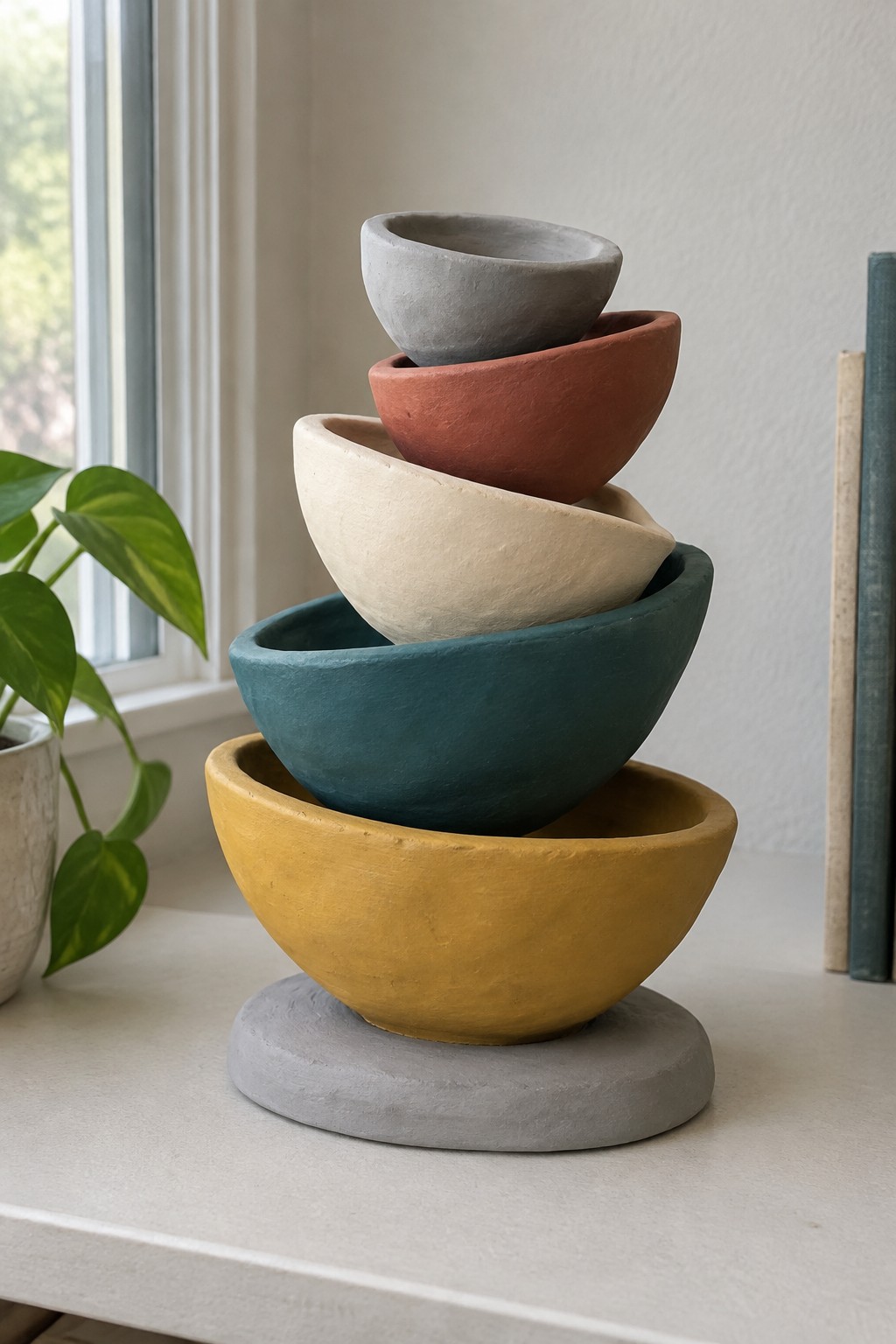
A stack of hand-sculpted clay bowls becomes a decorative sculpture through its off-center arrangement and contrasting earthy colors. The irregular rims and softly rounded forms keep the stack from looking too uniform, while the gray base gives the composition a stable visual finish.
The shape does most of the creative work, so you could simplify the project by stacking just three bowls or vary the sizes and colors to suit your space. Keep it as a display piece, or adapt the stacked forms into separate small decorative bowls; its bold silhouette also makes it a distinctive idea to save for experimenting with pinch-pot shapes.
Frequently Asked Questions
Pinch-potting is a hand-building method in which you shape clay by pressing your thumb into a ball and gently pinching the walls between your thumb and fingers. Rotate the clay as you work to create an even thickness and a smooth, sturdy shape.
Air-dry clay is convenient for simple projects because it does not need a kiln. For pieces you want to fire, use pottery clay that suits your kiln and glazing plans, such as earthenware or stoneware. Check the clay’s instructions, and avoid using air-dry clay for food or drinks unless the product is specifically certified as food-safe.
Work with clay that feels soft and pliable, but not sticky or watery. Pinch gradually, keeping the walls roughly even, and avoid making them too thin. If the clay starts to dry, lightly smooth it with damp fingers. For projects with added features, score and slip the joining surfaces, then blend the seams securely.
Yes. Many pinch-pot projects are easy to adapt. Start with a basic bowl, dish, or small animal shape, then add simple details such as texture, handles, ears, or painted patterns. Make one change at a time, and keep small decorations lightweight so they attach easily and do not distort the pot.
Let air-dry clay dry according to its packaging, turning the piece occasionally if needed so it dries evenly. Once it is completely dry, you can paint it and apply a compatible sealer. Pottery clay must be dried thoroughly and kiln-fired before glazing. Follow the clay, glaze, and kiln instructions, and treat decorative pieces as non-food-safe unless they have been properly made and certified for food use.
