


I’ve always liked the charm of tiny buildings, from crooked little cottages to simple storefronts with painted details.
In this collection, I’m sharing miniature clay ideas that play with small shapes, colors, and architectural touches.
Some are sweet decorations for a shelf, while others have the look of little houses you could personalize to suit your style.
Here are 19 ideas to inspire your next small-scale clay project.
Colorful Miniature Clay House Magnets

These hand-sculpted miniature houses turn simple building shapes into a colorful set of decorative wall magnets. Their varied rooflines, contrasting doors, tiny windows, and dotted roof details give each house its own look while keeping the designs consistent as a group.
The repeated house shape makes the idea easy to adapt: simplify the windows and trim for smaller versions, or vary the roof colors and door shapes to create a whole street. Made as individual magnets, the houses could decorate a fridge or magnetic board, and the same designs could be scaled up as small wall decorations.
Tiny Mushroom House

This hand-sculpted clay miniature turns a cottage into a mushroom, with a rounded terracotta roof, pale spots, a small chimney, and a cream-colored base. Painted flowers, a wood-look door, and pebble steps add detail to the decorative house sculpture without hiding its simple, recognizable shape.
The broad roof and small features make the design easy to adapt: a simpler version could use a plain roof, spotted cap, and arched door, while extra details can be added as time allows. Try different roof colors or painted motifs, or make a set of mushroom houses in varied sizes for a miniature display or a handmade gift.
Miniature Lighthouse Clay Pendant

A hand-sculpted lighthouse becomes a tiny building charm, with a tapered white tower, dark blue trim, small windows, and a lantern room at the top. The raised brick-like texture gives the narrow shape definition, while the silver loop and chain make it a wearable clay accessory rather than a freestanding miniature.
The lighthouse silhouette and simple blue-and-white palette make the design recognizable even at pendant size. To adapt it, simplify the brick marks or windows, change the trim color, or make the tower larger as a hanging ornament; the small version also makes a distinctive handmade gift for someone who collects nautical-themed accessories.
Miniature House Clay Ring Dish

This hand-sculpted clay trinket dish turns a tiny blue-gray house into a place to keep rings. Raised cream-colored rooflines, shingles, windows, and a door give the shallow dish a layered miniature-sculpture design, while the hand-shaped rim keeps it recognizable as a dish.
The house motif makes the ring dish more distinctive than a plain tray, and the windows provide natural spots for sorting a few small pieces of jewelry. For a simpler version, use a basic house outline with painted-on windows and roof details, or change the colors and add a chimney or simple door design; making it larger could create more room for rings and other small accessories.
Miniature Clay Bookshop Keychain
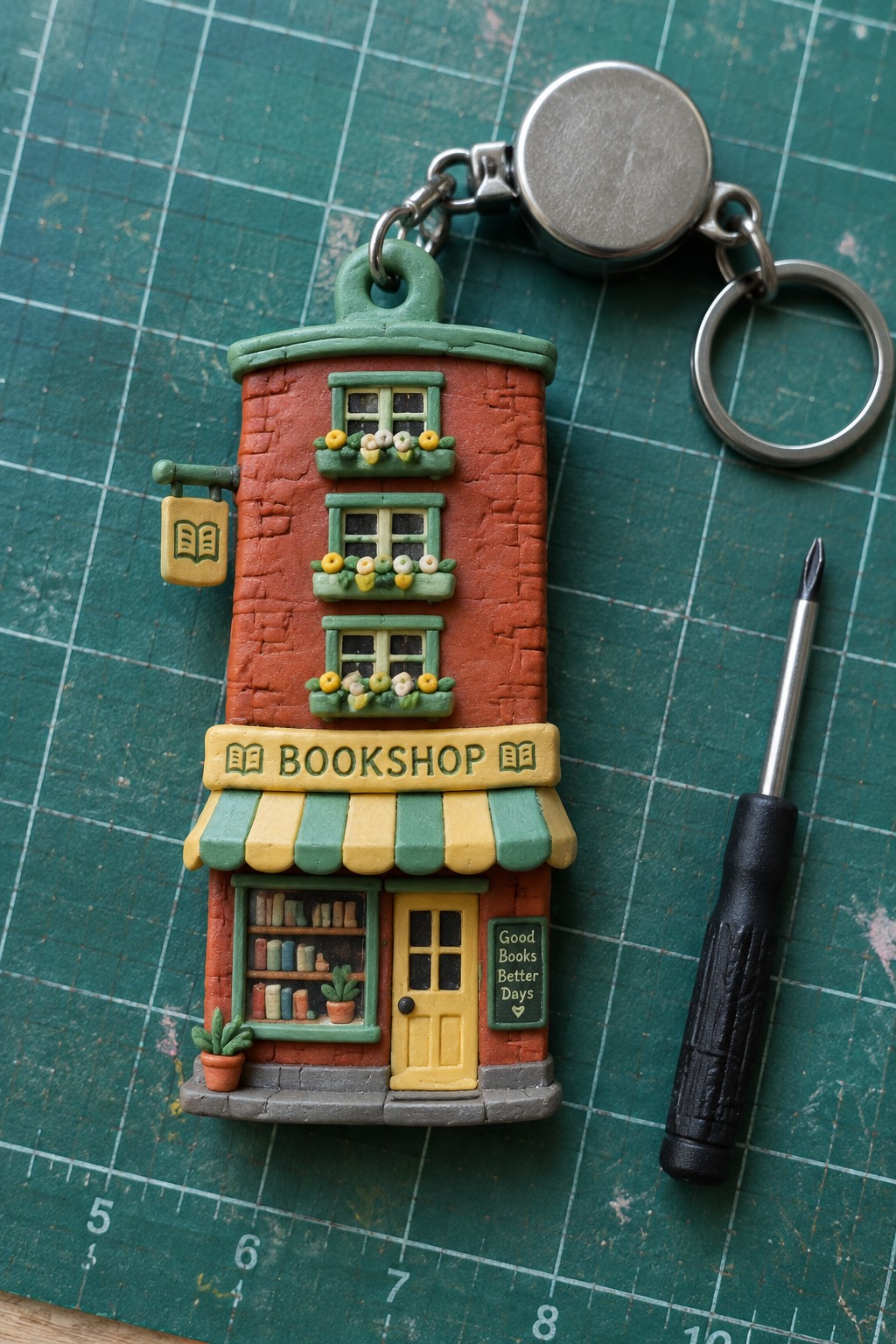
A hand-sculpted miniature bookshop becomes a decorative keychain, with a brick-red façade, green-and-yellow striped awning, flower-box windows, and tiny books in the front display. The layered shop details and sign make the small building recognizable while giving it the feel of a miniature sculpture rather than a simple flat charm.
The storefront design is worth adapting because its main features can be simplified into a few clear shapes: a tall building, an awning, windows, and a sign. You could change the shop into a bakery or flower store, vary the colors and window decorations, or make a less detailed version as a hanging ornament or bag charm.
Five-House Miniature Clay Village
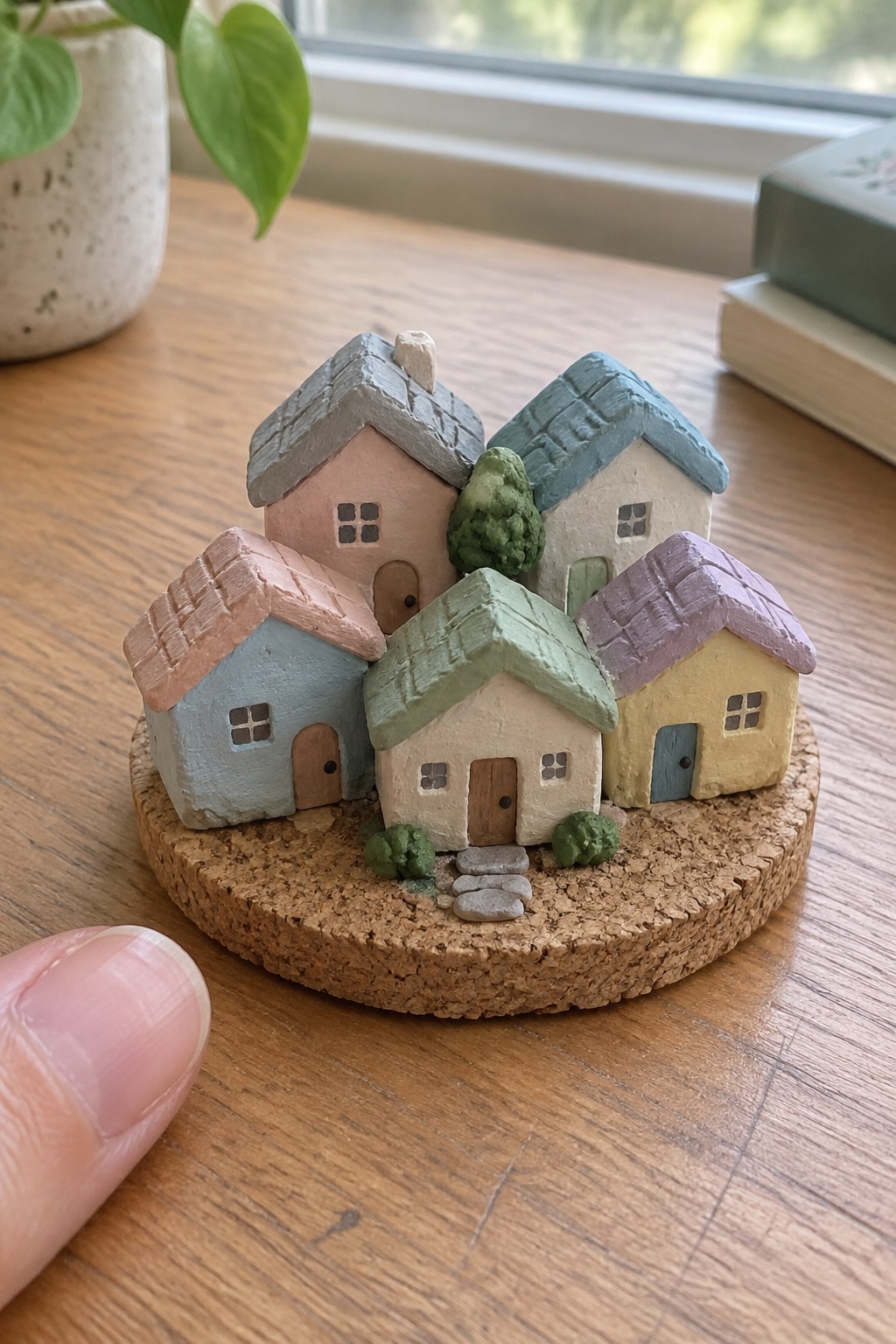
This hand-sculpted clay miniature arranges five tiny houses on a round base to create a compact village scene. Muted pastel walls and varied roof colors make each house distinct, while the small windows, doors, textured roofs, and sculpted trees give the decorative sculpture its detail.
The grouped houses make the scene memorable, and you could adapt it with fewer buildings or simpler windows and doors if you want a less detailed version. Try changing the roof colors, adding a path or small plants, or making a single house as a standalone miniature for a small display or handmade gift.
Miniature Cottage Clay Earrings
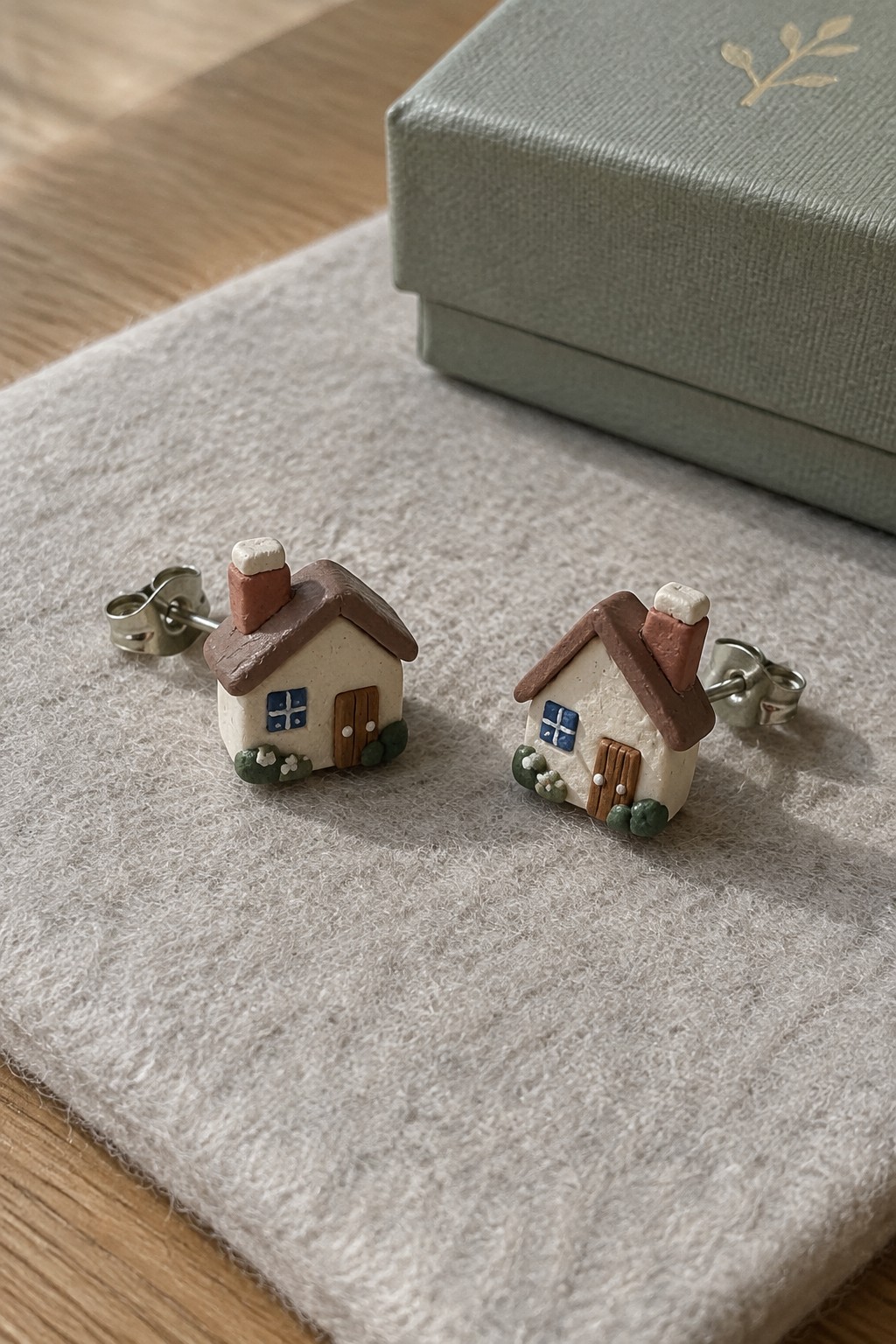
These hand-sculpted clay earrings turn tiny cottages into wearable miniature sculptures, with small chimneys, brown roofs, blue windows, and painted garden details. The cream, terracotta, and muted green colors make the house shapes easy to read despite their small scale, while the visible metal posts attach them as a pair of earrings.
The house silhouette is the main idea to adapt: simpler versions could use plain walls, a roof, and one painted window, while more detailed pairs could vary the doors, roof colors, or small greenery. Keeping the cottages small preserves their use as jewelry, and the same design could also be made larger as a decorative miniature or ornament.
Hanging Miniature Clay House Garland

This clay wall decoration pairs small house-shaped plaques with simple windows and doors, strung vertically on a cord. The hand-formed silhouettes and muted terracotta, mustard, and blue-green colors give each miniature its own look while keeping the hanging arrangement cohesive.
The repeated house shape makes the design easy to adapt: change the colors, add different window patterns, or make the plaques larger or smaller to suit the display space. A simpler version could use one color and just a door and two windows on each plaque, while a longer string could include more houses for a handmade wall ornament or gift.
Miniature Clay Café With a Rooftop Terrace

This hand-sculpted clay miniature turns a small café into a detailed two-story scene, with a striped awning, upstairs terrace, tiny tables, and clustered potted plants. The warm beige walls, charcoal accents, and terracotta pots give the building definition, while the attached details make it read as a complete miniature sculpture rather than a simple house model.
The terrace and café frontage can be simplified into separate sections, such as a striped awning, shuttered windows, or a small outdoor table, for a more manageable project. Changing the colors or plant shapes would create different building styles, and a smaller version could become a shelf decoration or part of a miniature streetscape.
Gingerbread-Style Clay House Pencil Topper

A tiny hand-sculpted house turns an ordinary pencil into a decorative accessory, with a brown building shape, a pink door, divided windows, and pastel roof details. Raised white trim and small flower accents give the miniature its gingerbread-house look without relying on painted details alone.
The roof’s simple outline and repeated icing-like shapes make the design easy to adapt with different door colors, window layouts, or tiny decorations. You could simplify it by using fewer raised details, or make several house toppers in different colors for a small collection or a handmade gift.
Miniature Halloween Clay Houses

These hand-sculpted miniature houses form a small Halloween village, with tall crooked roofs, uneven stone-like walls, narrow windows, and tiny bat figures. Dark, muted colors contrast with the warm yellow windows and purple doors, making the sculpted details easy to pick out. The set works as a decorative clay miniature sculpture rather than a functional object.
The three different house shapes make the village visually varied, while repeated details like the arched windows tie the set together. You could simplify the idea by making one small house and adding just a crooked roof, painted windows, and a few clay stones, or adapt the color palette and details for another season. Make the houses in different sizes for a shelf display or create smaller versions as individual ornaments.
Snow-Covered Clay House Ornaments

These miniature clay houses are sculpted as hanging ornaments, with rounded snowy roofs, painted windows, tiny doors, and small evergreen details. Their muted house colors and raised white roof shapes create a clear winter village look while keeping each ornament distinct.
The simple house silhouette makes the idea easy to adapt into different sizes, colors, and painted details, such as adding a wreath, garland, or different window shapes. Make one as a small seasonal decoration or create a matching set with varied rooflines and door colors.
Miniature Clay Bakery and Post Office Plaque
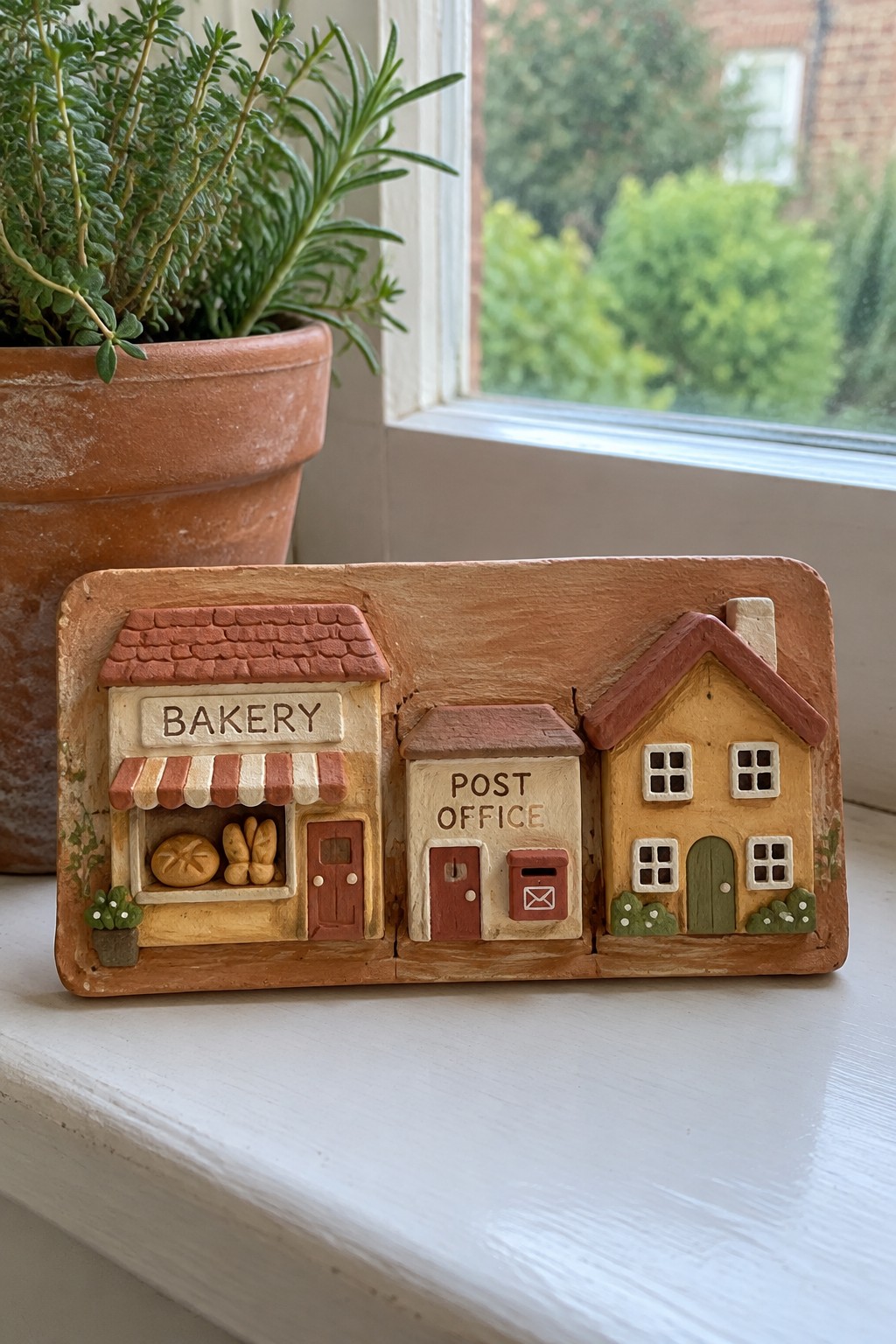
A hand-sculpted clay village plaque brings together a bakery, post office, and small house as a single miniature scene. Raised building shapes, painted shop signs, striped awnings, tiny windows, and small display details give the warm terracotta and cream palette plenty to look at without losing the clear outline of each building.
The buildings could be made simpler by using basic box shapes and adding just one or two defining details, such as an awning or a sign. Try changing the shopfronts to a café, flower shop, or library, or paint the buildings in different colors; the finished plaque works as a decorative shelf piece or a small handmade gift.
Miniature Clay Townhouse Sculpture

This hand-sculpted clay miniature recreates a narrow townhouse with a slate-colored roof, cream window trim, a small balcony, and tiny potted plants. Its stacked windows and muted sage, cream, and blue-gray palette make the tall building easy to recognize, while the uneven handmade details keep it distinct from a mass-produced model. It fits the miniature sculpture category and is designed as a decorative display piece.
The townhouse’s simple rectangular shape gives you a clear starting point, while the balcony and window boxes add detail without changing its compact footprint. For an easier version, skip the railing and chimney, then use contrasting clay strips to frame a few windows; you could also change the facade color or turn the design into a row of attached townhouses.
Three Minimalist Miniature Clay Houses
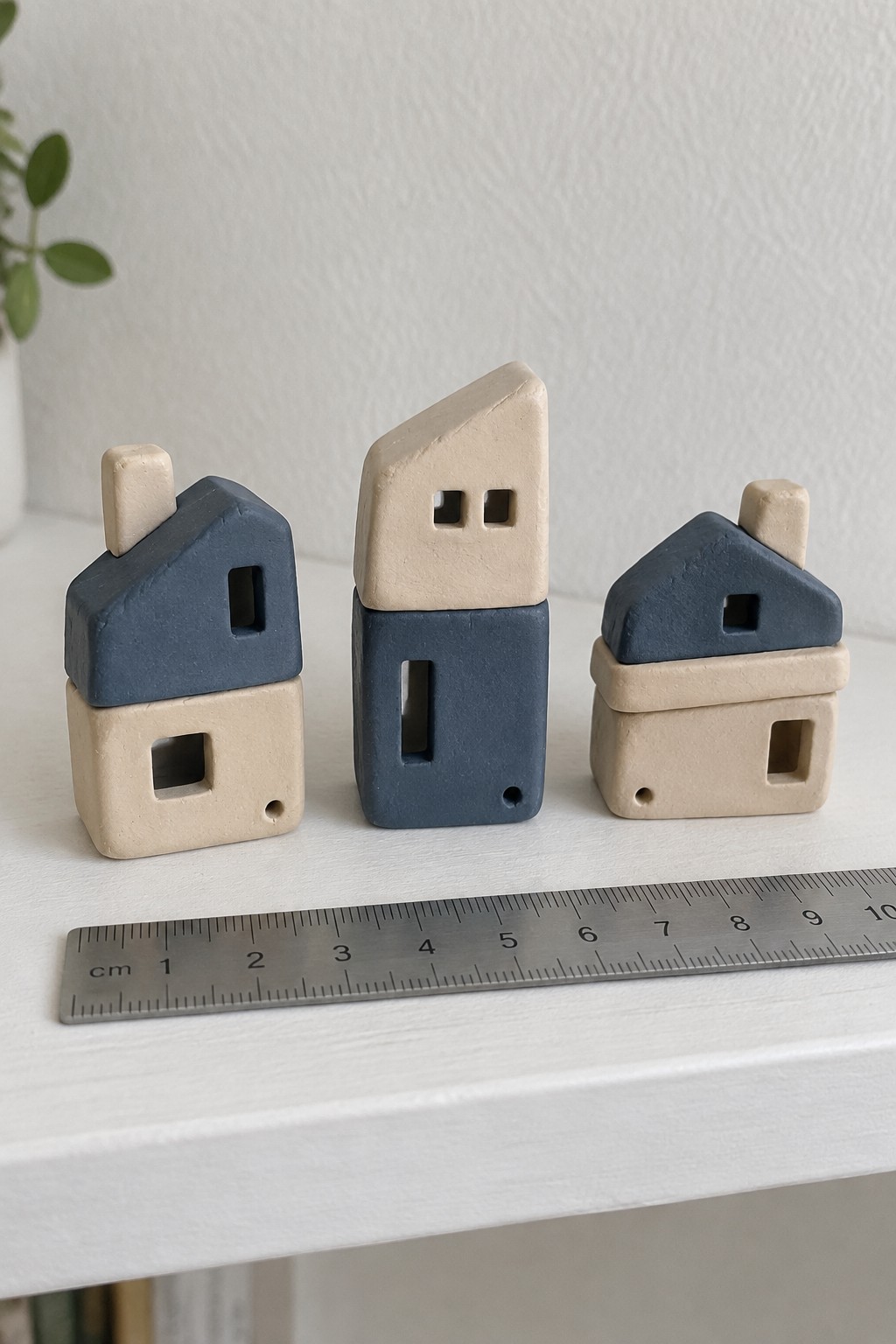
These hand-sculpted clay houses use simple block and roof shapes, cutout windows, and a restrained cream-and-slate palette to create a small decorative village. Their slightly uneven contours and contrasting roof and wall sections make each miniature distinct, placing them in the decorative clay sculpture category.
The clear shapes make the design easy to adapt: simplify the windows or use fewer color sections for a more straightforward version, then try different rooflines or muted colors to create a matching set. Make the houses in varied sizes for a small display, or add hanging loops if you want to turn the silhouettes into ornaments.
Three Tiny Clay Houses on a Hanging Cord

Three hand-sculpted clay cottages are strung vertically on a cord to make a small hanging decoration. Their rounded shapes, contrasting roof colors, and painted doors and windows give each miniature house its own look while keeping the set visually connected.
The vertical arrangement makes the idea easy to adapt into a shorter ornament or a longer house garland, with different colors and window or door details for each cottage. You could simplify the painted features into basic doors and square windows, or make a single house for a smaller hanging decoration.
Miniature Clay Greenhouse With Succulents

A tiny greenhouse sculpture combines a peaked, wood-framed structure with clear-looking panels, a small door, and sculpted succulents arranged inside and along the ledges. The mix of muted wood and stone colors with green plants gives this handmade miniature a detailed garden scene that fits the decorative clay sculpture category.
The greenhouse shape and planted ledges make the idea easy to adapt without copying every small detail. For a simpler version, focus on the peaked frame and add just a few chunky clay succulents, or change the building into a flower shop or potting shed; a larger version could become a tabletop display, while a smaller one could be made as a miniature collectible.
Painted Miniature Clay Birdhouses

These hand-sculpted clay birdhouses turn simple house shapes into a small decorative collection, with round entry holes, contrasting roofs, and hand-painted stripes and flowers. Their different silhouettes and muted colors make each miniature distinct while keeping the group visually cohesive.
The repeated house shape makes the idea easy to adapt: simplify the paintwork to stripes or dots, or change the roof colors and add a different small motif to each one. Make a single birdhouse as a small decorative sculpture or several in varied sizes for a miniature display; the painted details are what make the group especially memorable.
Miniature Clay Bakery Sculpture
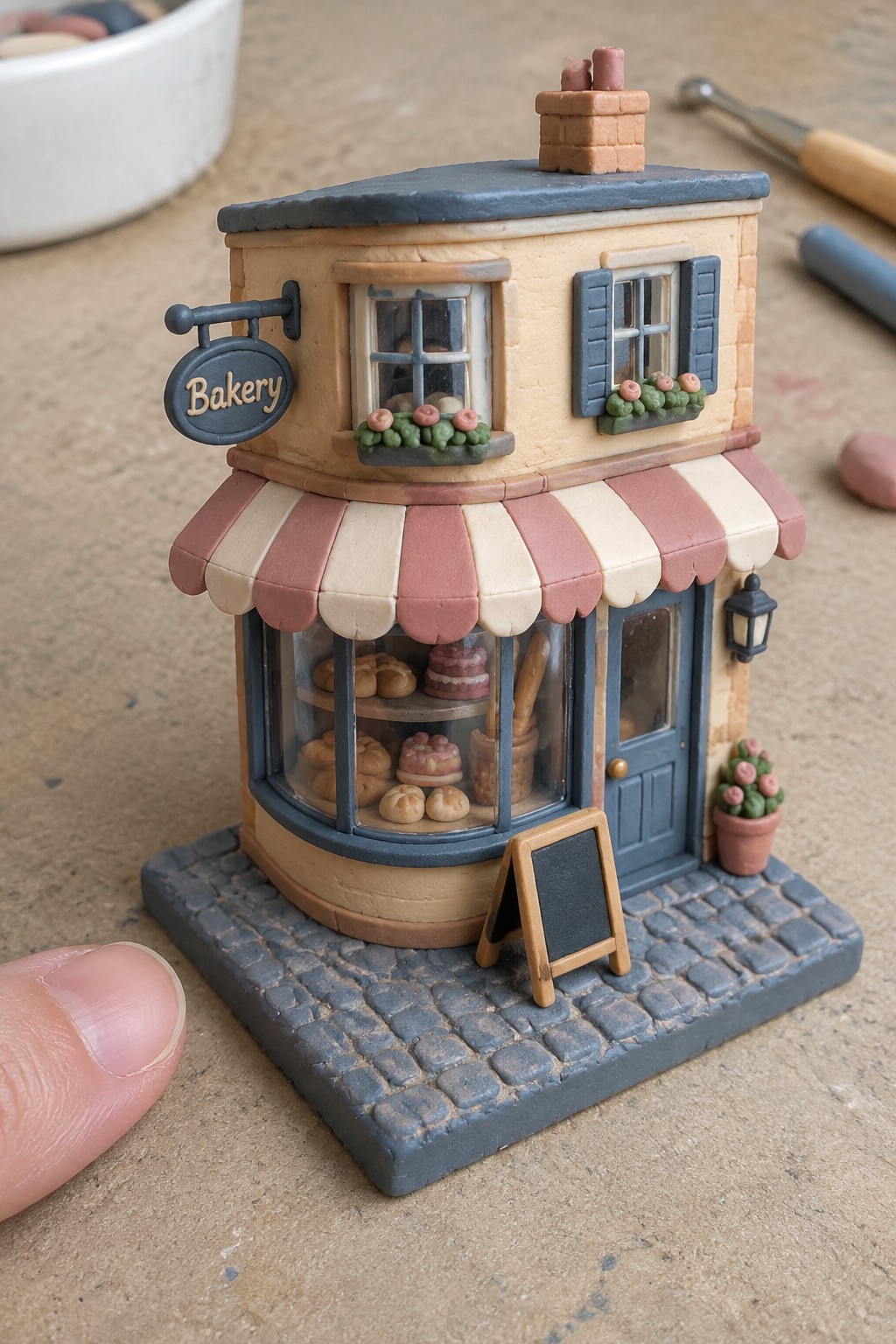
A hand-sculpted miniature bakery turns a small storefront into a detailed clay building, with a striped awning, bay window display, hanging sign, and tiny pastries. Its muted blue, cream, and dusty pink colors tie the many small features together, making it a decorative miniature sculpture rather than a functional shop model.
The bakery’s curved front window and awning give the design a clear silhouette, while the pastries and sign make the building recognizable at a small scale. You could simplify it by making a plain storefront with one display window, or adapt the concept into a flower shop or café using different colors and miniature items; a larger version could also become a standalone display piece.
Frequently Asked Questions
Polymer clay is a popular choice because it comes in many colors, holds small details, and can be baked at home according to the package directions. Air-dry clay is another good option if you prefer not to use an oven, though it may shrink or become more fragile as it dries. For either type, test a small piece first and follow the manufacturer’s instructions.
You can get started with a small rolling pin or smooth bottle, a craft knife, a needle or toothpick, and a flat surface. These tools are useful for shaping walls, cutting doors and windows, and adding details such as bricks, shingles, and trim. Silicone shaping tools can help with finer work, but household tools are often enough for a first project.
Build the structure from simple shapes, then join the pieces while the clay is still workable. Score the surfaces where they meet and press them together gently. For polymer clay, bake according to the clay’s directions, supporting delicate parts if needed. With air-dry clay, let the pieces dry fully before handling or assembling them, and use a compatible adhesive if the joints need extra strength.
Use simple tools to press patterns into the clay before it hardens. A toothpick can mark bricks, a craft knife can define window frames, and textured fabric or a small stamp can create stone or wood effects. Add painted details after the clay is fully baked or dry. Keeping colors and details consistent can make a miniature building look polished without overcrowding it.
Display them as part of a tiny village, a fairy garden, a dollhouse, or a seasonal scene. Small buildings can also decorate shelves, desks, terrariums, or gift boxes. If you plan to display them outdoors, check that the clay, paint, and finish are suitable for outdoor conditions, and protect the pieces from moisture and direct sunlight.
