


I like how small animal figurines let me play with simple shapes and little details without taking on a large project.
A rounded body, tiny ears, or a painted spot can give each creature its own character.
I’ve gathered ideas for a mix of familiar animals and playful little designs, so there are plenty of ways to make the figures your own.
Here are 19 small animal figurine ideas to inspire your next clay project.
Sleeping Fox Wrapped in Its Tail

This miniature clay fox figurine curls its large orange-and-cream tail around its body, creating a compact, rounded shape that reads clearly at a small scale. Closed eyes and simple facial details give the animal a sleeping pose, while the contrasting colors help separate its face, ears, and tail.
The curled pose makes the design memorable without needing many small details, and the broad tail gives the figurine a clear silhouette. You could adapt it with different animal colors or markings, or simplify the face and ear shapes for an easier version; making a few variations would also work well for a small collectible set or a decorative gift.
Textured Clay Hedgehog Figurine

A small hand-sculpted hedgehog figurine gets its distinctive look from rows of raised, tapered spines against a smooth, rounded face and body. Its muted brown and beige colors, simple black eyes, and rounded nose keep the animal recognizable while letting the sculpted texture carry the design. This is a decorative miniature animal sculpture.
The contrast between the smooth face and textured back makes the idea memorable, and the same form could be made with fewer, larger spines for a simpler version. Try different earthy shades or make a set of hedgehogs in varied sizes, adjusting the spine shape to give each one a different look.
Gray Cat Clay Keychain

A rounded gray cat figurine becomes a decorative keychain, with a cream-colored belly, pink inner ears, simple facial features, and a curled tail attached to a metal ring. The compact animal shape and contrasting color patches make this a clear example of a hand-sculpted clay charm designed to travel on keys or a bag.
The broad, simple body gives the design a recognizable silhouette, while the ears, paws, and tail add detail without relying on intricate features. You could adapt it with different animal shapes, belly colors, or facial expressions, or simplify it to a rounded body with just ears and a face; making smaller versions could also turn the cat into a collection of decorative charms.
Handmade Clay Penguin Family

A hand-sculpted penguin family makes a compact animal figurine, with two larger adults and a smaller chick arranged on a shared base. The charcoal bodies, white bellies, orange beaks, and simple painted eyes give each figure a clear silhouette without needing many details.
The grouped shapes make the design easy to adapt: a simpler version could use one adult and one chick, while different sizes or small additions like scarves could make each family distinct. Keep the figures as a decorative miniature, or use the same penguin shapes as inspiration for individual clay ornaments.
Pastel Clay Snail Magnets

These small hand-sculpted snail decorations pair curved bodies with raised spiral shells in soft mint, peach, blue, and cream. Simple eyes and smiles give each animal a clear face, while the painted-looking shell bands make the spirals stand out. They fit the small animal figurine category and could be displayed as decorative magnets.
The spiral shell is the main feature, so you can keep the body and face details simple and still make each snail distinctive. Try different pastel or brighter color combinations, or vary the shell patterns to create a matching set; making them smaller could also turn the design into decorative charms.
Gray Mouse With a Miniature Cheese Wedge

A seated gray clay mouse holding its paws near a bright yellow cheese wedge makes a playful miniature animal sculpture. Rounded ears with pink centers, a long curved tail, and small dark eyes give the mouse clear features, while the cheese’s scooped holes make the companion object easy to recognize.
The pairing gives you a simple scene to adapt: change the mouse’s color, adjust its pose, or swap the cheese for another tiny food-shaped accessory. You could simplify the sculpt by using basic rounded forms and fewer details, or make a larger version as a decorative figurine; the mouse-and-cheese combination is distinctive enough to save as a small sculpture idea.
Seated Gray Clay Elephant Figurine

A seated elephant figurine is a small animal sculpture built from rounded shapes, with oversized ears, a curved trunk, and simple black-and-white details. The gray body and pale inner ears make the silhouette easy to read, while the handmade contours keep it distinct from a mass-produced figure.
The large ears and short curved trunk are the main features to focus on when adapting this design; simpler eyes and fewer details could make a smaller version easier to sculpt. Try different body colors or add small painted markings to create a family of elephants, or scale the figure up for a decorative display piece.
Painted Clay Turtle Figurine

A hand-sculpted turtle figurine uses a rounded green body, short legs, and a domed shell painted in teal and green panels. The shell’s contrasting sections and the turtle’s simple painted face make this small animal sculpture easy to recognize without relying on intricate features.
The shell pattern gives you room to experiment with different color combinations, while the rounded body can be kept simple for an approachable version. Make the turtle larger as a shelf decoration or smaller as part of a collection of clay animal figurines, changing the shell markings to give each one a distinct look.
Three Colorful Clay Birds on a Branch
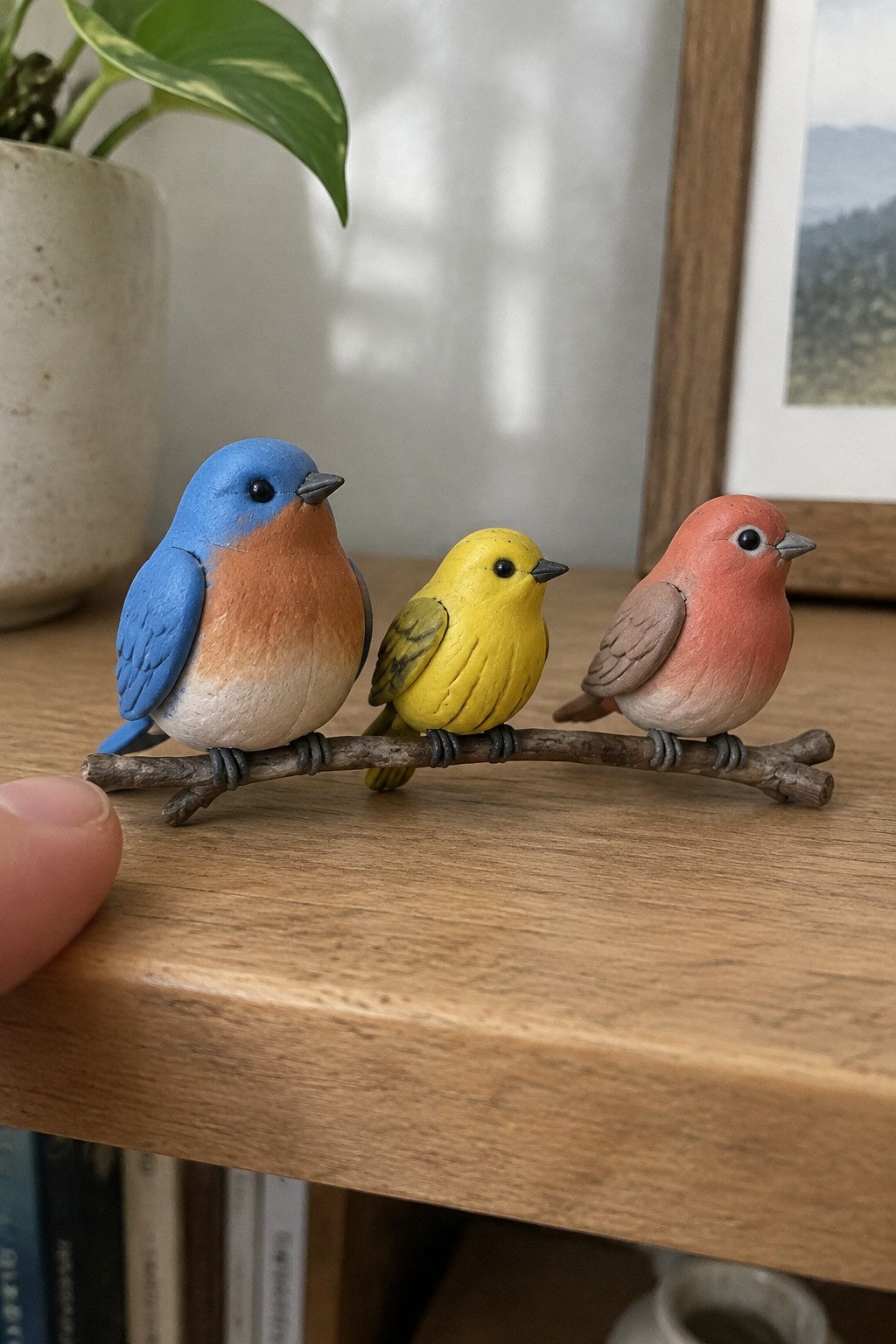
This miniature clay bird sculpture arranges three rounded birds in blue and rust, yellow, and coral on a shared branch. Their simple sculpted bodies, small wings, dark beaks, and painted feather details make the contrasting colors easy to appreciate, while the connected perch gives the animal figurines a clear composition.
The branch creates a useful starting point for adapting the design: keep the birds’ shapes simple, then change their colors, wing patterns, or number to make a small flock of your own. Make the arrangement larger as a shelf decoration or reduce it to a single bird for a smaller display piece.
Blue Narwhal Clay Keychain

A small narwhal figurine becomes a playful clay keychain, with a rounded blue body, flippers, tail, dark eyes, and a cream spiral tusk as its main detail. The simple color contrast and compact animal shape make it easy to recognize as a miniature animal charm.
The spiral tusk gives the design a memorable feature, while the basic body can be adapted with different colors, facial expressions, or a shorter horn for other sea creatures. Simplify the flippers and face for an easier version, or make several narwhals in varied sizes as decorative charms or small collectible figurines.
Sloth Hanging From a Branch

This hand-sculpted clay sloth figurine hangs from a small branch, with its curved limbs wrapped around the wood and a rope loop that lets it hang as a wall ornament. The brown and cream body, painted facial markings, and green leaves give the small animal craft a clear sloth-and-tree silhouette.
The branch and dangling pose make this design easy to adapt into different sizes, from a small ornament to a larger wall decoration. A simpler version could use a rounded body, two long front limbs, and painted face details, while different leaf shapes or branch colors can change the look without losing the sloth concept.
Brown and Cream Clay Owl on a Tree Stump
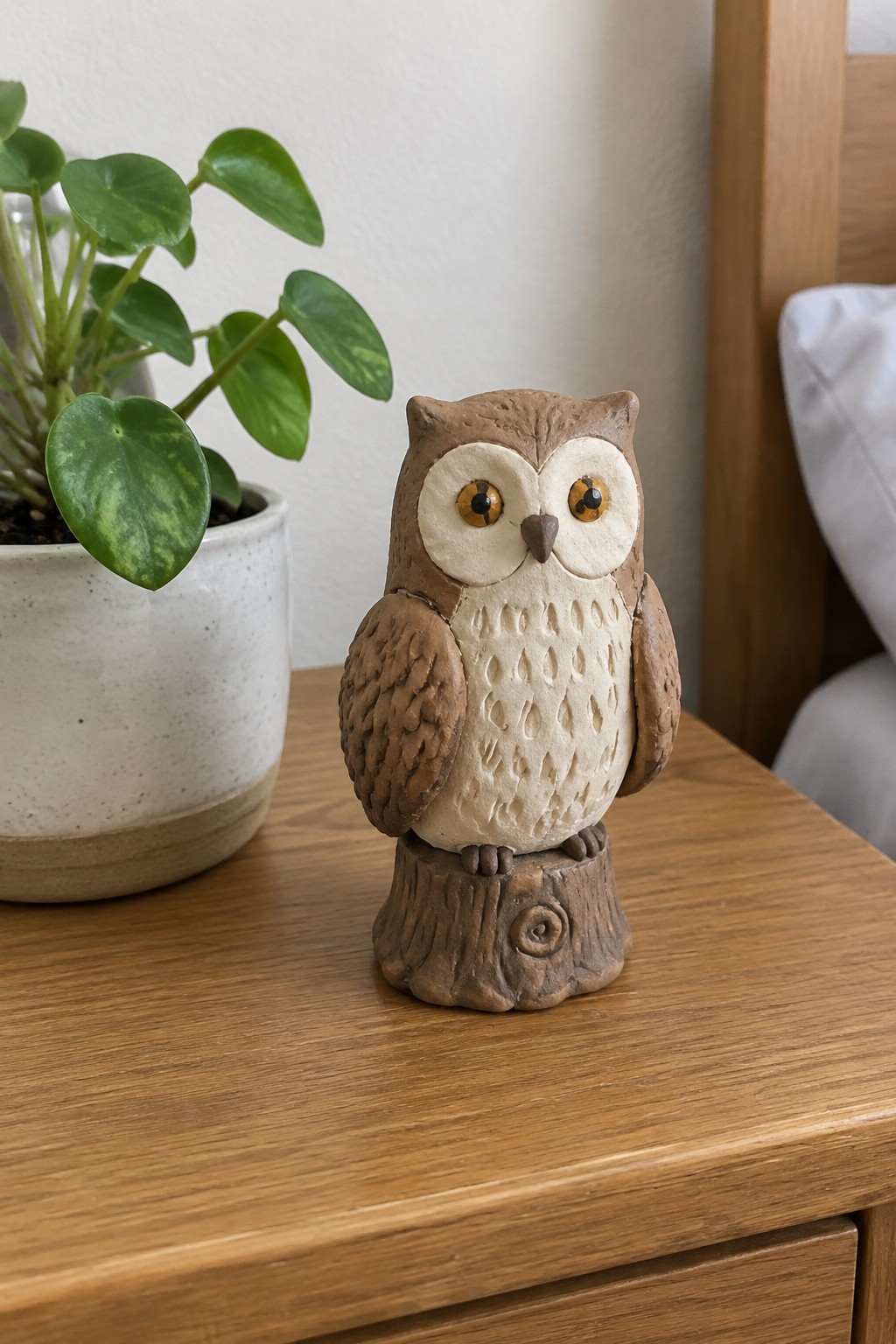
A hand-sculpted owl figurine perched on a textured stump makes a small animal sculpture with a clear woodland theme. The cream chest and oversized round eyes stand out against the brown body, while the carved feather marks and stump details give the compact figure plenty of definition.
The broad body and simple color blocking could help guide the shape, though the layered feather and bark textures take patience to add. For a simpler version, keep the owl’s face and belly smooth and use just a few marks for feathers; changing the eye color or adding a tiny leaf to the stump can make each figurine distinct.
Squirrel Holding an Acorn

A hand-sculpted clay squirrel figurine uses a rounded body, upright ears, and a large curled tail to create a clear animal silhouette. Its warm brown coloring, textured fur, and small acorn held between its paws make this a decorative animal sculpture with detail concentrated around the face and tail.
The curled tail gives the design a memorable shape, while the acorn provides a simple detail to adapt or swap for a tiny leaf or nut. For a simpler version, use fewer fur marks and basic shapes for the body, then try different squirrel colors or make the figurine in a smaller collectible size.
Spotted Frog on a Lily Pad

A hand-sculpted clay frog figurine sits on a broad lily pad, with dark spots and raised eyes giving the small animal clear, recognizable features. The green-on-green colors keep the miniature sculpture cohesive, while the painted spots and sculpted toes add contrast and detail.
The lily pad gives the frog a natural base, but the concept can be simplified by making the spots larger and the toes less detailed. Try different frog colors or add small water-lily accents to create variations, or make the frog and pad separately as a decorative miniature scene.
Teal Clay Baby Dragon Figurine

A small hand-sculpted dragon makes a detailed miniature animal figurine, with a teal body, coral belly plates, curved horns, and raised wings. Its oversized eyes and rounded limbs keep the dragon’s shape readable, while the contrasting colors and textured scales add detail without losing its toy-like look.
The separate features make this idea easy to adapt: a simpler version could use a smooth body and just a pair of horns and wings, while extra spikes or different belly colors can create distinct designs. Make it palm-sized as a display figurine or scale it down for a small collectible, keeping in mind that the detailed parts may take patience to shape.
Gray Cat Pencil Topper

A hand-sculpted gray cat turns an ordinary pencil into a small animal figurine and decorative accessory. Its rounded head, pink inner ears and nose, dark whiskers, and curled tail make the cat easy to recognize, while the yellow pencil gives the figure a clear use.
The pencil topper idea can be adapted with different animal faces, ear shapes, and tail positions, or simplified by using fewer facial details. Keep the sculpted figure small and try alternate colors to make a set of matching pencil decorations or a personalized gift for someone who enjoys drawing.
Woodland Animal Clay Magnets

These small hand-sculpted clay magnets turn familiar woodland animals into simple, painted face and bird designs. The fox, hedgehog, blue bird, and sleeping bear use rounded shapes, contrasting colors, and a few clear facial details to make each animal recognizable at a small scale. Together, they form a coordinated set of decorative animal crafts.
The simple features make the designs easy to adapt: beginners could start with flat animal faces, while more detailed versions could add the hedgehog’s textured spines or the bird’s sculpted wings. Make a matching set in different colors or sizes, or choose one favorite animal as a small handmade gift or fridge decoration.
Decorated Clay Llama Figurine

A hand-sculpted llama figurine gets its character from a tall neck, upright ears, and a small painted face. A rust-and-cream patterned saddle blanket and matching collar add color and detail while keeping the cream-colored animal shape easy to read. It fits naturally into a collection of small animal clay sculptures and is intended as decorative display.
The blanket’s geometric pattern is a useful detail to adapt, since a few contrasting shapes can make a simple animal silhouette more distinctive. You could change the blanket colors or motifs, simplify the face and accessories for a more basic version, or make the llama in a different size for a shelf display or handmade gift.
Pair of Small Cream Clay Rabbits

These hand-sculpted clay rabbit figurines use the same rounded body shapes to create two distinct poses: one sitting upright and one curled up asleep. Their cream-colored forms, pink inner ears, and simple painted facial details make this a small animal sculpture idea that relies on shape and pose rather than elaborate decoration.
The two-pose concept is easy to adapt by changing the rabbits’ ear positions, expressions, or body shapes, or by using soft gray and brown colors instead. For a simpler version, focus on a rounded body, two ears, and a few painted facial marks; making the pair in different sizes could also create a small decorative collection.
Frequently Asked Questions
For beginners, air-dry clay is a convenient choice because it hardens without a kiln. Polymer clay is great for tiny, detailed animals because it stays workable until you bake it according to the package directions. Both work well for ideas like miniature cats, frogs, birds, or woodland creatures. Choose a clay that suits your tools, experience, and available workspace, and check the label for handling and curing instructions.
You can make many figurines with just clay, your fingers, and a toothpick. A craft knife, needle tool, small ball stylus, and soft brush can help with shaping details such as eyes, fur, feathers, and scales. A little water may help smooth some air-dry clays, but use it sparingly and follow the clay maker’s advice. Keep tools clean, especially when switching colors.
Start with simple shapes and build details gradually. Form the body, head, and limbs first, then add ears, tails, beaks, paws, or horns. Use small amounts of clay so delicate parts do not become bulky. For balanced features, mark their positions lightly before attaching them, and compare both sides as you work. If a detail is too small to shape by hand, a toothpick or needle tool can help.
Cracks are less likely when the clay has an even thickness and the parts are securely joined. Avoid attaching very thin limbs to a heavy body without support. Score both surfaces where pieces meet, add a small amount of the appropriate clay adhesive or slip if recommended, and press them together gently. Let air-dry clay dry slowly and evenly, and bake polymer clay according to its package directions. Thin tails, ears, and legs may need reinforcement.
Let air-dry clay dry completely before painting. Acrylic paint is a popular option for adding colors, spots, stripes, eyes, and other details. Polymer clay can often be painted after baking, but check that the paint and clay are compatible. Apply thin paint layers and let each one dry before adding the next. If you want a protective finish, use a sealer made for your clay type and test it on a small area first.
