


I always like finding a use for the little bits of clay left over after a project.
They’re just the right amount for making small decorative pieces, charms, and other useful odds and ends.
I’ve gathered 16 mini projects that make those scraps feel worth keeping, with plenty of room to play with shapes and colors.
Here are a few ideas to try the next time you have a small piece of clay on hand.
Miniature Strawberry Tart

This miniature clay tart combines a fluted pastry shell, a pale filling, and three sliced strawberries arranged on top. The contrast between the warm tan crust and bright red fruit makes it read clearly as a tiny dessert sculpture, suited to a miniature food collection or decorative display.
The tart’s simple round base gives you room to vary the topping, using different clay colors for fruit or arranging fewer strawberry slices for an easier version. Make it smaller for a miniature scene or larger as a display piece, and use the same tart concept with other sculpted fruit.
Leaf-Shaped Clay Ring Dish

A hand-sculpted clay trinket dish takes the form of a broad leaf, with uneven edges and painted green veins that make the surface look botanical. Its shallow shape and small scale suit it for holding a ring or other jewelry as a decorative accessory.
The leaf outline gives leftover clay a clear shape without requiring many added details, and the painted veins make the design easy to personalize. You could simplify the pattern to a few main lines, try different greens or autumn colors, or make a smaller version for earrings and tiny keepsakes.
Mini Mushroom Clay Earrings

These handmade clay earrings turn small sculpted mushrooms into wearable charms, pairing cream-colored stems with contrasting caps. White spots on the red cap and dark speckles on the ochre one make each mushroom easy to recognize while giving the pair a coordinated but mismatched look.
The mushroom silhouette and painted details are the main design elements, so you could simplify the shapes or use different cap colors and markings to make your own version. Keep them small for earrings, or make larger mushrooms as decorative charms or miniature sculptures.
Sleeping Orange Tabby Clay Figurine

A curled-up cat figurine is a small animal sculpture, shaped with rounded forms and painted orange and cream markings. Its tucked paws, curled tail, and simple closed-eye details make the resting pose easy to recognize while keeping the design compact.
The rounded body gives you a clear shape to build from, and the painted stripes can be simplified or changed to suit a different cat. Make it smaller as a shelf or desk decoration, or try another curled-up animal using the same pose and basic features.
Miniature Clay Fruit Magnets

These small hand-sculpted clay fruit decorations turn leftover scraps into a pear, a cluster of blueberries, and a watermelon wedge. Green leaves, dark blueberry details, and black watermelon seeds make each simple shape easy to recognize, while the different colors keep the group visually distinct. The fruit designs could be made as decorative magnets or kept as miniature sculptures.
The separate fruit shapes are useful for trying out leftover colors without needing to make a larger project. Simplify the details by using plain leaves and fewer seeds, or make a coordinated set with other small fruits in different colors. Varying the size could also turn the same idea into charms or small decorative pieces.
Small Sculpted Clay Pumpkins

These hand-sculpted clay pumpkins use rounded, grooved bodies and short green stems to create a simple seasonal decoration. Their warm orange and cream colors make the set visually distinct, while the uneven handmade contours keep each small sculpture from looking identical.
The ribbed shape is the main feature, so a simpler version can use a few broad grooves and a single stem. Try changing the colors to muted green, pale pink, or deep red, or make one pumpkin in several sizes for a small autumn display or a seasonal gift.
Miniature Clay Succulent Pots

These miniature clay succulent pots recreate the look of small potted plants with hand-sculpted leaves arranged in compact rosettes. The contrast between the soft green forms, pale top dressing, and simple terracotta-colored pots makes the set read clearly as tiny plant sculptures.
The three different leaf shapes give each pot its own look, so you could use leftover clay to make a varied set rather than matching pieces. Simplify the leaves into rounded or pointed shapes for an easier version, or change the colors and pot sizes to create a miniature collection for a shelf or desk.
Hanging Clay Cloud Garland

This handmade clay wall decoration uses a row of sculpted clouds, each with a soft white body and a blue-painted lower edge. The varied cloud sizes and rounded, hand-shaped contours give the vertical garland a simple, recognizable silhouette.
The repeated shapes make the design easy to adapt with leftover clay, and a beginner could keep the clouds simple while varying their sizes or blue accents. Try other sky-inspired colors or add small sun and raindrop shapes, then hang the finished garland as a decorative accent or make a shorter version for a smaller space.
Miniature Clay Croissant Keychain
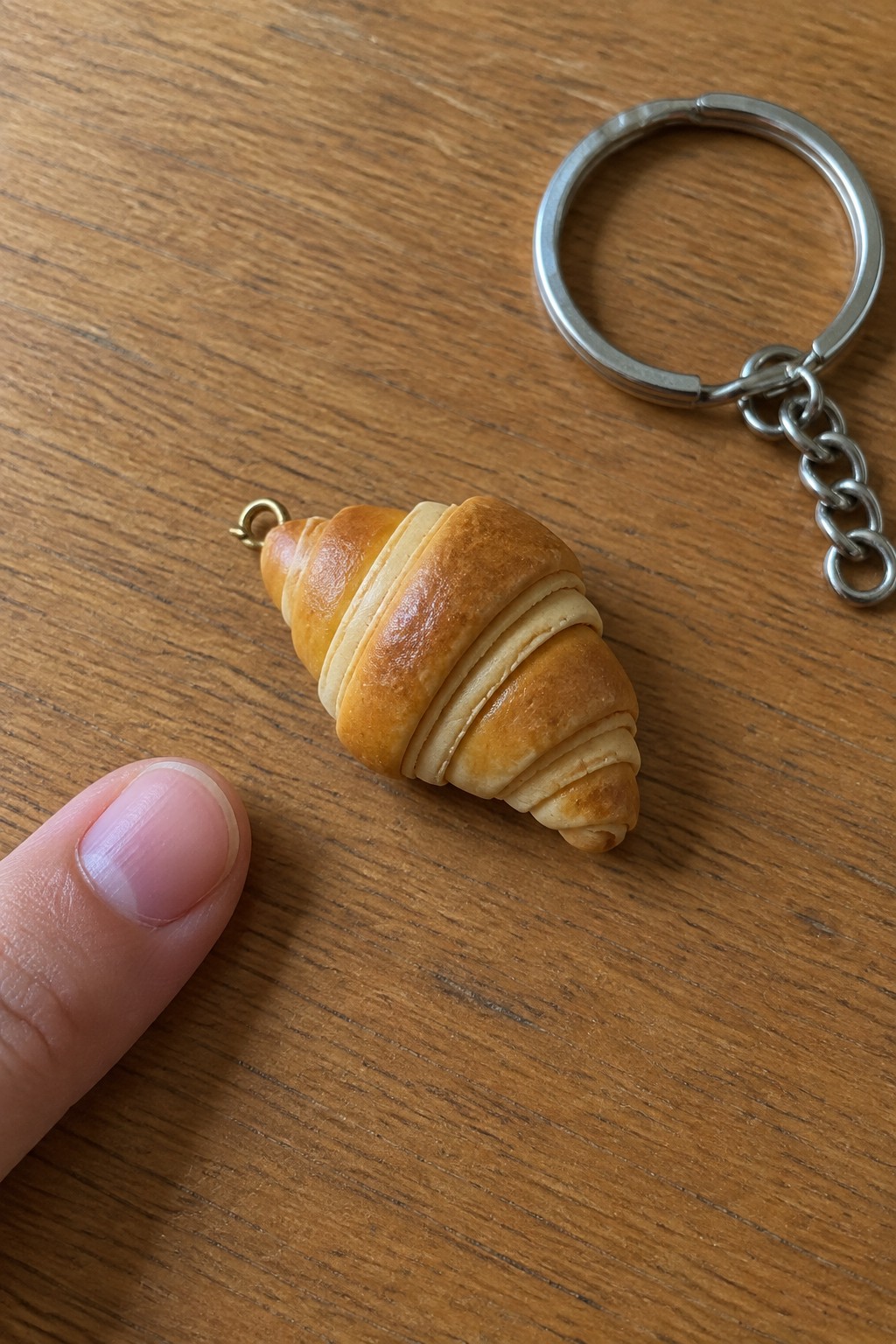
A tiny hand-sculpted croissant makes a playful clay charm, with curved layers and a warm golden-brown color that give the pastry its recognizable shape. Its compact size and raised folds make it work as a miniature sculpture attached to a key ring.
The layered shape is the main detail to focus on, and a simpler version could use a tapered crescent with just a few sculpted bands. Try lighter or darker browns for different levels of toasting, or adapt the same miniature pastry idea into a bag charm or a small decorative collectible.
Crescent Moon Clay Ring Dish

A crescent-shaped clay trinket dish turns a simple jewelry holder into a sculptural decorative accessory. Its hand-formed outline and uneven gold-colored rim contrast with the pale, textured center, while a small recessed spot keeps rings together.
The curved shape gives leftover clay a clear purpose, and the design can be scaled down for a bedside ring dish or made wider for other small accessories. For a simpler version, keep the crescent silhouette and use one painted edge color, or try dots and stars instead of the gold border.
Miniature Clay Sushi Pieces

These tiny handmade clay sculptures recreate a sushi trio, with a salmon nigiri, tamago nigiri, and a round maki roll. Their familiar shapes and contrasting colors make the miniature food easy to recognize, while the small sculpted details give each piece a distinct look.
The sushi shapes could be made as a tiny display set or adapted into charms or magnets by adding suitable attachments. For a simpler version, focus on one piece and use smooth color blocks for the fish, egg, rice, and seaweed; changing the fillings or toppings would make it easy to create a varied collection.
Hand-Painted Clay Floral and Wave Tiles

These small, hand-sculpted clay tiles use raised botanical and flower motifs alongside a tile painted with flowing bands of terracotta, cream, and blue-green. The simple shapes and earthy palette tie the three designs together, making them decorative clay pieces with a tactile, handmade look.
The leftover-scrap scale makes this idea easy to adapt into individual tiles with different leaves, flowers, or stripe patterns. Keep the details simple for a quicker project, or vary the shapes and colors to make a coordinated set of miniature decorations or keepsakes.
Blue and Cream Clay Bird Figurine

A hand-sculpted bird figurine with a rounded blue body, cream-colored breast, layered wing feathers, and small feet perched on a clay branch makes a detailed miniature animal craft. The simple color blocking keeps the shape easy to read, while the raised feather details add texture without crowding the design.
The bird’s rounded form could be simplified by using fewer feather details, or adapted with different colors, markings, and perch shapes. Make it small as a shelf decoration or enlarge it into a more substantial decorative sculpture, using leftover clay for the wings, beak, and feet.
Three-Arched Clay Sculpture

This small clay sculpture features three nested arches in terracotta, muted blue, and cream, joined by a low oval base. Its simple repeated shape and contrasting colors make it a compact decorative sculpture, with the uneven handmade contours adding texture without extra details.
The repeated arches make the design easy to adapt: a simpler version could use two shapes, while different sizes or color combinations would create a new arrangement. It could sit on a shelf as a decorative accent, or be made smaller as a miniature sculpture using leftover clay scraps.
Miniature Clay Macarons and Lemon Desserts

These miniature clay sweets combine stacked pink and cream macarons with a lemon tart and a molded lemon dessert topped with piped-looking details. The pastel colors, tiny fruit accents, and varied shapes make the set read as a coordinated collection of handmade dessert miniatures.
The layered macarons are a useful starting point because their rounded shapes can be simplified while still looking recognizable, and the tart and molded dessert offer ways to use small leftover pieces in different forms. Try changing the colors or toppings to create a set of mini cupcakes, cookies, or other pretend pastries for a miniature display or playful gift.
Miniature Clay Fairy Door
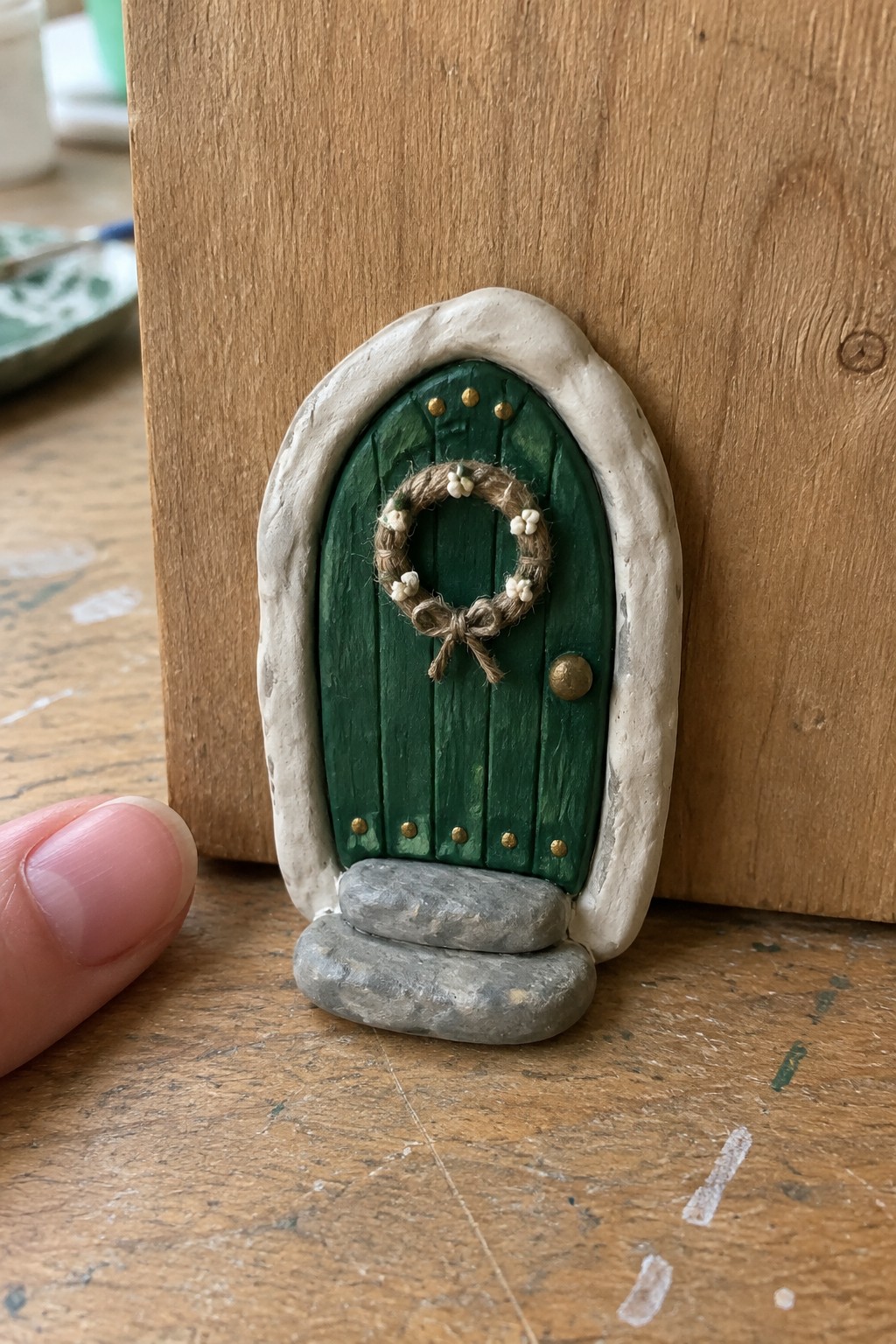
A tiny hand-sculpted fairy door turns leftover clay into a miniature decorative scene, with a rounded off-white frame, a deep green plank-style door, and a small twine wreath. Gold-colored accents and a pair of gray stone-like steps add contrast and make the doorway easy to recognize at a small scale.
The door’s simple shape can be adapted with different paint colors, a different wreath, or small sculpted details such as flowers or a window. A beginner-friendly version could use a plain rounded frame and a few painted lines for the door planks, making it a sweet miniature to display on a shelf or attach to a larger craft scene.
Frequently Asked Questions
Most leftover clay works well, including polymer clay and air-dry clay, but keep the clay types separate because they need different handling and curing. Polymer clay scraps can usually be conditioned, mixed, and baked according to the package directions. Air-dry clay scraps may need a little water to become workable again, though clay that has dried completely can be difficult to reuse. Check the instructions for your specific clay before starting.
Sort scraps into similar color groups before mixing. Blend colors that work well together, such as warm shades or cool shades, and leave contrasting pieces partly separate for a marbled effect. Avoid kneading the clay until every color is fully blended if you want visible swirls. You can also turn tiny scraps into accents, spots, stripes, or terrazzo-style flecks rather than combining them into one solid color.
Tiny scraps are ideal for small items that do not need much clay. Try mini beads, buttons, charms, magnets, simple earrings, decorative pins, dollhouse food, or tiny embellishments for another craft. For especially small pieces, roll the clay into little balls or coils, or press it into a small mold. Keep the pieces a consistent size when they need to bake or dry together.
Make pieces with an even thickness and avoid thin, fragile sections unless the clay is specifically designed for them. Smooth joins by gently blending the seams, and use appropriate supports for delicate shapes while they dry or bake. For polymer clay, follow the package’s temperature and baking-time instructions, since underbaking can leave pieces brittle. For air-dry clay, let projects dry slowly and completely before handling or painting them.
Keep workable clay sealed in an airtight container or wrap it securely so it does not dry out or collect dust. Store different colors separately if you want to preserve them, and label the clay type if you have several kinds. Polymer clay generally stays usable when protected from heat and sunlight. Air-dry clay needs especially airtight storage, and some brands may be harder to revive once they begin drying.
