


I like how small clay ornaments can make a Christmas tree feel a little more personal.
Botanical details such as leaves, sprigs, and tiny flowers add a natural touch without making each design feel too fussy.
I’ve gathered ideas for mini ornaments that play with simple shapes and leafy patterns.
There are plenty of lovely details to borrow for your own handmade holiday decorations.
Twisted Clay Holly Wreath Ornament

A small hand-sculpted clay wreath makes a seasonal hanging ornament, with a twisted green ring decorated by pointed holly leaves and three red berries. The raised details and contrasting colors make the botanical motif easy to recognize at miniature scale.
The twisted ring gives the ornament visual texture, while the leaves and berries can be arranged in different ways or recolored for another seasonal design. For a simpler version, use fewer leaves and round berries, then make several small wreaths as tree decorations or handmade gifts.
Clay Pinecone Christmas Tree Ornament
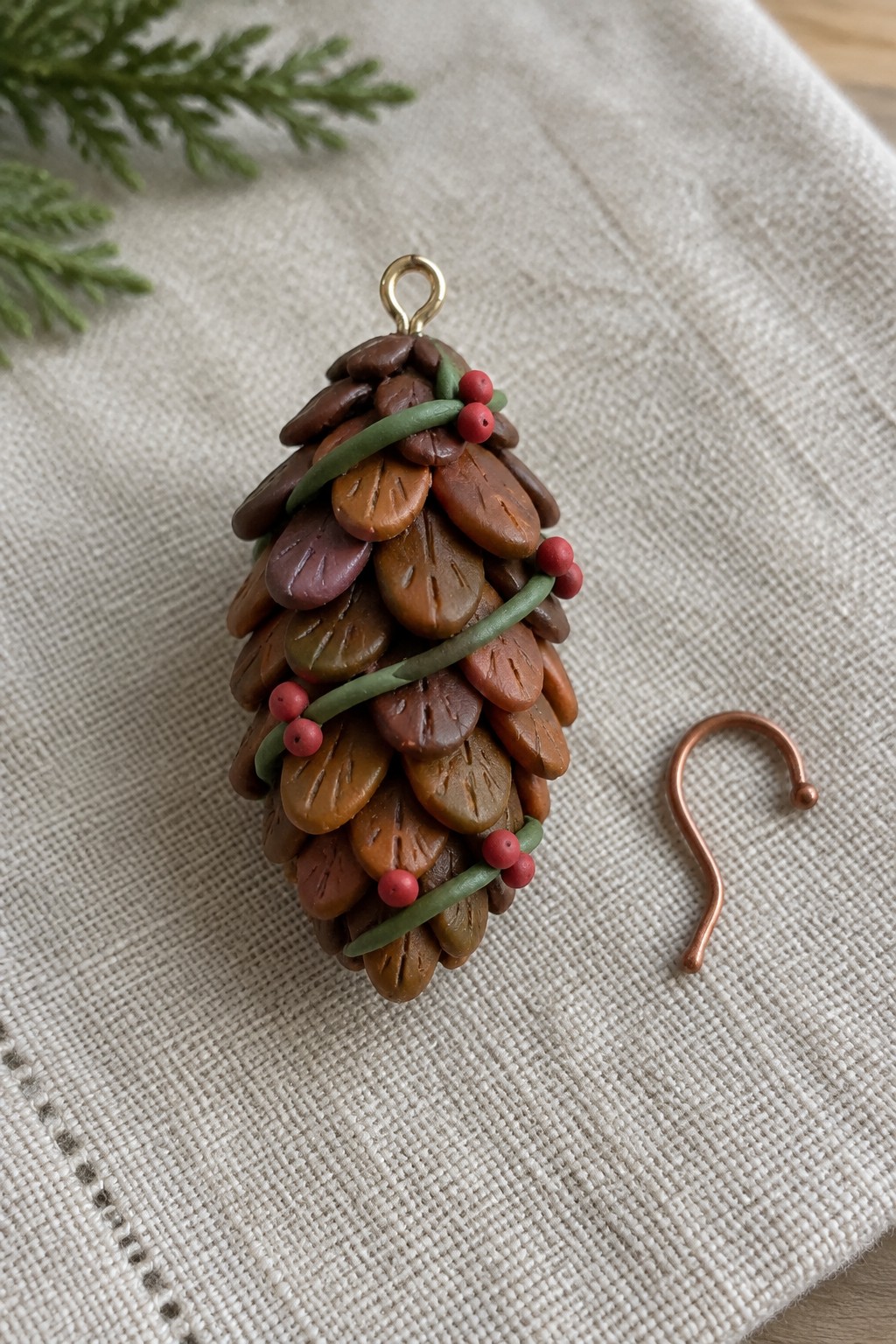
This miniature clay ornament turns a pinecone shape into a small Christmas tree, with overlapping brown sculpted scales, green garlands, and red berry details. Its tapered silhouette makes the tree instantly recognizable, while the hand-shaped pieces give the surface a layered texture suited to a seasonal hanging decoration.
The pinecone-inspired form is the main idea to keep if you adapt it: simpler versions could use fewer, larger scales and one green band of garland. Try different colors for the tree and berries, or make the ornament larger or smaller to suit a tree, wreath, or gift decoration. The repeated details also make it a distinctive handmade gift or a fun design to save as part of a set of miniature botanical ornaments.
Botanical Clay Hanging Ornament

A small, hand-shaped clay ornament can take its design from a pressed or applied botanical motif, such as the leafy stem on this oval plaque. Its muted green leaves stand out against the pale, softly textured surface, while a hole and hanging loop make it suitable as a seasonal decoration or small wall accent.
The oval shape is simple to adapt, and the leaf arrangement can be changed to suit a mini wreath, pine sprig, or other winter greenery. Keep the stem and leaves minimal for an easier version, or make several ornaments in different sizes and soft greens for a coordinated set or handmade gift.
Layered Poinsettia Clay Christmas Ornament
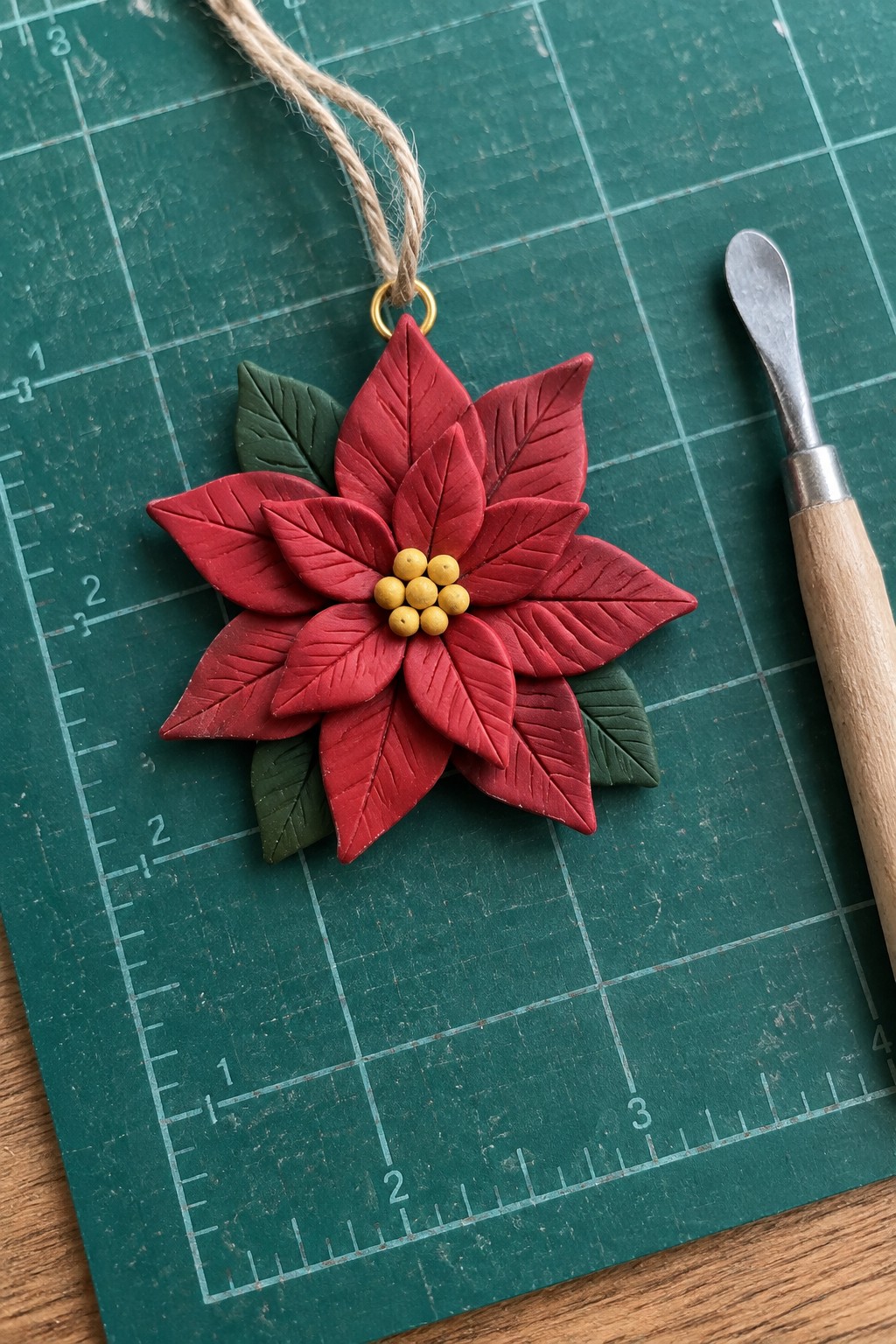
A hand-sculpted clay ornament takes the shape of a layered poinsettia, with pointed red petals, dark green leaves, and small yellow pieces clustered at the center. Incised veins add detail to the petals while keeping the flower’s bold shape easy to recognize as a seasonal decoration.
The layered arrangement makes the design memorable, and you could simplify it by using fewer petals or leaving out the incised veins. Try different shades of red and green, or make smaller versions for a coordinated set of hanging ornaments or gift decorations.
Cream Clay Bell With a Botanical Band

This small hanging clay bell combines a flared bell silhouette with a raised band of gold-toned leaves and a matching round clapper. Its cream and muted metallic colors keep the botanical detail distinct without crowding the shape, making it a seasonal ornament with a handmade, sculpted look.
The simple bell form gives you room to change the leaf pattern, add berries, or use green and copper accents instead. A beginner could make a less even band with fewer leaves, while a larger version could suit a wreath or door display; the small scale also makes it easy to save as inspiration for a handmade Christmas gift.
Clay Heart Ornaments With Sculpted Green Leaves

These small hanging clay ornaments pair two cream heart shapes with a cluster of muted green leaves and white bead-like details. The handmade floral arrangement and gold-colored hanging loops turn a simple heart silhouette into a botanical Christmas decoration.
The contrast between the soft green leaves and cream hearts makes the design easy to adapt with different leaf shapes or accent colors. For a simpler version, use fewer leaves and skip the small white details; making the hearts smaller could also turn the same motif into a gift tag or decorative charm.
Hand-Carved Botanical Clay Star Ornament
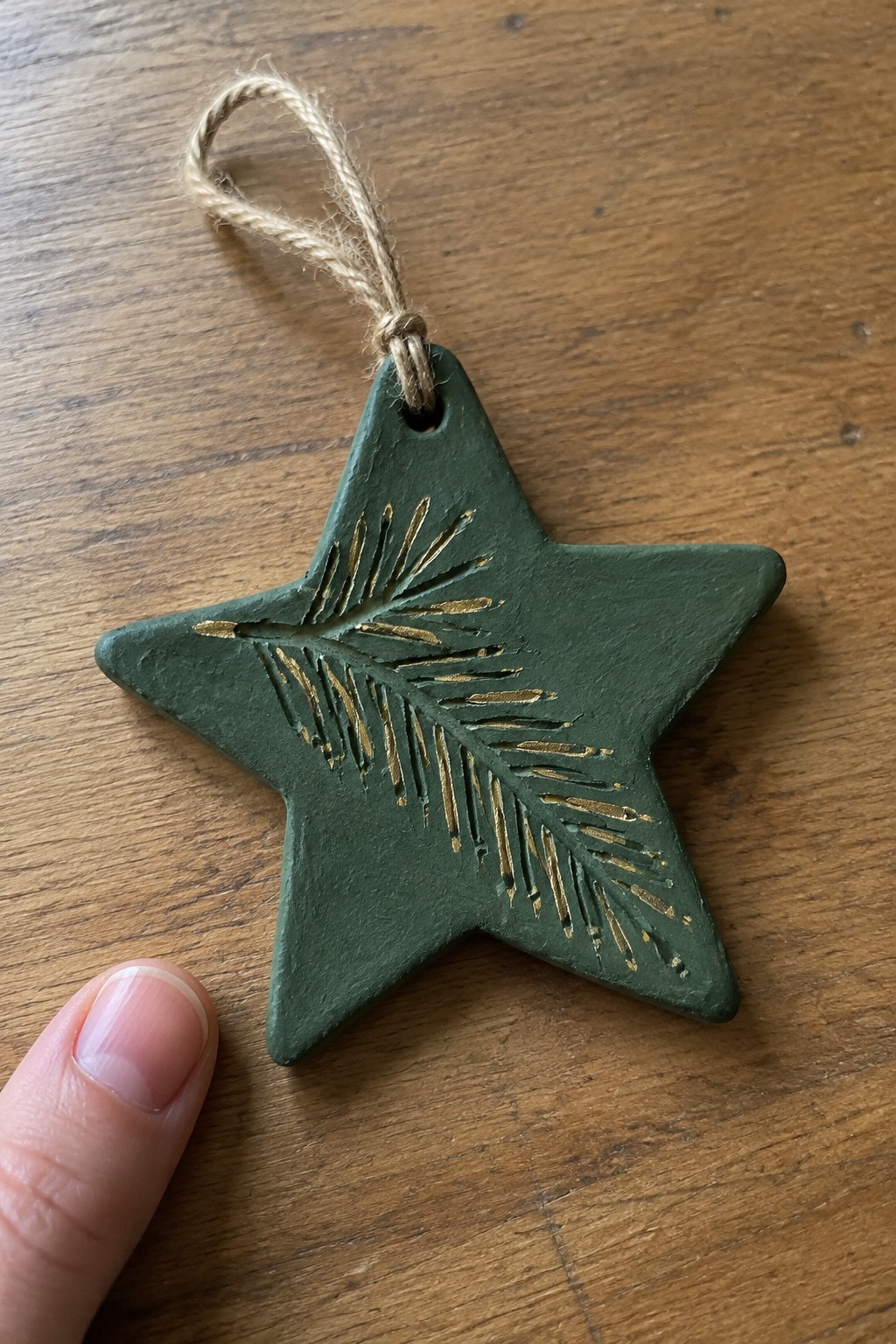
A small, five-pointed clay star becomes a hanging Christmas ornament with a deep green finish and gold botanical marks scored across its surface. The uneven handmade outline and linear leaf-like motif give this seasonal decoration a simple, graphic look.
The star silhouette is easy to adapt with different muted clay colors or painted details, such as white berries or a fine red accent. Keep the botanical pattern sparse for a simpler version, or make several stars in varied sizes to hang together as a coordinated set.
Spotted Mushroom Clay Christmas Ornament

A hand-sculpted mushroom ornament pairs a rounded red cap with small white spots, a cream-colored stem, and green holly leaves with a red berry. Its compact figurine shape and loop at the top make it a clear seasonal decoration, while the contrasting colors keep the botanical details easy to notice.
The mushroom silhouette is simple enough to adapt, but the attached holly leaves and berry give it a distinctive Christmas look. For a more straightforward version, use fewer spots or simplify the leaves; you could also change the cap color or make a group of mushrooms in different sizes for hanging decorations.
Rosemary Sprig Clay Hanging Ornaments

These small rectangular clay ornaments use sculpted rosemary sprigs as their main botanical detail, set against cream, terracotta, and muted green backgrounds. Their simple shape and raised greenery make the handmade clay decorations easy to recognize as seasonal hanging ornaments without adding extra motifs.
The sprig can be simplified to a stem with a few narrow leaves, or varied with another small botanical detail while keeping the same rectangular form. Making a set in different earthy colors gives the ornaments a coordinated look, and their twine loops suit hanging them on a Christmas tree or tying them onto a gift.
Mini Clay Wreath With Red Berries

This small clay wreath ornament uses overlapping rounded green leaves and clusters of red berries to build a full circular shape, finished with a small hanging loop. The contrast between the muted greens and bright red details makes the botanical design easy to recognize, while the handmade contours keep it distinct from mass-produced holiday decor.
The wreath shape gives you a clear base to adapt: use fewer leaves for a simpler version, or change the berry color and foliage to create a different seasonal palette. Made in a smaller scale, it could work as a tree ornament or gift tag decoration, while a larger version could become a decorative hanging accent.
Crescent Clay Fern Ornament
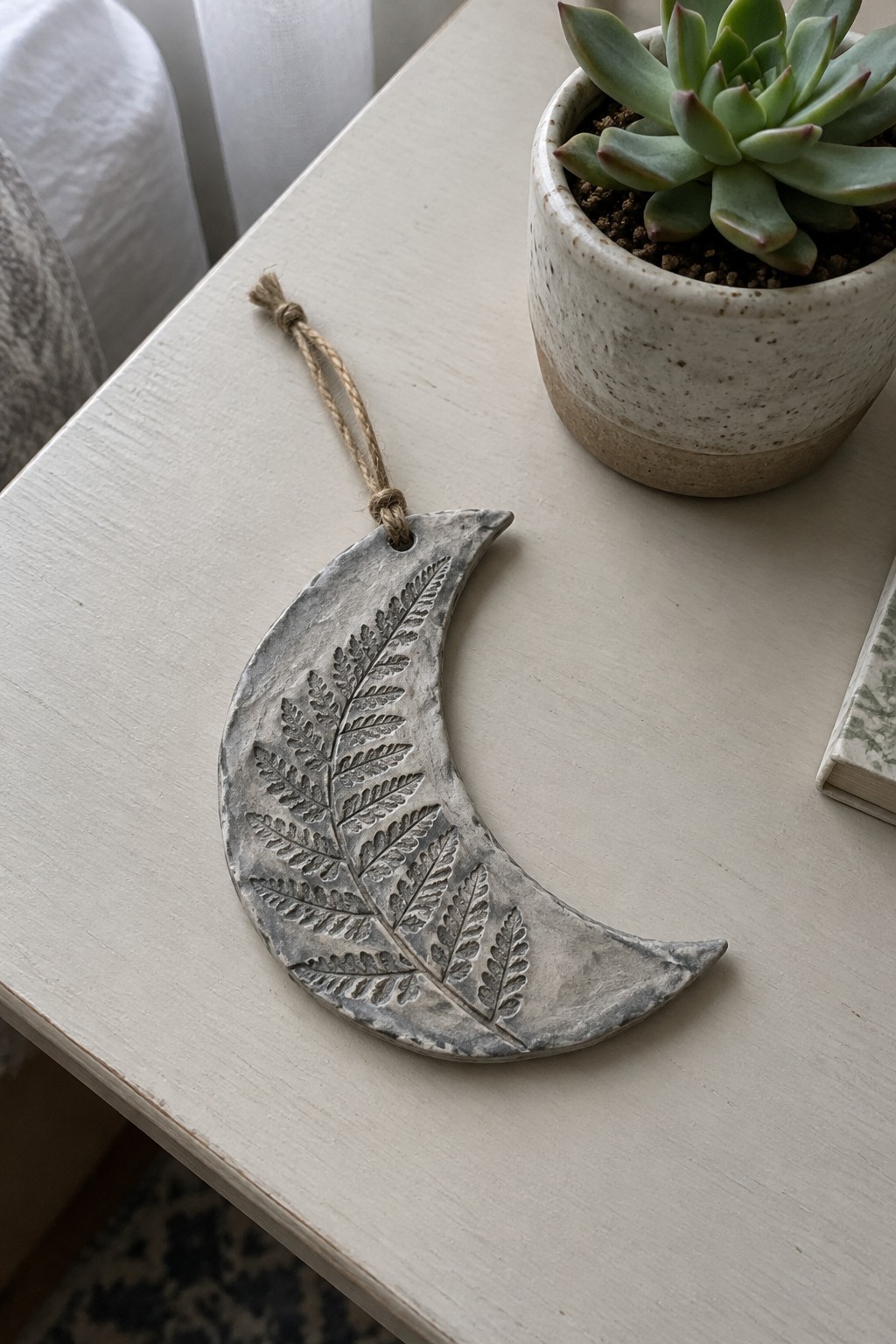
A crescent-shaped clay ornament with pressed fern details makes a simple botanical motif the focus. Its muted, stone-like finish and natural jute hanger suit a handmade seasonal decoration that can be displayed on a tree or hook.
The curved silhouette gives the fern fronds room to spread across the surface, and the same design could be made smaller for a tree ornament or larger as a hanging wall accent. For a simpler version, use one fern frond, or vary the plant imprint and clay color to create a small set of botanical ornaments.
Miniature Clay Acorn Ornaments

Hand-sculpted acorns make simple, nature-inspired Christmas ornaments, with rounded brown bodies and textured caps built from small overlapping clay shapes. The contrast between the smooth-looking nut and the layered cap gives each tiny hanging decoration its recognizable form.
The acorn silhouette is easy to vary by changing the body shape, cap texture, or earthy colors, and a simpler cap with fewer sculpted pieces could suit a beginner version. Make them in different sizes for a small ornament set, or use the same botanical idea to create clay oak leaves to hang alongside them.
Miniature Clay Cottage Christmas Ornament
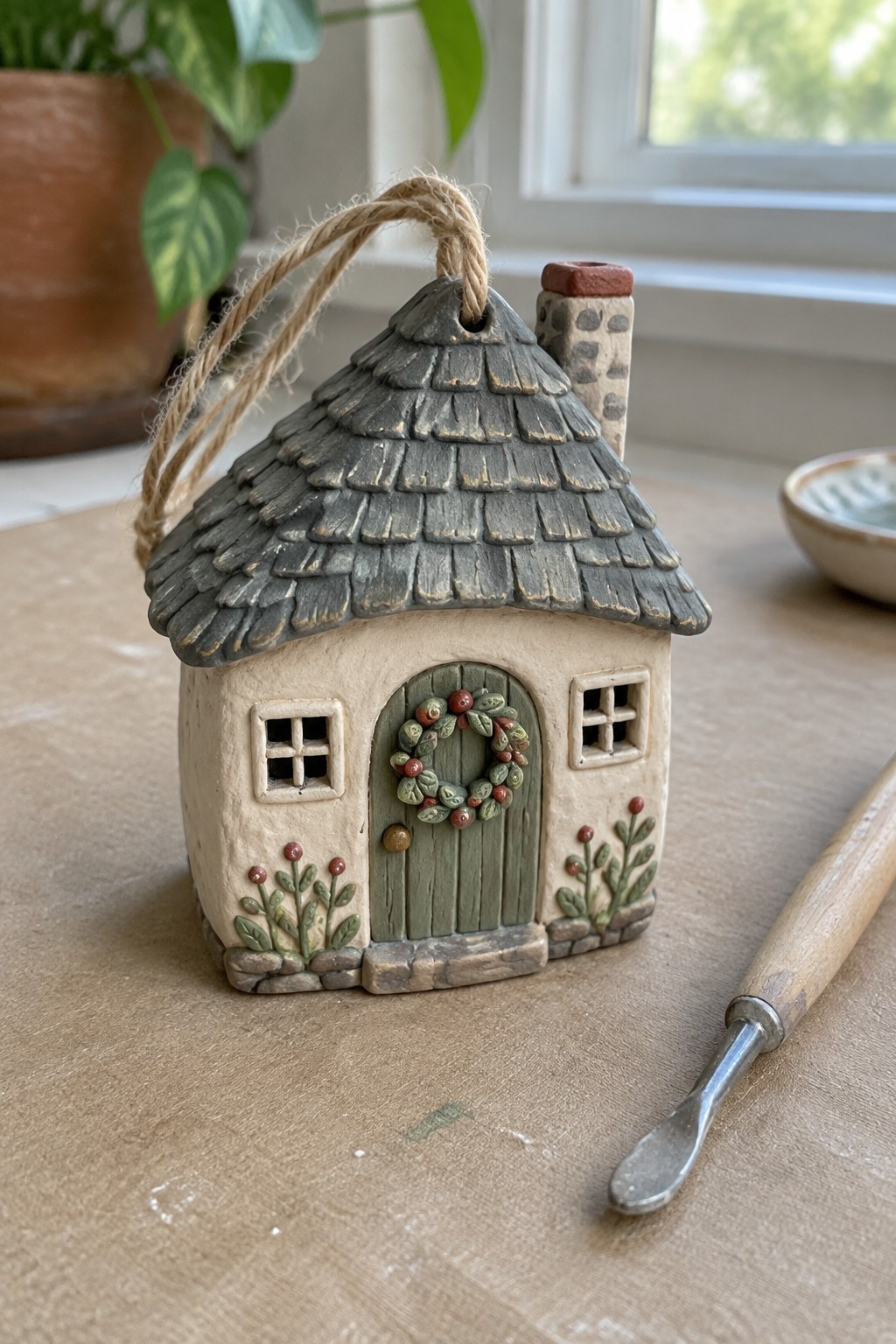
A hand-sculpted clay cottage makes a detailed seasonal ornament, with a steep, layered roof, a tiny wreath on the door, and small plants decorating the front. Its muted gray, cream, and green colors keep the many miniature details from feeling too busy, while the hanging loop gives the sculpture a clear ornament shape.
The cottage silhouette is the main feature, so a simpler version could use a plain roof and door with just a small wreath or a few sculpted leaves. You could change the roof or door colors, add berries or other botanical details, and make different cottages for a coordinated set of hanging decorations.
Bluebird on a Leafy Branch Ornament

A small hand-sculpted clay bird perched on a leafy branch makes a distinctive botanical Christmas ornament. The blue-gray wings and head contrast with the cream-colored breast, while the muted green leaves add detail without competing with the bird’s shape; a hanging loop completes the design.
The bird and branch can be simplified into rounded shapes, with just a few incised leaf veins and painted markings to keep the details manageable. Try changing the bird’s colors or swapping the leaves for evergreen sprigs, and make the ornament larger or smaller to suit a tree or a decorative gift tag.
Botanical Clay Disc Christmas Ornaments

These handmade clay ornaments use small round discs as a base for raised botanical details: a red poinsettia, green evergreen sprigs, and red berries with leaves. Their muted holiday colors and contrasting sculpted motifs make each ornament distinct while keeping them cohesive as a set of seasonal decorations.
The round shape is easy to adapt into different sizes, and a simpler version could use one sprig or berry branch on each disc instead of a layered flower. Try changing the base colors or botanical motifs to make a coordinated set for a tree, a gift tag, or a small seasonal display.
Frequently Asked Questions
Air-dry clay is a good choice if you want to avoid using an oven, while polymer clay is sturdy and usually needs baking according to the package directions. Both can capture small botanical details such as leaf veins and sprigs of rosemary. Choose a clay with a smooth finish, and test a small piece first to see how well it takes impressions.
Press clean, dry leaves, herbs, or small sprigs gently into the clay, then lift them away to reveal the impressions. Rosemary, fern, eucalyptus, and small evergreen tips can make especially clear patterns. Use a light touch so the botanical material leaves a crisp imprint without sticking or tearing the clay.
Keep the clay evenly rolled and avoid making the ornaments too thin. Smooth cracks and rough edges before the clay dries or bakes, and make the hanging hole large enough to leave a little clay around it. Let air-dry clay dry fully, turning the pieces as needed, and handle finished ornaments gently when threading ribbon through the hole.
Make the hole before the clay dries or goes into the oven. A drinking straw, skewer, or small round tool can create a neat opening. Place it near the top but not too close to the edge, so there is enough material to support the ribbon or twine. Check that the hole is clear after drying or baking.
Once the ornaments are completely dry or cool, you can leave them natural or add paint, metallic accents, or a suitable clear sealer. Follow the sealer’s instructions and test it on a spare piece first, since some finishes can change the clay’s color or sheen. Store the ornaments in a dry box with tissue between them to help prevent scratches and breakage.
