


I love how a tiny shift in color or texture can make a clay fruit look surprisingly lifelike.
These miniature replicas are a fun way to play with details like dimpled citrus peel, smooth apple skin, and bumpy berries.
I’ve gathered 15 ideas that show how varied these little fruit sculptures can be, from simple shapes to more detailed finishes.
Each one offers a different bit of inspiration for your next small clay project.
Realistic Miniature Clay Strawberry

A hand-sculpted clay strawberry turns a familiar fruit into a small decorative miniature, with a tapered red body, green leafy top, and raised yellow seeds that create its recognizable texture. The contrast between the softly varied red surface and the separate sculpted leaves gives the fruit definition without needing extra decoration.
The seed details make this design memorable, and they can be spaced more simply for an easier version or made smaller and more numerous for a detailed miniature. Try the same approach with different fruit shapes and colors, or make several strawberries in varied sizes for a small display or decorative charm.
Citrus Slice Clay Magnets

Hand-sculpted clay magnets shaped like orange, lemon, and lime cross-sections turn simple fruit forms into colorful refrigerator decorations. Their rounded outlines, contrasting rind colors, and segmented centers make each miniature slice easy to recognize.
The repeating wedge pattern gives the set a clear visual structure, while swapping fruit colors or changing the slice size offers an easy way to make variations. Simplify the details to a few broad segments for a quicker project, or add finer lines for more definition; the finished slices could also be adapted as decorative charms or small ornaments.
Lemon Slice Clay Trinket Dish

A miniature lemon-slice clay dish turns a familiar fruit shape into a decorative holder for small items such as rings. Its shallow, rounded form, yellow outer edge, and pale segmented interior make the citrus motif easy to recognize while giving the piece a hand-sculpted look.
The segmented center is the key detail, and it can be simplified into a few broad sections or made more defined for extra texture. Try the same dish in orange or grapefruit colors, or scale the shape down for a small ring holder or up for a decorative catchall; it is a memorable fruit-inspired idea to save and adapt.
Miniature Clay Banana Bunch

A hand-sculpted clay banana bunch turns a familiar fruit into a small realistic miniature, with several curved yellow bananas joined at their stems. The brown tips and subtle surface speckles give the simple shapes enough detail to read clearly as fruit, making this a miniature sculpture rather than a functional object.
The curved forms and repeated yellow shapes make the design recognizable, while small variations in speckles and ripeness can give each banana its own look. A simpler version could use fewer bananas and basic brown end details, or you could make single bananas in different sizes as a collection of miniatures or decorative charms.
Miniature Clay Kiwi Half

A hand-sculpted clay kiwi half recreates the fruit’s cross-section with a green outer ring, pale center, and a circle of tiny dark seeds. Its rounded form and textured brown exterior make it read as a realistic miniature fruit sculpture, fitting naturally into a collection of clay fruit replicas.
The seed ring is the detail that makes this design memorable, and it can be simplified to a few evenly spaced dots for a smaller or easier version. Try adjusting the green tones or making a whole kiwi alongside the cut half; different sizes could work as miniature collectibles or decorative pieces.
Hand-Sculpted Clay Apple Decoration

A miniature clay apple with a hollowed center turns a familiar fruit shape into a small decorative sculpture. Its rounded, uneven contours and mottled red and cream coloring give it the look of a realistic fruit replica, while the raised brown stem adds a clear finishing detail.
The recessed center makes this apple more distinctive than a solid miniature, and you could keep that shape or simplify it into a rounded apple with a short stem. Try different red, green, or yellow color blends, or make a set of varied fruit sculptures at different sizes for display or as small handmade gifts.
Miniature Clay Grape Keychain
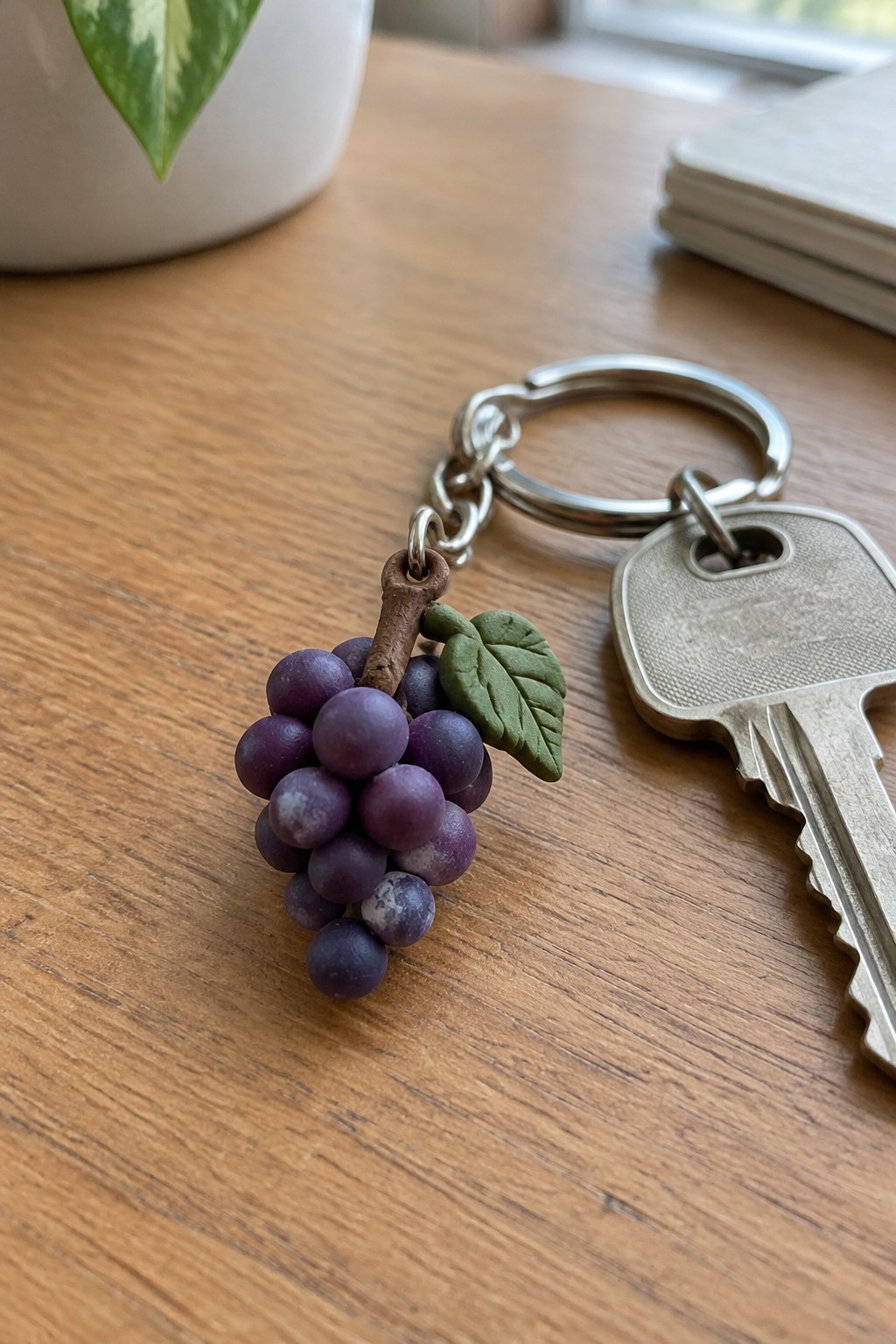
A hand-sculpted bunch of purple clay grapes turns a familiar fruit shape into a decorative keychain charm. Rounded grapes, a small brown stem, and a green leaf create a clear fruit silhouette, while the handmade contours and varied purple tones keep the miniature from looking too uniform.
The grape cluster is memorable because its repeated rounded shapes make the form easy to recognize, even at a small scale. You could simplify it by using fewer grapes and one leaf, or try green grapes and a different leaf shape; the same sculpted fruit could also become a bag charm or a small display miniature.
Miniature Clay Peach With a Sculpted Pit

A miniature clay peach captures the fruit’s rounded shape, soft pink and golden coloring, and fine surface texture, with a matching half that reveals the ridged pit. The two-part fruit replica fits the miniature sculpture category, and the contrast between its fuzzy-looking exterior and smooth cut flesh makes the design especially recognizable.
The peach’s simple rounded form gives you a clear starting point, while the pit and color blending add detail without needing extra decorations. You could make a smaller version as a charm or magnet, or vary the fruit’s size and blush colors; for a simpler replica, sculpt a whole peach and add just the central seam and a few color shifts.
Miniature Clay Pomegranate Half

A hand-sculpted pomegranate half makes a striking miniature fruit sculpture, with its rounded red rind framing separate sections of glossy-looking red seeds and pale pink dividers. The contrast between the smooth seed shapes and the uneven, sculpted interior gives this decorative clay fruit its realistic texture.
The open-cut shape is the key detail to keep when adapting the idea, even if you simplify the seed sections into fewer rounded pieces. Try different rind shades or make a whole pomegranate beside the cut half for a small fruit display, a collectible miniature, or a decorative gift.
Miniature Clay Coconut Half

A hand-sculpted clay coconut half is a realistic miniature fruit replica, with a textured brown shell, a thick white rim, and a hollow center. The contrast between the rough outer surface and smooth-looking interior gives the small sculpture its recognizable coconut shape.
The layered form makes this a useful reference for practicing texture and proportion without adding many details. Keep it simple with a rounded shell and white inner section, or make several halves in different sizes for a fruit display; a tiny wooden-look spoon nearby could also inspire a separate decorative accessory.
Watermelon Slice Clay Trinket Dish

A hand-sculpted clay trinket dish shaped like a watermelon slice turns the fruit’s curved profile into a small jewelry holder. The pink center, pale rind, green outer edge, and painted black seeds make the fruit easy to recognize while giving the handmade contours a clear role in the design.
The shallow shape is useful for keeping rings and earrings together on a dresser, and the painted details can be simplified to suit a first clay project. You could change the seed placement, adjust the slice’s size, or use the same curved design for another fruit-inspired dish; as a decorative holder, it also makes a practical gift.
Red and Yellow Miniature Clay Mango

A hand-sculpted clay mango makes a recognizable miniature fruit decoration through its tapered oval shape and blend of red and golden-yellow color. A small raised stem adds a clear finishing detail, while the handmade contours and subtle surface marks keep the fruit from looking like a simple painted oval.
The color transition is what makes this idea easy to adapt: try more yellow for a ripe mango, or add green patches for a less-ripe version. A single fruit can be displayed as a miniature sculpture, and several small mangoes in different sizes could form a fruit collection or be adapted into decorative charms.
Miniature Clay Cherry Drop Earrings

These handmade clay earrings turn paired red cherries, green stems, and small leaves into a fruit-inspired jewelry design. The rounded fruit and simple sculpted details make the motif easy to recognize, while the dangling arrangement gives the miniature sculpture a clear place as a wearable accessory.
The two-cherry shape is memorable without needing many details, so you could simplify the leaves or fruit texture for a more basic version. Try different fruit colors or make the cherries larger or smaller to create variations for gifts or personal accessories.
Miniature Clay Lemon Slice Garland

Hand-sculpted clay lemon slices can be arranged on a cord to make a small fruit-themed wall decoration. Their yellow rinds and painted white segments make the citrus motif easy to recognize, while the mix of slice sizes gives the garland a handmade look.
The repeated round shapes and simple color palette make this idea easy to adapt into a shorter garland, individual ornaments, or small decorative magnets. For a simpler version, use fewer slices and keep the segment details minimal, or vary the colors to create a garland inspired by oranges, limes, or grapefruit.
Miniature Clay Fruit Bowl Arrangement
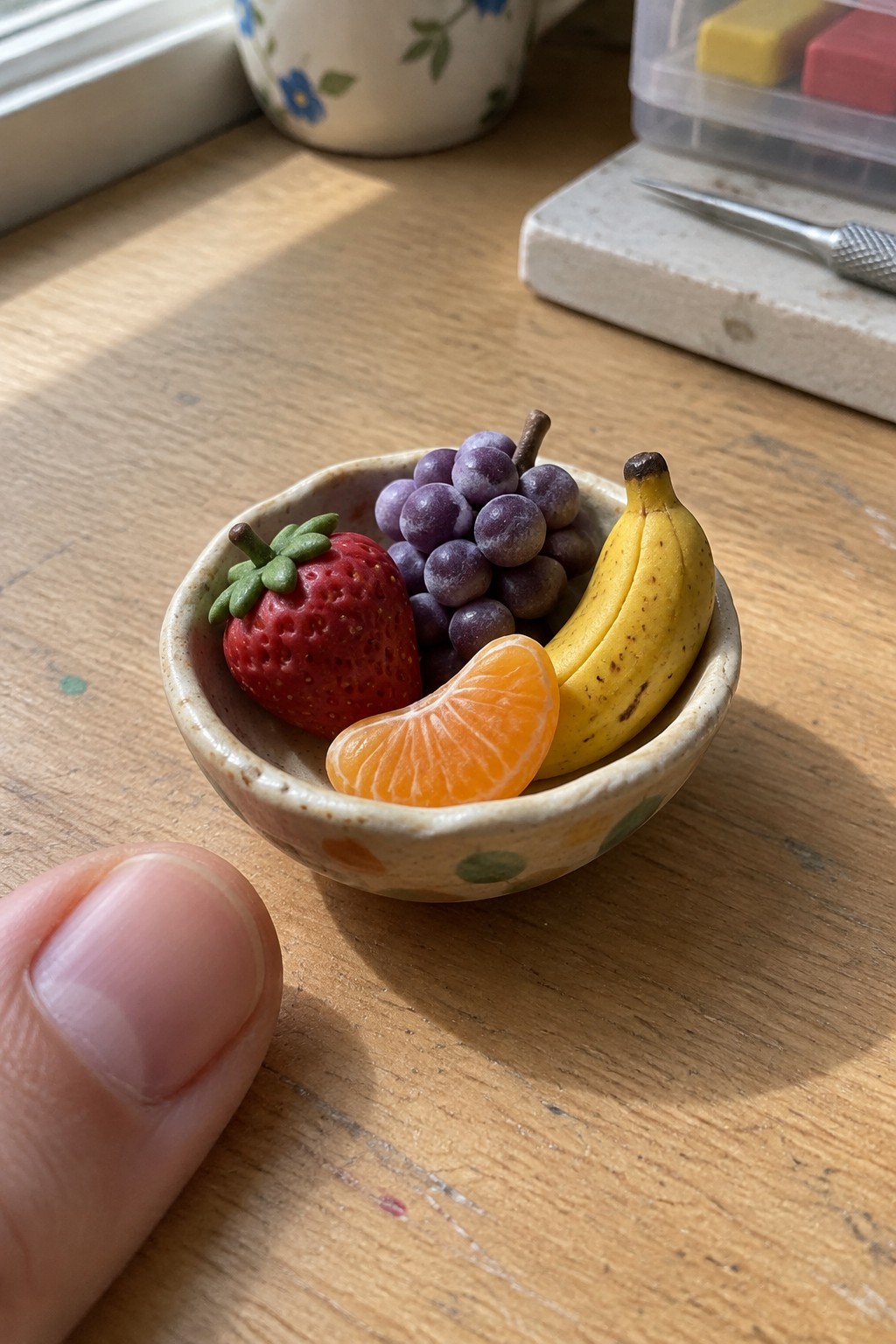
A hand-sculpted miniature fruit arrangement pairs a strawberry, purple grapes, a banana, and a peeled citrus segment in a small decorative bowl. The realistic fruit shapes, varied colors, and tiny scale make it read as a compact still life rather than a single fruit figurine.
The bowl and fruit could be made as one display or as separate pieces that can be rearranged, with simpler versions using fewer fruits and less surface detail. Try swapping in different fruit colors or making the arrangement larger for a shelf decoration, or scale it down into a miniature collectible.
Frequently Asked Questions
A set of 15 mini clay fruits can be used for dollhouse scenes, miniature food displays, craft projects, jewelry, magnets, or decorative accents. They’re also handy for practice: you can study how different fruits vary in shape, color, and surface texture before making your own.
Small details help distinguish one fruit from another. Subtle dimples suggest an orange, tiny dots can mimic a strawberry’s seeds, and shallow lines add the look of a melon’s rind. Slight variations in color and finish also make the fruit appear less uniform and more natural.
Polymer clay is a popular choice because it holds fine details and can be baked to harden. Air-dry clay is another option, especially for projects that don’t require baking. You may also want sculpting tools, a craft knife, a fine brush, and acrylic paints or chalk pastels for adding color and texture. Follow the clay manufacturer’s instructions for safe handling and curing.
Work with small portions of clay and keep the rest covered so it doesn’t dry out or collect dust. Use light pressure when adding seeds, dimples, or other details, and handle finished pieces with a toothpick or tweezers if needed. For polymer clay, bake pieces on a flat, heat-safe surface according to the package directions.
Display them in a miniature bowl, market stall, dollhouse kitchen, or clear case to protect them from dust and accidental damage. Keep them away from direct sunlight and excessive heat, which can affect colors or materials over time. Clean them gently with a soft, dry brush, and check whether the clay or finish is suitable for use around children or pets.
