


I’ve always liked how a tiny clay version of a familiar snack can turn into a charming little display piece or accessory.
Miniature food replicas are a fun way to play with color, texture, and small details without taking on a large project.
In this collection, I’ve gathered ideas ranging from sweet treats to savory favorites, each with its own personality.
Browse through and see which tiny creation catches your eye.
Miniature Croissant Clay Sculptures

These tiny croissants are hand-sculpted clay food miniatures, shaped with curved layers and tapered ends to suggest flaky pastry. Their warm golden-brown color and shallow ridges make the bread form recognizable at a small scale, fitting naturally into a miniature food collection.
The layered contours create visual interest without needing painted-on details, and you could vary the browning or shape to make a set of different pastries. A simplified version could use one crescent-shaped form with a few pressed-in lines, while finished miniatures could be displayed on a tiny tray or adapted as decorative charms.
Three-Piece Miniature Sushi Magnet

This hand-sculpted clay miniature turns three pieces of sushi into a small decorative magnet. The white rice shapes and orange, red, and yellow toppings make each piece easy to distinguish, while the dark band around the egg nigiri adds a clear contrast and recognizable detail.
The simple rounded forms make the set adaptable: you could change the toppings, colors, or number of pieces, or make one sushi piece as a smaller charm. For a simpler version, shape just one piece of nigiri and use a few shallow lines to suggest its topping; the trio could also be arranged on a small backing for a miniature food display.
Three Miniature Sprinkle-Topped Clay Donuts
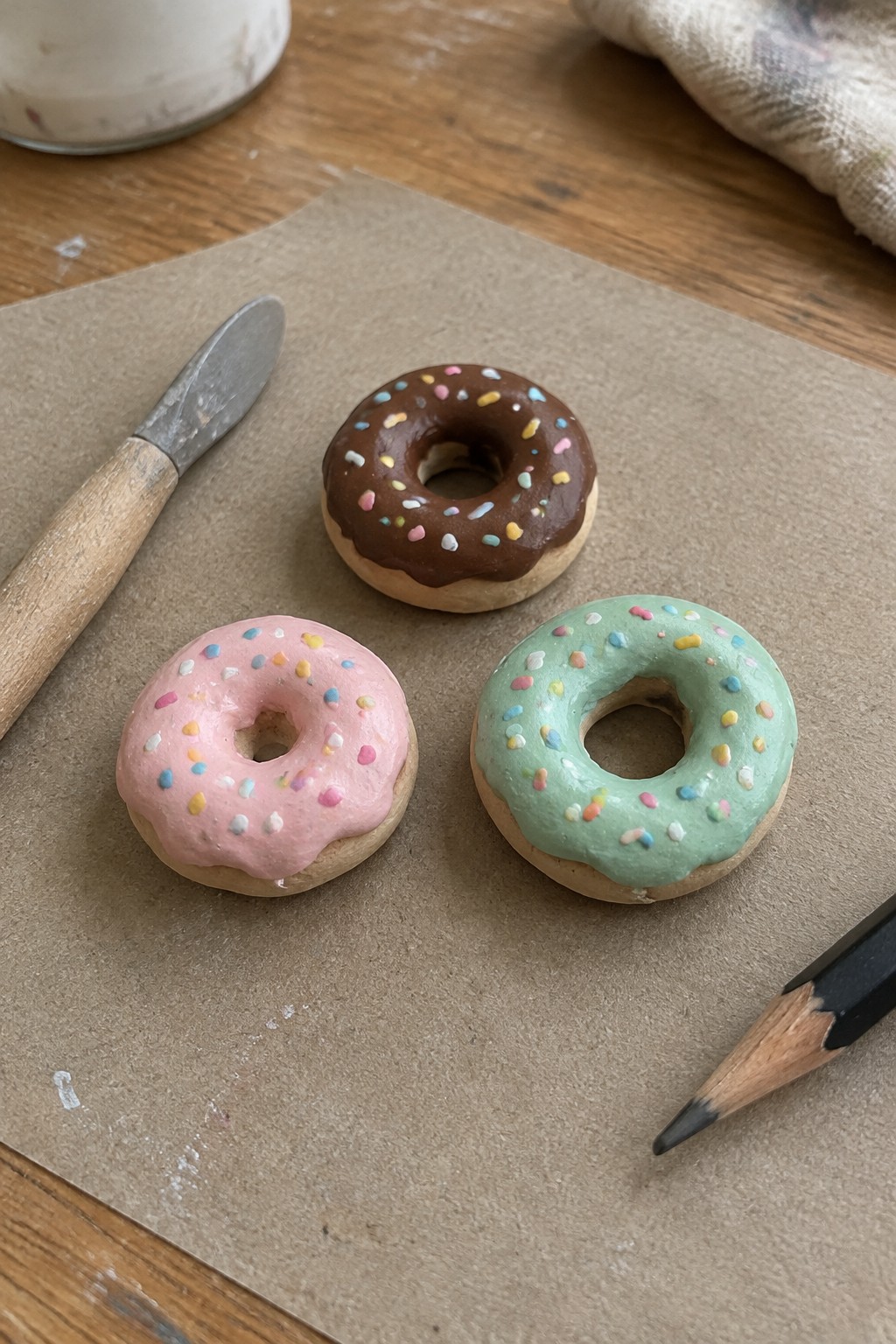
These handmade clay miniatures recreate ring-shaped donuts with tan bases, chocolate, pink, and mint icing, and small multicolored sprinkles. Their rounded forms and contrasting icing colors make the familiar baked treat easy to recognize as a playful miniature sculpture.
The three-color set is worth adapting because the same simple donut shape can look distinct with different icing and sprinkle combinations. Make one or several at a small scale for a miniature food collection, or enlarge them as decorative pieces; a beginner could simplify the icing and use fewer sprinkles while keeping the ring shape clear.
Miniature Macaron Clay Earrings

Hand-sculpted clay macarons become playful stud earrings, with stacked shell shapes and a contrasting cream-colored filling. The lavender and pale green colorways, along with the small ridged edges, make each tiny food replica easy to recognize as wearable miniature jewelry.
The rounded layers create a clear macaron shape without needing many extra details, so you could simplify the edges or use two solid colors for an easier version. Try other macaron shades or vary the filling color, and adapt the same miniature design into a small charm or decorative collectible.
Miniature Avocado Toast Clay Sculpture

A tiny clay avocado toast sculpture turns a familiar snack into a miniature food replica. Its layered green avocado, toasted-brown bread, and red tomato slice make the design easy to recognize, while the uneven contours and small seed-like details give the handmade miniature more visual depth. It fits naturally into a collection of miniature food sculptures or could be adapted as a decorative charm.
The contrasting colors make this idea memorable, and the basic shapes can be simplified to suit your skill level: use one rounded toast shape, a flattened avocado layer, and a small tomato accent. You could change the topping to add a radish slice, herbs, or extra seeds, or make several versions with different bread shapes for a miniature food display.
Miniature Baguette Clay Keychain

A tiny baguette sculpted from clay makes a playful food-replica keychain. Its long, tapered shape, golden-brown color, and pale score marks give the miniature bread its recognizable look, while the attached loop turns it into a small decorative accessory.
The baguette’s simple silhouette keeps the concept easy to adapt: use fewer score marks for a simpler version, or make several loaves in different lengths and shades of brown. It could also become a decorative zipper pull or ornament by changing the attachment, making this a fun idea to save for a miniature food collection or a small handmade gift.
Miniature Lemon Tart Clay Sculpture
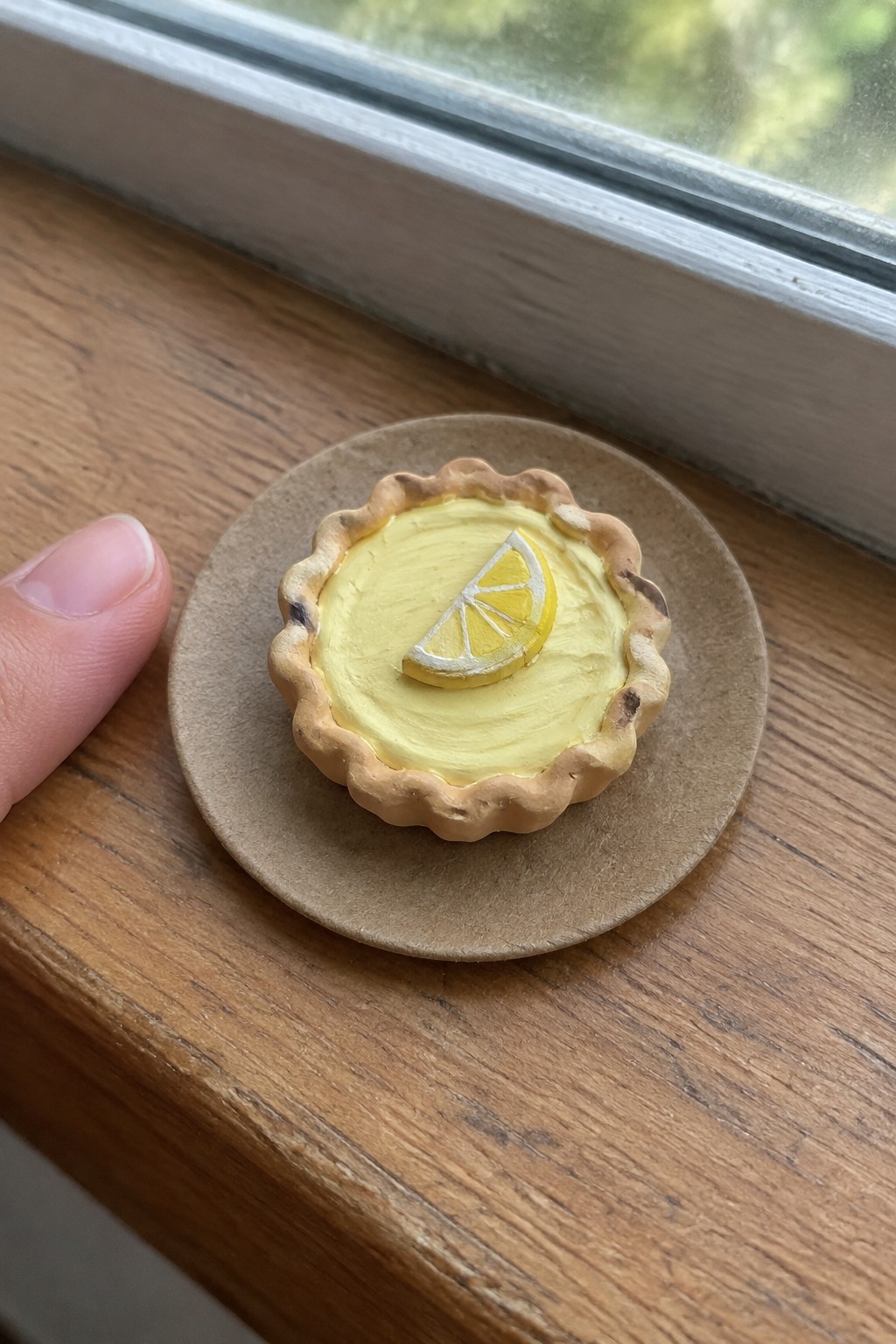
A tiny clay lemon tart combines a fluted golden crust, smooth pale-yellow filling, and a small lemon-slice decoration. Its familiar dessert shape and contrasting colors make it read clearly as a miniature food sculpture, with the hand-shaped edge adding detail without crowding the design.
The lemon slice gives the tart a memorable focal point, and you could adapt the idea with a different fruit topping or filling color. A simpler version could use a plain round tart with just one small sculpted garnish, while several variations could make a coordinated set of decorative miniatures or gifts.
Three Miniature Double-Scoop Clay Cones
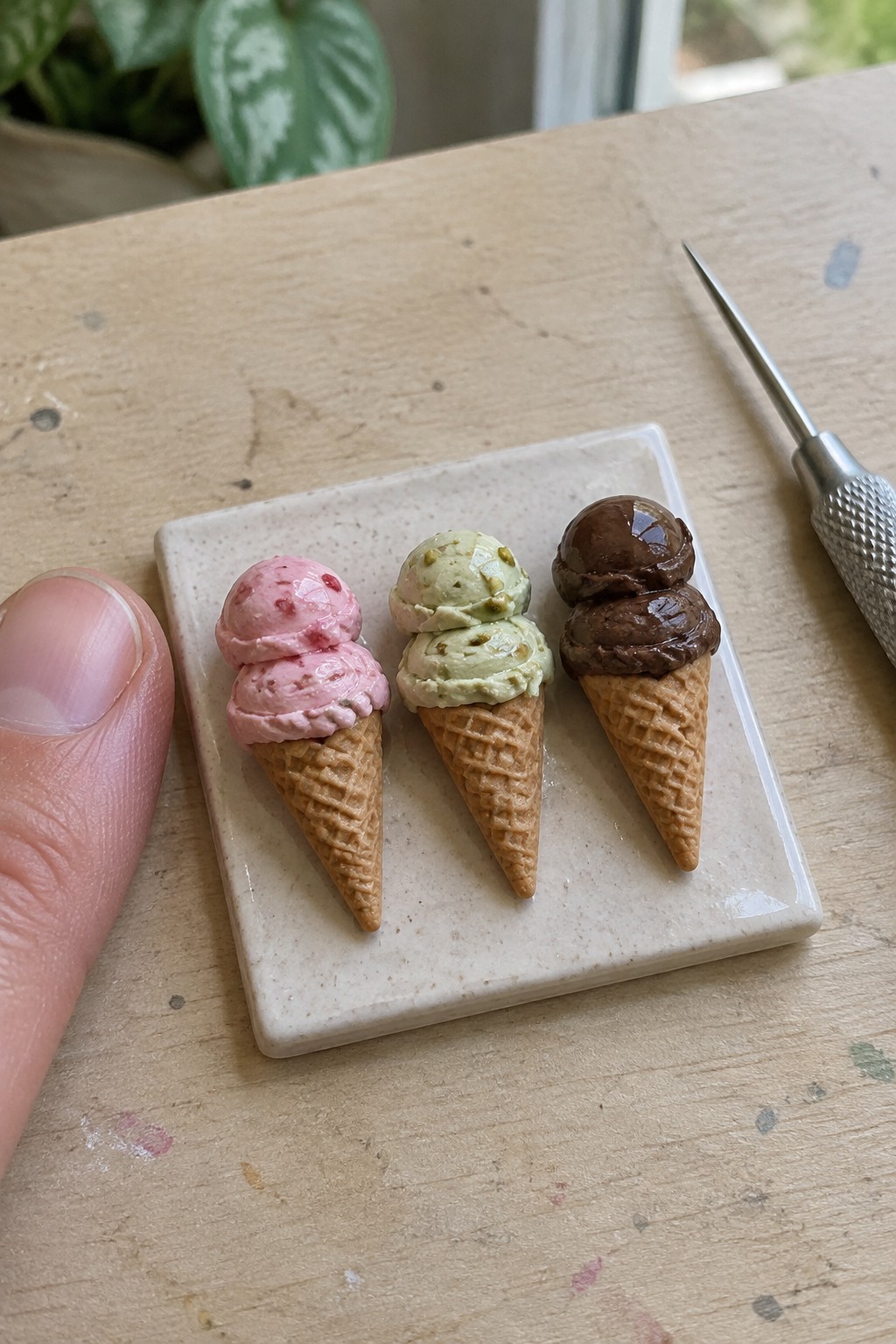
These hand-sculpted clay miniatures recreate ice cream cones, each topped with two rounded scoops in a different color combination. The textured cone shapes and small flecks of color make them recognizable at a tiny scale, while the uneven contours keep them looking handmade. They fit neatly into the miniature food sculpture category.
The repeated cone shape makes this idea easy to adapt with other scoop colors, toppings, or cone details. A simpler version could use one scoop and fewer surface marks, while a set of different flavors would make a playful display or a small gift for someone who collects miniatures.
Miniature Stack of Clay Pancakes

A tiny stack of three pancakes makes a recognizable miniature food sculpture, with a small butter pat and syrup spilling down the front. The rounded layers and warm golden-brown colors give the handmade clay decoration its shape and detail without needing extra toppings.
The stacked form is easy to adapt into a shorter pile or a single pancake, and the butter and syrup can be simplified to small sculpted pieces. Try different syrup shades or add a few tiny berries to create variations for a miniature food collection or display.
Miniature Bento Box Clay Charm

This hand-sculpted clay charm recreates a tiny bento box, with a rice section decorated like a face and separate compartments for rolled egg, cucumber, and a carrot slice. The maroon tray and distinct food colors make the miniature food arrangement easy to read at a small scale.
The compartment layout gives you a clear way to organize several simple food shapes in one project, while the tiny facial details make the rice section stand out. You could swap in other bento foods or change the colors, then keep the attached loop for a charm or make the box without it as a miniature display piece.
Miniature Strawberry Layer Cake
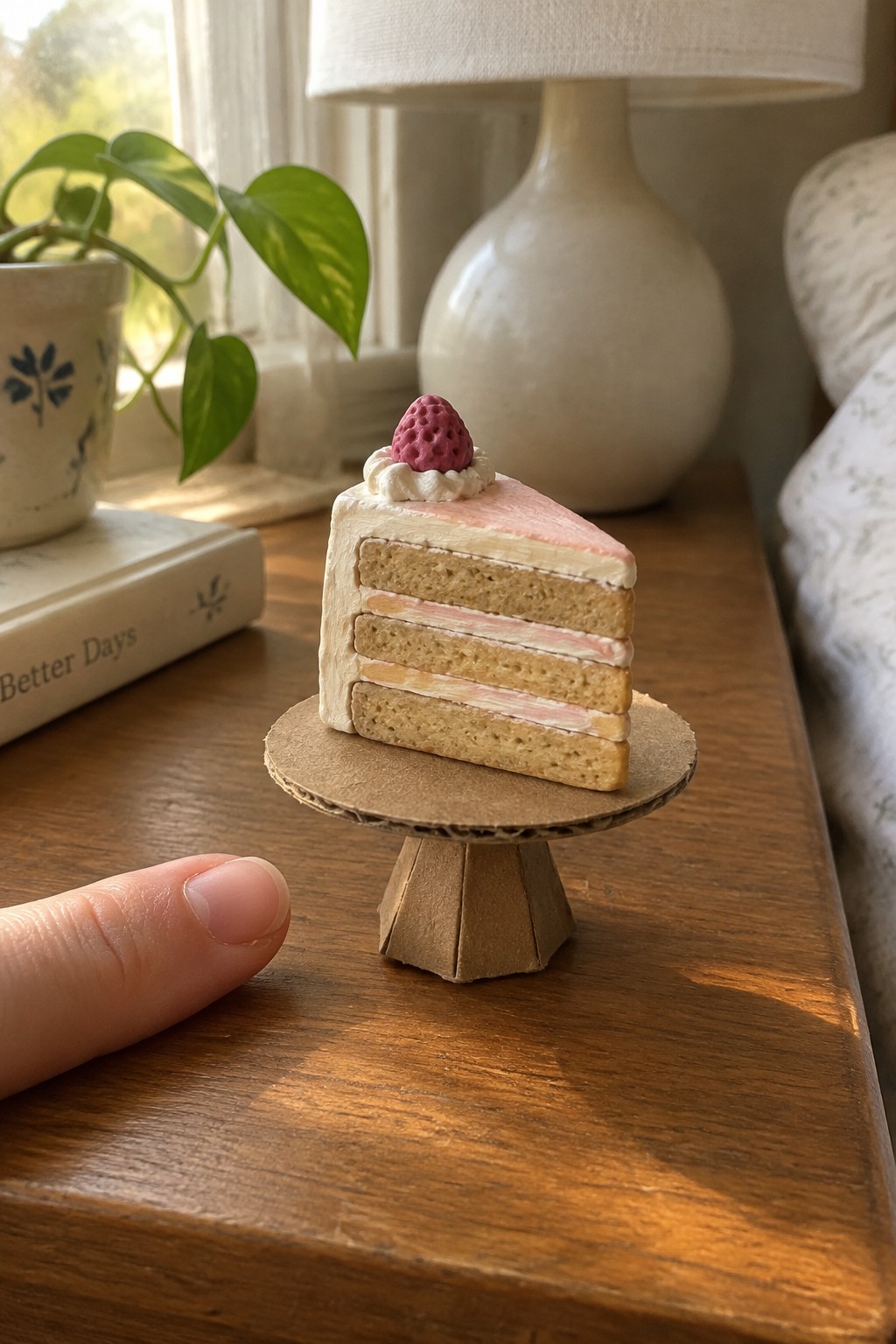
This hand-sculpted clay miniature recreates a slice of strawberry layer cake, with stacked cake layers, thin pink filling, pale frosting, and a small berry on top. Its cutaway shape makes the layers easy to read, while the tiny scale and handmade contours place it firmly in the miniature food sculpture category.
The layered construction gives you clear details to focus on without needing to sculpt a whole cake, and the same design could be varied with different frosting colors or a different small fruit topping. A simpler version could use fewer cake layers and basic rounded shapes, while a finished slice could be displayed on a miniature stand or added to a collection of clay dessert replicas.
Miniature Pretzel Clay Earrings

Hand-sculpted clay pretzels become playful stud earrings, with twisted brown forms and small white salt details that make the food replica easy to recognize at a tiny scale. Their rounded contours give the design a handmade look, while the metal posts make them a wearable miniature-food accessory.
The pretzel shape is distinctive enough to stand out without needing many colors or extra decoration. You could simplify the twist for an easier version, change the brown tones, or make the same miniature pretzels as charms or decorative pieces; making a matching pair keeps the earrings coordinated.
Miniature Clay Fruit Bowl

A hand-sculpted miniature fruit bowl brings together a curved banana, a red apple, and a cluster of purple grapes in a shallow brown dish. The familiar fruit shapes and contrasting colors make this small clay sculpture easy to recognize as a tiny tabletop still life.
The bowl and fruit can be made as one display or as separate miniatures, so the idea scales easily from a small collectible to a larger decorative piece. For a simpler version, choose two fruits and focus on their basic shapes, then change the colors or fruit selection to make a different miniature arrangement.
Miniature Iced Cinnamon Roll Clay Pin

A tiny cinnamon roll clay pin recreates the pastry’s spiral layers with warm brown filling and a white icing swirl. Its rounded handmade shape and contrasting details make it recognizable at a small scale, while the pin backing turns the miniature food sculpture into a wearable accessory.
The spiral is the main feature, so a simpler version can use a basic coil and a few painted or sculpted icing lines. Try changing the icing color or making the roll larger for a brooch, or create several small pastries as a coordinated set of decorative pins.
Miniature Grilled Cheese Clay Magnet
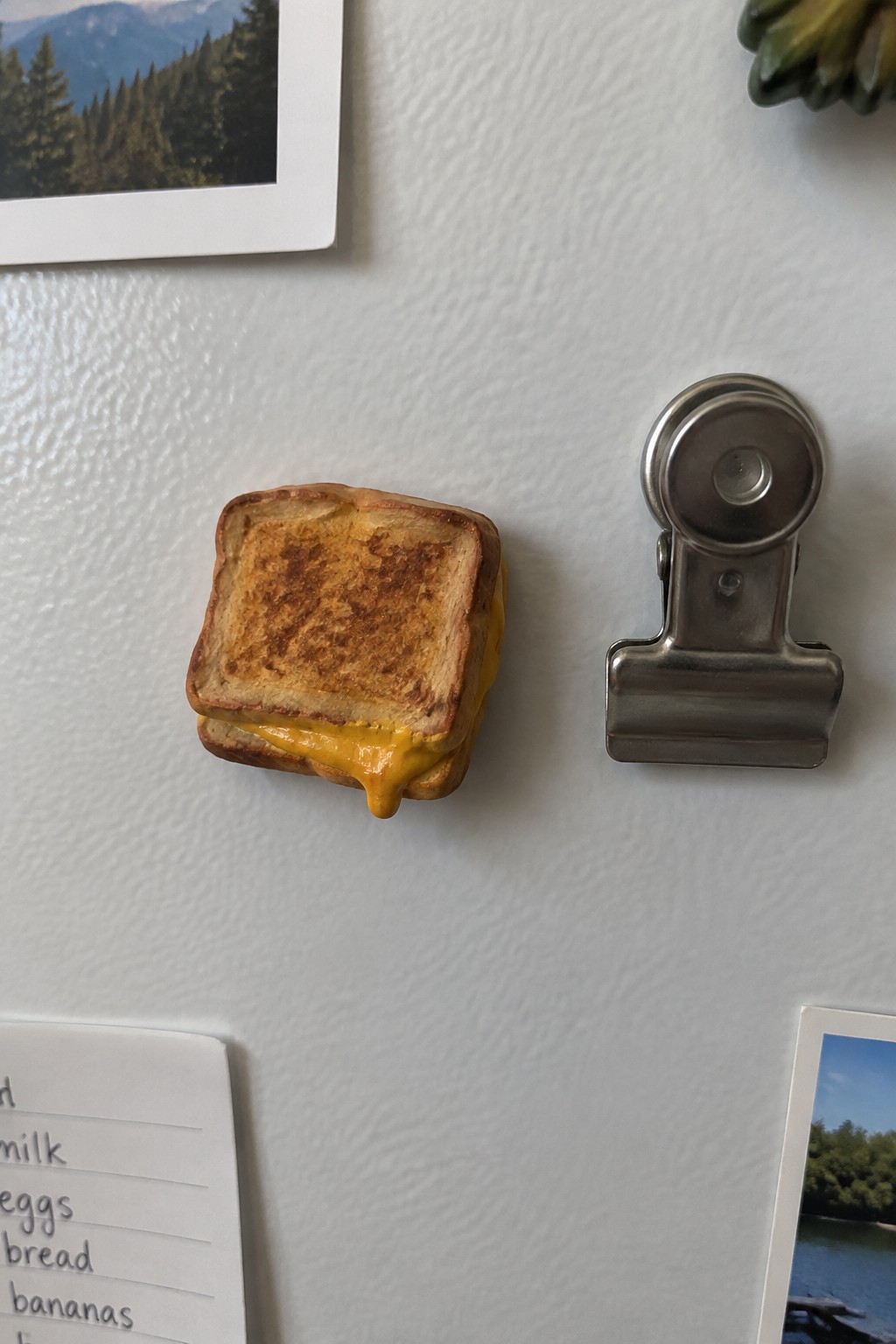
A tiny grilled cheese sandwich makes a recognizable miniature clay sculpture, with browned bread and a bright melted-cheese detail that gives the simple shape contrast. Its stacked slices and small cheese drip make it read clearly as miniature food, fitting naturally into a playful decorative magnet collection.
The toasted color pattern is what makes this idea memorable, and it can be simplified to two bread shapes with a small strip of yellow cheese between them. Try different degrees of browning or make a few sandwich variations at different sizes; the finished piece could also become a decorative charm or collectible miniature.
Miniature Cupcake Clay Ring

A tiny cupcake sculpture turns a pink ridged wrapper, piped-looking white frosting, and colorful sprinkle details into a playful ring centerpiece. Its rounded shape and contrasting colors make the miniature food design easy to recognize, while the metal band gives it a clear place in the clay jewelry category.
The frosting swirl and sprinkles create plenty of detail without needing a large sculpture, and a simpler version could use a smooth frosting mound with just a few dots or short sprinkle shapes. Try different wrapper and frosting colors, or adapt the cupcake into a small charm or decorative miniature; the ring version is especially worth saving for its distinctive, wearable scale.
Three Miniature Clay Tacos

These tiny clay tacos are a miniature food sculpture, filled with textured green lettuce, small red and yellow toppings, and brown filling inside curved golden shells. Their repeated shapes and bright colors make the set easy to recognize at a small scale.
A simpler version could use fewer toppings and broader patches of color, while extra details such as diced tomato or different fillings could make each taco distinct. The set could stay a tabletop miniature or be adapted into small decorative magnets or charms.
Strawberry Slice Clay Bracelet

This handmade clay bracelet uses small strawberry slices as its repeating decorative motif, with pale centers and tiny yellow seed details set against red edges. The round, slightly irregular pieces create a bright miniature-food jewelry design, while the cord keeps the focus on the sculpted fruit shapes.
The repeated slices make the concept easy to adapt into a shorter bracelet, necklace, or individual pendant. A simpler version could use fewer seed marks and basic red-and-cream shapes, while alternate fruit colors or shapes could turn the same idea into a mixed-fruit accessory.
Miniature Assorted Clay Truffles

These tiny hand-sculpted clay truffles turn familiar chocolates into a four-piece miniature confectionery set. Their rounded forms, dark brown colors, and contrasting dot and stripe decorations make each piece easy to distinguish, while the small square box gives the sculptures a neat display arrangement.
The truffles could be simplified by shaping four plain spheres and adding a few painted dots or lines, or varied with different colors and toppings to suggest other flavors. Make the set smaller for a charm or keep the box and lid as part of a decorative miniature gift display.
Miniature Pepperoni Pizza Clay Keychain

A hand-sculpted slice of pepperoni pizza makes a playful miniature food keychain, with a browned crust, pale cheese, and small red toppings defining the familiar shape. Its triangular silhouette and contrasting colors keep the design recognizable at a small scale, while the attached metal ring makes it a functional decorative accessory.
The pizza details can be simplified to a wedge, crust, and a few flat toppings, or varied with different cheeses and toppings to create a matching set. This idea could also be adapted into a bag charm or a standalone miniature sculpture, making it easy to save as inspiration for a food-themed clay project.
Miniature Berry Tart Clay Charm

This miniature clay tart charm pairs a scalloped, hand-shaped crust with glossy-looking red filling and tiny strawberry and blueberry details. Its fruit topping and baked-goods shape make it a recognizable miniature food sculpture, while the small loop turns it into a hanging decoration.
The berry colors stand out against the pale crust, so the design remains easy to recognize at a small scale. You could simplify it with just one type of berry or change the filling and fruit for a different tart; making a few variations would create a coordinated set of charms or ornaments.
Frequently Asked Questions
Polymer clay is a popular choice because it holds tiny details, comes in many colors, and hardens in a home oven. Air-dry clay is another option if you do not want to bake your work, though it may be less durable and can shrink as it dries. Check the package instructions for curing or drying times, and use a dedicated craft surface and tools.
You can get started with polymer clay, a craft blade, a toothpick or needle tool, and a small rolling pin or smooth pen barrel. A silicone shaping tool, tweezers, and a texture tool can help with fine details. For a low-cost setup, household items such as a clean toothbrush or crumpled foil can create useful textures.
Build recognizable shapes first, then add small details and texture. Mix colors rather than relying on a single flat shade: a little brown can make bread look toasted, while tiny flecks of green can suggest herbs. Use tools to add details such as frosting, seeds, grill marks, or fruit pulp. Looking at reference photos can help with colors and proportions.
The right size depends on how you plan to use it. For dollhouse scenes, match the food to the scale of the furniture and figures. For jewelry or charms, make pieces large enough to handle and securely attach a finding. If you are experimenting, start slightly larger than you think you need, since very tiny pieces can be difficult to shape and detail.
Follow the clay manufacturer’s directions for baking temperature and time, and use an oven thermometer if possible. Avoid overheating, and do not use kitchen tools for food preparation afterward. Once the pieces have cooled, add a compatible finish only if the project needs extra protection or shine. Store miniatures in a small box or divided container to prevent dust, scratches, and breakage.
