


I like working with foam clay when I want to make small figures without adding much weight.
Its soft texture makes it fun to shape simple characters, then personalize them with colors and little details.
In this collection, I’ve gathered ideas for playful animals, people, and other tiny creations that can bring a handmade touch to a shelf or desk.
Each figure has its own character, so there are plenty of different styles to try.
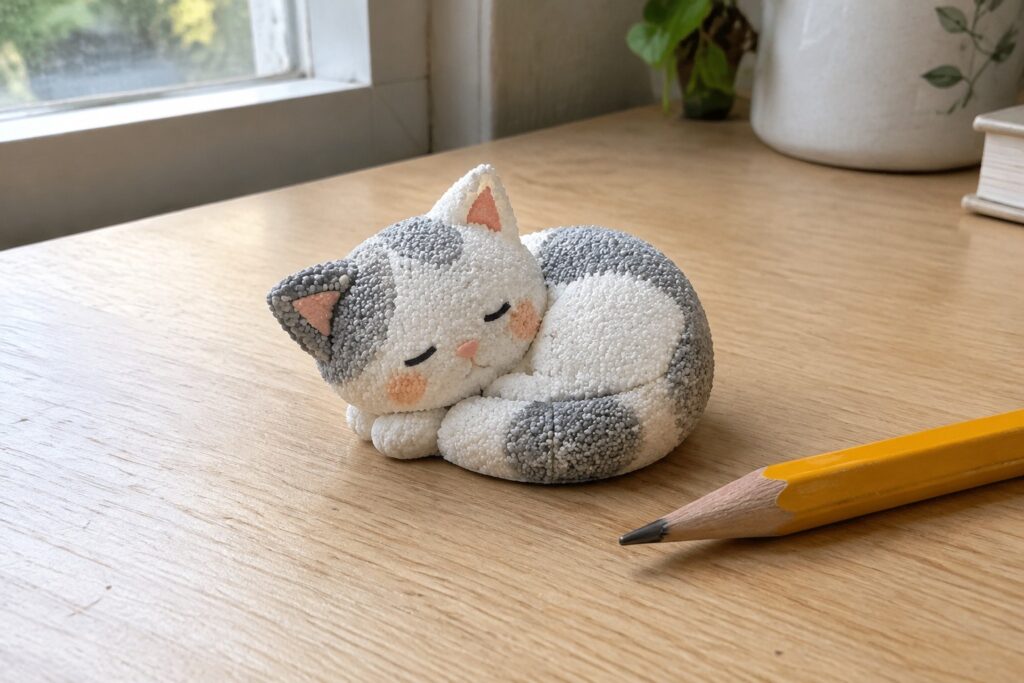
Curled Gray and White Foam Clay Cat

A curled-up cat figurine is a compact foam clay character sculpture, with its rounded body shaped into a sleeping pose and gray-and-white patches defining its coat. The closed eyes, pink nose, and small inner ears give the handmade figure recognizable details without needing a complex pose.
The curled shape helps the cat read clearly as a small character, and the two-color pattern is easy to adapt with different coat markings or eye and nose colors. For a simpler version, keep the body as one rounded form and add only the ears, face, and tail; making several cats in different sizes or poses could also create a small collection of decorative figures.
Avocado, Orange, and Mushroom Clay Magnets

Hand-sculpted fruit and mushroom magnets turn familiar foods into small character figures for a refrigerator or other magnetic surface. The rounded shapes, textured edges, warm colors, and simple painted faces make each piece recognizable while giving the set a consistent look as a decorative clay craft.
The design can be adapted by swapping in other foods, such as a lemon, strawberry, or tiny bread roll, while keeping the same simple facial details. For an easier version, use flatter silhouettes and fewer textures; making the figures in a small matching set also gives you a practical handmade gift idea.
Blue Robot Clay Charm

A small hand-sculpted clay robot becomes a hanging charm, with a rounded body, separate-looking arms and feet, and a simple face that makes the character easy to recognize. The blue color, dark painted features, and small metal loop give this miniature figurine a clear, playful design without needing many details.
The rounded shapes make the robot’s silhouette easy to adapt into other characters, such as a different-colored robot with antennae, a chest emblem, or a new expression. Keep the same basic form for a small charm, or enlarge it as a decorative miniature sculpture; simplifying the face and body details can also make a more manageable version to try.
Sleeping Moon and Star Clay Figurine

A hand-sculpted clay figurine of a sleepy character sitting in a crescent moon makes a small decorative sculpture for a bedside table or shelf. Its rounded white body, closed-eye details, gold stars, and attached star give the design a clear night-sky theme, while the uneven contours keep it visibly handmade.
The design can be adapted by changing the character’s expression, the shape of the moon, or the colors of the stars and base. For a simpler version, use a round body, a curved moon, and just one painted star; making a few with different colors or small accessories could turn the idea into a coordinated set of decorative figures.
Red and White Mushroom Clay Earrings
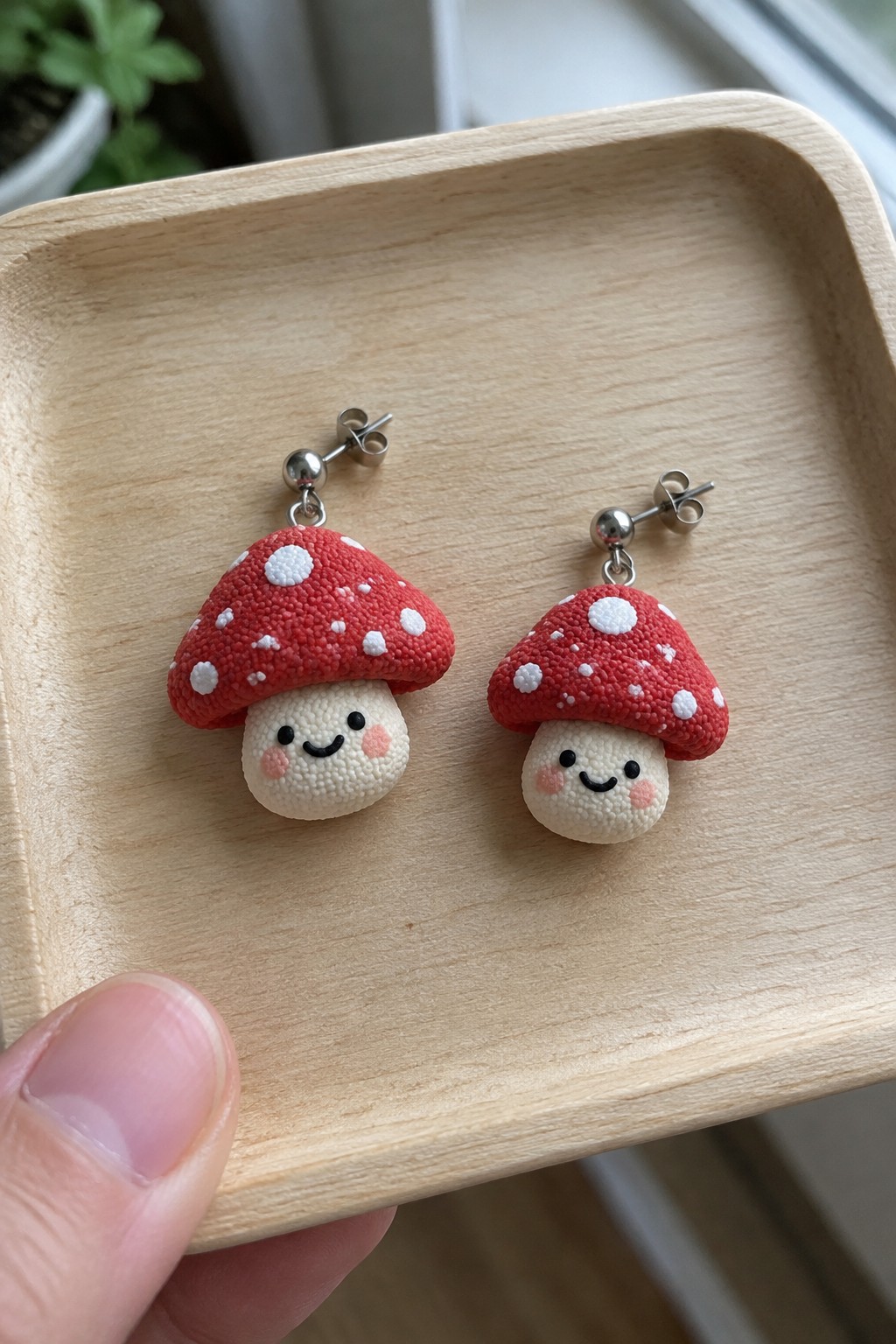
These miniature mushroom earrings are hand-sculpted clay jewelry, with rounded white stems, broad red caps, and raised white spots that make the design easy to recognize at a small scale. Simple painted faces add character without distracting from the mushroom silhouette, while the metal posts and drops turn the figures into wearable accessories.
The cap-and-stem shapes can be made separately in color before adding spots and simple facial details, and a beginner version could skip the faces or use fewer spots. Try changing the cap color or making a single mushroom as a pendant or charm; the paired earrings are also a fun idea to save for a playful handmade gift.
Orange and Cream Foam Clay Fox Pencil Topper
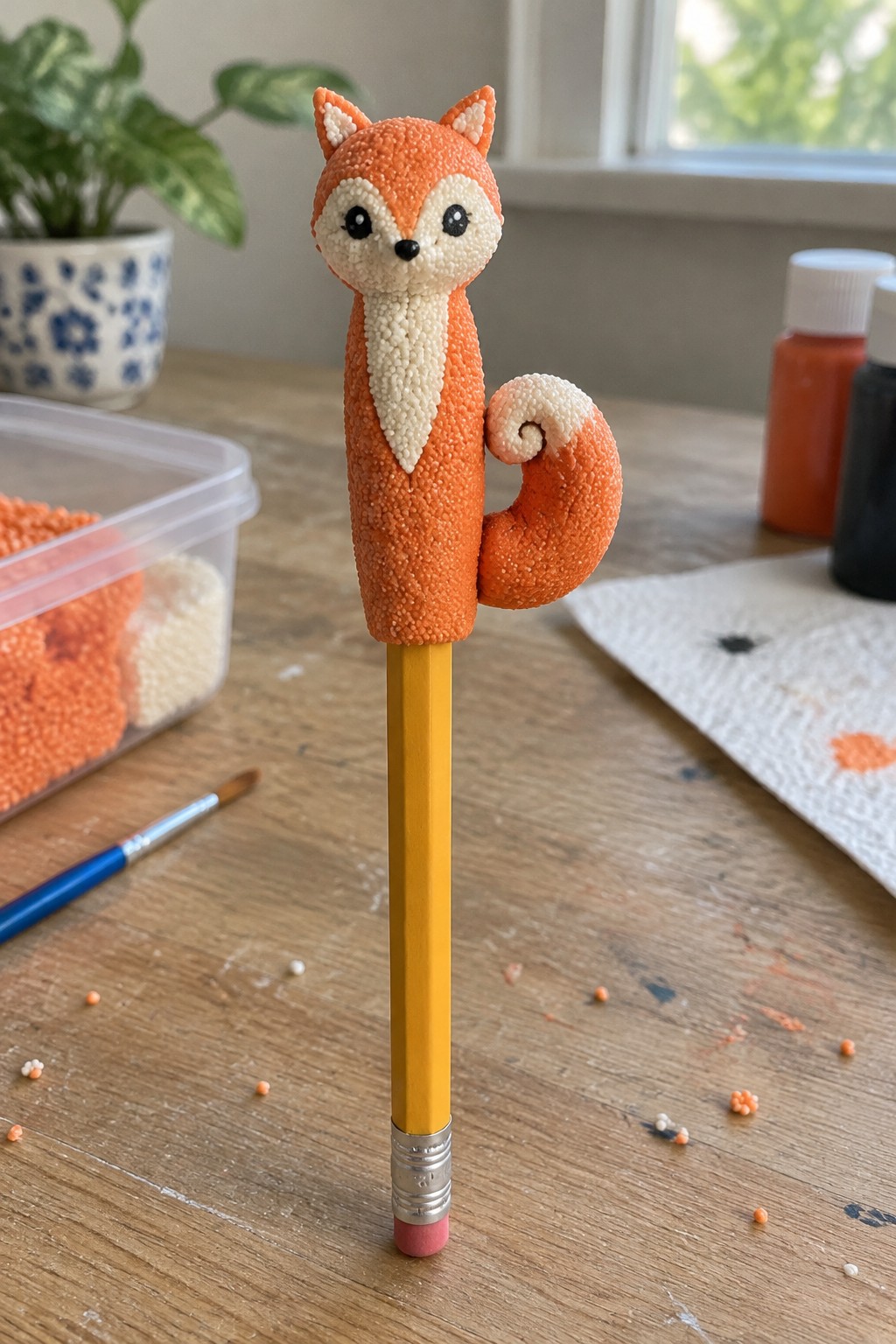
This foam clay animal craft turns a slim fox figurine into a decorative pencil topper. Its upright body, pointed ears, curled tail, and cream-colored face and chest create a recognizable silhouette, while the raised bumpy texture gives the handmade figure extra definition.
The pencil makes the fox easy to display on a desk, and the same design could be scaled into a standalone miniature or adapted as a different animal topper. To simplify it, keep the body and tail shapes but use fewer details on the face; changing the main color or adding different ear and tail markings can create a whole set of character figures.
Smiling Sun, Cloud, and Raindrop Clay Figures
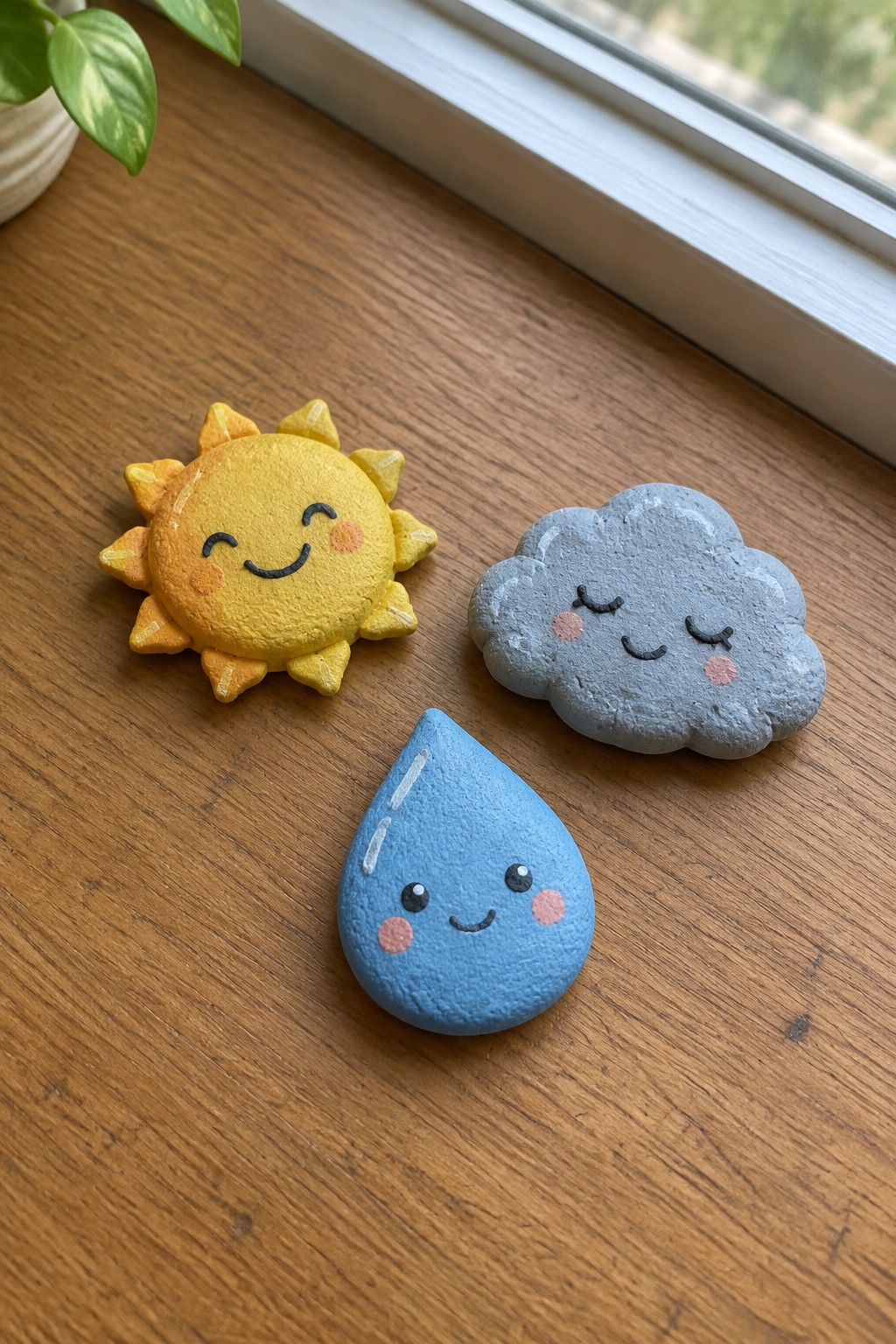
These small hand-sculpted weather figures turn a sun, a gray cloud, and a blue raindrop into a coordinated set of decorative clay miniatures. Their rounded shapes, textured surfaces, and simple painted faces make each silhouette easy to recognize, while matching rosy cheeks tie the colorful characters together.
The simple shapes make this idea easy to adapt: keep the faces and silhouettes basic, or add details such as extra sun rays, raindrops, or different expressions. Making the figures in several sizes or changing their colors could turn the set into a small display or a thoughtful handmade gift.
Red-Hatted Gnome and Toadstool Clay Figurines

A hand-sculpted gnome and matching toadstool make a small decorative miniature sculpture set. The gnome’s tall textured red hat, blue outfit, and long white beard contrast with the mushroom’s red cap and white spots, giving the pair a clear woodland theme.
The simple, recognizable shapes make the idea adaptable: a smaller version could use fewer surface details, while changing the hat or mushroom colors would create a different character set. These figurines work as decorative pieces or handmade gifts, and the gnome and toadstool could also be sculpted separately in different sizes.
Sleeping Blue Whale Foam Clay Figurine

A small hand-sculpted whale figurine pairs a rounded blue body and white underside with a flipper, raised tail, and stitched-look water spout. Its simple painted face and pink cheek keep the animal recognizable, while the soft color contrast and compact shape make it a playful miniature sculpture.
The broad body and attached details give the design a clear silhouette, so you could simplify it by shaping the whale first and adding just a tail and one flipper. Try different body colors or replace the water spout with a tiny hat or flower to make a series of distinct animal figures; at a small scale, it could also become a decorative desk companion or handmade gift.
Foam Clay Rabbit, Hedgehog, and Turtle Figurines

A trio of small foam clay animal figurines brings together a seated white rabbit, a spiky brown hedgehog, and a green turtle with a patterned shell. Rounded, simplified bodies make each animal easy to recognize, while the rabbit’s pink ears and the turtle’s painted shell panels add contrasting details. Together, they make a miniature animal sculpture set for display.
The different shapes offer useful ways to adapt the idea: keep the rabbit and turtle smooth, then give the hedgehog a textured back or swap in another animal with a distinctive feature. For a simpler version, make one animal using basic body shapes and just a few painted details; the set could also be scaled up or made in new color combinations for a small gift or collectible display.
Striped Scarf Foam Clay Snowman Ornament

A two-ball snowman with a striped red-and-green scarf makes a simple seasonal clay ornament with a clear, recognizable silhouette. Its dotted smile, black buttons, and orange nose provide small contrasting details that stand out against the textured white body.
The rounded forms keep the design easy to adapt: use fewer face details for a simpler version, or change the scarf colors and pattern to suit another holiday palette. Make the snowman smaller for a gift tag or larger as a hanging tree decoration, keeping the loop and twine for display.
White and Silver Foam Clay Astronaut Figure

This small astronaut is a hand-sculpted foam clay character figure, with a rounded white suit, silver details, and a dark visor that gives the face a clear focal point. The antennae, side pieces, and chest panel make the simple seated shape read as a miniature space-suit sculpture rather than a plain toy-like form.
The rounded parts and limited color palette make the design easy to adapt without losing its recognizable silhouette. A simpler version could use a smooth visor and just one or two suit details, while different helmet colors or a small backpack could make each figure distinct; the same concept also suits a desk decoration or a collectible set of miniature astronauts.
Pink Frosted Donut Clay Charm
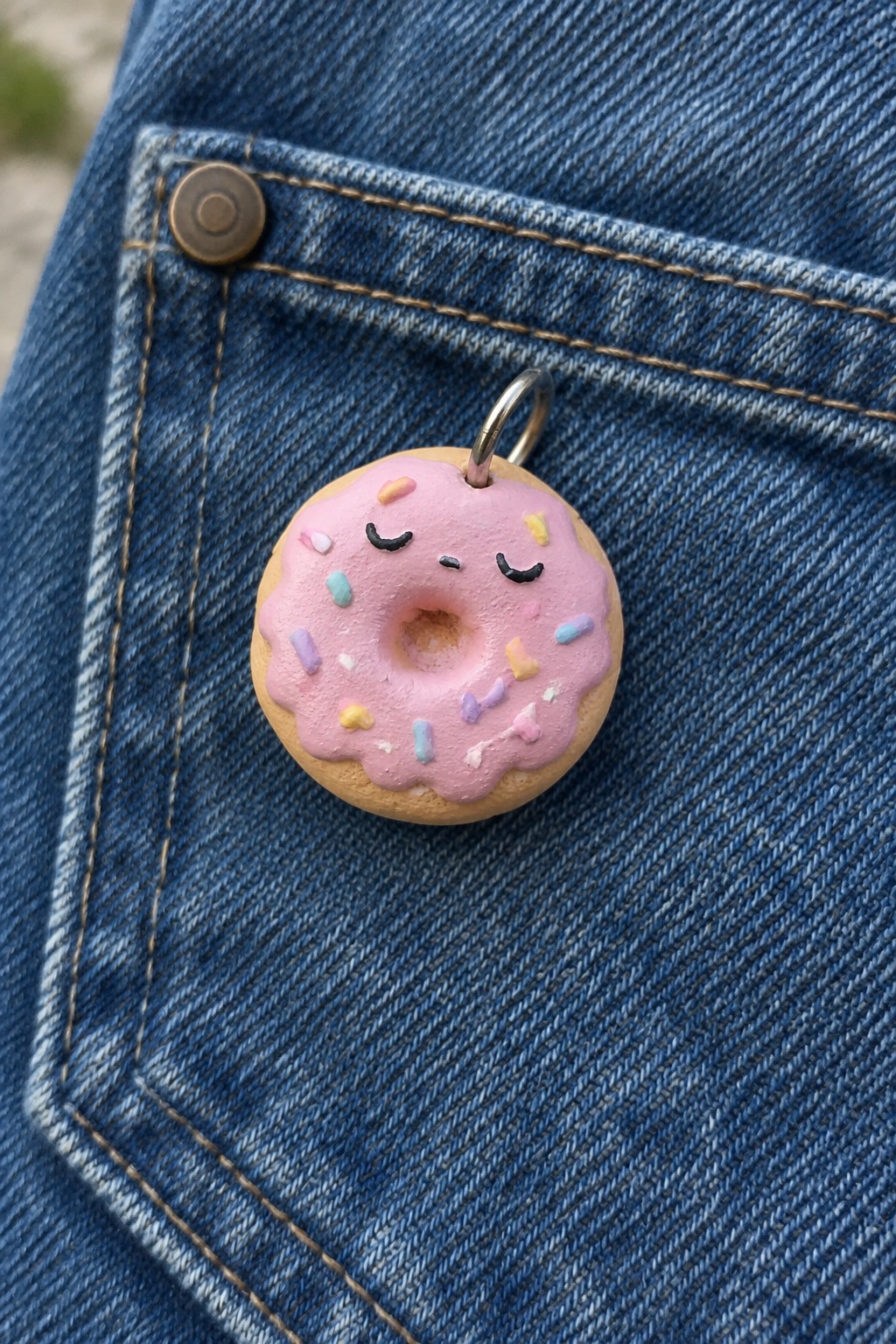
A miniature clay donut charm turns a familiar sweet treat into a playful accessory. Its rounded tan base, pink frosting, pastel sprinkles, and sleepy face make the small sculpted shape easy to recognize, while the metal loop lets it hang from a bag or key ring.
The simple donut silhouette is a useful starting point for trying different frosting colors, sprinkle patterns, or facial expressions without changing the basic design. You could make a matching set of food-themed charms, or leave off the face and details for a simpler version that still reads clearly as a donut.
Foam Clay Sun, Moon, and Star Garland
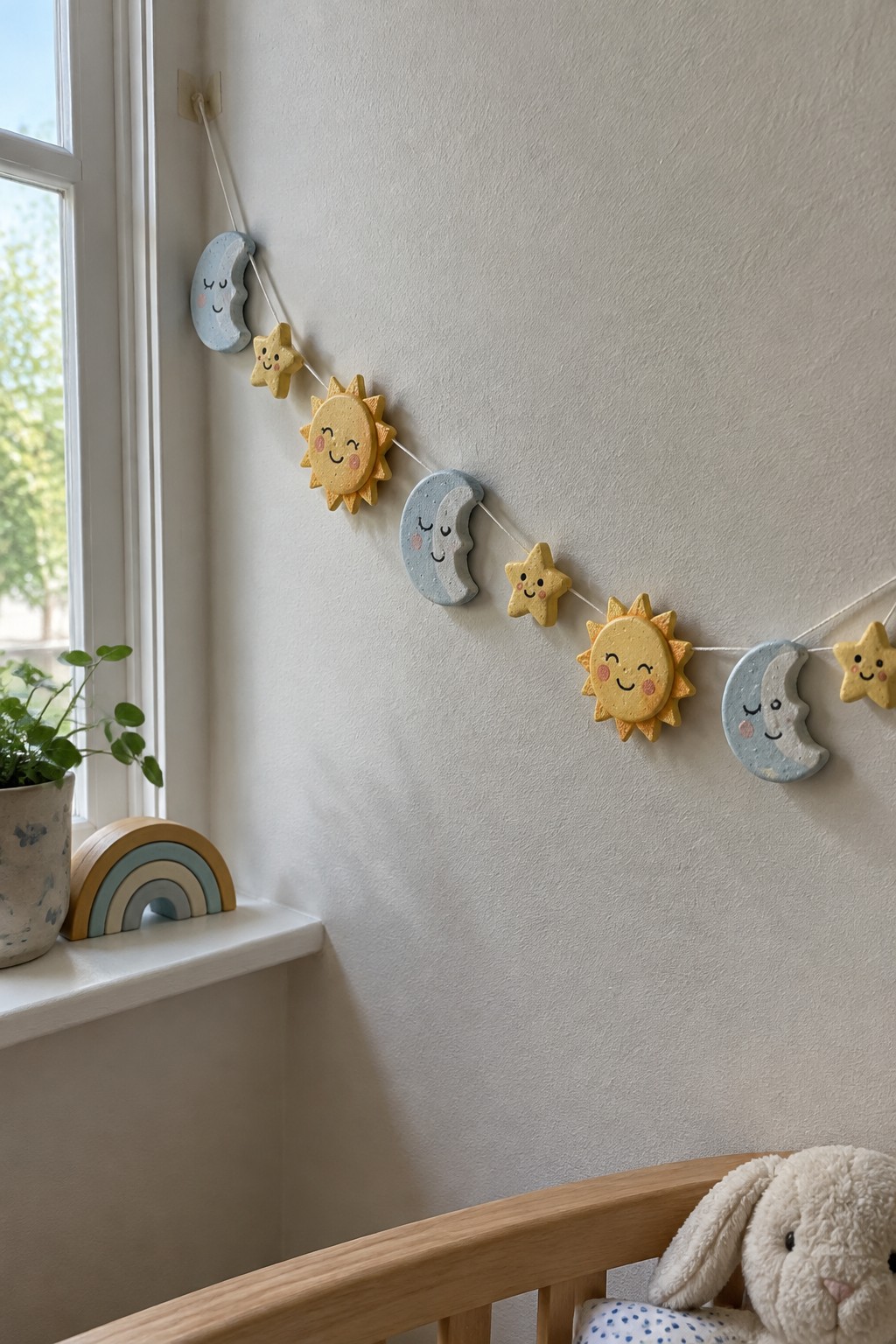
A hand-sculpted clay garland pairs smiling suns, crescent moons, and small stars in soft yellow and blue. The raised shapes, simple painted faces, and alternating motifs make it a clear wall decoration, while the handmade contours keep each figure distinct.
The repeated sun-and-moon pattern is easy to adapt by changing the colors, expressions, or order of the shapes, or by making a shorter string for a smaller space. For a simpler version, focus on one sun, one moon, and a few stars, keeping the faces and shapes bold enough to read from across the room.
Mint Green Foam Clay Dragon Figurine
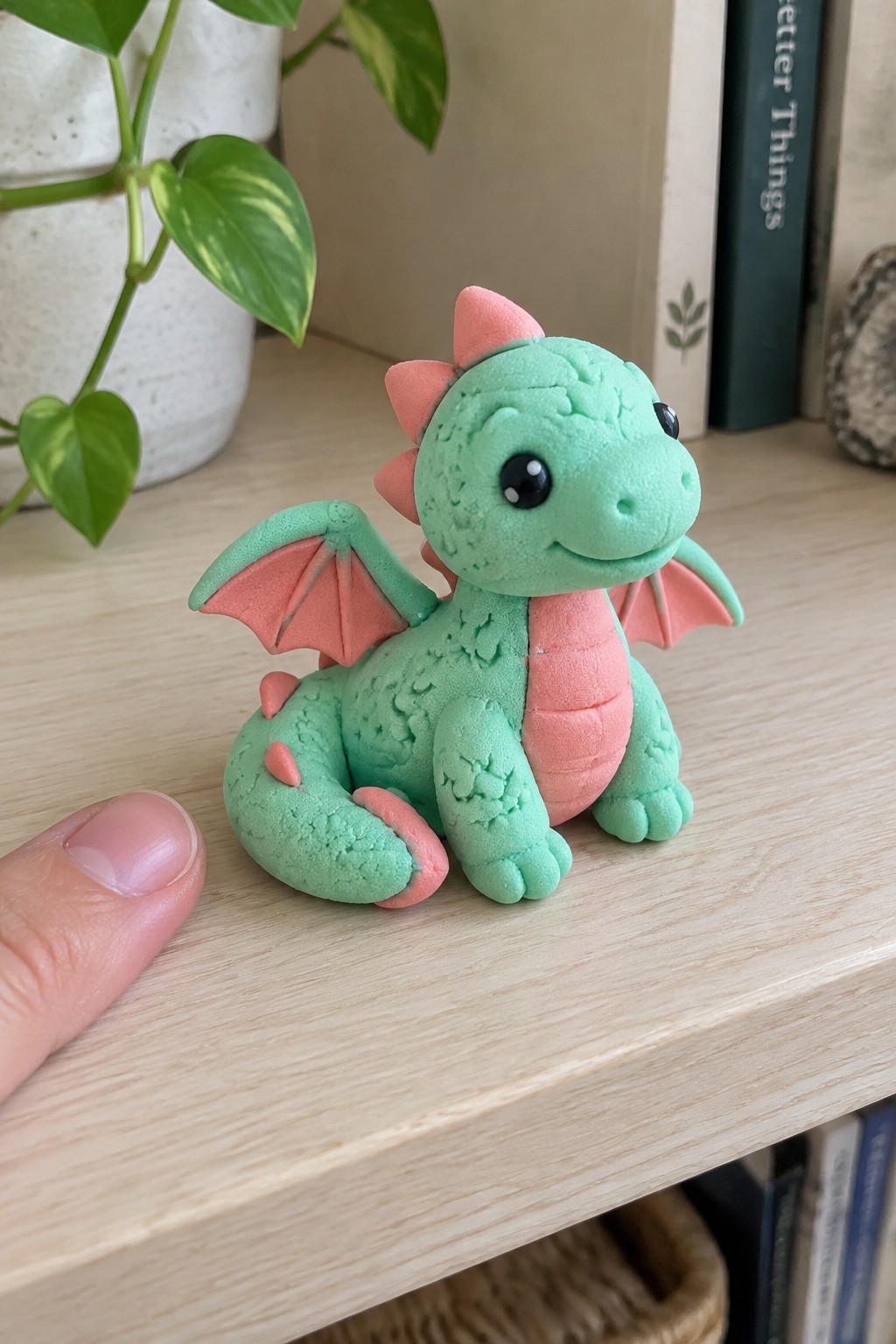
A seated dragon miniature pairs a rounded mint green body with coral pink belly plates, wing membranes, and back spikes. Its large eyes, small snout, textured scales, and curled tail make it a recognizable fantasy animal craft while keeping the sculpted shape soft and compact.
The contrasting colors help separate the dragon’s features, so you could keep the same design and swap in lavender wings, a yellow belly, or different scale markings. Simplify it by using smooth body shapes and fewer details, or make a larger version as a decorative figurine; the small version also works as a collectible desk decoration.
Woodland Animal Foam Clay Figures

Handmade foam clay animal figurines turn a fox, raccoon, and bear into a small woodland character set. Their rounded shapes, painted facial features, and layered coats and scarves give each figure a distinct look while keeping the group visually coordinated. This miniature sculpture idea is decorative, with simple color blocking and attached clothing details adding interest to the figures.
The shared woodland theme makes the set easy to adapt with different animals, coat colors, or small accessories such as hats and leaf motifs. For a simpler version, use one animal with a basic body shape and just a few painted details, or make the figures smaller as part of a collectible display.
Smiling Sushi, Croissant, and Coffee Cup Clay Miniatures

These small clay miniatures turn familiar breakfast and café foods into character figures with simple painted faces. The sushi roll, croissant, and takeaway cup each have a distinct sculpted shape, while their natural food colors and rosy cheeks tie the set together as a playful collection of decorative figures.
The clear silhouettes make each character recognizable, so a simpler version could use basic shapes and just a few painted features. You could change the food theme to pastries, fruit, or café treats, or make the figures smaller for a shelf display or larger as standalone sculptures.
Foam Clay Moon, Star, and Bear Mobile
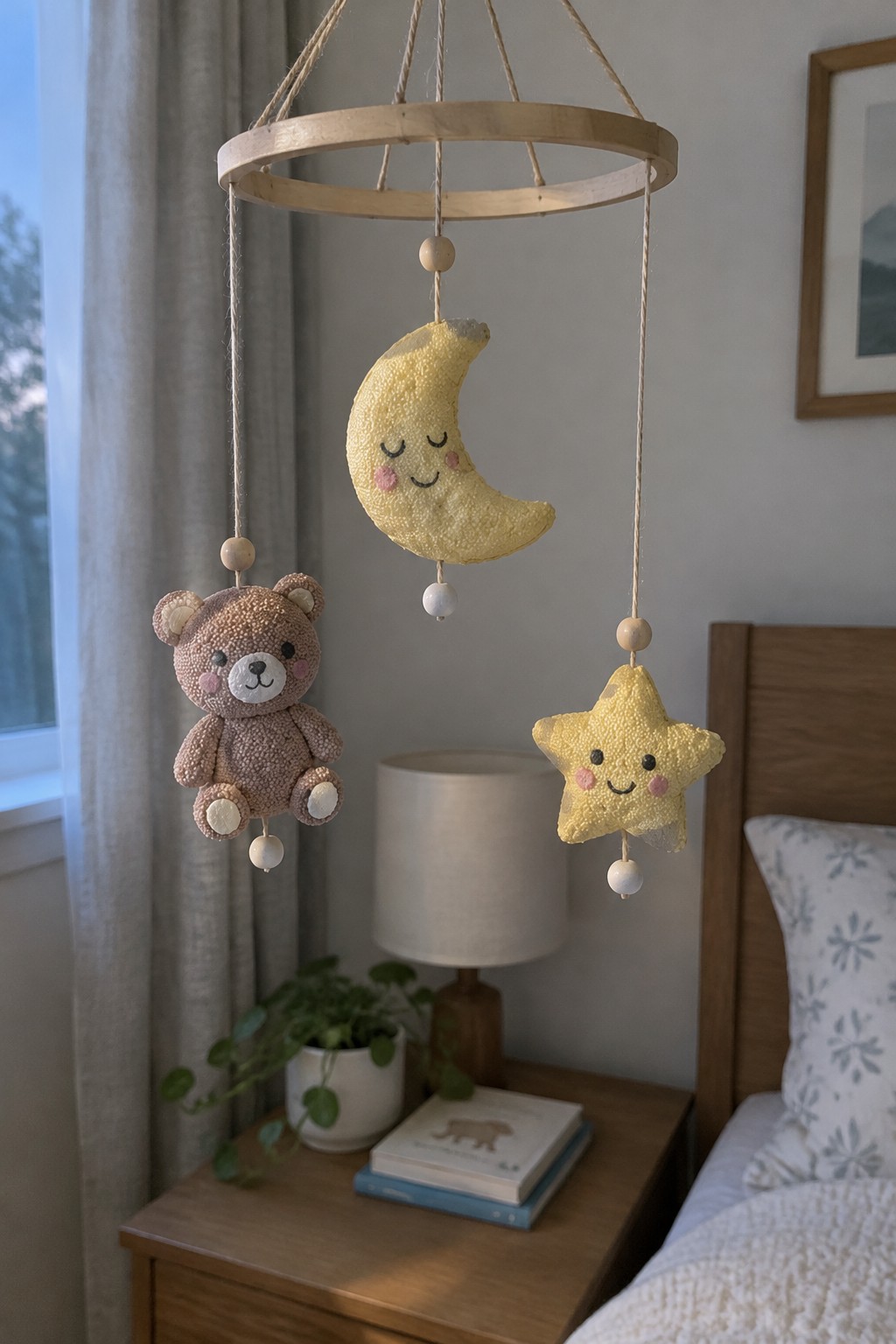
A hanging foam clay mobile combines a crescent moon, a smiling star, and a small bear into a set of lightweight character figures. Their rounded, textured shapes and simple painted faces make the forms easy to recognize, while the soft yellow and brown colors give the decorative mobile a coordinated look.
The hanging arrangement is easy to adapt by changing the characters, colors, or number of figures, and the small shapes can also be made as individual ornaments. For a simpler version, focus on one moon or star and use just a few painted features; making several figures at different sizes can create a fuller mobile without adding complicated details.
Green-Hatted Gnome With a Clay Watering Can

This hand-sculpted clay gnome figurine pairs a tall green hat and matching clothes with a small orange watering can decorated with a daisy. Its textured surfaces, white beard, and simple flower details make it read clearly as a miniature garden character, rather than a functional gardening tool.
The watering can gives the figure a distinct theme and a detail to customize, such as a different flower, leaf, or painted pattern. For a simpler version, use rounded shapes for the gnome’s body and beard, then keep the hat and watering can in contrasting colors; the finished figurine could also be resized or adapted with a different garden accessory.
Frequently Asked Questions
Foam clay is a lightweight, soft modeling material that usually air-dries without baking. It’s a good choice for character figures because it’s easy to shape, comfortable to handle, and much lighter than polymer clay. That makes it especially useful for small ornaments, toys, desk decorations, and figures with larger heads or accessories. Check the package instructions, since drying times and flexibility vary by brand.
Start with a simple shape, such as a round animal, a tiny ghost, or a basic cartoon creature. These designs can be made from a few basic forms, with small pieces added for features like ears, eyes, or a tail. Choose a character with minimal fine details, then add complexity once you’re comfortable shaping and attaching the clay.
Keep the figure’s center of gravity low and give it a wide, stable base. Use a larger base for characters with oversized heads, tall ears, or outstretched limbs. For added support, you can build the body around a lightweight armature or use a small, blunt craft support where appropriate. Make sure any support is compatible with your clay, and let the figure dry fully before standing or handling it.
Press details gently onto the figure while the clay is still soft. For a stronger join, lightly roughen the contact points and use a small amount of compatible adhesive if needed. Avoid adding too much water, since it can make some foam clays sticky or difficult to control. If the surface has already dried, check the product guidance before attaching new pieces.
Let the figure air-dry in a well-ventilated spot, following the drying time and care instructions on the packaging. Thick or layered pieces may take longer to dry all the way through, so give them extra time before painting. Once dry, test paint on a small area first. If you want a protective finish, use a clear sealer that’s suitable for the clay and paint, and follow its instructions.
