


I like how pinch-pot shaping turns a simple ball of clay into a little pot with its own character.
These mini pots can be rounded, wavy, or decorated with small details to suit a windowsill or shelf.
I’ve gathered ideas that play with different shapes and finishes, so you can find a style that feels like your own.
Here are 18 pinch-pot designs to inspire your next small clay project.
Small Scalloped Pinch-Pot Bowls

These small hand-sculpted pinch pots have rounded bodies and irregular scalloped rims, with muted terracotta, sage green, and cream finishes. White dots add a simple painted accent to one bowl, giving the group the look of miniature decorative dishes rather than mass-produced containers.
The uneven edges make each pot distinct, and the basic form can be adapted with different rim shapes, colors, or painted patterns. Make a single bowl as a small decorative accent or create a set in varied sizes; for a simpler version, keep the rim softly wavy and skip the dots.
Tiny Striped Clay Mug Planter

A miniature hand-sculpted mug becomes a decorative holder for a small air plant, with an oversized handle and irregular blue-and-cream bands giving it a playful, handmade look. Its rounded mug shape and visible clay contours make this a miniature clay sculpture with a decorative plant-holding purpose, rather than a drinking vessel.
The curved stripes make the design easy to adapt with other color combinations, while a simpler version could use a plain mug shape and just one painted band. Make it in different sizes for a tiny plant display or a small shelf accent, or keep the mug empty and use it as a miniature collectible.
Cat-Shaped Clay Pinch-Pot Trinket Dish

A small clay pinch-pot dish becomes a cat sculpture through its pointed ears, shallow facial features, and pink cheeks. The handmade contours and simple painted details keep the design recognizable while leaving the bowl’s center open for holding small items such as a ring. It fits the category of a decorative trinket dish with a miniature animal design.
The cat silhouette makes a basic dish shape more distinctive, and the facial details can be simplified to a few impressions and painted accents. Try different ear shapes or colors, or make a larger version with room for several small accessories; it is a useful design to save if you want a pinch-pot project that combines a sculpted animal motif with a small storage space.
Colorful Mini Pinch-Pot Planters

These small hand-sculpted clay pots use rounded pinch-pot forms, short feet, and distinct surface details to create a coordinated set of miniature decorative planters. The yellow pot has indented dots, the teal one has leaf motifs, the coral pot has a scalloped rim, and the dark speckled pot keeps a simpler finish.
The rounded forms make the set easy to adapt: simplify the feet and surface patterns for a pared-back version, or vary the rims and motifs to give each pot its own look. Making them in several colors and sizes creates a memorable collection for display, and the same pinch-pot idea could be adapted into small decorative holders.
Pink and Gold Scalloped Clay Ring Dish

A shallow pinch-pot trinket dish turns a simple hand-formed bowl into a decorative place for rings. Its uneven scalloped rim and pink surface are picked out with a gold edge, making the handmade contours part of the design rather than something to hide.
The shape is easy to adapt by making the bowl wider or deeper, changing the rim to soft waves or sharper points, or choosing a different color combination. Keep the finish simple for a beginner version, or add a contrasting edge for a small handmade gift or jewelry dish; it should be used for trinkets, not food.
Spotted Mushroom Pinch Pot

A miniature mushroom-shaped clay pot pairs a rounded red cap with white spots and a short, textured stem. The open cap forms a small decorative vessel, while its uneven handmade contours keep the sculpted form distinct from a mass-produced ornament.
The mushroom silhouette and simple spots make the idea easy to adapt: use different cap colors, vary the spot sizes, or make the stem shorter or taller. A smaller version could become a decorative miniature, while a larger one could hold lightweight small items; either way, it is best treated as decorative rather than for food or drink.
Botanical-Imprint Pinch-Pot Trinket Dishes

These shallow, hand-formed clay dishes use pinch-pot shaping to create irregular, gently raised rims, with leaves and a lace-like pattern pressed into the centers as contrasting botanical impressions. Their natural off-white color keeps the embossed details subtle, making them decorative trinket dishes rather than food-serving bowls.
The pressed patterns give each small dish a distinct look, while the rounded shape is simple to adapt with different leaves, flowers, or textured materials. Make a single dish for small keepsakes or create a mismatched set in different sizes and add a light wash of color to bring out the impressions.
Miniature Striped Clay Hanging Pot
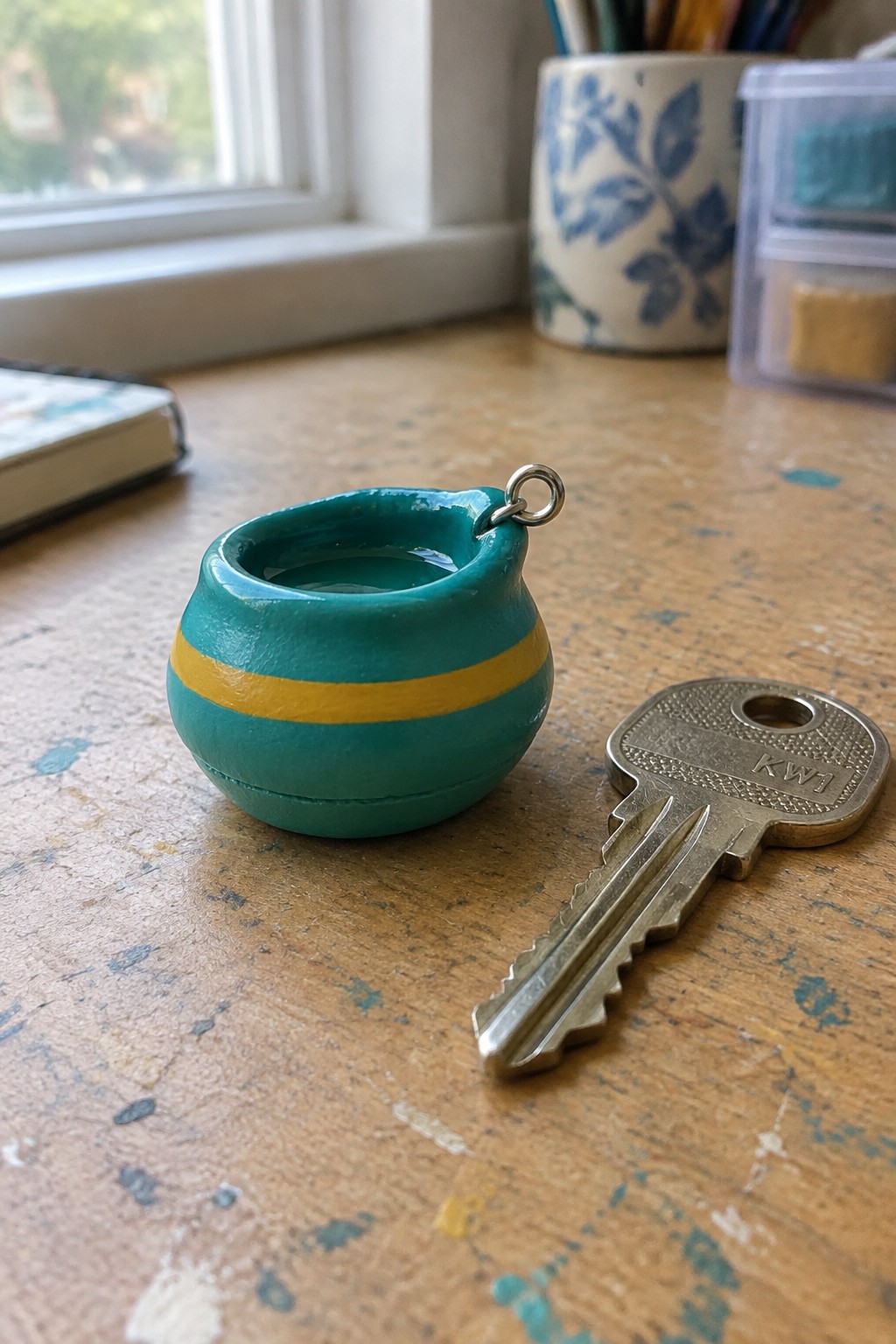
A rounded pinch-pot form becomes a tiny decorative hanging pot with a teal body, a yellow stripe, and a small metal loop attached at the rim. Its handmade contours and bold color bands make this miniature clay accessory easy to recognize, while the hanging detail gives it the look of a small ornament.
The simple shape is a useful starting point for experimenting with painted stripes, dots, or other small motifs, and the pot could be made in different sizes or color combinations. Keep the opening and form uncomplicated for a simpler version, or adapt the striped design into a miniature bowl or decorative hanging charm.
Hanging Clay Pocket Planter With Dried Flowers

A small hand-sculpted clay pocket planter turns a rounded pinch-pot form into a wall decoration for holding dried stems. Its uneven rim and warm terracotta color keep the shape visibly handmade, while the hanging cord makes the compact pot stand out against a plain wall.
The simple pocket shape is easy to adapt with a wider opening, a more regular rim, or a different clay color, and the cord could be changed to suit the display. Try arranging dried flowers or small branches inside, or make a smaller version as a decorative wall pocket; keep the contents lightweight and treat the clay piece as decoration rather than a water-holding planter.
Fox-Shaped Clay Pinch-Pot Dish
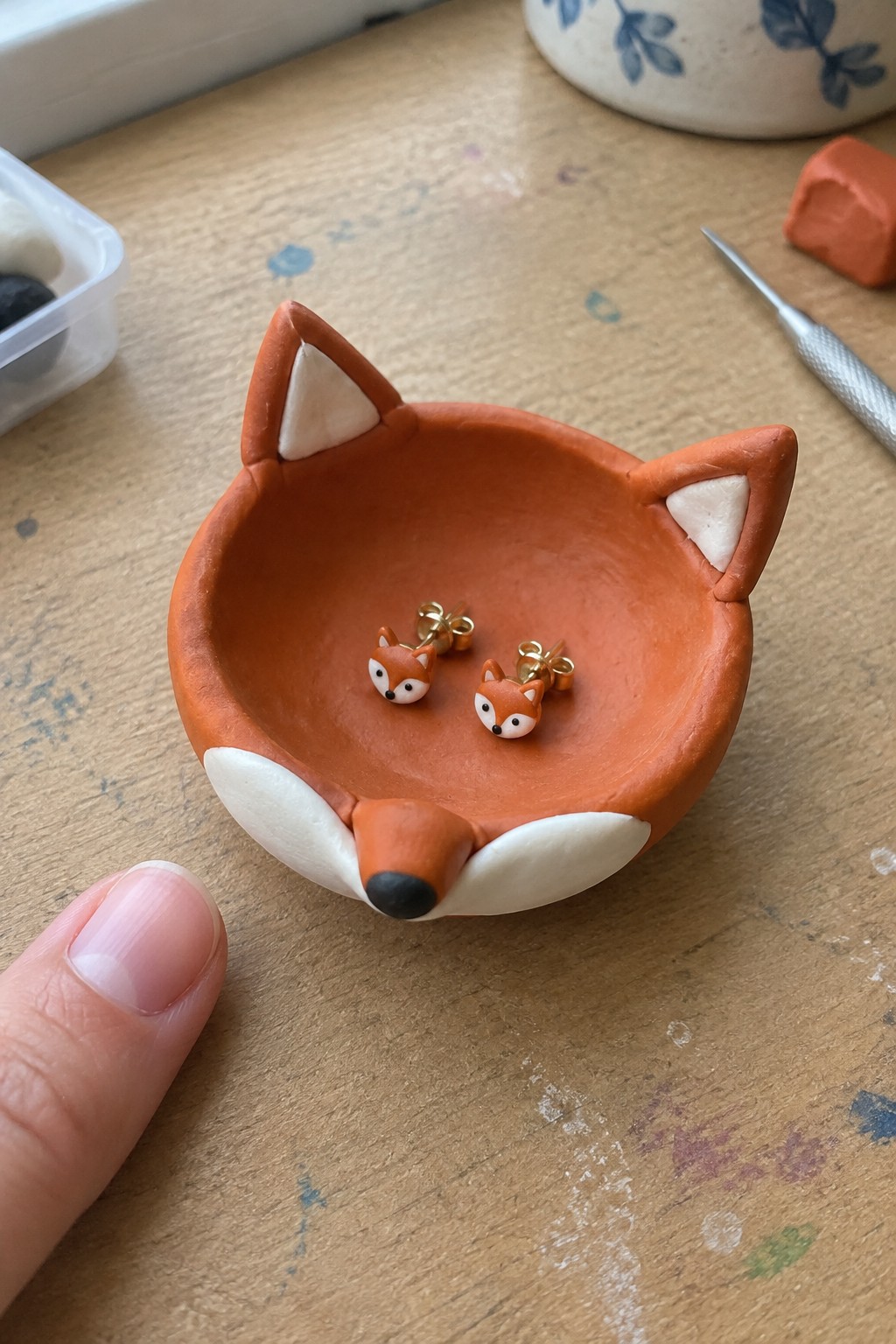
A small pinch-pot dish becomes a fox through its pointed ears, white inner-ear and cheek details, and a sculpted nose at the front. The orange-and-white animal features turn a simple bowl form into a handmade clay trinket dish with a clear miniature-sculpture look.
The fox face gives the dish a memorable silhouette, while the open center can hold small items such as the tiny fox earrings pictured. For a simpler version, keep the bowl shape and add just the ears and nose, or change the colors and facial details to create another animal-themed dish.
Nested Scalloped Pinch-Pot Planter

A hand-formed clay planter sits inside a wider, shallow scalloped bowl, with muted green and cream surfaces and a few simple painted stripes. The paired forms create a layered decorative holder, while their uneven rims and softly textured finish keep the design visibly handmade.
The contrast between the tall inner pot and low outer bowl gives this project a clear shape to adapt: make both pieces smaller for a desk display, or change the rim and stripe colors to suit your palette. A beginner could simplify the painted marks and focus on forming two basic pinch pots with wavy edges; the finished set could hold a small plant or serve as a decorative display.
Smiling Sun Pinch-Pot Trinket Dish

A small sun-shaped clay trinket dish combines a shallow pinch-pot bowl with sculpted rays around its rim and a simple smiling face inside. Its warm yellow and orange colors make the sun silhouette easy to recognize, while the uneven handmade contours keep the miniature clay decoration from looking mass-produced.
The shape can be adapted with fewer, rounder rays or a different expression, and the dish can be made larger or smaller to suit the project. Keep the face and colors simple for an approachable version, or try a pastel palette and use the piece as a decorative catchall for small items.
Ribbed Clay Tea Light Holder

A rounded pinch-pot form becomes a decorative holder for a small battery-operated tea light, with hand-sculpted vertical ridges and a simple ochre-colored rim. The contrast between the warm accent and the off-white clay makes the shape stand out without adding many extra details.
The ribbing gives this small project a clear focal point, while the simple silhouette can be adapted into a smoother or more deeply fluted version. Try different rim colors or make holders in several sizes, keeping any candle use to a battery-operated light unless the material and design are specifically suitable for an open flame.
Blue-Spotted Pinch-Pot Creamer

A small hand-sculpted clay pitcher uses a rounded body, pinched spout, and loop handle to turn the pinch-pot form into a decorative creamer. Its cream-colored surface and scattered blue dots make the uneven handmade contours stand out, giving the piece the look of a miniature functional accessory.
The rounded shape is a useful starting point for experimenting with different spouts, handle sizes, and painted patterns. You could simplify it by making a small pinch-pot with just a spout, or create a matching set in different colors for display; because food safety depends on the clay and finish, treat an unverified version as decorative.
Whale-Shaped Clay Planter With an Air Plant

A hand-sculpted whale planter turns a rounded pinch-pot form into a small decorative animal holder, with the plant growing from its open back and a curved tail extending behind it. The muted blue surface, scattered speckles, and simple painted face make the whale recognizable without distracting from the air plant’s spiky leaves.
The whale silhouette is the main feature, so you could simplify the face and tail for an easier version or change the color and speckle pattern to make a whole set of sea creatures. Keep the planter small for an air plant, or adapt the same rounded body into a decorative whale figurine without a plant opening.
Stacked Mini Clay Pots With Succulents
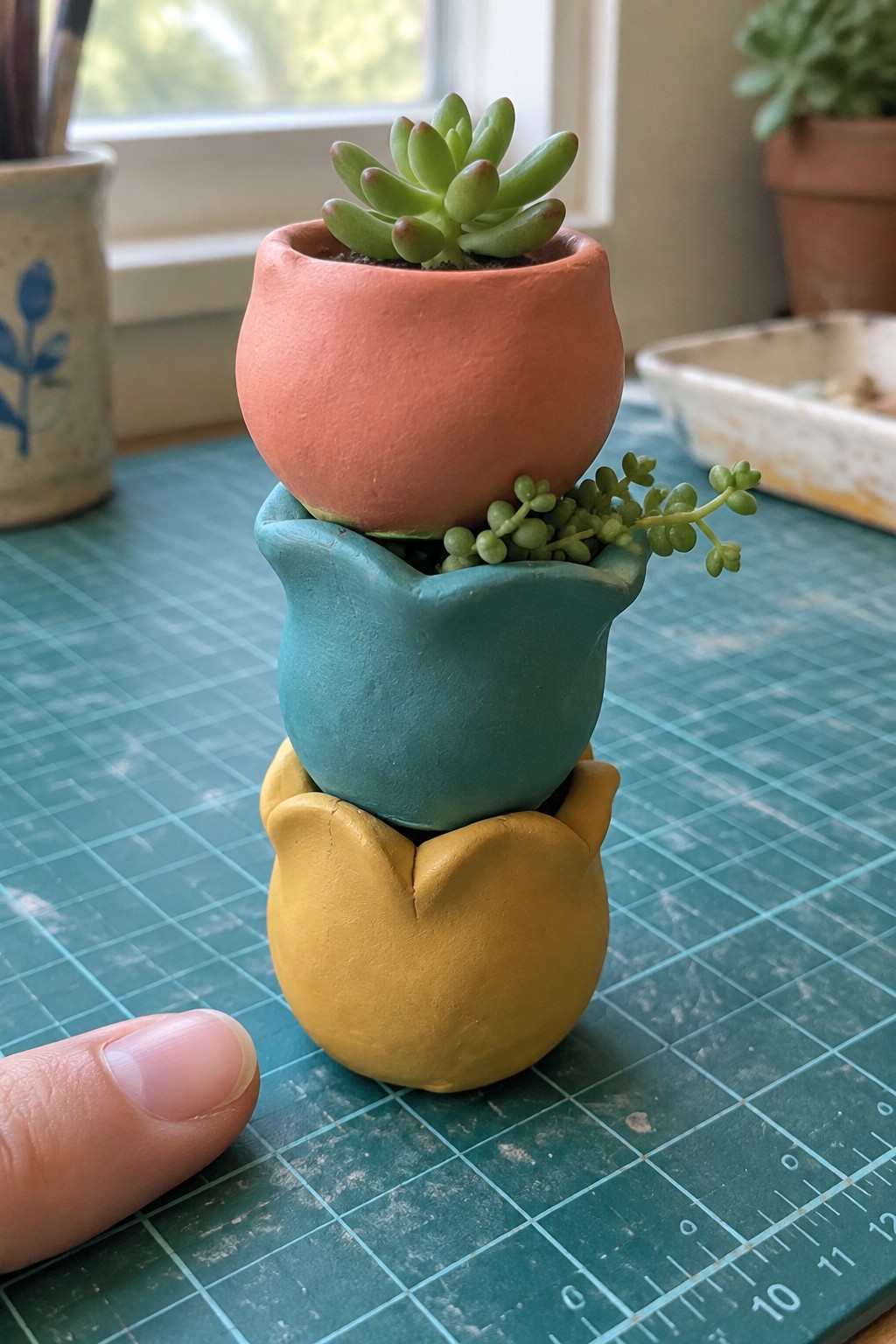
Three rounded, hand-sculpted clay pots form a colorful tower for small succulents. The warm coral, teal, and mustard colors, uneven handmade contours, and trailing plant detail make this a miniature clay planter arrangement with a playful sculptural look.
The stacked shape makes the arrangement memorable, and each pot can be kept simple with a pinch-pot form and a different color. You could vary the height, use other color combinations, or replace the succulents with small decorative clay plants to make a miniature sculpture or gift.
Pastel Pinch-Pot Planters With Mini Succulents

Small hand-shaped clay pinch pots become decorative planters for miniature succulents, with rounded rims, soft pastel colors, and simple painted motifs such as daisies, hearts, and clouds. Grouping pots in different shapes and colors makes the handmade contours part of the design and turns the set into a colorful display for small plants.
The mix of succulent shapes and pot designs gives you plenty of ways to adapt the idea, from a single daisy pot to a coordinated set in different sizes. For a simpler version, keep the pots plain and add one painted detail, or use a few colors and motifs to make a personalized gift set; treat them as decorative planters rather than food-safe vessels.
Miniature Clay House Pinch Pot

A small hand-sculpted clay house combines a rounded pot form with a peaked roof, arched doorway, and short projecting detail. The mint-green body and contrasting roof stripes make it read clearly as a tiny house, placing it in the category of decorative miniature sculpture rather than a functional vessel.
The house-shaped opening and roof are the features to preserve if you adapt the idea, while the colors and doorway details can be changed to create different miniature homes. A simpler version could use a plain roof and doorway, and making several small houses in varied colors would create a coordinated set for display or gifting.
Frequently Asked Questions
You’ll need air-dry clay or pottery clay, a small bowl of water, a smooth work surface, and a few simple shaping tools. Your fingers are enough for the basic pinch-pot technique; a wooden tool or toothpick can help smooth seams and add details. If you’re making pots to hold plants or water, choose a clay and firing method suited to that use. Air-dry clay is best for decorative pots unless it is specifically labeled as waterproof.
Start with a small ball of clay and press your thumb into the center, stopping before you reach the bottom. Rotate the ball as you pinch the walls between your thumb and fingers, working gradually so the pot stays even. Keep the base slightly thicker than the walls, and avoid making any area too thin. Set the pot on a flat surface and gently adjust its base so it sits level.
Vary the shape, rim, surface texture, and decoration. Try a few designs such as rounded bowls, narrow-necked pots, tiny planters, faceted forms, scalloped rims, or pots with small handles. You can also press patterns into the clay with fabric, leaves, stamps, or textured tools. To make the collection feel coordinated, repeat one detail across all 18 pots, such as a shared color palette or a simple stamped motif.
Work with clay that is soft but not sticky, and pinch gradually rather than thinning the walls all at once. Smooth small cracks with a fingertip lightly dampened with water, but avoid adding too much water, which can make the clay soft and weak. Keep the rim and walls at a consistent thickness, and let finished pots dry slowly and evenly. For air-dry clay, follow the package directions and turn the pots occasionally if the instructions recommend it.
Let the pots dry completely before painting or sealing them. Air-dry clay may take longer in humid conditions, so check that the base is dry as well as the rim. Once dry, decorate with acrylic paint, then apply a compatible sealer if you want extra protection. Most air-dry clay pots are not reliably waterproof, so use them for dried flowers, small desk supplies, or decorative displays, or place a separate watertight container inside if you want to hold a plant.
