


I like how clay can be shaped into forms that feel simple, playful, or a little unexpected.
For this collection, I’ve gathered sculptural ideas that explore different shapes, textures, and small details.
Some could add a personal touch to a shelf or tabletop, while others make fun little objects to keep or give.
I hope you find a form here that sparks an idea of your own.
Nested Clay Arch Sculpture

This hand-sculpted clay sculpture uses three nested arch shapes in terracotta, blue-gray, and cream, set upright on a matching base. Its simple geometric silhouette and contrasting colors make it a decorative miniature sculpture rather than a functional object.
The repeated arch shape is easy to adapt into a taller statement piece or a smaller shelf decoration, and changing the color palette can give each version a different look. For a simpler variation, make two arches instead of three and keep the contours slightly irregular to retain the handmade quality.
Sleeping Fox Clay Miniature

A curled sleeping fox makes a compact animal figurine, with its rounded body and tucked tail forming a clear silhouette. Rust-brown clay, cream accents, and a few simple facial details give the hand-sculpted miniature definition without relying on a lot of decoration.
The curled pose is the main idea to borrow: a beginner could simplify the face and tail while keeping the rounded shape, or change the colors to create another fox variation. Made larger or smaller, it could be a decorative figurine or a small handmade gift, and the simple silhouette makes it easy to recognize at a glance.
Coral Flower Clay Trinket Dish

A hand-sculpted clay trinket dish shaped like a five-petal flower turns a small storage piece into a decorative floral craft. Its raised, uneven petal edges and coral-pink petals frame a textured yellow center, making the painted color contrast the main visual feature.
The flower shape gives the dish a clear outline, while the shallow petals create separate spots for small items such as rings. You could simplify the center or use fewer painted details, or adapt the idea with different petal colors and sizes for a personalized gift or bedside trinket dish.
Miniature Sushi Clay Keychains

These miniature clay keychains turn sushi shapes into small sculptural accessories, including a salmon-topped rice piece, a tamago-style nigiri, and two colorful sushi rolls. Contrasting orange, yellow, white, and dark details make each design readable at a small scale, while the attached metal rings give the handmade clay forms a clear use as bag or key charms.
The sushi shapes are easy to adapt by changing the fillings, rice details, or topping colors, and making a matching set lets each piece have a different silhouette. For a simpler version, sculpt one basic roll or nigiri and add only a few defining colors; these could also be made larger as decorative miniatures instead of keychains.
Hanging Clay Botanical Wall Plaques

Three hand-sculpted clay plaques hang in a vertical strand, each decorated with a raised botanical motif. Their rounded shapes, earthy green, terracotta, and ochre colors, and carved-looking leaf details make this a decorative wall hanging rather than a functional clay object.
The repeated plaque shape keeps the set cohesive, while changing the plant designs and colors gives each piece its own look. You could make fewer plaques for a shorter hanging, try simpler leaf shapes, or use flowers and other nature-inspired motifs; varying the plaque size would also make the arrangement easy to adapt for different wall spaces.
Geometric Clay Statement Earrings

These handmade clay earrings use a linked sequence of a round disc and two semicircular shapes to create a bold, tiered silhouette. Mustard yellow, teal, and terracotta stand out against one another, while the simple forms keep the sculptural jewelry design clear and graphic.
The shape does most of the work here, so you could adapt the idea with fewer tiers, smaller pieces, or a different color combination. Make each pair slightly different by changing the order of the colors or the proportions of the shapes, and use the same design concept for a pendant or other decorative clay jewelry.
Textured Clay Relief Tiles

These hand-sculpted clay tiles use raised patterns to turn flat squares into small relief artworks. Wavy bands, diagonal ridges, and a leafy branch create three different designs, while muted green, blue-gray, terracotta, and cream keep the set visually connected. They fit the category of decorative wall pieces or small sculptural tiles.
The repeated square shape makes the set easy to adapt: keep the same palette for a coordinated group, or change the patterns to include simple dots, lines, or other botanical motifs. A beginner could start with one tile and a single raised design, while more detailed versions could be made as a series of miniature decorative panels.
Miniature Mushroom House With a Gnome

A hand-sculpted miniature scene pairs a rounded mushroom house with a red cap, white spots, small windows, and a wood-look door. A seated gnome, tiny mushrooms, and a textured green base complete the sculptural clay decoration.
The layered details make the scene memorable, and you could simplify it by sculpting just the mushroom house and adding a few larger spots. Try changing the cap color, door shape, or small garden pieces, or make a larger version with more figures for a miniature display.
Speckled Clay Ring Holder Dish

A hand-sculpted clay ring holder combines a shallow, rounded dish with a raised central post for keeping rings together. Its cream-and-brown speckled surface and gently uneven contours give this small decorative accessory a simple, handmade look.
The raised post makes the design easy to adapt: shorten it for stacking rings or make it taller for holding several bands. You could also change the dish shape or speckle pattern to suit different styles, making it a useful small gift or a practical project to personalize.
Colorful Clay Food Magnets

Hand-sculpted clay shapes turn familiar foods into small decorative magnets, including a strawberry, lemon slice, croissant, pink macaron, and spotted mushroom. Their rounded contours and bright colors make each miniature easy to recognize, while the simple details give the group a consistent, playful look.
The separate designs can be made one at a time or as a coordinated set, with other fruits, pastries, or mushrooms added to suit a theme. Simplify the shapes and surface details for an easier project, or adjust the size and colors to create a different collection of decorative magnets.
Succulent Face Clay Planter

A hand-sculpted clay planter decorated with a friendly face turns a simple plant container into a characterful sculptural decoration. Its muted green body, raised leaf-like hair, and small painted facial features tie the pot visually to the succulent growing above it.
The face and leafy details make the concept easy to adapt with different expressions, hair shapes, and colors, or by using another small plant. A simpler version could use a plain pot shape with just raised eyebrows and a smile, while keeping the sculpted leaves around the rim as the main decorative feature.
Pastel Clay Flower Bouquet

A hand-sculpted clay bouquet turns simple daisy shapes and small buds into a decorative floral arrangement. Soft pink and yellow petals stand out against muted green stems, while the kraft-paper wrap and twine give the sculpted flowers a clear bouquet form without making them look like fresh-cut blooms.
The flower shapes are memorable but easy to adapt: simplify the design to a few large blossoms, or add more buds and vary the petal shapes for a fuller arrangement. Changing the color palette or making a smaller version could turn the same idea into a desk decoration or a handmade gift.
Hanging Clay Moon and Cloud Mobile

A hanging clay mobile pairs sculpted moons, stars, and clouds in a vertical arrangement, with a larger crescent as its central focal point. Muted sage, navy, cream, and ochre give the handmade shapes a coordinated look, making this a decorative clay ornament for a window or room.
The repeated motifs and simple silhouettes make the design easy to adapt without copying every strand: a smaller version could use one moon, a few clouds, and stars in two or three colors. You could also change the palette or arrange the shapes as a shorter hanging ornament, keeping the varied sizes to give the composition visual interest.
Cat-Shaped Clay Pencil Toppers
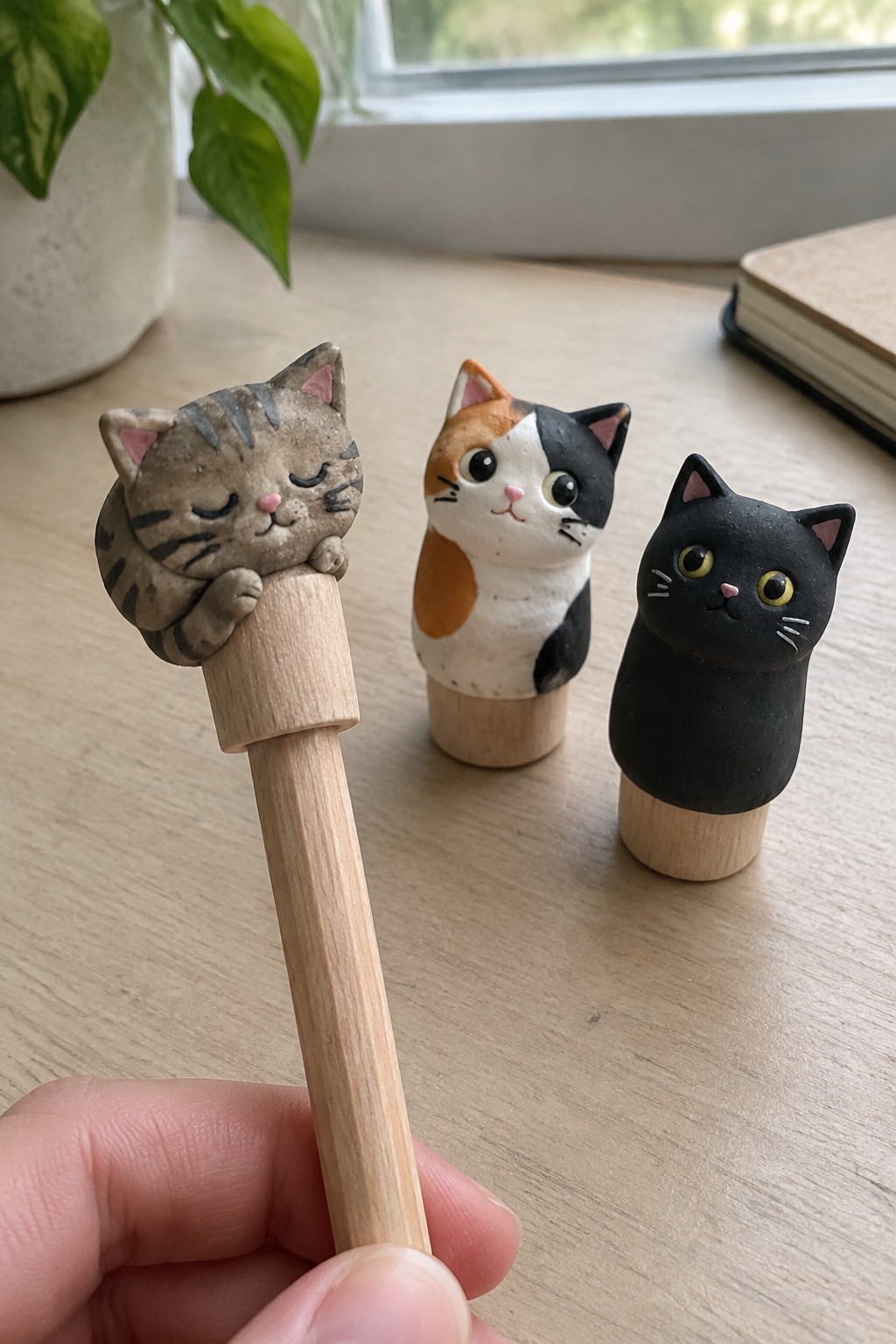
Hand-sculpted cat figures turn plain wooden pencils into decorative accessories, with each topper given a different expression, coat pattern, and eye color. Their rounded bodies and small painted facial details make these miniature clay animal sculptures easy to recognize while keeping each design distinct.
The pencil-topper format gives the cats a clear use, and the same idea could be adapted with other animals, ear shapes, or color patterns. A simpler version could use a smooth, single-color body and just a few painted features, while a set of varied cats would make a distinctive handmade gift.
Rustic Clay Pumpkin Sculptures

Hand-sculpted clay pumpkins make a seasonal decoration, with rounded lobes and sturdy stems giving each form a recognizable pumpkin shape. A mix of burnt orange, warm white, and muted sage green makes the trio visually distinct while keeping the designs simple and sculptural.
The repeated shape is easy to adapt by changing the size, proportions, or colors of each pumpkin. For a simpler version, sculpt one pumpkin with broad lobes and a short stem, then add subtle surface texture; making several in different sizes creates a coordinated seasonal display or a handmade gift set.
Earth-Toned Clay Bead Necklace

Hand-sculpted clay beads in cream, terracotta, and deep green form a long statement necklace, with varied round shapes and a leaf pendant giving the design its sculptural character. The mix of smooth, roughly textured, and pierced beads makes this handmade clay jewelry feel more like a wearable collection of small sculptures than a uniform strand.
The varied bead sizes and earthy palette make the idea easy to adapt: use fewer beads for a simpler necklace, or change the colors and pendant shape to create a different look. You could also make the individual beads into earrings or a matching bracelet, keeping the same mix of textures for a coordinated set.
Green Clay Botanical Relief Plaque

A hand-sculpted clay wall plaque uses raised leaves and a cluster of rounded berries to create a botanical relief design. The layered shapes, incised veins, and muted green tones give the flat plaque a textured, sculptural look while keeping it firmly in the category of decorative wall art.
The leafy composition could be adapted with different plant forms, berry colors, or a simpler arrangement of just a few leaves. Beginners could start with a smaller plaque and fewer raised details, while a larger version could make the leaf pattern more intricate; either way, the handmade contours help the botanical motif stand out.
Miniature Clay Bread and Cupcake Set

A tiny clay bakery set pairs sculpted baguettes and croissants with a cupcake topped in swirled frosting and a small heart. The warm bread colors contrast with the cupcake’s pale icing and pink accents, making this a clear miniature food sculpture rather than a functional serving set.
The mix of simple rolled shapes and small frosting details gives the set several forms to practice or adapt. You could make just one croissant for a smaller project, change the cupcake colors and topping, or arrange the miniatures as a decorative collectible or handmade gift.
Face-Shaped Clay Planter With a Succulent

A hand-sculpted clay planter shaped like a human face turns a simple container into a small sculptural decoration. Its raised brows, closed eyes, long nose, and textured hair frame the green succulent, making the plant part of the design rather than a separate accent.
The face details are the main creative feature, so you could adapt them with a different hairstyle, expression, or clay color while keeping the planter’s basic shape. Simplifying the features to a few raised lines can make the idea more manageable, and making the face larger or smaller gives you options for different decorative displays.
Mushroom House Clay Keychain

A tiny mushroom house becomes a sculpted clay keychain, with a red, white-spotted cap above a cream-colored base shaped like a small cottage. The miniature door and round window give the simple form a clear house-like design, while the metal ring makes it a decorative accessory that can travel on a set of keys or a bag.
The mushroom silhouette and a few painted details do most of the design work, so you could adapt the idea with a different cap color, door shape, or window style. For a simpler version, keep the cottage body and spotted cap but use fewer details; making several in different colors could also turn the concept into a small set of handmade gifts or bag charms.
Stacked Abstract Clay Sculpture

This hand-sculpted clay sculpture balances rounded geometric forms in muted ochre, blue-gray, cream, rust, and gray. The mix of arch-shaped and bowl-like silhouettes creates a tall, playful arrangement, while the visible handmade contours keep it clearly sculptural rather than functional.
The stacked shapes make a memorable miniature sculpture, and you could adapt the concept by changing the order, proportions, or palette of the forms. For a simpler version, use fewer shapes and build a shorter stack; making several in different color combinations could also create a coordinated set of decorative pieces.
Pastel Clay Rose Hair Clips

These floral clay hair clips pair small sculpted roses and leaves in coral, blush pink, and mint green with simple metal snap clips. The raised petals give each physical handmade clay accessory a miniature-sculpture quality, while the pastel palette keeps the clustered floral design easy to notice.
The compact flower clusters could be adjusted to suit different clip sizes, or simplified to a single rose and a few leaves for a less detailed version. Try changing the colors or arranging the flowers into a different small motif to make a pair for a gift or a personal accessory.
Hanging Clay Star, Moon, and Tree Ornaments
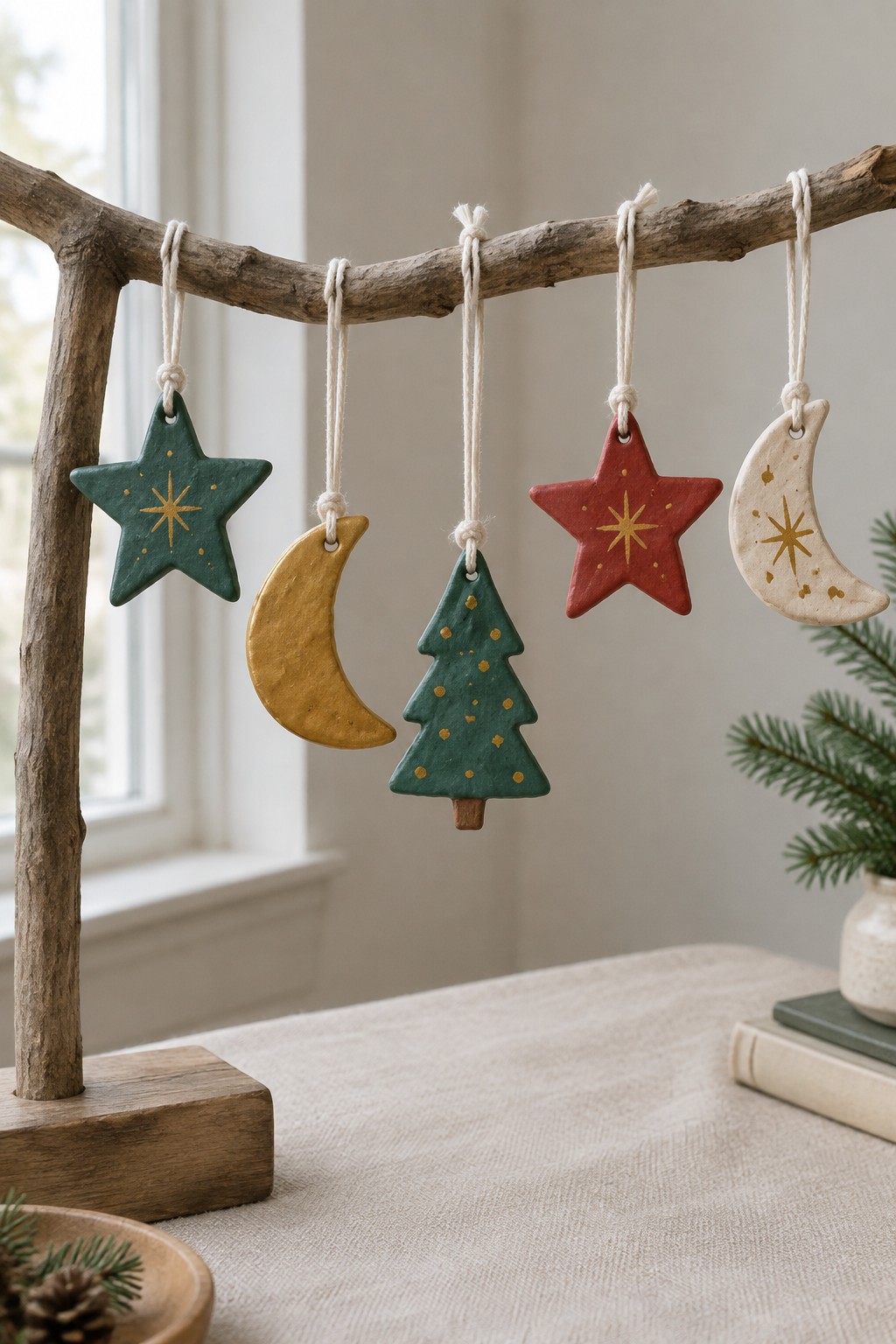
Hand-sculpted clay shapes turn a simple set of star, crescent moon, and tree silhouettes into seasonal hanging ornaments. Deep green and red, warm ochre, and cream give the group a coordinated palette, while small painted starbursts and dots add detail without crowding the forms. This is a decorative clay ornament project that can be displayed individually or arranged together.
The simple silhouettes make the idea easy to adapt: keep the painted motifs or swap them for stripes, tiny dots, or other seasonal designs. You could make one larger statement ornament or a matching set in different colors, which also makes the project a useful handmade gift idea.
Blue and Orange Clay Cat Figurine
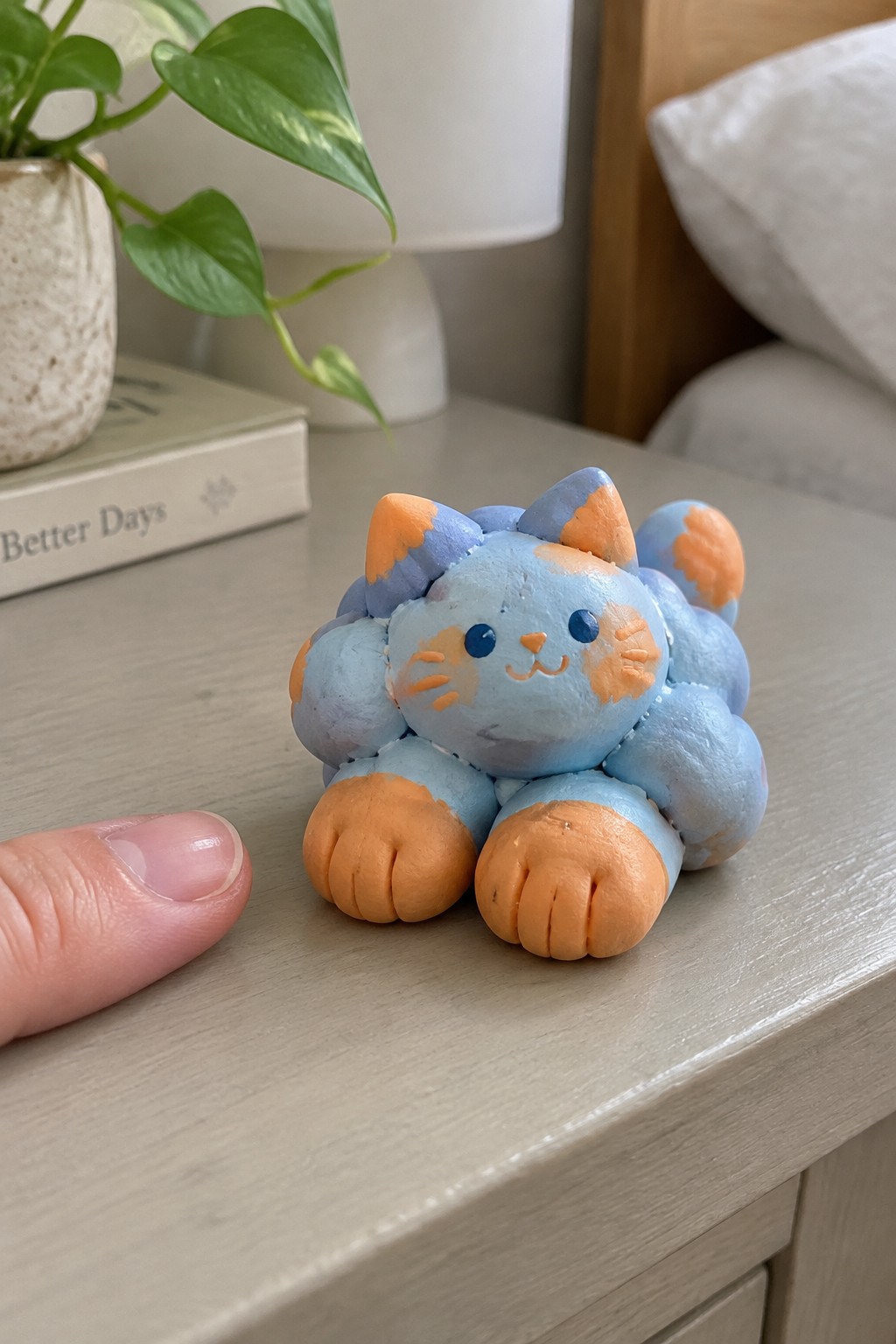
This hand-sculpted clay cat is a small animal figurine built from rounded forms, with orange patches and matching oversized paws that stand out against its pale blue body. Its painted face and raised ears make the cat readable at miniature scale, while the handmade contours keep it looking like a sculpted clay craft rather than a mass-produced decoration.
The rounded body and simple facial features offer a clear starting point for making a similar miniature, though the attached forms and painted details take some care to shape neatly. Try different color combinations, markings, or expressions, or simplify the design by using fewer body details; the finished cat works as a small decorative collectible or a handmade gift.
Frequently Asked Questions
Start with simple forms that leave room for experimentation. Try a pinch-pot face, a small abstract figure, a textured wall tile, or a coil-built vessel with an uneven rim. Focus on one expressive feature, such as a dramatic curve, exaggerated proportions, or a rough surface. Air-dry clay is convenient for at-home projects, while kiln-fired clay is a good choice if you have access to a pottery studio.
Emphasize shape, gesture, and texture. Stretch or compress parts of the form, exaggerate a feature, or use curves and angles to suggest movement or emotion. Surface marks can add character too: press in fabric, carve lines, make fingerprints visible, or build up contrasting textures. An expressive sculpture does not need to look realistic or perfectly polished.
Choose clay based on your tools and the finished piece you want. Air-dry clay is easy to use without a kiln and works well for small indoor sculptures, but it may be less durable and water-resistant. Polymer clay is useful for small, detailed pieces and hardens in a home oven according to its package directions. Ceramic clay offers more options for durable, fired work, but it needs suitable studio equipment. Always follow the manufacturer’s instructions.
Build larger forms gradually and use an armature or internal support when appropriate. Keep the clay thickness reasonably even, join separate pieces securely by scoring and adding slip or the clay maker’s recommended joining method, and avoid trapping air in enclosed forms. Let the sculpture dry slowly and evenly, especially where thick and thin sections meet. For fired clay, ask your studio about safe construction and firing practices.
Let the sculpture dry or cure fully before finishing it. Depending on the clay, you can paint it, apply glaze and fire it, or leave its natural surface visible. Check that paints, sealers, and finishes are compatible with your clay and intended use. Display the finished piece on a stable base, away from heavy traffic, excessive moisture, and direct heat. Air-dry clay pieces are generally best kept indoors and handled gently.
