


I’ve always liked how expressive little clay animals can be, especially turtles and octopuses with their rounded shapes and tiny details.
In this collection, I’ve gathered ideas that play with different colors, expressions, and sculpted forms.
Some are sweet and simple, while others have extra details that give each creature its own personality.
I hope these ideas help you find a turtle or octopus project that feels fun to make.
Turtle-Shaped Clay Ring Dish

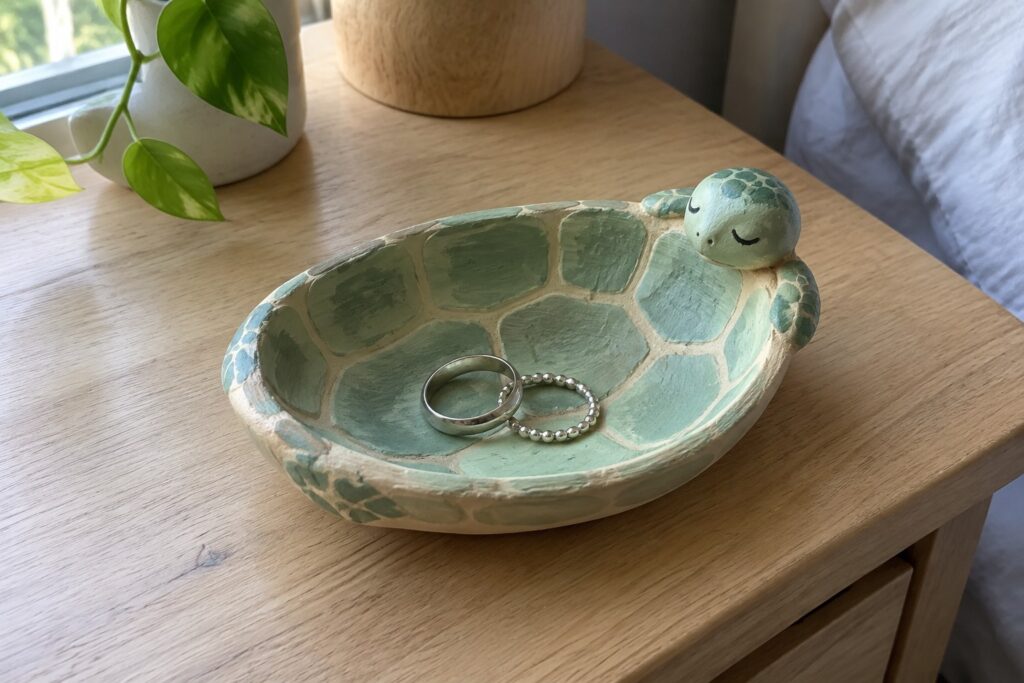
A hand-sculpted clay trinket dish combines a shallow, shell-shaped bowl with a small turtle head at the rim. Muted green shell panels and a cream-colored raised border make the turtle shape easy to read, while the painted face gives the decorative ring holder a clear animal-craft theme.
The shell pattern is the main detail, so you could simplify it into a few larger panels or use contrasting colors for a bolder look. Keep the turtle head and dish small for a jewelry holder, or scale up the shell to create a decorative catchall; either way, the design makes a distinctive handmade gift that’s easy to save for inspiration.
Painted Turtle Clay Charm

This hand-sculpted clay turtle is a small animal charm, with a rounded green shell decorated in layered yellow and teal patterns and a simple smiling face. The gold-colored loop turns the miniature sculpture into a hanging accessory, while the contrasting spots on its flippers carry the shell design across the whole figure.
The shell’s concentric pattern makes the charm easy to personalize with different color combinations or simpler dots and stripes. A beginner could use a plain rounded shell and minimal face details, while making the turtle larger or smaller would shift it toward a decorative ornament or collectible miniature.
Pink Octopus Ring Holder

This hand-sculpted clay octopus is designed as a decorative ring holder, with curled tentacles that provide places to rest rings. Its rounded head, soft pink-and-cream coloring, and small painted details make the animal shape easy to recognize while giving the holder a playful look.
The curled tentacles are the main feature to adapt: you could make fewer curls for a simpler version or change their placement to hold different ring sizes. Try another color combination or add simple painted spots, and make the base wider or smaller to suit a desk or bedside table.
Pastel Clay Octopus Fridge Magnets

These hand-sculpted clay octopuses turn a simple round head and short, rounded tentacles into small animal magnets. Their pastel purple, turquoise, and coral colors stand out against the black eyes and tiny curved smiles, while the handmade contours keep each figure distinct. The design fits neatly into the decorative clay animal and fridge magnet categories.
The rounded shapes make the octopuses easy to adapt: a simpler version could use fewer tentacles and basic painted eyes, while extra color combinations or facial expressions can give each one a different look. Make them in several sizes for a coordinated set, or use the same octopus shape as a small figurine instead of a magnet.
Turtle-Shaped Clay Cable Holder

A hand-sculpted turtle cable holder turns a small animal figurine into a decorative accessory for keeping a cord loosely wrapped. Its rounded mustard-yellow shell, teal body, and painted spots make the turtle easy to recognize, while the shell’s raised sections create space for the cable to rest.
The shape and painted details make this idea easy to adapt: simplify the spots or shell pattern for a smaller project, or change the colors to create a whole group of turtles. It could also be made as a purely decorative miniature by leaving out the cord, or adapted into a small desk accessory with another animal shape.
Miniature Purple Clay Octopus Figurines

These small hand-sculpted octopus figurines use rounded heads, curled tentacles, and simple painted faces to turn a familiar sea creature into a compact animal sculpture. The two shades of purple and tiny contrasting details make each figure distinct while keeping the design cohesive.
The rounded body and curled tentacles provide a clear shape to adapt, whether you make one octopus or a pair in different colors and sizes. For a simpler version, use fewer tentacle curls and basic eyes and a smile; extra dots or contrasting tentacle tips can add detail while keeping the figures decorative and easy to display or give as small handmade gifts.
Succulent Turtle Shell Planter Cover

A hand-sculpted clay turtle shell forms a decorative cover over a potted succulent, turning the plant into a turtle-inspired display. Its raised shell has dark green panels separated by cream-colored lines, while the opening beneath lets the succulent leaves emerge like the turtle’s head and legs. The project fits the animal craft and decorative planter category.
The shell pattern makes the concept recognizable, and the plant gives it a simple way to vary the final look. You could simplify the design by making a smaller shell with fewer panels, or change the colors and use a different compact plant to suit the pot. It could also be adapted as a standalone miniature turtle sculpture without the planter.
Pastel Octopus Clay Keychain

A hand-sculpted octopus becomes a small decorative keychain, with a rounded coral-pink head, a mint-green lower face, and short tentacles striped in yellow and mint. The large eyes and simple smile make the animal easy to recognize, while the attached metal ring gives the miniature sculpture a clear accessory use.
The rounded forms and painted color blocks make this idea easy to adapt without losing the octopus shape: simplify the face, use fewer colors, or change the tentacle patterns. You could make smaller versions for a bag charm or try different color combinations for a set of matching animal keychains.
Textured Turtle Clay Wall Plaque

A hand-sculpted sea turtle sits in relief on a square clay wall plaque, with a deep blue-green body set against a pale blue, speckled background. Its simple, broad silhouette and raised flippers make the animal easy to recognize, while the handmade contours and distressed edges give the wall decoration a tactile look.
The bold turtle shape carries the design, so you could simplify the flippers and shell details while keeping the plaque recognizable. Try changing the background color or speckle pattern, or make smaller versions as decorative keepsakes; the two corner holes also offer a clear way to hang the finished piece.
Turtle Clay Pencil Topper

A hand-sculpted turtle turns the end of a yellow pencil into a playful animal accessory, with a rounded green head, small legs, and a blue-and-green shell built up from distinct sections. The contrasting shell colors and raised shapes make this small clay sculpture easy to recognize without needing many fine details.
The pencil gives the turtle a clear use as a decorative topper, and the same design could be scaled for a larger figurine or adapted with different shell patterns and colors. For a simpler version, use a plain rounded shell with a few contrasting spots, keeping the head and legs as the main sculpted details.
Octopus Clay Trinket Dish
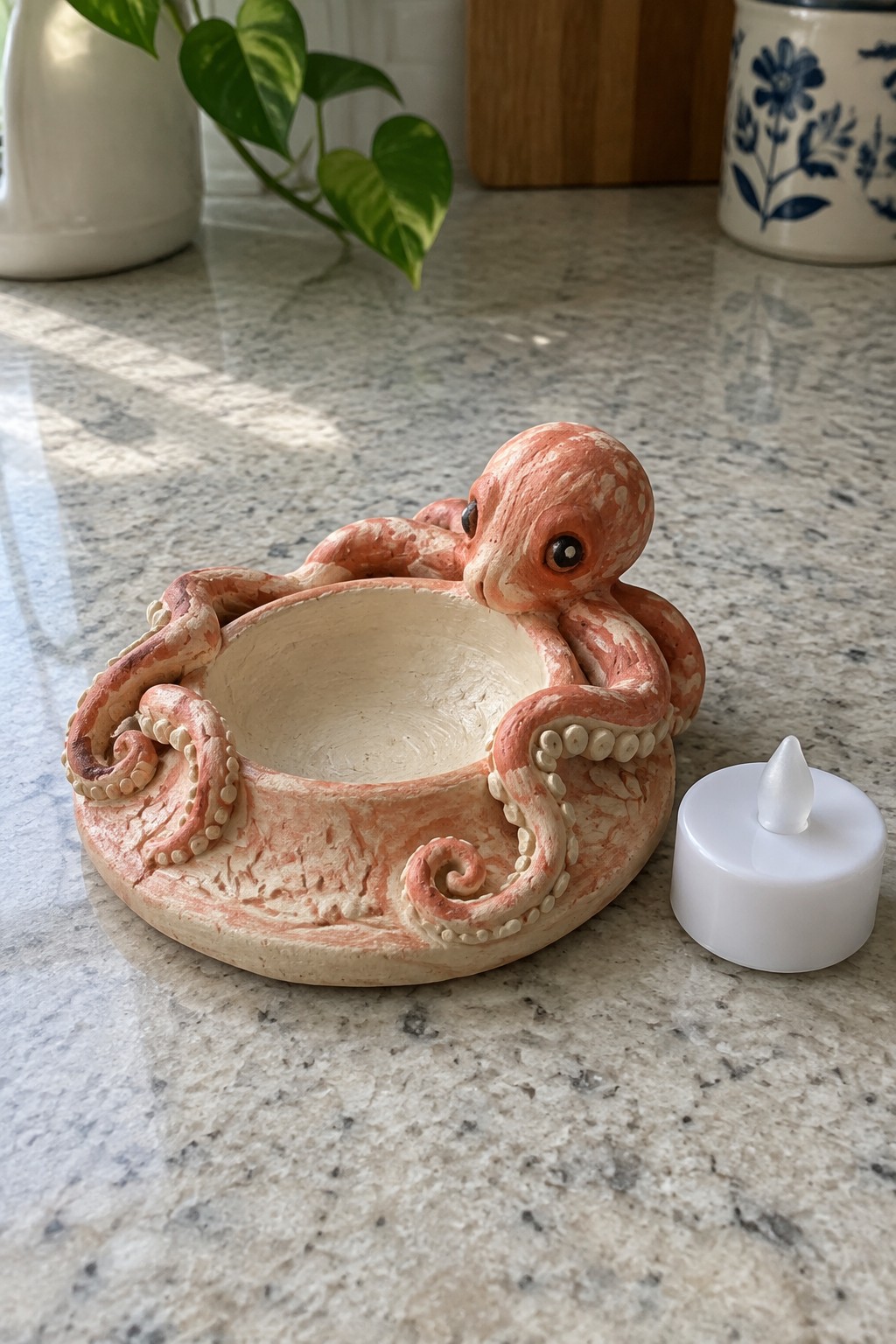
A hand-sculpted octopus wraps its curled, textured tentacles around a shallow trinket dish, turning a small decorative holder into an animal sculpture. The warm pink-and-cream coloring and raised suction cups make the tentacles stand out against the simple dish shape.
The dish could hold small accessories or keepsakes, but it should be treated as decorative rather than food-safe. For a simpler version, use fewer tentacles and reduce the suction-cup details, or adapt the octopus into a miniature figurine; changing the colors or dish size gives the idea room to suit different displays.
Purple Octopus Reading in a Seagrass Hideaway

This miniature clay sculpture pairs a round purple octopus with a tiny open book, curling tentacles, and tall green leaves that form a sheltered scene. Pebbles and small coral-like shapes add texture around its base, while the contrasting purple, green, and blue-green colors keep the details easy to distinguish. It fits the miniature animal sculpture category, with the book and plant setting giving the octopus a clear theme.
The book-and-seagrass idea is memorable but can be simplified by shaping a round head, a few curled tentacles, and one broad leaf around the figure. Try different book colors or swap the octopus for a turtle to create a related reading-themed miniature, and make the base smaller if you want a compact collectible or desk decoration.
Spotted Clay Turtle Drawer Knobs

Hand-sculpted turtle figures become decorative drawer knobs, with rounded shells, small attached heads and flippers, and hand-painted spots in muted green, terracotta, and cream. Their compact animal shapes and contrasting colors make these clay pieces distinctive functional accessories for a small cabinet or craft drawer.
The rounded shell gives the design a clear shape that can be adapted with different spot patterns or colors to suit a room. You could also make the turtles as standalone miniature sculptures, or simplify the forms and details for a matching set of decorative knobs in different sizes.
Colorful Clay Octopus Phone Stand

A hand-sculpted octopus phone stand combines a playful animal figurine with a practical support for a phone. Its curled tentacles form the base and front supports, while layered blue, purple, and cream details give the sculpted shape clear texture and contrast.
The tentacles do most of the work, so a simpler version could use fewer curls and larger, easier-to-shape details. You could change the colors or scale the octopus to fit a tablet, or adapt the same sculpted design into a decorative miniature without the phone-supporting parts.
Painted Turtle and Octopus Clay Hanging Ornaments

Hand-sculpted turtle and octopus ornaments turn familiar sea animals into small hanging decorations, with twine loops for displaying them from a branch or hook. Their rounded shapes, hand-painted cream dots, and contrasting red and teal details make each animal easy to recognize while giving the pair a coordinated look.
The simple hanging format is easy to adapt with different sea creatures, color palettes, or painted patterns, and the ornaments could be made larger or smaller for a display. A simpler version could use flatter silhouettes and fewer details, while keeping the turtle’s patterned shell or the octopus’s curved tentacles as the main feature.
Scarf-Wearing Clay Turtle Figurine

A hand-sculpted turtle figurine gets its character from a segmented teal shell dotted with small cream and gold spots, paired with an orange scarf. The rounded head and limbs keep the animal shape simple, while the layered shell details make it a distinctive miniature sculpture.
The spotted shell and scarf are easy features to adapt with different colors or patterns, and a simpler version could use fewer shell markings and a plain neck wrap. Making turtles in several sizes or changing the scarf color could create a small collectible set or a personalized handmade gift.
Painted Turtle and Octopus Clay Hanging Ornaments

This handmade clay hanging decoration arranges sculpted turtles and octopuses in three dangling strands beneath a circular wooden ring. Soft blue, green, yellow, pink, and purple paint gives the small animal shapes a coordinated pastel palette, while the turtles’ shell patterns and the octopuses’ curved tentacles make each silhouette easy to recognize. It’s a decorative clay ornament designed to hang in a nursery or another indoor space.
The repeated shapes make the design easy to adapt: you could use just one animal, change the colors, or add other simple sea creatures to the strands. For a simpler version, make fewer ornaments and keep the turtle shells or octopus tentacles less detailed; making the pieces in different sizes could also give the hanging arrangement more variety.
Turtle and Octopus Clay Bookmarks

Hand-sculpted clay turtles and octopuses turn simple metal page clips into playful decorative bookmarks. The small green turtles have raised shell patterns, while purple and pink octopuses use curled tentacles and dark eyes to make each design easy to recognize.
The flat clip shape keeps the animals compact, and their distinct colors and details make them easy to vary with different shell patterns or tentacle poses. You could simplify the figures to rounded bodies and a few small features, or make a matching set in different colors for marking pages in a journal or book.
Seafoam Octopus Clay Soap Dish

A hand-sculpted octopus becomes a decorative soap dish, with its curled tentacles forming a shallow area for a bar of soap. The seafoam-green body, pale tentacle centers, and painted face give the clay animal clear definition while keeping the design cohesive.
The tentacles do the practical work here, so their curves can be adjusted to fit a smaller or wider bar of soap. For a simpler version, use fewer, broader tentacles and basic painted facial details; changing the body color or adding spots can make each dish distinct.
Clay Turtle Garden Stakes

These hand-sculpted clay turtle figurines are mounted on wooden stakes, with painted shell designs that distinguish each one: a sun, a water drop, and leafy sprigs. Their rounded heads and small flippers keep the animal shapes simple, while the colorful shells make them easy to spot as decorative garden markers.
The painted motifs give you a clear starting point for making a set, and you could swap in flowers, dots, or other simple patterns to make each turtle different. Keep the bodies and details chunky for an easier version, or change the colors and shell designs to match a plant collection or make a small handmade gift.
Frequently Asked Questions
Air-dry clay is a good choice for simple projects because it doesn’t need baking and is easy to find. Polymer clay works well for small, detailed figures and becomes durable when baked according to its package instructions. For younger children, choose a nontoxic clay and make sure an adult handles any baking or kiln work.
You can make many cute animals with clay, a smooth work surface, and a few basic tools. A craft stick or toothpick can add shell patterns, eyes, and texture, while a small rolling pin helps flatten clay. You may also want acrylic paint or clay-safe glaze, depending on the clay you use. Always check product labels to make sure paints and finishes are compatible.
For a turtle’s shell, press in a grid, dots, scales, or swirling patterns before the clay dries or is baked. Try contrasting colors for the shell and body to make the pattern stand out. For an octopus, gently curve each tentacle and add small suction-cup details with a rounded tool. Keep the tentacles fairly thick so they’re less likely to break.
Join pieces while the clay is still workable, and gently blend the seams with your fingertip or a tool. Avoid making thin, unsupported parts, especially long octopus tentacles. If you’re using air-dry clay, let the figure dry slowly and evenly, following the package directions. For polymer clay, bake it at the recommended temperature and time rather than guessing.
Choose simple designs, such as a rounded turtle with a patterned shell or a cheerful octopus with short, sturdy tentacles. Pre-portion the clay, use child-safe tools, and supervise any project involving ovens, sealants, or small parts. For children who aren’t ready for detailed sculpting, let them shape the animals and add features with paint or larger clay pieces instead.
