


I like how pinch pots turn a simple piece of clay into a small dish with its own character.
For this collection, I’ve gathered cute miniature designs that can add a handmade touch to a shelf, desk, or bedside table.
Some have playful shapes, while others stand out through little details and color.
I hope these ideas help you find a style you’d enjoy making and displaying.
Painted Daisy Clay Trinket Dish

A hand-shaped clay trinket dish uses five rounded petals and a shallow center to create a daisy silhouette. Lavender petals, a pale yellow center, and softly uneven painted edges make the small dish read clearly as a flower while keeping its handmade contours visible. It fits the decorative dish category, with space for small items such as rings.
The flower shape makes the design easy to adapt: use fewer or more petals, change the color palette, or add simple painted details to the center. A beginner-friendly version could use broad, rounded petals and a single solid color on each section, while making the dish larger or smaller changes its look without changing the basic idea.
Fox Face Clay Pinch Pot

A small clay pinch pot becomes a fox-themed trinket dish with two pointed ears and a painted face. Its warm orange body, pale muzzle and ear details, and simple black features make the animal motif easy to recognize while keeping the bowl shape visible.
The fox face makes this miniature dish memorable, and the same idea could be adapted with different ear shapes or animal markings for a small collection. For a simpler version, keep the pot rounded and add just the ears, a nose, and a few painted details; it can be made larger or smaller as a decorative dish for small keepsakes.
Pastel Marbled Clay Pinch Pot

A small hand-sculpted clay pinch pot becomes a decorative trinket dish through its softly uneven rim, swirled pastel pink, mint, and cream colors, and a gold-painted edge. The marbling carries across the inside and outside, giving this miniature dish a unified look while keeping its handmade contours visible.
The contrasting gold rim gives the design a clear outline, and the pastel colors can be changed to suit a season or favorite palette. For a simpler version, use two colors and leave the edge unpainted, or make a few pots in different sizes for holding small jewelry or keepsakes; treat them as decorative dishes rather than food-serving bowls.
Sculpted Leaf Clay Trinket Dish

A hand-sculpted clay trinket dish takes the shape of a broad leaf, with raised veins and an uneven, curled rim that echo the natural form. Its muted green surface keeps the sculpted details prominent, making it a decorative dish for holding small items such as rings or keys.
The leaf outline gives the dish visual interest without needing added pieces or painted motifs, and the vein pattern can be simplified into a few main lines for an easier version. Try different green tones or a contrasting rim, or make a smaller leaf-shaped dish for a gift or a larger one as a decorative catchall.
Painted Moon and Stars Clay Pinch Dish
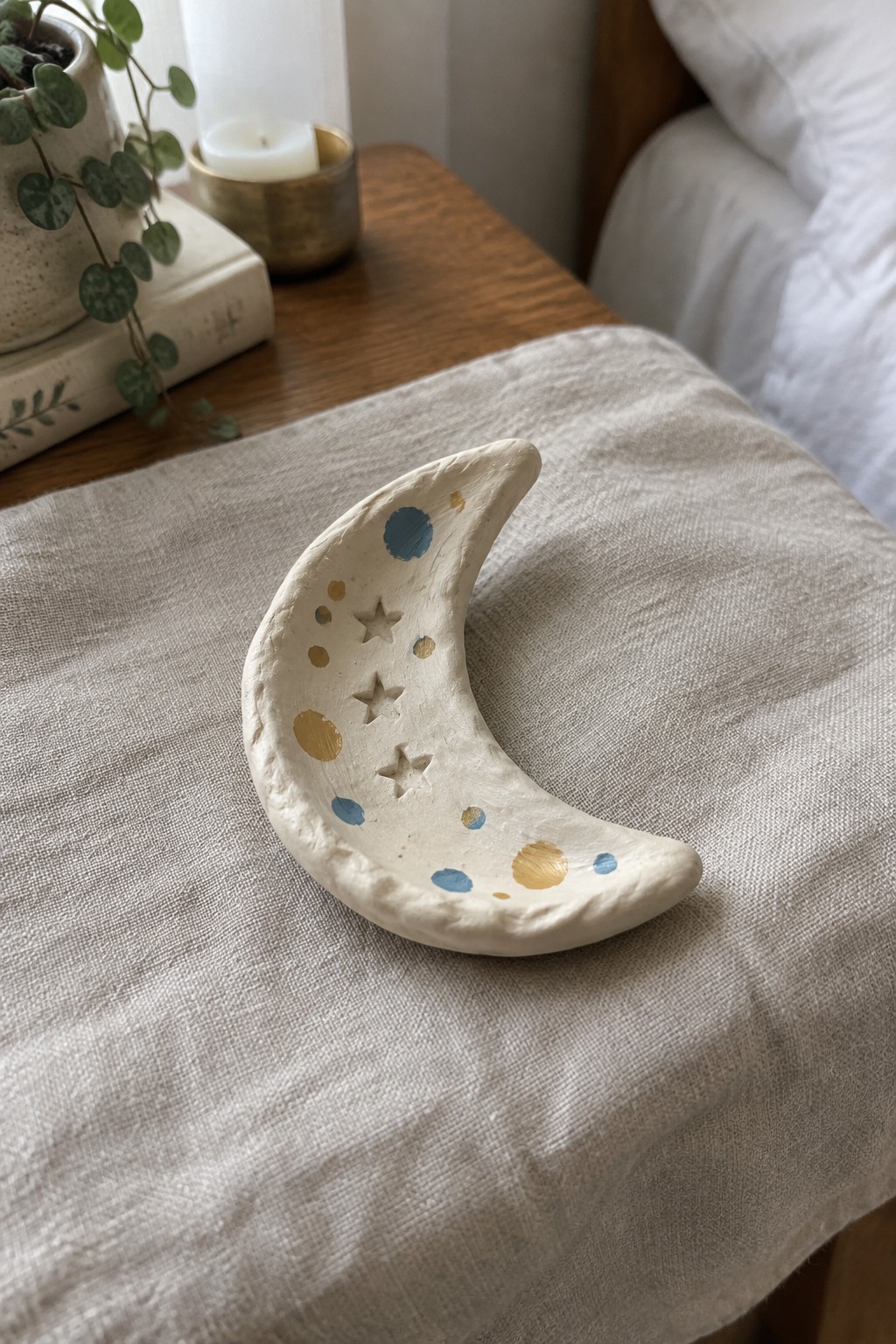
A hand-sculpted crescent moon forms a small decorative dish, with star-shaped cutouts and scattered blue and ochre dots painted across its surface. The uneven contours and carved details keep the miniature sculpture visibly handmade, while the celestial pattern gives the dish a clear theme.
The crescent shape makes this idea easy to adapt: use fewer painted dots for a simpler version, or change the colors and add different star placements to make each dish distinct. It could be made in a range of sizes as a decorative trinket dish, or the moon silhouette could become a standalone ornament instead.
Colorful Terrazzo Clay Pinch Pot Dish

A hand-sculpted clay pinch pot becomes a small decorative dish with a rounded, uneven rim and scattered terrazzo-style flecks in teal, rust, mustard, and cream. The contrast between the warm speckled surface and the simple shallow shape makes the dish visually distinctive without adding a separate sculpted motif.
The colorful flecks can be varied in size and spacing, or swapped for a limited palette to give each dish a different look. A smaller version could hold jewelry or other tiny items as a decorative trinket dish, while a beginner could keep the rim simple and focus on arranging the colored pieces across the surface.
Hedgehog Clay Trinket Dish

A shallow hand-shaped clay dish becomes a decorative hedgehog trinket holder, with a sculpted face and overlapping textured spines attached at the back. The contrast between the pale dish and the brown hedgehog details makes the animal motif stand out while keeping the dish’s shape simple.
The rounded bowl can be adapted into different sizes for holding small items such as rings, or made flatter if you want the hedgehog to read more as a miniature sculpture than a holder. For a simpler version, use fewer spine details and keep the face to a small nose, eyes, and a touch of color on the cheeks.
Pale Green Scalloped Clay Trinket Dish

A shallow clay trinket dish takes on a flower-like shape with its uneven, scalloped rim and soft pale green color. Small raised dots near the center add a simple detail, while the hand-shaped contours keep it distinct from a mass-produced dish. It fits the decorative accessory category and could hold small items such as rings or earrings.
The scalloped edge gives this design its character, so a simpler version can keep the same outline and skip the dots. Try other muted colors or add a few small painted marks, and make the dish larger or smaller to suit the trinkets it will hold. As a decorative clay project, it’s an easy idea to save and adapt without needing a complicated motif.
Terracotta Clay Ring Dish

A shallow, hand-shaped terracotta clay dish with a small center opening creates a simple place to set a ring when it is not being worn. A narrow white band follows the inner rim, adding contrast to the warm clay and giving this decorative ring holder a clear focal point.
The rounded shape and limited color palette keep the idea approachable, while the handmade contours make each dish distinct. You could adjust the size for different jewelry, change the painted rim to a contrasting color, or leave the clay unpainted for a simpler look. Keep it decorative rather than using it to serve food.
Strawberry Clay Pinch Pot

A small strawberry-shaped clay pinch pot pairs a rounded red bowl with a leafy green top and tiny yellow seed details. Its hand-shaped rim and shallow interior keep the form recognizable while making it a decorative miniature dish rather than a serving bowl.
The strawberry motif makes this idea easy to adapt: change the red to pink or cream, vary the seed marks, or simplify the leaves for a less detailed version. Make it larger or smaller to suit a display, or use the same fruit design for a miniature sculpture or decorative trinket dish.
Red and White Spotted Mushroom Clay Pinch Pot
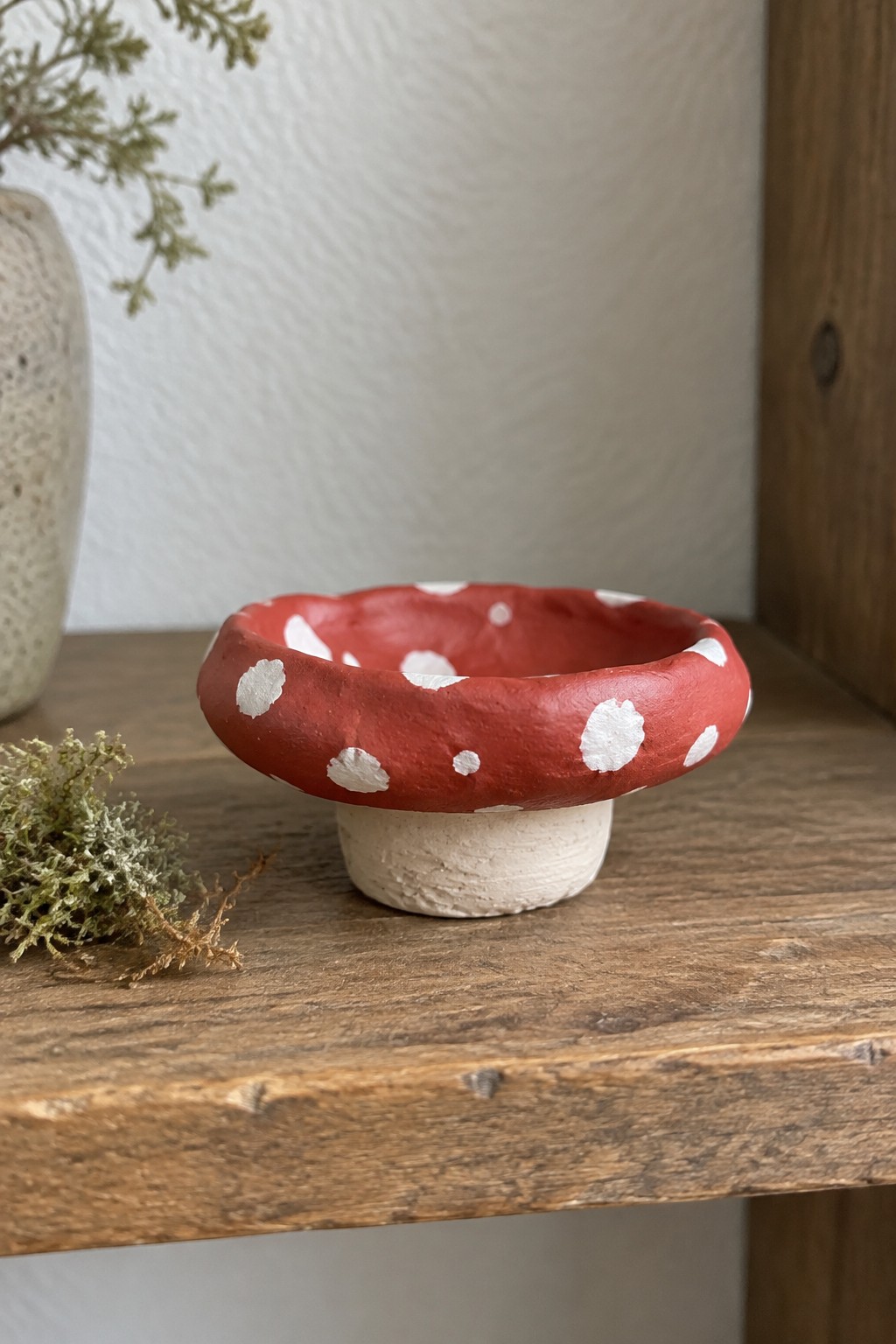
A mushroom-inspired clay pinch pot pairs a rounded red bowl with white spots and a short, pale stem-like base. Its hand-shaped contours and simple painted pattern turn a miniature dish into a decorative mushroom sculpture that still has space for small trinkets.
The red-and-white contrast makes the design easy to recognize, while the basic bowl and stem shapes can be adapted into different sizes or spot patterns. For a simpler version, keep the bowl shallow and use a few painted dots, or try a different cap color to make a small set of matching decorative dishes.
Abstract Color-Blocked Clay Pinch Dish

This hand-sculpted clay pinch dish pairs an irregular rounded bowl shape with broad blocks of charcoal, cream, and ochre. Shallow ridges across the interior add texture, while the contrasting colors make it read as a decorative trinket dish rather than a plain container.
The uneven rim and simple color blocking make the design easy to adapt without copying every detail. Try a smaller version for rings or keepsakes, switch to a different three-color palette, or simplify the interior by leaving out the ridges and focusing on the painted sections.
Tiny Clay Cottage Pinch Pot

A small house-shaped clay pinch pot combines a shallow open top with a miniature cottage facade, including a terracotta-colored roof, blue windows, and a painted door. Its uneven sculpted contours and simple painted details make it both a decorative miniature sculpture and a small dish for holding non-food items.
The cottage shape gives a basic pinch pot a memorable focal point, while the roof and facade can be adjusted with different colors, window shapes, or door details. For a simpler version, keep the pot’s rounded form and paint on just a door and two windows; making it larger could create more room for keys or small craft supplies.
Pastel Rainbow Clay Pinch Pot

A small hand-shaped clay pinch pot uses bands of pastel pink, yellow, green, and lavender to create a rainbow pattern inside and around the bowl. Its rounded form and softly uneven edges keep the layered colors looking handmade, making it a decorative miniature dish rather than a serving bowl.
The color bands make this design easy to adapt without changing the basic pinch-pot shape: try brighter rainbow shades, a two-color palette, or thinner stripes for a different look. A smaller version could hold rings or other small items, while a larger one could be displayed as a decorative dish; keep any painted clay version for non-food use.
Speckled Stone-Effect Clay Pinch Pot

A small hand-sculpted clay pinch pot can be shaped into a shallow dish with a softly uneven rim and a contrasting pale interior. The muted gray, speckled exterior and natural contours give this decorative trinket dish a simple stone-like look without needing painted motifs or attached details.
The irregular rim is the main feature, so you can keep the form simple and vary the edge for a more personal version. Make it smaller for rings or other small keepsakes, or try a warmer clay color and a smoother rim; a beginner can focus on pinching an even bowl shape and leave the surface plain. As a decorative dish, it is a useful idea to save for a handmade gift or a small display piece.
Pastel Flower-Decorated Clay Pinch Dish

A shallow, hand-formed clay pinch dish gets its decoration from three sculpted flowers in pink, lavender, and cream, with small green leaves tucked between them. The uneven rim and raised floral details give it a soft, handmade look, making it a decorative trinket dish rather than a serving bowl.
The simple rounded dish shape can be adapted with different flower sizes, colors, or leaf arrangements, or made smaller as a ring dish. For a simpler version, add one sculpted flower instead of a cluster, keeping the dish’s irregular contours as part of the design.
Paw-Shaped Clay Ring Dish
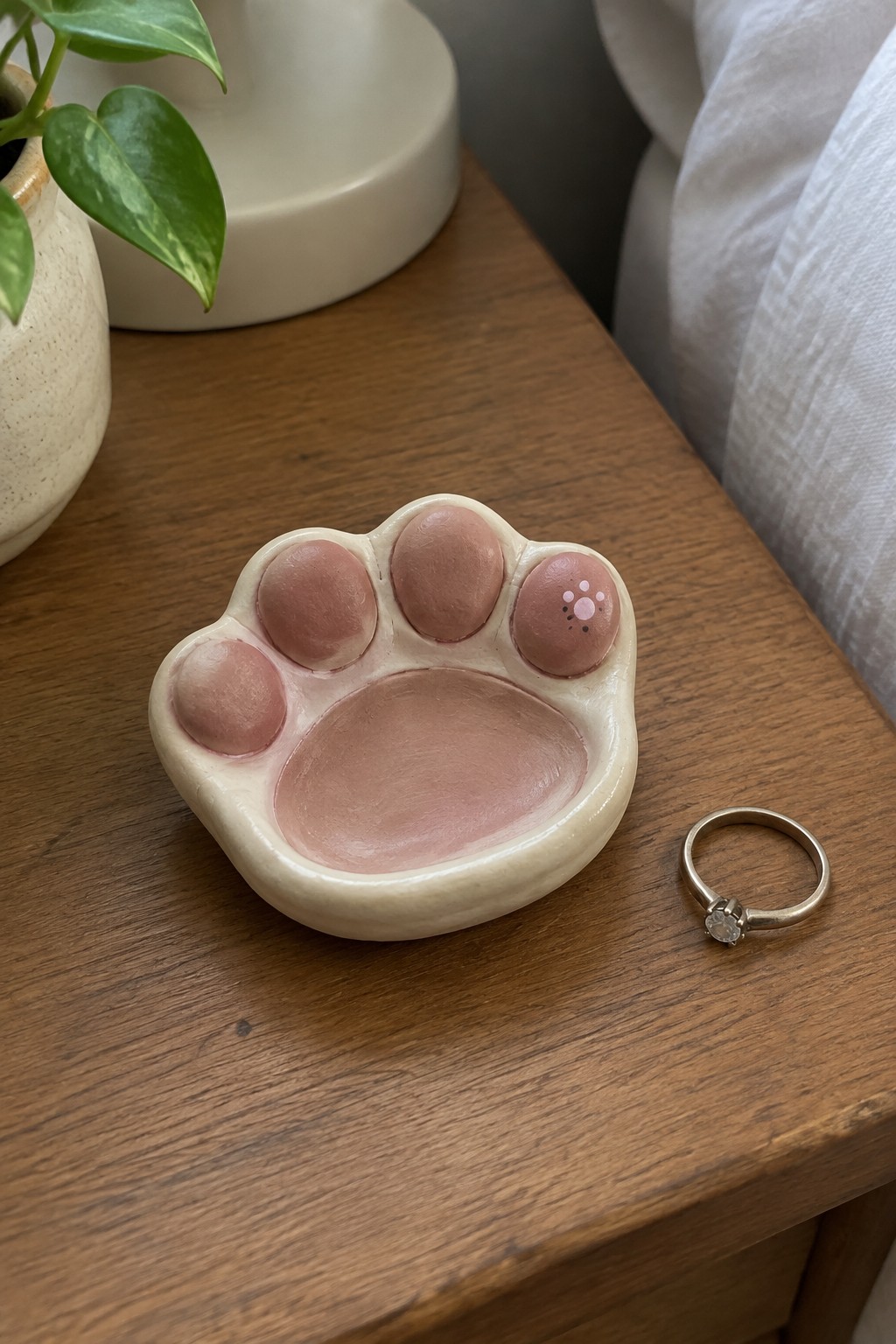
A hand-sculpted paw-shaped trinket dish uses rounded pink pads set into a cream-colored base, with small painted dots adding detail to one toe. Its shallow center and raised outline make the animal-paw motif easy to recognize, while the handmade contours keep it distinct from a mass-produced dish. It fits the decorative clay dish category and can hold small items such as a ring.
The paw silhouette makes this idea memorable, and the simple two-color palette is easy to change to suit a pet’s coloring or a favorite scheme. A simpler version could use a plain base and fewer painted details, while different sizes could turn the design into a small jewelry dish or a larger decorative catchall. Keep it for small accessories rather than food.
Frequently Asked Questions
A pinch pot is made by shaping a ball of clay with your fingers: press a thumb into the center, then gently pinch and turn the clay to form a hollow bowl. It’s beginner-friendly because you don’t need a pottery wheel or special shaping tools. The simple technique also makes it easy to create small decorative dishes in playful shapes, such as flowers, shells, hearts, and tiny animal faces.
Choose clay based on how you plan to finish and use your dishes. Air-dry clay is convenient for decorations that won’t need to hold water or food. For sturdier pieces, use a ceramic clay that can be fired in a kiln, following the clay and kiln instructions. Polymer clay is another option for miniature decorative projects, but it’s baked in a household oven according to its package directions. Don’t assume a dish is food-safe or waterproof just because it has been painted or sealed.
Start with a smooth ball of clay and pinch gradually, rotating the piece as you work. Use light, even pressure so the walls stay a similar thickness, and check the rim from above to spot uneven areas. Smooth small cracks with a damp fingertip or an appropriate clay-smoothing tool. If the rim looks wobbly, gently reshape it while the clay is still workable rather than trying to fix it after it dries.
Try simple details that suit the dish’s shape. Add small clay pieces for petals, ears, or fruit stems, and blend the joins carefully so they don’t come loose. You can also impress patterns with a stamp, toothpick, or textured material, then paint the finished pot with designs such as tiny flowers, scalloped edges, or a smiling face. For best results, check that your paint and finish are compatible with your clay and intended use.
They make charming decorative accents and can hold small, dry items such as rings, beads, paper clips, or wrapped sweets. A set of matching dishes can also work as a thoughtful handmade gift, party favor, or shelf decoration. Because miniature pieces can be delicate, place them somewhere they won’t be knocked over, and avoid using them for food or liquids unless the clay, finish, and firing process are specifically suitable.
