


I always enjoy seeing simple clay shapes turn into little woodland characters with their own personalities.
Foxes, owls, hedgehogs, and other forest friends make sweet subjects for small handmade decorations and keepsakes.
I’ve gathered ideas with a mix of playful shapes, colors, and charming details to suit different crafting styles.
Here are 20 cute clay creations to inspire your next woodland-themed project.
Sleeping Fox Family Clay Sculpture

This hand-sculpted clay miniature depicts an adult fox curled around two sleeping kits, with their bodies forming a compact nest-like scene. Rust orange, cream, and muted brown shapes define the foxes, while closed eyes and small facial details keep the features simple and readable. It works as a decorative woodland animal sculpture rather than a functional object.
The curled arrangement helps the three figures read as one small scene, so the idea could be adapted with different fox colors or other woodland animals. For a simpler version, make one curled fox with a single kit and use just a few painted facial details; making the sculpture larger would also give more room for shaping the ears and tails.
Sleeping Squirrel Leaf Trinket Dish

A hand-sculpted clay trinket dish shaped like a broad leaf pairs a warm terracotta color with pale vein details and a small sleeping squirrel perched on the rim. The shallow dish is designed to hold small items such as rings, making it a decorative woodland-themed accessory rather than a serving bowl.
The leaf shape and raised squirrel make the idea easy to adapt into different sizes, from a small ring dish to a larger catchall for jewelry. For a simpler version, keep the leaf and painted veins but leave off the squirrel, or swap in another small woodland animal; changing the leaf color can give each version a different look.
Mushroom House Keychain With a Tiny Mouse
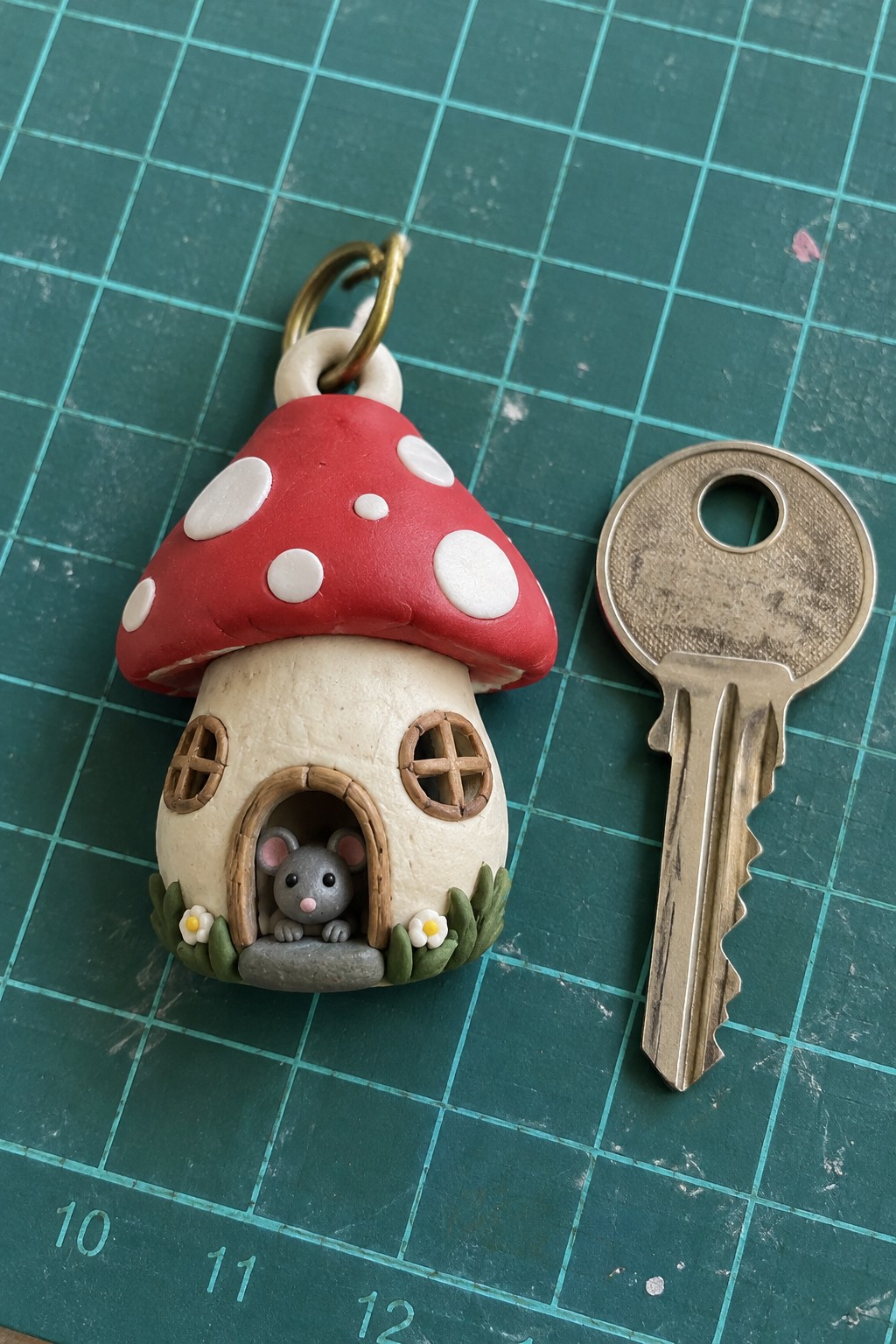
A miniature mushroom-house clay charm turns a classic woodland scene into a keychain, with a red spotted cap, small windows, and a mouse tucked in the doorway. Its rounded shapes and contrasting red, cream, and brown details make the house easy to recognize even at a small scale.
The mushroom silhouette is the main feature, so you could simplify the windows and mouse into a few basic shapes while keeping the idea clear. Try different cap colors or swap the mouse for another small woodland creature, then make the house larger as a hanging ornament or keep it tiny for a bag charm.
Hedgehog Clay Key Dish

A hand-sculpted hedgehog forms the edge of this shallow clay key dish, combining a rounded cream-colored basin with a textured brown back and small painted facial details. The animal figure and dish work together as a decorative holder for keys or other small items, rather than as a serving bowl.
The shape makes the idea easy to adapt: keep the dish simple and change the animal to a fox, cat, or turtle, or sculpt a smaller hedgehog on the rim. For a less detailed version, use fewer marks for the spines and keep the face to basic features; the finished piece could also make a practical handmade gift for an entryway.
Hand-Sculpted Owl Clay Earrings

These dangling clay earrings feature paired owl figures with rounded bodies, raised wings, layered feather details, and large contrasting eyes. Their brown, cream, and muted blue-green colors make the sculpted features easy to read, while the small scale turns the owls into playful animal jewelry rather than standalone figurines.
The bold shapes and limited color palette make this design easy to adapt: simplify the feather marks for a less detailed version, or change the colors and facial details to create a different owl style. You could also use the same owl shapes as small hanging ornaments or decorative charms, making the idea worth saving for a handmade gift or a matching set in different sizes.
Woodland Animal and Mushroom Clay Magnets

Hand-sculpted clay magnets turn simple woodland shapes into a matching set: a sleeping fox head, a standing fawn, a spotted mushroom, and an acorn. Their rounded contours, warm brown and cream colors, and small painted markings make each silhouette easy to recognize while keeping the designs visually connected as decorative animal and nature crafts.
The simple shapes make the set easy to adapt into different woodland characters or seasonal colors, and beginners could simplify the faces and markings while keeping the main silhouettes. Make the pieces larger for wall decorations or smaller as a coordinated set of fridge magnets, using details such as spots, closed eyes, or leaf patterns to give each one a distinct look.
Frog on a Spotted Mushroom
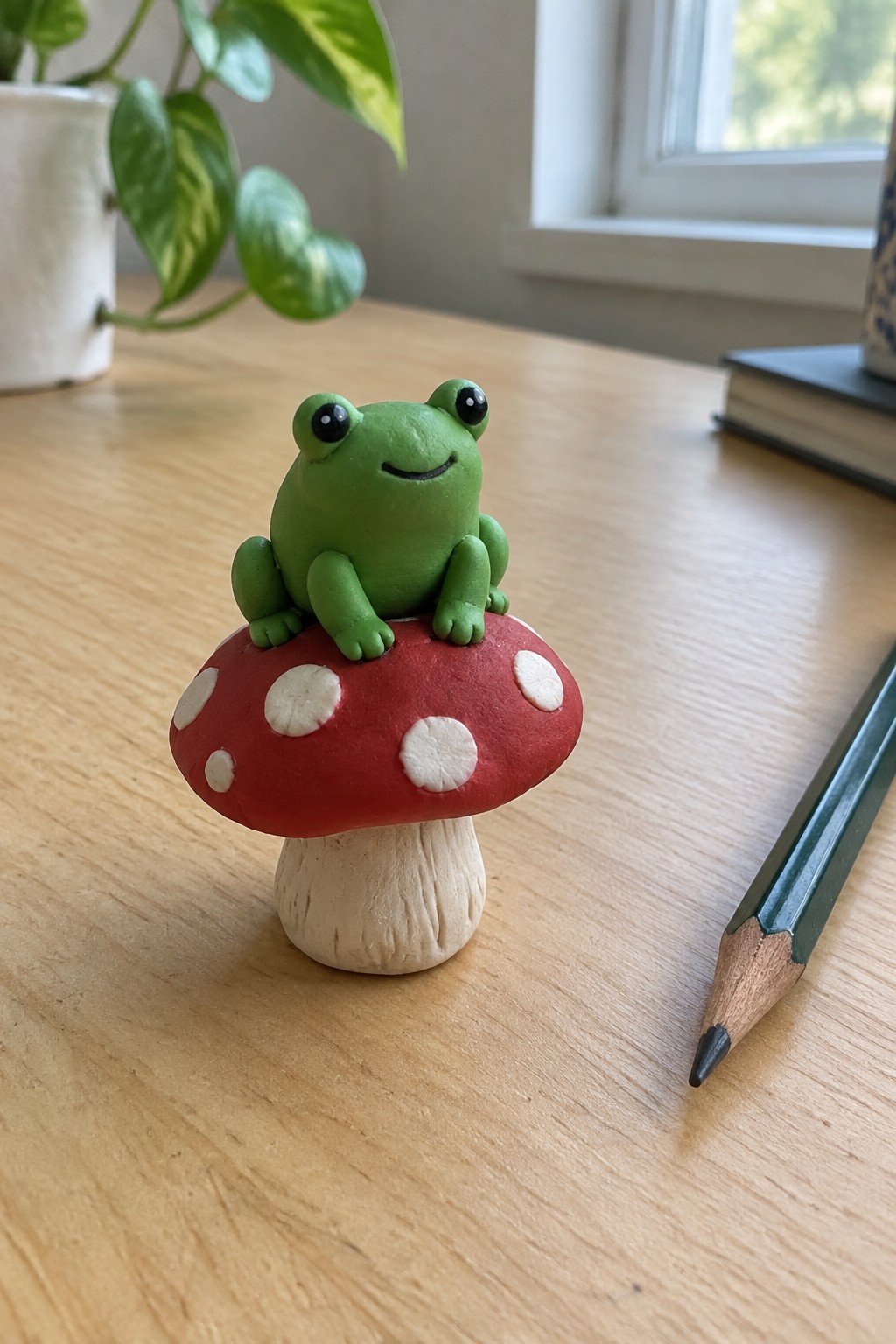
A hand-sculpted clay frog perched on a red mushroom makes a small woodland creature figurine with a clear, playful silhouette. The rounded green body, raised eyes, simple smile, and pale spots on the mushroom cap give the miniature scene its character without relying on intricate surface detail.
The mushroom provides a sturdy-looking base and a strong color contrast, while the frog’s basic shapes can be adjusted to create different poses or expressions. For a simpler version, use a round body, two raised eyes, and a few flat spots; you could also change the cap color or make a series of tiny frogs on differently shaped mushrooms as decorative miniatures.
Woodland Owl and Leaf Clay Garland

A handmade clay wall decoration can turn simple owl and leaf shapes into a hanging garland for a wall or doorway. The repeated pieces, earthy orange, yellow, and green colors, and painted feather and vein details make the design easy to read as a woodland theme without needing intricate sculpting.
The alternating shapes give the garland a clear pattern that could be shortened or extended by changing how many owls and leaves you make. For a simpler version, use basic owl silhouettes and plain leaves, then add a few painted details; you could also change the colors to match a season or make individual pieces as separate hanging ornaments.
Snail and Mushroom Clay Pendant

A hand-sculpted snail with a curled, peach-and-cream shell and a tiny spotted mushroom makes a small woodland-themed clay jewelry pendant. The simple body and antennae contrast with the shell’s layered spiral and the mushroom’s raised details, giving the miniature a clear shape and color pattern.
The compact design could be adapted into a bag charm or ornament, or made larger as a small decorative sculpture. For a simpler version, keep the snail’s body and spiral shell, then use a few contrasting spots or a single mushroom accent; changing the shell colors can give each version a different look.
Stacked Clay Fox Figurine

A hand-sculpted fox figurine uses rounded forms stacked into a small woodland character, with rust-colored clay, cream markings, pointed ears, and simple painted facial features. Its contrasting tail and heart-shaped chest patch make the animal recognizable without adding many fine details, keeping the project firmly in the decorative clay sculpture category.
The large, simple shapes offer a useful starting point for adapting the design: a beginner could make a single fox head, while more detailed versions could add a curled tail or different facial expressions. Try changing the cream markings or making a set of woodland animals in varied sizes and colors for a small decorative collection or a handmade gift.
Mouse and Berry Tart Woodland Miniature

A hand-sculpted clay mouse holding a tiny cup sits beside a berry tart on a small stool, with spotted mushrooms and flowers arranged around it. The cream, red, and earthy green colors make this a detailed woodland miniature scene rather than a functional table setting.
The layered scene could be adapted with a different small animal, baked treat, or mushroom color while keeping the same miniature scale. For a simpler version, sculpt just the seated mouse and one mushroom, then add the cup or tart as a separate detail; the full scene could also make a thoughtful handmade gift for someone who collects tiny animal figures.
Hedgehog Face Clay Planter

A hand-sculpted hedgehog planter pairs a rounded animal-shaped pot with a small succulent, turning a woodland creature into a decorative plant holder. The tan face, closed eyes, dark nose, and textured gray spines make the animal easy to recognize, while the leafy plant gives the design a clear purpose beyond display.
The face and spines create a memorable silhouette that could be adapted with different colors or a simpler pattern of short sculpted marks. For a beginner version, use a basic rounded planter shape and add just the face and a few rows of spines; smaller versions could also become decorative holders for tiny plants.
Acorn and Toadstool Clay Stud Earrings
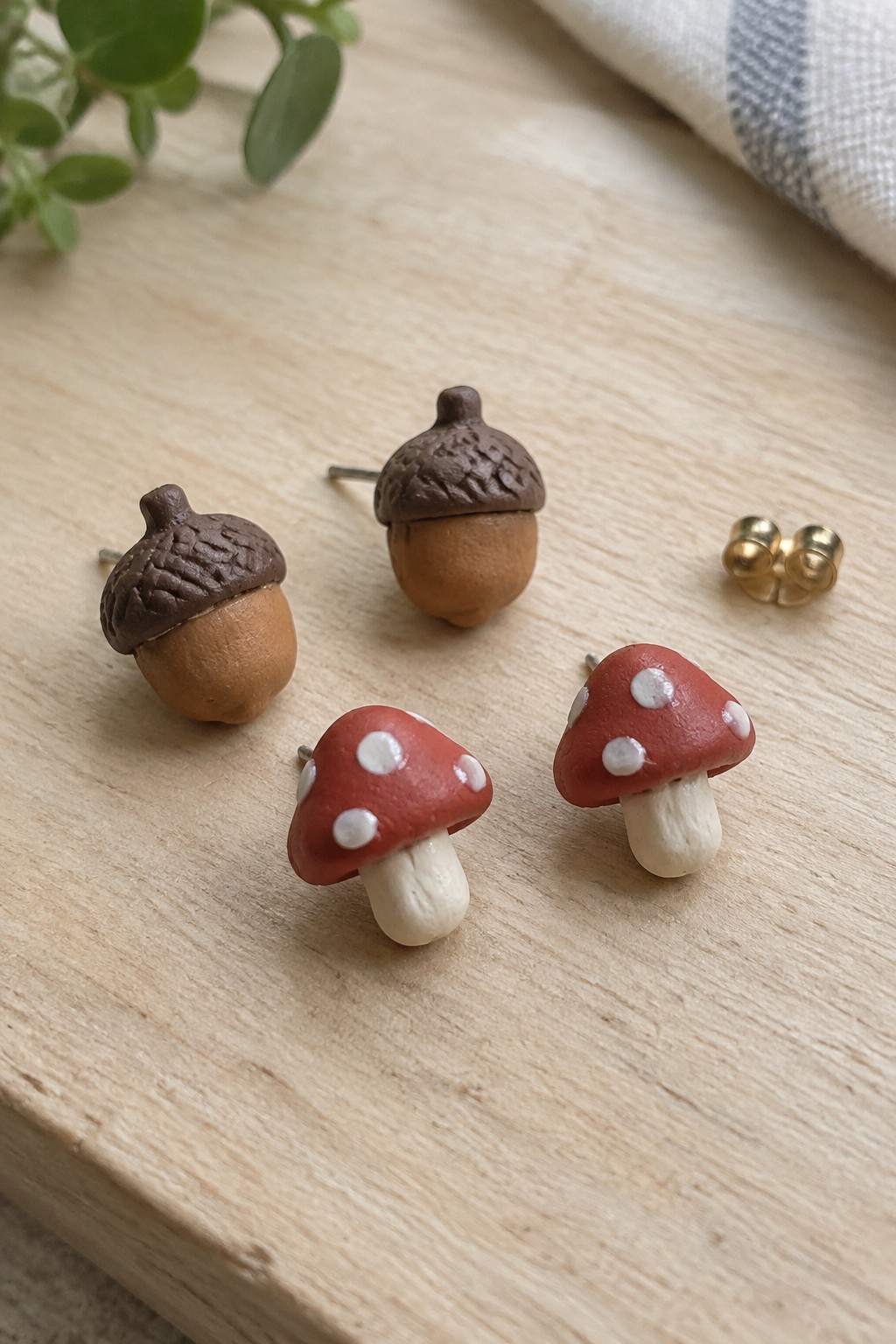
These small clay stud earrings pair acorns with red, white-spotted toadstools for a woodland-themed jewelry set. Their rounded, hand-sculpted forms and earthy brown, cream, and red colors make each miniature recognizable without needing many details.
The simple shapes are a useful starting point for making a coordinated set, and you could vary the cap colors or add tiny leaf details to create other woodland motifs. Their small scale suits earrings, while the same acorn and mushroom designs could be made larger as decorative miniatures or charms.
Woodland Animal Pencil Toppers

These hand-sculpted clay pencil toppers turn a fox, blue bird, and spotted mushroom into small decorative animal figures. Their rounded shapes, painted features, and contrasting colors make each topper easy to recognize, while the wooden pencils give the sculptures a clear purpose as playful desk accessories.
The simple silhouettes make the idea adaptable: keep the faces and details minimal, or swap in other woodland creatures and mushroom patterns. Make a matching set as a small gift, or scale the figures into standalone miniatures if you want to skip the pencil-topper format.
Raccoon and Badger Clay Fridge Magnets

Hand-sculpted raccoon and badger faces make a playful pair of woodland animal magnets for a refrigerator or other magnetic surface. Their rounded shapes, contrasting dark-and-light markings, and small sculpted ears give each face a clear character while keeping the designs compact and recognizable.
The simple face shapes make the idea easy to adapt into other woodland animals, such as a fox or bear, by changing the markings and ears. You could also make one larger face or a matching set in different colors, keeping the details bold so they remain easy to see at a small scale.
Fox Howling at the Moon Wall Hanging

This hand-sculpted clay wall decoration features a seated rust-colored fox lifting its muzzle toward a crescent moon, set against a deep green background with small leafy details. Raised contours and a muted, hand-painted palette make the fox and moon stand out from the rectangular plaque, giving the design a clear woodland animal theme.
The plaque shape keeps the composition simple to adapt: a beginner could use a basic fox silhouette and moon, then add painted leaves instead of raised details. Try changing the background or fox colors, or make a smaller version as a decorative ornament; the howling pose and crescent moon keep the idea recognizable at either scale.
Mushroom Trio Clay Keychain

Three hand-sculpted mushrooms hang from a brass-tone key ring as a playful woodland-themed clay charm. Their rounded cream stems and spotted caps in red, ochre, and muted purple make the small sculptures easy to distinguish.
The simple mushroom shapes are a useful starting point for making a coordinated set, with cap colors and spot patterns changed to suit a different palette. Keep the trio as a keychain or adapt one mushroom into a bag charm or small decorative ornament.
Woodland Bird Acorn Trinket Dishes

These hand-sculpted clay trinket dishes have acorn-shaped rims and small woodland animals painted inside. The raised, textured caps and warm earth-tone colors frame each bird or squirrel, making the pieces decorative dishes for holding small items.
The acorn silhouette is easy to adapt with different animal details, leaf patterns, or colors, and a simpler version could use a plain bowl shape with a painted woodland motif. Make one dish as a small gift or create a set in different sizes and colors; keep them decorative rather than using them for food.
Pinecone-Backed Clay Hedgehog Figurine

A small hand-sculpted clay hedgehog figurine uses a rounded body and face as the base for rows of individually placed brown and tan pieces that suggest spines. The simple dark eyes and nose keep the face readable, while the varied earthy colors give the miniature animal craft its texture.
The repeated spine shapes make the design memorable, and you could simplify them into fewer, larger pieces for an easier version. Try a different mix of warm browns, creams, or muted reds, or make the hedgehog larger as a decorative sculpture or smaller as a collectible miniature.
Woodland Creature and Mushroom Clay Mobile

A handmade clay mobile pairs small woodland animals, spotted mushrooms, and leaf shapes in a hanging decoration. The birds and seated foxes have rounded, hand-sculpted forms, while muted green, cream, and rust colors keep the painted details easy to distinguish. Its dangling strands and simple branch support make it a decorative clay craft rather than a functional object.
The repeated shapes make the design easy to adapt: use fewer clay pieces for a shorter mobile, or swap in acorns, flowers, or other forest animals. A beginner-friendly version could use simple bird and mushroom silhouettes with minimal painted details, while making several strands at different lengths would create a fuller arrangement for a window or wall.
Frequently Asked Questions
For easy projects at home, air-dry clay is a great choice because it needs no kiln. Polymer clay is another popular option: it stays workable until you bake it in a regular oven, which can make it a good choice for smaller, sturdier details. Choose a clay that suits your project, and check the package directions before you begin. If children are crafting, select a child-appropriate product and supervise tools and baking.
Try making foxes, hedgehogs, owls, rabbits, deer, squirrels, raccoons, badgers, and mice. You could also create frogs, snails, mushrooms, or tiny woodland houses to complete the scene. Start with simple shapes, such as a rounded body and small ears, then add distinctive features like a fox’s pointed muzzle or a hedgehog’s textured back.
Use expressive details and playful proportions. Give a fox oversized ears, a hedgehog a tiny flower crown, or an owl big, bright eyes. Pastel colors, miniature scarves, acorns, mushrooms, and little forest props can add charm. Keep the details simple and repeat a few colors or motifs to make a group of creatures feel like a coordinated collection.
Make texture while the clay is still soft. Press in patterns with a toothpick, blunt needle, or clay tool, or use a small piece of textured fabric to create a subtle imprint. Roll tiny pieces of clay for noses, spots, paws, and leaves, then gently attach them with a little water if your clay’s instructions recommend it. Work carefully around delicate parts, and avoid making thin pieces that can break easily.
Follow the instructions for your specific clay, since air-dry and oven-bake clays are handled differently. Let air-dry pieces dry fully, turning them when appropriate so they dry evenly. Bake polymer clay only at the temperature and for the time listed on its packaging. Once the pieces are completely dry or cool, paint them with suitable paints and add a compatible sealant if you want extra protection. Store finished creations somewhere dry and handle small details gently.
