


I like having a small place to keep the rings and earrings I take off at the end of the day, and clay bowls can be both useful and personal.
I’ve gathered ideas in different shapes, colors, and styles, from simple little dishes to more decorative designs.
Some could sit by the bed, while others might look right at home on a bathroom shelf or dresser.
Here are 18 clay bowl ideas to help you find a style that suits your jewelry and your space.
Hand-Formed Clay Ring Dish

A shallow, hand-formed clay trinket dish keeps rings in one easy-to-reach place, with a gently uneven rim that gives it a relaxed handmade shape. Its cream-colored center and earthy brown edge create a simple contrast, while the small raised detail near the rim adds a subtle finishing touch.
The wide, low shape is easy to adapt with a smoother edge, a different color band, or small sculpted accents, and you could make a smaller version for a few everyday pieces of jewelry. A beginner could keep the surface plain and focus on shaping the dish by hand, making this a practical clay accessory to save or recreate for a bedside table or dresser.
Swirled Clay Bowl for Jewelry Storage

A shallow hand-sculpted clay bowl makes a decorative spot to keep earrings, rings, and necklaces together. Its flowing teal, coral, and cream pattern carries across the inside and outside, so the small trinket dish looks finished from different angles while still being easy to use for everyday jewelry.
The marbled colors are the main design feature, and you could adapt them with a simple two-color swirl or try a different palette to match a room or make a personal gift. Making the bowl in a smaller or larger size would suit anything from a few rings to a longer chain, while a matching set of dishes could separate different kinds of jewelry.
Sculpted Leaf Clay Jewelry Dish

A hand-sculpted clay trinket dish shaped like a broad leaf gives rings and small earrings a dedicated place to land. Its raised, irregular edges and pressed vein details make the shallow dish look like a real leaf, while the muted green finish keeps the sculpted texture easy to see.
The leaf shape does most of the decorating, so you could keep the surface simple or use a different green, add subtle painted veins, or curl one edge more dramatically. Make a smaller version for a few favorite pieces or a wider one for necklaces and bracelets, and treat it as a decorative holder rather than a dish for food.
Scalloped Clay Jewelry Dish With Beaded Details

A hand-sculpted clay trinket dish turns a simple jewelry holder into a decorative accessory, with a scalloped flower-like outline, a pale interior, and a soft pink rim accented with small beads. Its shallow shape keeps earrings and other small pieces together while the uneven contours make the handmade design stand out.
The scalloped edge is the main feature, so you could simplify the project by shaping a plain dish and adding fewer beads, or replace the beads with painted dots or short lines. Try different color combinations or make a few sizes to suit rings, earrings, or necklaces, keeping the dish for jewelry storage rather than food.
Three-Section Clay Jewelry Dish

A hand-formed clay jewelry dish with three divided sections keeps rings, earrings, and a necklace separate in one compact trinket holder. Its rounded shape, raised partitions, and contrast between the speckled cream interior and terracotta-colored rim make the handmade contours part of the design.
The divided layout is useful for sorting small jewelry, and the same idea could be made smaller for a bedside table or wider for larger accessories. A simpler version could use just one raised divider, while different clay colors or a less even rim would give each dish its own look.
Sleeping Cat Clay Jewelry Dish
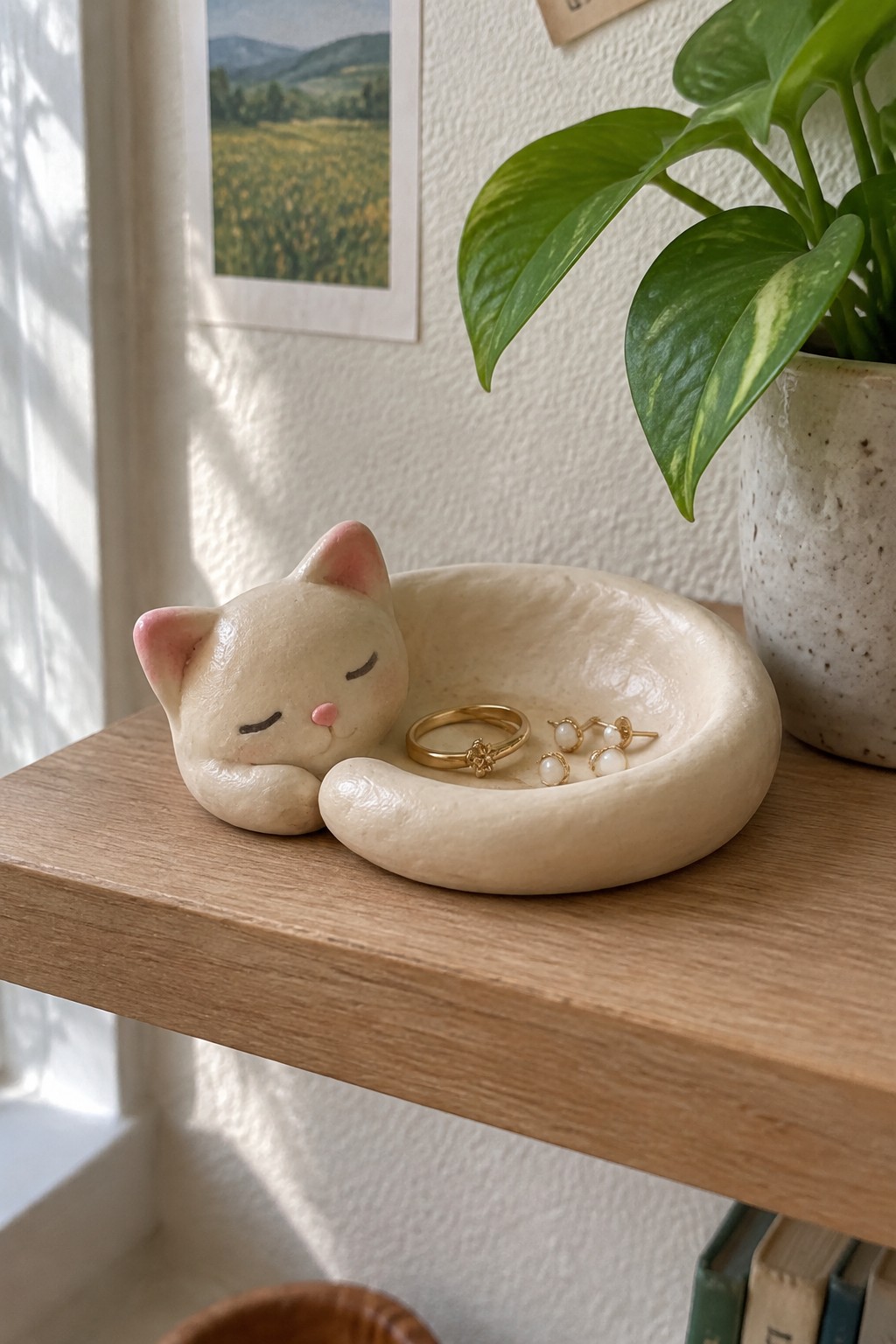
A hand-sculpted cat forms the resting end of this shallow clay dish, turning a jewelry holder into a small animal figurine and functional decorative accessory. The curled body creates the dish’s rim, while the cream color and simple painted face keep the design clear without competing with the rings and earrings stored inside.
The cat shape could be adapted with different ear positions, facial details, or clay colors, and the dish could be made wider for bracelets or smaller for everyday rings. For a simpler version, make a shallow oval dish and add only a sculpted cat head at one end, keeping the main idea recognizable with fewer details.
Textured Clay Bowl for Jewelry Storage

A rounded clay trinket bowl with a raised, repeating pattern turns a simple storage dish into a decorative jewelry holder. Its pale gray finish keeps the sculpted texture in focus, while the open shape makes it easy to set aside necklaces and small accessories.
The repeating details make the bowl memorable, and you could simplify them into a few hand-pressed marks or add a different border pattern. Making it wider or deeper would change how much jewelry it can hold, while a smaller version could keep rings or earrings together; use it for accessories rather than food.
Nesting Clay Bowls for Jewelry Storage

A set of three hand-formed clay bowls in graduated sizes creates a compact jewelry organizer, with each dish holding a different type of accessory. The rounded shapes and contrasting pink, yellow, and blue-green colors make the stacked arrangement decorative as well as useful for sorting small items.
You could make the bowls in other color combinations or vary their sizes to suit rings, earrings, and larger pieces. A simpler version could use two bowls with plain rims, while a matching set makes a practical handmade gift for someone who needs a spot to keep everyday jewelry.
Pink Heart-Shaped Clay Jewelry Dish

A hand-formed clay trinket dish shaped like a heart keeps rings and small jewelry pieces together, while an uneven dotted rim adds texture to its soft pink surface. The shallow bowl is both a decorative clay accessory and a practical place to set jewelry.
The heart silhouette gives the dish a clear outline, and the rim detail can be simplified to dots pressed in by hand or adapted with a scalloped edge. Make it smaller for a bedside ring dish or try another color and rim pattern to suit a different style; the same design also makes a useful handmade gift.
Layered Clay Lotus Jewelry Bowl

A hand-sculpted clay bowl shaped like an open lotus gives rings and other small jewelry a decorative place to rest. Overlapping mauve petals rise around a contrasting textured center, making the floral shape the main visual feature while keeping the bowl’s purpose clear.
The layered petals make this design memorable, and you could simplify it by using fewer, broader petals around a shallow center. Try different petal colors or adjust the bowl’s size to suit the jewelry you want to store, while keeping it for decorative storage rather than food.
Organic Stone-Shaped Clay Jewelry Dish

A hand-formed clay jewelry dish with an irregular, stone-like shape turns a simple catchall into a small sculptural accessory. Its uneven rim and muted gray, beige, and brown surface give it a natural, layered look, while the shallow interior keeps rings easy to reach.
The organic outline makes this design easy to adapt without needing a perfectly symmetrical shape. You could make a smaller version for rings, a wider one for bracelets, or change the clay colors to create a lighter or more speckled stone effect; it is a useful project to save if you want jewelry storage that also works as a decorative accent.
Faceted Teal and Indigo Clay Jewelry Bowl

A hand-formed clay bowl with angular, gem-like sides turns jewelry storage into a decorative display. Teal and indigo panels contrast with the broad, simple interior, making the sculpted contours the main feature of this functional decorative accessory.
The geometric shape is memorable, but it can be adapted without matching every facet: a smaller bowl with fewer angled sections would keep the look manageable, while painted color blocks could create a similar effect. Try different color pairings or make the bowl wider or deeper to suit rings and earrings, keeping it for jewelry rather than food.
Clay Ring Dish With a Raised Jewelry Holder

A shallow hand-formed clay bowl with a raised center post keeps rings and bracelets together while leaving a small area for loose pieces. Its cream surface and simple gray bands give the sculpted holder a coordinated look, making it a functional decorative accessory for jewelry storage.
The raised post provides a handy place to slide on rings or stack bracelets, while the bowl can hold smaller pieces such as earrings. You could adjust the post height for different jewelry, change the painted bands to match a room, or make a version with a simpler unpainted finish.
Green Pear-Shaped Clay Bowl for Jewelry Storage

A hand-formed clay trinket bowl shaped like a pear turns a familiar fruit silhouette into a small storage dish. Its raised, dimpled edge and short stem make the form easy to recognize, while the soft green color keeps the sculpted detail from feeling busy. It fits naturally among practical clay jewelry-storage ideas.
The pear shape makes this dish memorable without needing extra decoration, and you could adapt the same idea with a different fruit silhouette or a new color. A simpler version could use a rounded bowl shape with just a small stem, while making the dish larger or smaller would let you store anything from rings to earrings.
Braided-Rim Terracotta Clay Jewelry Bowl

A shallow clay jewelry bowl gets its distinctive look from a thick, twisted rim that contrasts with the smooth, rounded basin. The warm terracotta color and handmade contours make it a decorative storage dish for necklaces, bracelets, and other small pieces.
The braided edge is the detail to save and adapt: you could make it looser or more pronounced, or use a simpler rolled rim if you want an easier project. A smaller version would suit rings and earrings, while a larger bowl could hold several bracelets; keep it decorative and use it for jewelry rather than food.
Moon and Star Clay Jewelry Dishes

A crescent-shaped clay dish paired with a small star dish makes a celestial-themed set for holding earrings and other jewelry. Their deep blue surfaces, scattered gold dots, and tiny constellation details tie the handmade shapes together, while the raised edges help keep small pieces contained.
The contrasting crescent and star silhouettes make this set memorable, and either dish could be made on its own in a different size. For a simpler version, keep the shapes and gold speckles but skip the constellation lines, or swap in silver details and another night-sky motif.
Mosaic-Tile Clay Bowl for Jewelry Storage

A rounded handmade clay bowl becomes a decorative jewelry holder with small, irregularly colored tile-like pieces covering its outside. The neutral interior keeps the design simple where rings and bracelets rest, while the earthy mix of cream, green, ochre, and rust makes this functional clay accessory distinctive.
The contrast between the plain inside and patterned exterior is easy to adapt: use fewer colors for a simpler version, or arrange small clay pieces in stripes or a loose checkerboard. Making the bowl wider or shallower can suit different jewelry, and the mosaic idea could also decorate a small trinket dish.
Black Clay Jewelry Bowl With a Ring Cone

A shallow black clay bowl with a raised center cone keeps rings easy to reach while leaving space around it for earrings. The simple sculpted form and dark matte finish make the gold and green jewelry stand out, creating a functional decorative accessory for bedside storage.
The raised cone is useful for stacking rings, while the surrounding bowl can hold small pieces that do not fit over it. You could make the dish in a different size or color, or simplify the design by shaping a shallow bowl without the center holder; either version makes a practical handmade gift for someone who wears jewelry daily.
Frequently Asked Questions
Air-dry clay is a good choice for simple bowls because it doesn’t require a kiln. Polymer clay is another option: it’s easy to shape, but it must be baked according to the package instructions. For a bowl that will be especially durable, use pottery clay and fire it in a kiln. Check the product label before starting, since clays differ in how they’re cured and what finishes they can safely use.
Work the clay until it’s smooth, and avoid making the bowl unevenly thick. Follow the clay manufacturer’s directions for drying or baking. Air-dry clay usually needs to dry slowly, away from direct heat and sunlight; turning the piece occasionally can help it dry more evenly. If you’re using a mold, release the clay carefully and support the shape as you remove it.
Try adding a rolled rim, pressed textures, stamped patterns, or a small sculpted detail such as a flower or star. You can also paint a cured bowl, use metallic accents, or create a color-blocked finish. For a practical design, keep the center fairly smooth so rings and earrings are easy to pick up. Test paints, sealers, and decorative materials on a small sample first.
Choose the bowl’s shape and details based on what you plan to store. A shallow dish works well for rings, studs, and everyday pieces, while a deeper bowl can hold bracelets or hair accessories. Add small raised sections or separate dishes for sorting items, and make sure any dividers are smooth so they won’t snag delicate chains. For necklaces, consider using a separate hook or tray to prevent tangling.
Whether a bowl needs a sealer depends on the clay and finish. Follow the clay and paint manufacturer’s instructions, and use a compatible sealer if the piece needs protection. A sealer can help guard against light scratches and stains, but it does not necessarily make the bowl waterproof or food-safe. Clean it gently with a soft, dry or slightly damp cloth, and avoid soaking it or storing jewelry in it while the bowl is wet.
