


I like how a simple pressed pattern can give a handmade clay vase a little more character without making it feel fussy.
For these ideas, I’ve gathered a mix of textures and shapes that can suit different corners of the home.
Some have soft, subtle impressions, while others use bolder patterns to stand out.
Here are 16 decorative vase designs to inspire your next clay project.
Fern-Pressed Clay Vase

A hand-sculpted clay vase gets its decoration from fern fronds pressed into the surface, leaving raised leaf shapes across its rounded body. The muted green-gray finish keeps the botanical texture prominent, making this a decorative clay vessel with an organic, handmade look.
The fern impressions make the design memorable without needing painted detail, and you could use other leaves to create a different pattern. Try a smaller version as a decorative bud vase, or simplify the surface by pressing a single fern frond into the clay; changing the clay’s color can also shift the look from subtle to more graphic.
Lace-Pressed Clay Vase

This hand-shaped clay vase uses pressed lace and floral textures to create patterned bands around its rounded form. The terracotta color keeps the raised and recessed details easy to see, while the handmade contours give it the look of a decorative sculptural vessel rather than a mass-produced piece.
The lace pattern can be adapted with different fabric textures, floral motifs, or simpler repeated impressions, and the vase could be made taller or more compact. For an easier version, press one patterned band onto a smooth clay form instead of covering the whole surface; it would still make a distinctive decorative piece or handmade gift.
Ribbed Clay Vase With Raised Dots

This hand-sculpted clay vase uses alternating coral, cream, and ochre bands to emphasize its rounded body and narrow neck. Raised dots run down the sculpted ribs, adding texture and a repeated pattern that makes the vase read as a decorative clay accessory.
The vertical stripes make the design easy to adapt with different color combinations, while the raised details could be simplified to fewer dots or made with small clay pieces. A smaller version could work as a shelf decoration or handmade gift, and the same ribbed pattern could be used on a decorative pot or pencil holder.
Blue and White Pressed-Flower Clay Vase

A hand-sculpted clay vase pairs a softly uneven, rounded form with blue-and-white floral decoration. Raised daisies, delicate stems, and seed-head shapes stand out against the painted blue areas, giving the surface the look of a pressed-flower study while keeping the vase itself the focus. It fits the decorative clay vessel category and can be displayed as a sculptural object, whether or not it holds flowers.
The contrast between the irregular contours and the repeated botanical details makes the design memorable, while the blue-and-white palette can be adapted to suit different spaces. For a simpler version, choose one flower motif and repeat it around a smaller vase, or use a few raised leaves instead of a dense arrangement. You could also try other muted colors or turn the same pressed-texture concept into a decorative planter cover or small display vessel.
Marbled Clay Vase With Textured Bands

This hand-shaped clay vase combines cloudy teal, cream, and ochre marbling with raised geometric bands and repeated slit textures. The mix of smooth color patterns and tactile details gives the decorative vessel a layered look without relying on pressed leaves or flowers.
The contrasting bands make the design easy to adapt: use fewer textures for a simpler version, or change the colors and geometric motifs to suit a different style. A smaller version could become a decorative holder, while the same banded concept could be carried onto another sculpted clay object.
Twisted Coil Textured Clay Vase

A rounded clay vase with an uneven handmade rim gets its texture from raised, twisted coils that wrap around the body. The layered ridges create a strong pattern in the pale, earthy surface, making this a sculptural decorative vase idea rather than a plain vessel.
The coil texture is the main feature, so you could keep the color simple or use contrasting clay for more definition. Try the same approach on a smaller vase, or simplify the design with fewer, wider coils; either version would make a distinctive decorative accent or handmade gift.
Sage Green Clay Vase With Sculpted Buds
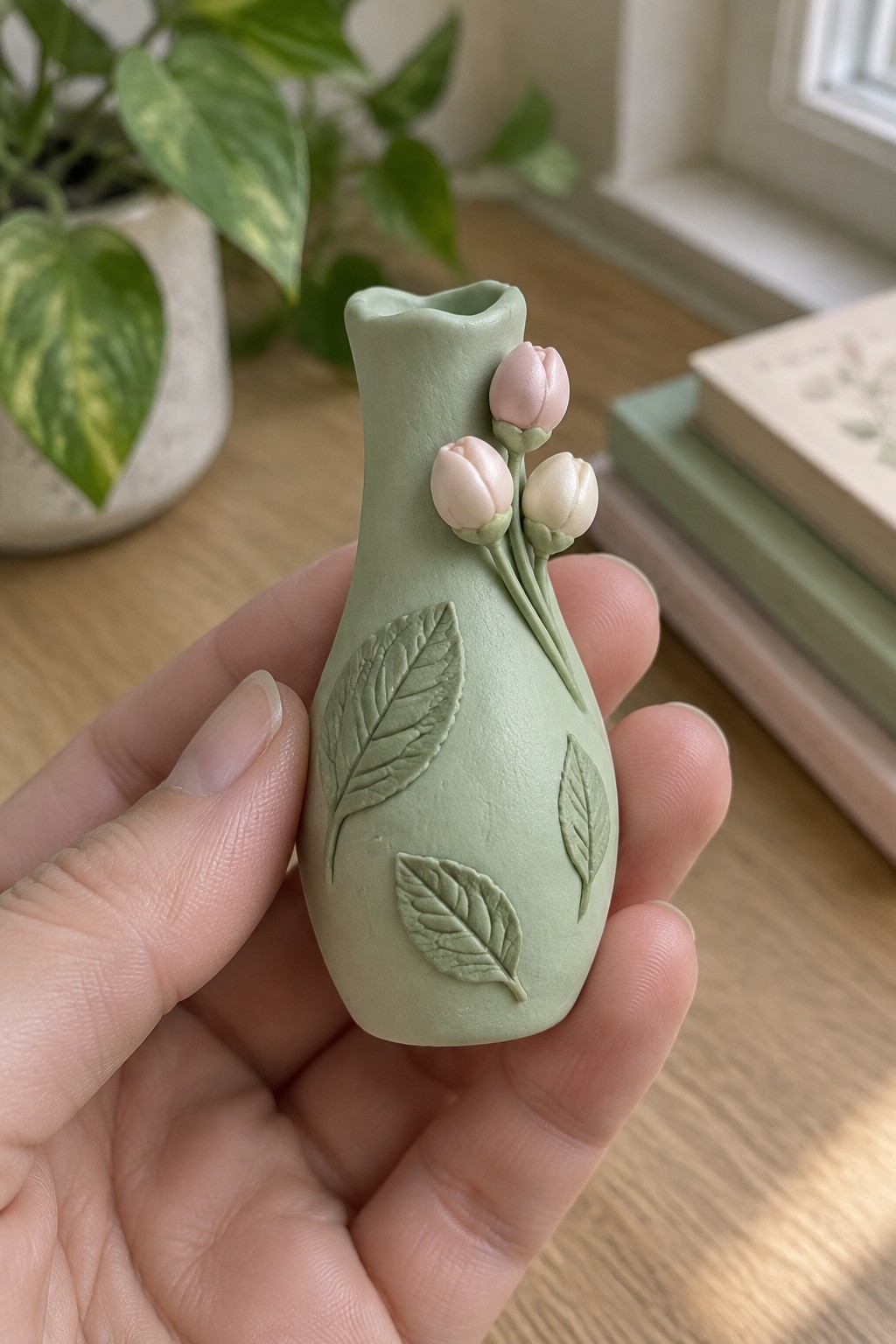
A small hand-sculpted clay vase pairs a softly tapered form with raised leaf details and three attached flower buds in pale pink and cream. Its muted sage color keeps the miniature floral decoration cohesive, while the leaf textures add contrast to the smooth surface. It fits as a decorative floral clay craft rather than a functional drinking vessel.
The narrow opening and compact size make this idea easy to adapt as a shelf decoration or handmade gift. You could simplify the design with fewer leaves and buds, or change the flower colors and vase shape to create a set of coordinated miniatures.
Mustard Clay Vase With a Raised White Stripe

A tall, hand-sculpted clay vase combines closely spaced vertical grooves and scattered raised dots with a single white stripe running down one side. The mustard-yellow color and uneven contours keep the decorative clay object visibly handmade, while the contrasting stripe breaks up the repeated texture.
The stripe gives this design a clear focal point, so you could adapt the vase with a different accent color or vary the dot placement while keeping the grooved surface. For a simpler version, use fewer grooves and raised details, or make the same textured motif on a smaller decorative vase.
Patchwork Clay Vase With Leaf Impressions
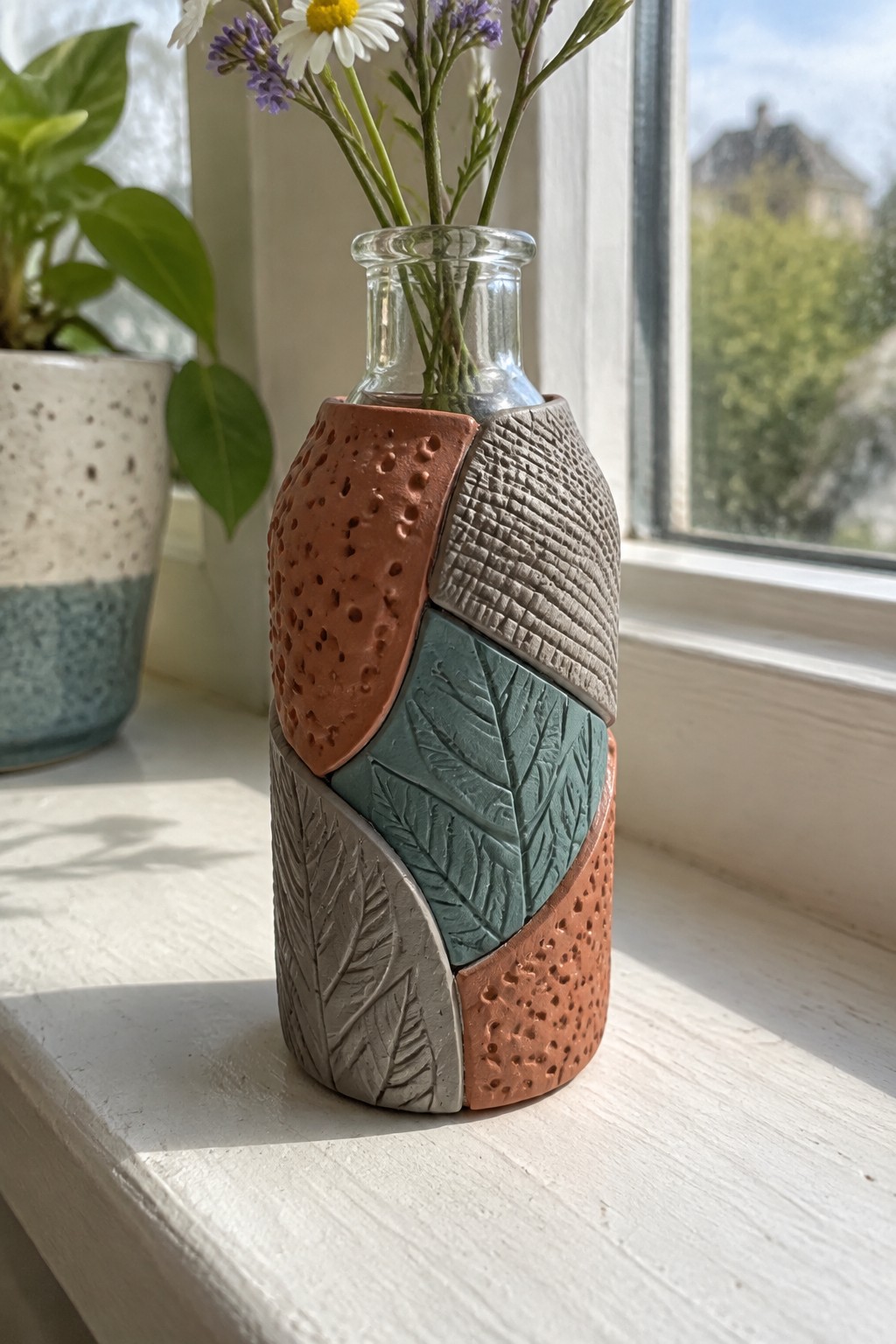
A hand-sculpted decorative vase combines raised clay panels with contrasting textures, including leaf impressions, ridges, and small indented marks. The rust, muted teal, and taupe sections create a patchwork effect around a glass flower holder, giving the vase a mix of botanical detail and geometric shape.
The patchwork design is easy to adapt by changing the panel colors or using different pressed textures, such as fabric, foliage, or carved lines. A smaller version could hold a few dried stems, while a simpler design with fewer panels would keep the same look with less detail to shape.
Botanical Imprint Clay Wall Pocket

This hand-sculpted clay wall pocket combines a shallow, rounded holder with raised botanical impressions and soft pink accents. Its open top holds dried stems, while the natural clay surface and pressed plant details make it both a small decorative holder and a wall decoration.
The pocket shape can be made wider or smaller to suit different dried arrangements, and the botanical details could be changed to leaves, grasses, or flowers in other muted colors. For a simpler version, use one or two pressed stems as the main motif, or adapt the idea into a flat hanging plaque without the holder.
Starburst-Pressed Clay Vase With Colorful Bands

A hand-sculpted clay vase uses wide vertical bands of sage green, terracotta, and cream, each marked with repeating pressed starburst textures. The rounded, slightly irregular shape and contrasting colors make the surface pattern the focus, creating a decorative vase with a handmade look.
The pressed motifs give the design strong visual detail without needing painted patterns, and the bands could be made in other color combinations or with different repeated shapes. Try a smaller version as a decorative accent, or simplify the pattern by texturing just one or two bands while keeping the same striped layout.
Stepped Clay Vase With Dimpled Texture

A hand-sculpted clay vase pairs a narrow neck with several rounded, widening tiers, each marked by irregular recessed dots. The warm, muted clay color and uneven handmade contours keep the stepped silhouette and pressed texture as the main decorative features.
The tiered shape gives the vase a memorable outline, while the repeated dimples make the surface interesting without adding painted detail. You could simplify the design by making fewer, broader tiers, or vary the clay color and dot sizes; a smaller version could serve as a decorative accent, while a larger one would make a sculptural display piece.
Two-Tone Clay Face Vase With a Textured Band

This handmade clay vase combines a rounded, open vessel with a sculpted face divided into peach and gray sections. Cream-colored eyes, a long nose, raised lips, and a rough, ridged band across the lower face create contrast against the smooth contours. It fits the decorative clay vase category, with the facial features turning the vessel into a small sculptural centerpiece.
The split-color surface and textured band make the design easy to adapt without copying every facial detail. For a simpler version, keep the rounded vase shape and add just two eyes or a single textured strip, or try different clay colors and band patterns. Changing the vase’s size or the face’s proportions could give each handmade version a distinct look.
Double-Neck Clay Vase With Geometric Texture Bands

This hand-sculpted clay vase pairs a rounded body with two tall, uneven necks, each decorated with raised geometric bands. The muted sage-green and terracotta colors make the carved-looking motifs stand out, giving the piece the feel of a sculptural decorative accessory rather than a plain vessel.
The double-neck silhouette is the main feature, while the repeated patterns offer a way to add pressed or modeled texture without covering the whole surface. You could adapt the design with different earthy colors or simpler bands of dots and lines, or make a smaller version as a purely decorative sculpture. For a less complex variation, keep the rounded body and use one neck with a single textured band.
Three Hand-Textured Clay Vases

A trio of hand-sculpted clay vases uses different shapes and pressed textures to create a coordinated decorative set. The rounded coral vase has a crisscross pattern with small indents, while the tall yellow and purple forms contrast smooth necks with irregular surface marks and raised rounded details.
The mix of colors and textures makes the set visually distinctive, and each vase can be adapted as a separate project in a different size or palette. For a simpler version, choose one vase shape and add a single repeated texture, such as dots or diagonal lines; these pieces are best treated as decorative accents rather than functional vessels.
Seashell-Decorated Clay Vase With Dried Flowers

A hand-sculpted clay vase gets its coastal look from small raised shell forms and porous, coral-like textures set into its sand-colored surface. The tapered shape and muted natural tones keep those pressed-texture details prominent, making this a decorative vase idea that pairs well with dried stems.
The shell motifs make the design easy to adapt without needing a patterned finish: use fewer details for a simpler version, or arrange different shell shapes across a larger vase. You could also change the clay’s base color or make a smaller version as a decorative bud vase, keeping any stems dried rather than treating the piece as a functional drinking vessel.
Frequently Asked Questions
Try leaves, ferns, grasses, lace, fabric, textured wallpaper, carved stamps, or everyday items such as buttons and mesh. Press the material into soft clay and lift it carefully to reveal the pattern. Test it on a small scrap first: delicate items can tear, while very deep textures may weaken thin areas of the vase.
For hand-built or slab-built vases, add impressions while the clay is soft enough to mark but firm enough to hold its shape. If the clay is too wet, the pattern may blur or the vase may slump. If it is too dry, it may crack. For a pottery-wheel vase, wait until it is leather-hard before pressing in details.
Use even pressure and avoid shifting the object while it is in contact with the clay. Keep patterns simple around curves, where an imprint can distort, and use a roller or soft tool to press evenly across larger areas. If a mark goes wrong, smooth the clay gently before trying again. A few intentional impressions usually look more polished than covering every inch.
Yes. Air-dry clay is suitable for decorative vases and can be shaped by hand, then textured with household materials. Follow the clay package instructions for drying and sealing. Air-dry clay is generally not waterproof, so use a separate waterproof container for fresh flowers, or choose dried flowers and decorative stems instead. For food-safe or water-holding pieces, use kiln-fired clay and an appropriate glaze.
Apply color lightly so it settles into the impressions rather than filling them. A thin wash of paint, a gently brushed glaze, or a subtle two-tone finish can highlight raised and recessed areas. Let the piece dry fully before painting or glazing, and check that any finish is compatible with the clay and intended use.
