


I like how air-dry clay can turn a simple shape into a useful little accent for the home.
For this collection, I’ve gathered ideas for decor you can shape and personalize with your own colors and details.
Some are simple, sculptural pieces, while others add a practical touch to a shelf, desk, or table.
Here are 18 creative projects to try when you’re in the mood to make something for your home.
Painted Lavender Flower Clay Trinket Dish

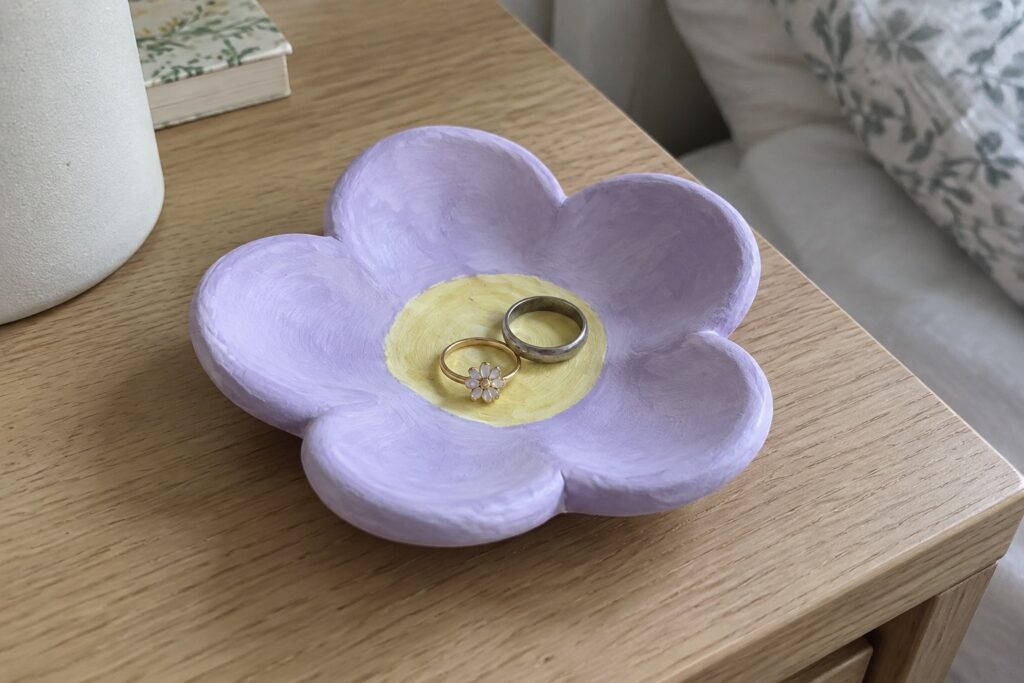
A hand-sculpted clay trinket dish shaped like a five-petal flower gives rings and other small items a decorative place to rest. Its rounded lavender petals frame a yellow center, while the uneven contours and visible brush texture keep the painted design looking handmade.
The flower shape makes the dish distinctive without requiring elaborate painted details, and you could simplify it by shaping a shallow base with fewer, broader petals. Try different petal and center colors, or make a smaller version for earrings and a larger one for hair accessories; it’s best kept for small decorative storage rather than food.
Three Arch-Shaped Clay Sculptures on a Base

This handmade clay sculpture arranges three rounded arches of different heights on a low oval base, creating a simple layered silhouette. The muted terracotta, blue-gray, and cream colors distinguish each shape, making it a decorative miniature sculpture rather than a functional holder.
The arches give the design a clear structure, so you could simplify it to two shapes or vary their height and spacing while keeping the same idea. Try a different palette, or make a larger version as a shelf accent or a smaller one as a desk decoration.
Pastel Clay Succulent Arrangement

Hand-sculpted clay succulents arranged in a low, pebble-covered base make a compact miniature sculpture for a windowsill or shelf. The layered rosette shapes and muted sage, blue-green, and lavender colors create visual variety while keeping the arrangement cohesive.
The rosettes are built from repeated rounded leaf shapes, so you could simplify the idea by making just one plant or using fewer leaves per flower. Try different pastel shades or vary the sizes to create a small group of matching decorations, or adapt a single rosette into a clay magnet or keepsake.
Botanical Clay Wall Hanging

Handmade clay plaques become a wall decoration when botanical impressions are arranged as a simple hanging. The three square panels use different muted colors and leaf or flower motifs, with twine linking them into a vertical display.
The repeating format makes the idea easy to adapt: use one plaque for a smaller accent, or choose different leaf shapes and colors for a longer arrangement. A beginner could keep the panels simple and focus on one pressed or sculpted plant motif per square, making the set a useful way to personalize a small stretch of wall.
Pastel Clay Bead Garland

A handmade clay bead garland strings rounded beads and flattened discs in alternating shapes and soft colors, including mustard yellow, dusty pink, cream, and teal. The contrast between the larger spherical beads and thin accent discs gives this decorative accessory a clear rhythm without needing painted patterns or extra details.
The repeated shapes make the design easy to adapt: use fewer beads for a shorter hanging ornament, or change the color palette to suit a room or season. A beginner-friendly version could use only two bead shapes and three colors, while smaller beads could turn the same idea into a decorative strand for a shelf or mantel.
Hand-Painted Clay Songbird Figurines

These small clay bird figurines use rounded, hand-sculpted forms and painted markings to distinguish each bird, including a blue-and-yellow songbird, a red-breasted bird, and a pale bird with patterned wings. Their matte, unevenly painted surfaces keep the designs visibly handmade, making this an animal figurine project for display rather than a functional accessory.
The simple body shapes are a useful starting point for making a small collection, while the color blocks and wing markings provide room to personalize each bird. A simpler version could use one body color and just a few painted details, or you could change the palette and bird shapes to create a coordinated group of miniature sculptures.
Botanical Clay Tealight Holder

A hand-sculpted clay tealight holder uses a ring of raised green leaves and small gold accents to frame a battery-operated candle. The layered botanical details and dark green-and-gold palette give this decorative holder a sculpted, woodland-inspired look while keeping the candle as the focal point.
The leaf shapes make the design memorable, and they can be simplified into a few larger leaves for an easier version or varied with different vein patterns and accent colors. Make the holder in a smaller or wider size to suit a battery tealight, or adapt the same botanical border for a decorative pot or trinket container; use a battery-operated candle rather than an open flame.
Painted Clay Mushroom Sculptures

These hand-sculpted clay mushrooms use rounded caps and thick stems, with painted spots and ridged cap details to give each one a distinct look. Their varied shapes and earthy colors make them decorative miniature sculptures rather than functional objects.
The simple mushroom silhouette is easy to adapt by changing the cap shape, size, or color, or by adding spots and grooves for contrast. A beginner could make a single mushroom with a smooth cap, while a set in different sizes would create a more varied display.
Blue Cloud Clay Wall Hook

A hand-sculpted cloud wall decoration becomes a small functional accessory with three short wooden pegs attached across its lower half. Its uneven rounded outline, blue painted surface, and tiny gold stars give the cloud a clear night-sky theme while keeping the shape simple.
The cloud silhouette is easy to adapt with different colors, painted motifs, or fewer pegs, and a smaller version could serve as a decorative hanging piece. For a practical wall hook, keep the clay form compact and make sure it is securely mounted; the same design could also be turned into a purely decorative plaque without pegs.
Terracotta Clay Duck Planter

A hand-sculpted terracotta-colored duck planter pairs a rounded, open body with a small heart-shaped detail rising from the back. Cream diagonal bands give the handmade clay decoration a simple painted contrast, while the hollow top makes it a small decorative holder.
The rounded form and limited color palette make the idea easy to adapt into different bird shapes, stripe patterns, or smaller versions for a shelf or desk. For a simpler variation, keep the body as a basic oval holder and use a small clay shape or painted detail at the back instead of sculpting the heart.
Croissant, Lemon, Tulip, and Mushroom Clay Magnets

These small hand-sculpted clay magnets turn everyday shapes into a coordinated set of colorful fridge decorations. The croissant’s layered curves, the lemon’s segmented center, the tulip’s leaves, and the mushroom’s painted spots give each piece a distinct silhouette while keeping the collection visually balanced.
The simple motifs are easy to adapt into other small decorations, such as a strawberry, daisy, or tiny coffee cup. You could simplify the finer details for a first project, or make the pieces larger and use them as decorative wall accents instead; changing the color palette would also make the set easy to match to a kitchen or gift theme.
Green Leaf-Shaped Clay Trinket Dish
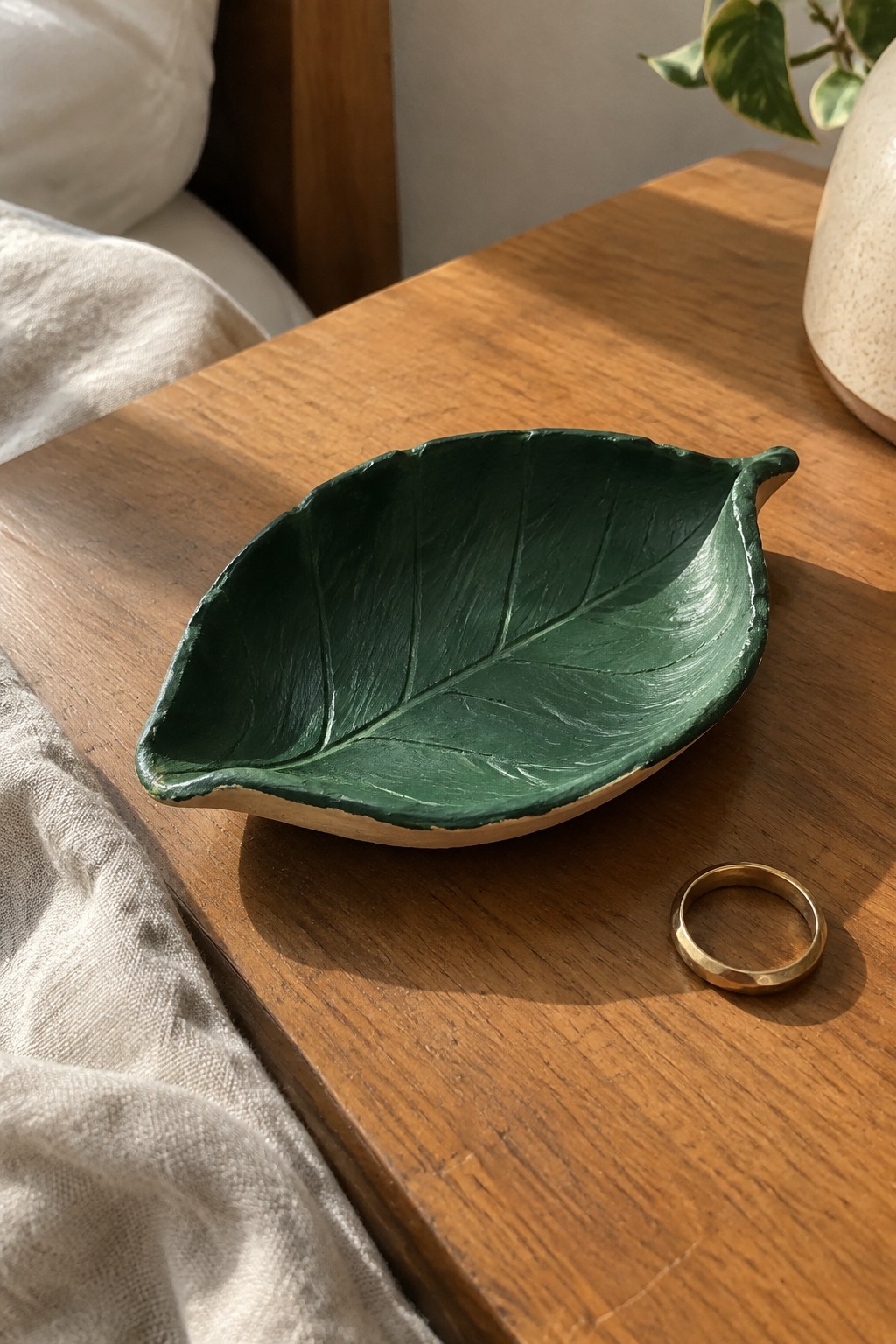
A hand-sculpted clay trinket dish takes the form of a broad green leaf, with raised veins and an uneven rim that give its shallow shape a botanical look. The dark green finish contrasts with the exposed clay-colored edge, making this a decorative holder for small items such as rings.
The leaf outline and vein details make the design recognizable without needing added decoration, and the shape can be adjusted to suit different sizes or plant-inspired forms. For a simpler version, make a shallow oval dish and add a few central vein lines, then try different greens or a contrasting rim; keep it decorative rather than using it to serve food.
Colorful Clay Flower Garland for a Planter

A handmade clay flower garland turns a plain planter into a decorative display. Small flowers in dusty pink, teal, and mustard yellow hang from a cord, with contrasting centers that make the row of sculpted shapes stand out against the pot.
The repeated flower shapes make the design easy to adapt: use fewer pieces for a shorter garland, or change the colors and flower sizes to suit another planter. A simpler version could use basic five-petal shapes and painted dots for the centers, making it a manageable project to try as a decorative clay accessory or a handmade gift.
Face-Shaped Clay Flower Vase

A hand-sculpted clay face turns a simple cylindrical vase into a decorative floral holder. Raised facial features and soft pink cheeks give the cream-colored surface its character, while the tall shape keeps the design easy to recognize among other clay home decor projects.
The face is the main design feature, so you could simplify the project by adding just a sculpted nose, closed eyes, and painted cheeks to a plain cylinder. Keep the vase small for a tabletop arrangement or make the face taller and change the colors to suit a different room; the same idea could also become a decorative pencil holder.
Colorful Sculpted Clay Drawer Knobs

These handmade clay drawer knobs turn simple round hardware into a set of decorative accents, with a ridged teal shell, a yellow star, and a smooth pink sphere. Their contrasting shapes and solid colors make each knob distinct while keeping the set cohesive, so this idea fits both functional decorative accessories and small clay sculptures.
The shape does most of the work here, making the designs easy to adapt with a flower, heart, or other simple motif in place of the shell or star. Keep the details bold and the forms compact so they remain easy to grasp, or make matching versions in a different color palette for a coordinated set.
Small Hand-Painted Clay Pumpkins

These sculpted clay pumpkins use rounded, grooved forms and short brown stems to make a simple seasonal decoration. The orange, cream, and muted green finishes give each pumpkin a distinct look while keeping the trio cohesive.
The repeated shape makes the idea easy to adapt: try different pumpkin sizes, vary the ribbing, or choose colors that suit your fall display. A beginner could sculpt a single pumpkin with broad grooves and a simple stem, then make a matching set for a tabletop or windowsill.
Moon and Star Clay Hanging

A hanging clay ornament made from crescent moons and stars turns simple sculpted shapes into a decorative mobile. The navy, cream, and gold colors give the repeated motifs contrast, while their varied sizes create an easy-to-read arrangement.
The repeated shapes make this idea adaptable: use fewer pieces for a smaller hanging, or change the colors and mix in other simple motifs. Each clay shape can also be displayed as an individual ornament, making the design a useful one to save for a coordinated set of handmade decorations.
Miniature Clay Village Houses

A row of sculpted clay houses creates a small decorative village, with each building given a different shape, roof, and muted color. The hand-formed contours, tiny windows, and separate doors make the miniature sculpture feel varied while keeping the houses visually connected on a shared base.
The different rooflines and building heights make the idea easy to adapt without needing every house to match. A simpler version could use fewer houses and painted-on windows, while extra pieces like small shrubs or a path could add detail; the finished village could sit on a shelf or be made in a different size for a seasonal display.
Frequently Asked Questions
You can start with a small amount of clay and a few basic tools: a rolling pin or smooth bottle, a craft knife, a cup or cookie cutter for shaping, and a little water to smooth seams. Household items such as textured fabric, leaves, or jar lids can also make patterns. Keep a damp cloth nearby, but avoid adding too much water because it can make clay sticky or prone to cracking.
Roll pieces to an even thickness and avoid making parts that are very thin beside thick sections. Smooth joins with a little water or slip made from clay and water. Let pieces dry slowly on a flat, breathable surface, and turn them occasionally if the underside is staying damp. Follow the clay package’s instructions, since drying times vary with thickness and room conditions.
Small, thin decorations may dry in about 24 hours, while thicker pieces can take several days. Humidity, airflow, and the type of clay all affect drying time. A piece may feel firm on the outside before it is completely dry inside, so allow extra time before sanding, painting, or sealing it.
Yes. Once the clay is fully dry, you can sand rough edges and paint it with acrylic paints. A clear varnish or suitable craft sealer can add a finished look and help protect the surface from dust and light splashes. Most air-dry clay is not waterproof or food-safe, even when sealed, so use clay dishes for keys, jewelry, or other dry items rather than food or liquids.
Start with simple, mostly flat designs that don’t need complicated assembly. Trinket dishes, ornaments, wall hangings, coasters for decorative use, small plant markers, and candle holders made to fit around battery-operated candles are approachable options. Use cookie cutters or a bowl as a shaping guide, and keep the design modest until you’re comfortable rolling, smoothing, and drying the clay.
